


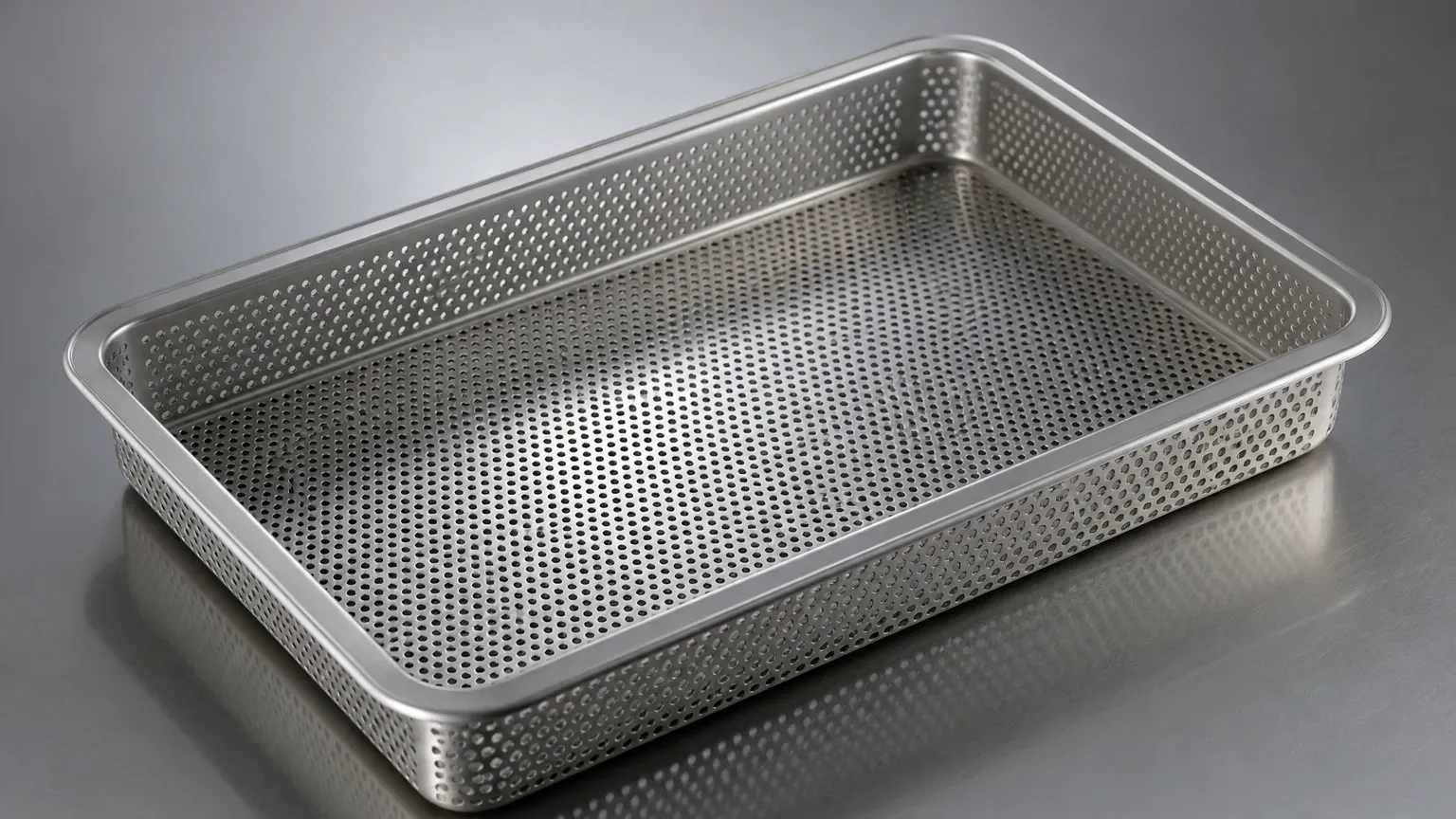
Perforated Metal Tray
In industrial processing, the efficiency of heat transfer, fluid drainage, and material handling often depends on the structural integrity and design of the containers used. A perforated metal tray is a specialized component engineered to facilitate these processes across demanding sectors such as pharmaceutical manufacturing, food processing, and chemical engineering. Unlike solid trays, these perforated units allow for the controlled passage of air, liquids, or fine particles, making them essential for drying, sorting, and filtration applications.
Selecting the right tray requires a deep understanding of material science, mechanical load requirements, and the specific dynamics of the media being processed. For engineers and procurement teams, the choice between different hole patterns, material grades, and fabrication methods directly impacts the longevity of the equipment and the quality of the final product.
Engineering Fundamentals of Perforated Metal Trays
The performance of a perforated metal tray is defined by its geometry and material composition. At its core, the tray is a sheet of metal—typically stainless steel—that has been mechanically punched or laser-cut to create a specific pattern of openings.
Material Selection
In industrial filtration and processing, material durability is non-negotiable. Most high-performance trays are fabricated from stainless steel due to its corrosion resistance and thermal stability.
* SS304: The standard grade for food and beverage applications. It offers excellent formability and resistance to atmospheric corrosion.
* SS316L: Preferred for pharmaceutical and chemical processing. The addition of molybdenum provides superior resistance to chlorides and pitting, which is critical when the tray is exposed to harsh cleaning agents or acidic environments.
* Specialty Alloys: In high-temperature drying or highly corrosive environments, alloys like Monel or Inconel may be utilized, though stainless steel remains the industry benchmark for a balance of cost and performance.
Hole Patterns and Open Area
The "Open Area" is perhaps the most critical technical specification. It refers to the percentage of the tray surface that is comprised of holes versus solid metal. This ratio determines the rate of airflow or drainage.
* Round Holes: The most common and structurally sound pattern. Staggered 60-degree round holes provide the highest strength-to-weight ratio and uniform airflow.
* Square Holes: Often used when a higher open area is required for maximum ventilation, though they may have slightly lower structural rigidity compared to round holes.
* Slotted Holes: Ideal for sorting elongated materials or for applications where specific drainage directions are required.
For technical professionals evaluating Perforated & Expanded Metal options, calculating the open area is vital for ensuring the tray does not become a bottleneck in the production line. A standard formula for a 60-degree staggered round hole pattern is:
`Open Area % = (D² × 90.69) / P²`
*(Where D = Hole Diameter and P = Pitch/Center-to-Center distance)*
The Relationship Between Perforated and Expanded Metal
When designing a tray, engineers must decide between perforated and expanded metal. While both serve similar functions, their manufacturing processes and physical characteristics differ significantly.
Perforated Metal is created by removing material from a solid sheet. This allows for extreme precision in hole size and placement. For filtration applications requiring specific micron-level accuracy or for trays that need a perfectly smooth surface to prevent product adhesion, perforated metal is the superior choice. It maintains a flat profile and is easier to clean, which is a primary requirement in sterile environments.
Expanded Metal, on the other hand, is produced by slitting and stretching the metal simultaneously. This process creates a diamond-shaped mesh without any material waste. Expanded metal trays are often lighter and provide a natural "grip" surface, which can be useful in certain industrial drying racks. However, because the process involves stretching the metal, the resulting surface is often slightly raised, which can make thorough cleaning (Clean-in-Place or CIP) more challenging than with a flat perforated surface.
Industrial Applications and Performance Expectations
Perforated metal trays are utilized in a variety of high-stakes environments where reliability is paramount. Understanding the specific demands of these applications helps in selecting the correct tray configuration.
Pharmaceutical and Biotech
In the pharmaceutical industry, trays are used for drying granules, sterilizing components, and holding vials during autoclaving. These trays must withstand repeated thermal cycling without warping. Furthermore, they must feature burr-free perforations and radius corners to prevent the accumulation of bacteria and ensure compliance with cGMP (Current Good Manufacturing Practice) standards.
Food and Beverage Processing
From dehydrating fruits to smoking meats, perforated trays allow for uniform heat distribution. The open area must be calculated to ensure that air circulates around the product evenly, preventing "cold spots" that could lead to uneven drying or food safety issues. Stainless steel trays are preferred here because they do not leach chemicals into the food and are resistant to organic acids.
Chemical and Industrial Filtration
In chemical plants, perforated trays often serve as supports for finer mesh filters or as primary strainers for large-particle separation. They must be engineered to handle the weight of the filter media and the pressure of the fluid flow. In these cases, the thickness of the metal (gauge) is as important as the perforation pattern to prevent sagging or mechanical failure under load.
Technical Selection Criteria for Engineers
When specifying a perforated metal tray for a project, several engineering factors must be evaluated to ensure the component is fit for purpose.
1. Load-Bearing Capacity
The tray must support the weight of the product without permanent deformation. The strength of the tray is influenced by the material thickness, the size of the holes, and the width of the "bridges" (the solid metal between holes). If a high open area is required for airflow, engineers may need to specify a thicker gauge of metal or add structural reinforcements such as U-profile edges or cross-bars.
2. Surface Finish and Edge Treatment
For many B2B applications, the finish of the tray is not just aesthetic—it is functional.
* Electropolishing: This process removes a microscopic layer of material, resulting in a smooth, mirror-like finish that is highly resistant to corrosion and easy to sterilize.
* Pickling and Passivation: Essential for removing surface contaminants after fabrication, ensuring the protective oxide layer of the stainless steel is intact.
* Safe Edges: Trays should be designed with hemmed or folded edges to eliminate sharp points, protecting both the operators and the integrity of any secondary filter bags or liners used in the process.
3. Drainage and Airflow Efficiency
If the tray is used for drainage, the hole size must be smaller than the product being retained but large enough to prevent surface tension from trapping liquid. For airflow, the pattern should be designed to minimize turbulence, which can be achieved through precise staggered hole alignments.
Customization and OEM Considerations
Off-the-shelf solutions rarely meet the exacting needs of specialized industrial equipment. Customization is often necessary to integrate the tray into existing workflows. Key customization options include:
* Dimensional Precision: Custom lengths, widths, and depths to fit specific drying ovens or conveyor systems.
* Handle Integration: Drop handles, wire handles, or integrated finger grips for ergonomic manual handling.
* Stacking Features: Trays can be designed with nesting features or stacking feet to maximize vertical space in storage or inside processing chambers.
* Variable Perforation Zones: In some cases, a tray may require solid margins or specific areas without holes to provide additional structural support or to direct fluid flow to a specific outlet.
Working with a manufacturer that understands the nuances of Perforated & Expanded Metal allows for the development of OEM components that are optimized for the specific mechanical stresses of the application.
Maintenance and Total Cost of Ownership
While the initial purchase price is a factor, the total cost of ownership (TCO) for a perforated metal tray is determined by its lifespan and ease of maintenance. A cheaply made tray may warp after a few thermal cycles or develop stress cracks around the perforations, leading to frequent replacements and potential product contamination.
Cleaning Protocols
In industries like food and pharma, trays undergo rigorous cleaning. Trays should be designed to be compatible with CIP (Clean-in-Place) or SIP (Sterilize-in-Place) systems. This means avoiding sharp internal corners (using coved corners instead) and ensuring all welds are continuous and ground smooth.
Inspection and Replacement
Regular inspection schedules should check for:
* Planarity: Ensuring the tray remains flat for even processing.
* Integrity of Perforations: Checking for any signs of erosion or clogging that could affect flow rates.
* Weld Points: Inspecting handles and reinforcements for signs of fatigue.
High-quality stainless steel trays, when properly maintained, can last for years in continuous industrial service, providing a much higher return on investment than disposable or lower-grade alternatives.
Procurement Checklist: What to Confirm Before Ordering
Before moving forward with a purchase or a custom fabrication project, engineers and purchasing teams should confirm the following technical details with their supplier:
1. Material Grade: Is SS304 sufficient, or does the environment require SS316L?
2. Hole Specifications: What is the required hole diameter, pitch, and pattern (staggered vs. straight)?
3. Open Area Percentage: Does the design meet the necessary airflow or drainage requirements?
4. Load Requirements: What is the maximum weight the tray will hold, and will it be subjected to vibration or impact?
5. Environmental Factors: What is the operating temperature range and what chemicals will the tray be exposed to?
6. Finishing Requirements: Is electropolishing or passivation required for compliance?
7. Quantity and Lead Times: For OEM projects, how do volume requirements affect production timelines?
By addressing these factors during the design and procurement phase, industrial operators can ensure that their perforated metal trays contribute to a more efficient, reliable, and hygienic production process.
