


Perforated Metal Tube
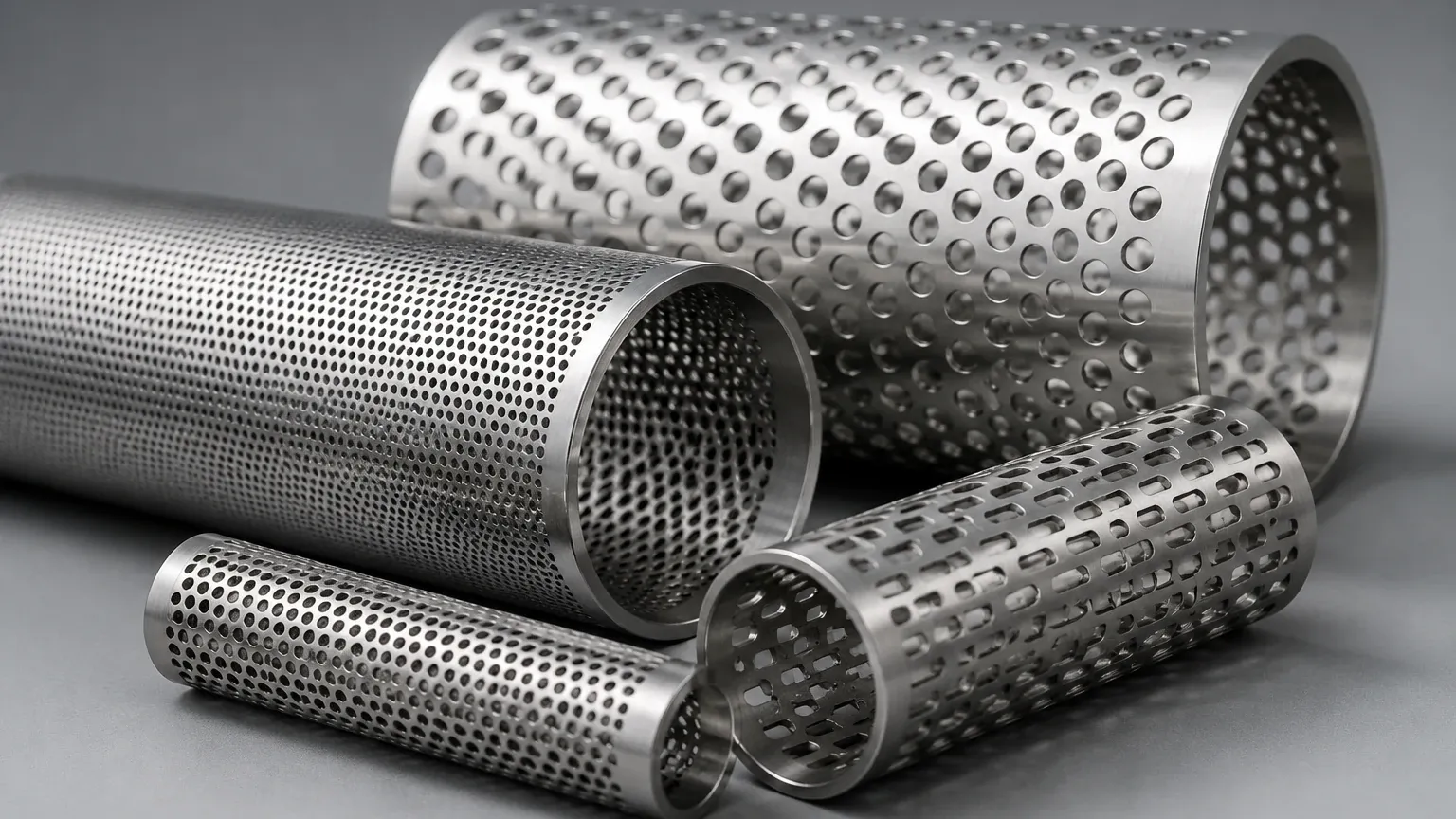
In the landscape of industrial filtration and structural engineering, the perforated metal tube serves as a fundamental component designed to provide both mechanical support and precise fluid management. As a specialized subset of Perforated & Expanded Metal, these tubes are engineered to withstand high-pressure environments while maintaining specific flow characteristics. For engineers and procurement professionals, understanding the technical nuances of tube fabrication, material properties, and hole geometry is essential for optimizing system performance and longevity.
The Role of Perforated Metal Tubes in Industrial Filtration
Perforated metal tubes are rarely standalone components; they typically function as the internal support core or the external protective shroud for complex filtration systems. In high-pressure hydraulic systems or deep-well oil filtration, the primary filter media—such as fine wire mesh or fiber felt—lacks the inherent structural integrity to resist collapsing under differential pressure. The perforated metal tube provides the necessary rigid skeleton.
Beyond structural support, these tubes act as a primary filtration stage in applications involving coarse particles. By selecting specific hole diameters, engineers can ensure that larger debris is captured before it reaches more delicate downstream components. This dual-purpose functionality—structural reinforcement and coarse filtration—makes the perforated metal tube a staple in sectors ranging from petrochemical processing to food and beverage production.
Material Selection and Chemical Compatibility
The performance of a perforated metal tube is heavily dictated by its metallurgy. Because these components often operate in corrosive environments or under extreme temperatures, material selection is the first critical decision in the design process.
Stainless Steel 304 and 316L
Stainless steel is the industry standard for most industrial filtration applications. Grade 304 offers excellent strength and basic corrosion resistance suitable for many food-grade and general industrial uses. However, for applications involving chlorides, high acidity, or pharmaceutical processing, Grade 316L is preferred. The addition of molybdenum in 316L enhances resistance to pitting and crevice corrosion, while the "L" (low carbon) designation ensures better weldability and minimizes carbide precipitation during the manufacturing process.
Specialized Alloys
In highly aggressive chemical environments or high-heat applications, standard stainless steels may fail. In such cases, materials like Duplex stainless steel, Monel, or Inconel are utilized. These alloys provide superior mechanical strength and oxidation resistance, though they come with higher material and machining costs. Engineers must balance the initial capital expenditure against the total cost of ownership, considering that a more durable alloy may significantly extend the replacement cycle.
Engineering Design: Hole Patterns and Open Area Calculations
The efficiency of a perforated metal tube is defined by its "open area," which is the percentage of the tube surface that consists of holes. This metric directly impacts the flow rate and the pressure drop across the filter.
Hole Geometry
While round holes are the most common due to their ease of manufacture and structural uniformity, other patterns like square, rectangular, or bridge slots are available. Round holes are typically arranged in a 60-degree staggered pattern, which maximizes the open area while maintaining the structural integrity of the metal bridge (the space between holes).
Calculating Open Area
For a standard 60-degree staggered round hole pattern, the open area percentage is calculated using the formula:
Open Area % = (D² × 90.69) / P²
Where *D* is the hole diameter and *P* is the pitch (the distance from the center of one hole to the center of the next). Engineers must ensure that the open area is sufficient to prevent excessive flow resistance, but not so high that the tube becomes susceptible to deformation under mechanical load.
Manufacturing Techniques: From Flat Sheet to Precision Tube
The transition from a flat Perforated & Expanded Metal sheet to a finished perforated metal tube involves several high-precision manufacturing steps. Each step must be controlled to ensure the final product meets the tight tolerances required for industrial assembly.
CNC Punching and Perforating
The process begins with CNC-controlled punching machines that create the specified hole pattern on a flat metal sheet or coil. Precision is paramount here; any deviation in the pitch or hole diameter can result in uneven stress distribution once the tube is formed.
Rolling and Forming
The perforated sheet is then rolled into a cylindrical shape. During this stage, the manufacturer must account for the "spring-back" effect of the metal, ensuring the internal diameter (ID) and external diameter (OD) remain within specification. For tubes used as filter cores, the ID tolerance is critical to ensure a snug fit with the filter media.
Welding Methods
The longitudinal or spiral seam of the tube is joined using advanced welding techniques:
* TIG (Tungsten Inert Gas) Welding: Provides a clean, high-quality weld with excellent penetration, ideal for stainless steel.
* Plasma Welding: Offers higher speeds and deeper penetration for thicker-walled tubes.
* Laser Welding: Used for high-precision applications where a narrow heat-affected zone is required to prevent material distortion.
Post-welding, the seams are often ground smooth to eliminate burrs that could damage the filter media or harbor bacterial growth in sanitary applications.
Applications Across Key Industrial Sectors
Perforated metal tubes are versatile components found in numerous high-stakes environments:
* Chemical and Petrochemical: Used in catalyst recovery, gas processing, and as support for high-pressure strainers. Their ability to withstand corrosive chemicals makes them indispensable in refinery operations.
* Food and Beverage: Employed in juice filtration, dairy processing, and brewery equipment. In these sectors, the tubes must feature smooth surface finishes (often electropolished) to meet strict hygiene standards.
* Pharmaceuticals: Used in centrifuge liners and fluid bed dryers. The precision of the perforation ensures that delicate pharmaceutical powders are processed without contamination.
* Hydraulics and Power Generation: Acting as the core for oil filters, these tubes prevent the collapse of the filter element during cold starts or high-pressure surges in hydraulic circuits.
* Water Treatment: Used in intake screens and desalination pre-filtration to protect downstream membranes from large debris.
Selection Guide: Key Factors for Engineering Procurement
When specifying a perforated metal tube for an industrial project, engineers should confirm several critical parameters with the manufacturer to avoid performance failures or installation issues.
1. Wall Thickness: The thickness of the metal must be sufficient to handle the maximum expected differential pressure. Thicker walls provide more strength but reduce the available open area for a given hole size.
2. End Configurations: Tubes can be supplied with plain ends, flanged ends, or custom threaded fittings. It is also common to request "margins" (unperforated areas) at the ends of the tube to facilitate easier welding into a larger assembly.
3. Surface Finish: Depending on the application, the tube may require pickling and passivation (to restore corrosion resistance after welding), sandblasting, or electropolishing (for a mirror-like, sanitary finish).
4. Burr Removal: In filtration, internal or external burrs can tear the filter mesh. Specifying the direction of the punch and the requirement for de-burring is essential for the protection of secondary filter layers.
5. Tolerances: Clearly define the allowable deviation for the OD, ID, length, and straightness. In automated assembly lines, even a minor deviation can lead to significant downtime.
Maintenance and Durability in Demanding Environments
The lifespan of a perforated metal tube is influenced by its operating conditions and maintenance protocols. In systems where the tube acts as a primary filter, regular cleaning—via backwashing, ultrasonic cleaning, or chemical soaking—is necessary to prevent blinding (clogging of the holes).
Because stainless steel perforated tubes are highly durable, they often outlast the finer filter media they support. However, they should be inspected during every filter change for signs of erosion, stress corrosion cracking, or mechanical deformation. If the tube shows signs of "necking" or bulging, it indicates that the system pressures are exceeding the design limits, and a thicker-walled or higher-alloy replacement may be required.
By focusing on precision engineering and material integrity, manufacturers like Kaifil provide the essential components that keep industrial processes running efficiently. Whether used as a simple strainer or a complex structural core, the perforated metal tube remains a cornerstone of modern industrial filtration technology.
