


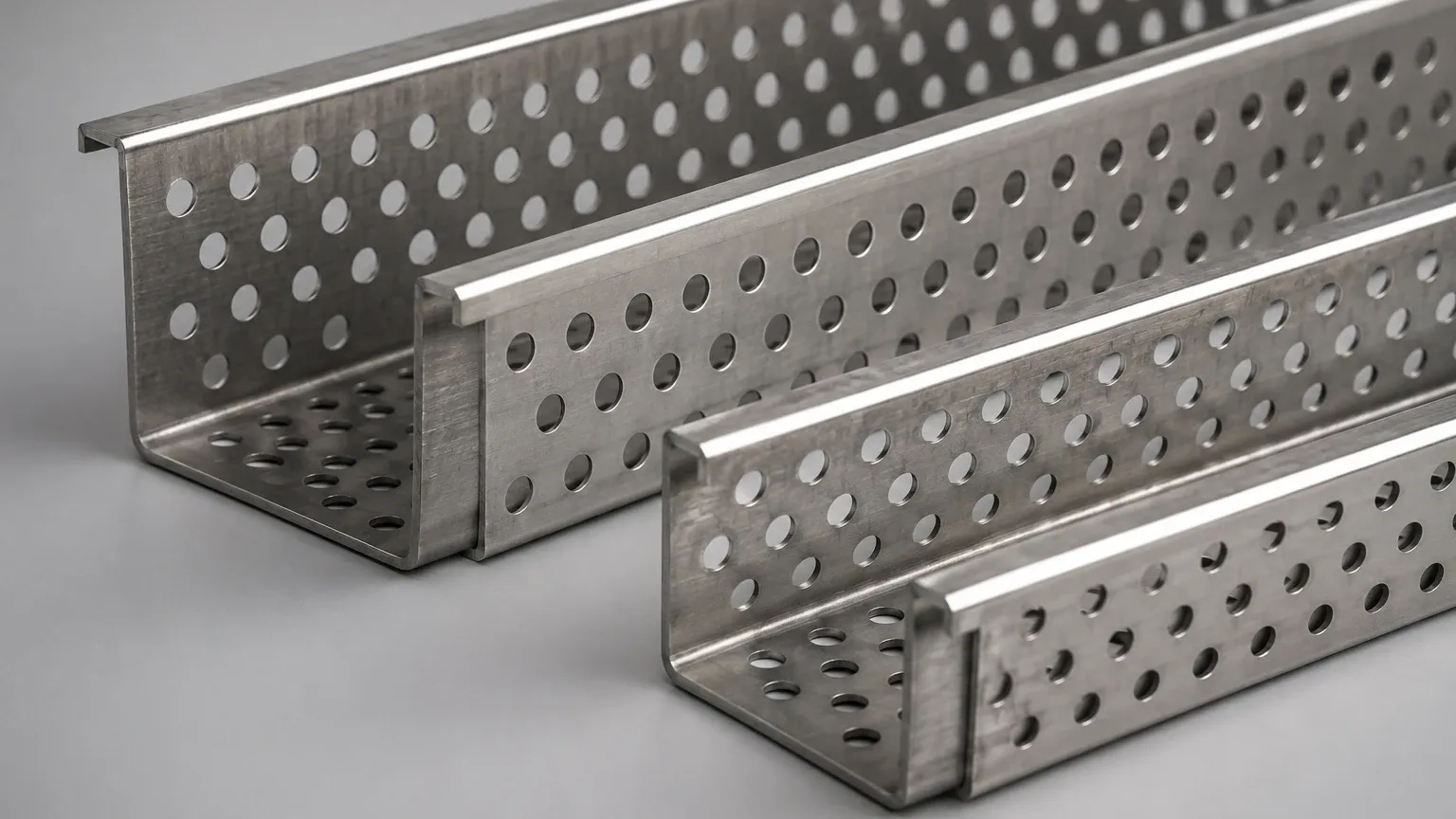
Perforated Metal U Channel
In industrial engineering and filtration system design, the requirement for structural integrity often intersects with the need for fluid or airflow. The perforated metal u channel is a specialized component designed to bridge this gap, offering the rigid support of a structural profile alongside the functional permeability of perforated sheet metal. These components are essential in environments where equipment must withstand mechanical stress while facilitating ventilation, drainage, or filtration.
As a manufacturer specializing in stainless steel filtration solutions, Kaifil provides precision-engineered Perforated & Expanded Metal products tailored to demanding industrial applications. Understanding the technical nuances of U-channel profiles—ranging from material selection to hole pattern geometry—is critical for engineers and purchasing teams looking to optimize system performance and longevity.
Understanding the Perforated Metal U Channel Profile
A perforated metal u channel consists of a base and two vertical legs, forming a "U" shape, where one or more surfaces are perforated with a specific pattern of holes. Unlike standard solid U-channels used purely for structural framing, the perforated version is engineered for multi-functional roles.
The primary advantage of the U-profile is its high strength-to-weight ratio. The vertical legs provide significant resistance to bending and torsion, making it an ideal choice for framing wire mesh filters, supporting heavy filtration media, or acting as a protective guard for sensitive machinery. When manufactured from high-quality stainless steel, these channels offer the durability required for chemical processing, food production, and water treatment facilities.
Material Selection: The Importance of Stainless Steel
For most industrial B2B applications, material selection is the most critical factor in determining the service life of a perforated metal u channel. While carbon steel or aluminum may be suitable for light-duty architectural use, industrial filtration and processing environments typically demand the superior properties of stainless steel.
304 Stainless Steel
Grade 304 is the most common choice for general industrial applications. It provides excellent corrosion resistance and is highly formable, allowing for precise U-channel bending without compromising the integrity of the perforated pattern. It is widely used in ventilation systems and machinery guards where exposure to harsh chemicals is limited.
316L Stainless Steel
In environments involving high salinity, acidic chemical processing, or pharmaceutical manufacturing, 316L stainless steel is the industry standard. The addition of molybdenum enhances resistance to pitting and crevice corrosion. For filtration systems handling corrosive fluids, using 316L for the perforated metal u channel ensures that the structural frame does not degrade faster than the filter media itself.
Technical Specifications: Hole Patterns and Open Area
The performance of a perforated metal u channel is largely dictated by its hole configuration. Engineers must balance the need for structural rigidity with the required "open area" for flow.
Round Hole Patterns
Round holes are the most popular configuration due to their versatility and ease of manufacturing. They offer a consistent distribution of stress across the metal surface.
* Staggered 60-Degree Pattern: This is the most efficient layout, providing the maximum open area while maintaining the highest possible strength. It is frequently used in high-pressure filtration supports.
* Straight Row Pattern: Used primarily when specific alignment is required for aesthetic or secondary assembly purposes, though it offers less structural stability than staggered patterns.
Square and Slotted Holes
Square holes provide a higher open area percentage, which is beneficial for high-volume airflow or drainage. Slotted holes are often utilized in screening applications where the shape of the particles or the direction of the fluid flow requires a specific orientation.
Calculating Open Area
The open area percentage is the ratio of the total area of the holes to the total area of the sheet. For a perforated metal u channel, this calculation must account for the solid margins near the bends. Excessive open area can lead to "webbing" failure or deformation during the U-bending process, so it is vital to consult with a manufacturer like Kaifil to ensure the design remains structurally sound.
Manufacturing Processes and Engineering Constraints
Producing a high-quality perforated metal u channel involves two primary stages: precision perforating and secondary forming. Each stage introduces specific engineering constraints that must be managed to ensure a flush fit and reliable performance.
Precision Perforating
The process begins with a flat sheet or coil. Using CNC punching or high-speed rotary dies, the pattern is applied. It is critical to maintain "safe margins"—areas of solid metal where the bends will occur. Perforating too close to a bend line can cause the holes to distort or the metal to crack during the forming stage.
U-Channel Forming (Bending)
After perforating, the metal is fed into a press brake or roll-forming machine to create the U-profile. The bend radius must be carefully calculated based on the material thickness and the hole proximity. For stainless steel, spring-back must also be accounted for to ensure the legs of the U-channel remain at the specified angle (usually 90 degrees).
Edge Treatment and Deburring
In industrial filtration, burrs can trap contaminants or damage delicate filter mesh. A professional manufacturing process includes deburring and, if necessary, pickling or passivating the stainless steel to restore the protective oxide layer after fabrication.
Key Applications in Industrial Filtration and Beyond
The versatility of the perforated metal u channel makes it a staple in various sectors. Its role often extends beyond simple support to becoming a functional part of the filtration or protection process.
1. Filter Element Framing: In large-scale industrial filters, U-channels are used to encase the edges of pleated wire mesh or expanded metal. This provides a rigid border that allows the filter to be slid into housings without damaging the media.
2. Machinery Guarding: In food and beverage plants, perforated U-channels are used to create guards that allow for washdown and ventilation while preventing operator contact with moving parts.
3. Cable Management in Corrosive Environments: In chemical plants, these channels provide a ventilated, corrosion-resistant path for electrical cabling, preventing heat buildup and chemical entrapment.
4. Architectural and Industrial Screening: They serve as robust frames for acoustic panels or security screens, where both airflow and physical barrier strength are required.
Selection Criteria: What Engineers Should Confirm
When specifying a perforated metal u channel for a project, several technical parameters must be documented to ensure the final product meets the application's demands:
* Material Grade: Specify 304, 316L, or other alloys based on the chemical environment.
* Dimensions: Define the base width, leg height, and total length.
* Material Thickness (Gauge): Thicker gauges provide more strength but require larger bend radii.
* Hole Size and Pitch: Determine the diameter of the holes and the distance between their centers.
* Margin Requirements: Clearly define the solid (unperforated) areas, especially along the bend lines and ends of the channel.
* Finish Requirements: Specify if the part requires electropolishing, passivation, or powder coating.
Common Risks and Quality Control
Failure to account for the physical limits of metal forming can lead to several common issues in perforated U-channels. One major risk is "oil canning," where the base of the U-channel bows due to internal stresses from the perforation process. This is mitigated by professional leveling and tensioning of the metal before forming.
Another risk is hole deformation. If the holes are too large or too close to the bend, they will become oval-shaped, which can affect the flow characteristics and aesthetic of the component. Working with a specialized manufacturer ensures that these tolerances are calculated during the design phase, preventing costly rework or system failure.
Customization and OEM Solutions with Kaifil
Every industrial environment presents unique challenges, from specific micron-level filtration requirements to extreme mechanical loads. Standard off-the-shelf profiles rarely suffice for specialized B2B applications. Kaifil specializes in providing customized filtration components, including bespoke perforated metal u channel designs that integrate seamlessly into existing systems.
By collaborating with an experienced manufacturer, engineers can access technical guidance on material compatibility, optimized hole patterns for specific flow rates, and precision fabrication that meets ISO standards. Whether you are designing a new hydraulic filtration system or upgrading a chemical processing line, the right U-channel configuration is a fundamental building block for a reliable, high-performance solution.
For detailed specifications on available patterns, material thicknesses, and custom fabrication capabilities, engineers and procurement professionals are encouraged to consult with technical experts to ensure all structural and filtration requirements are met.
