


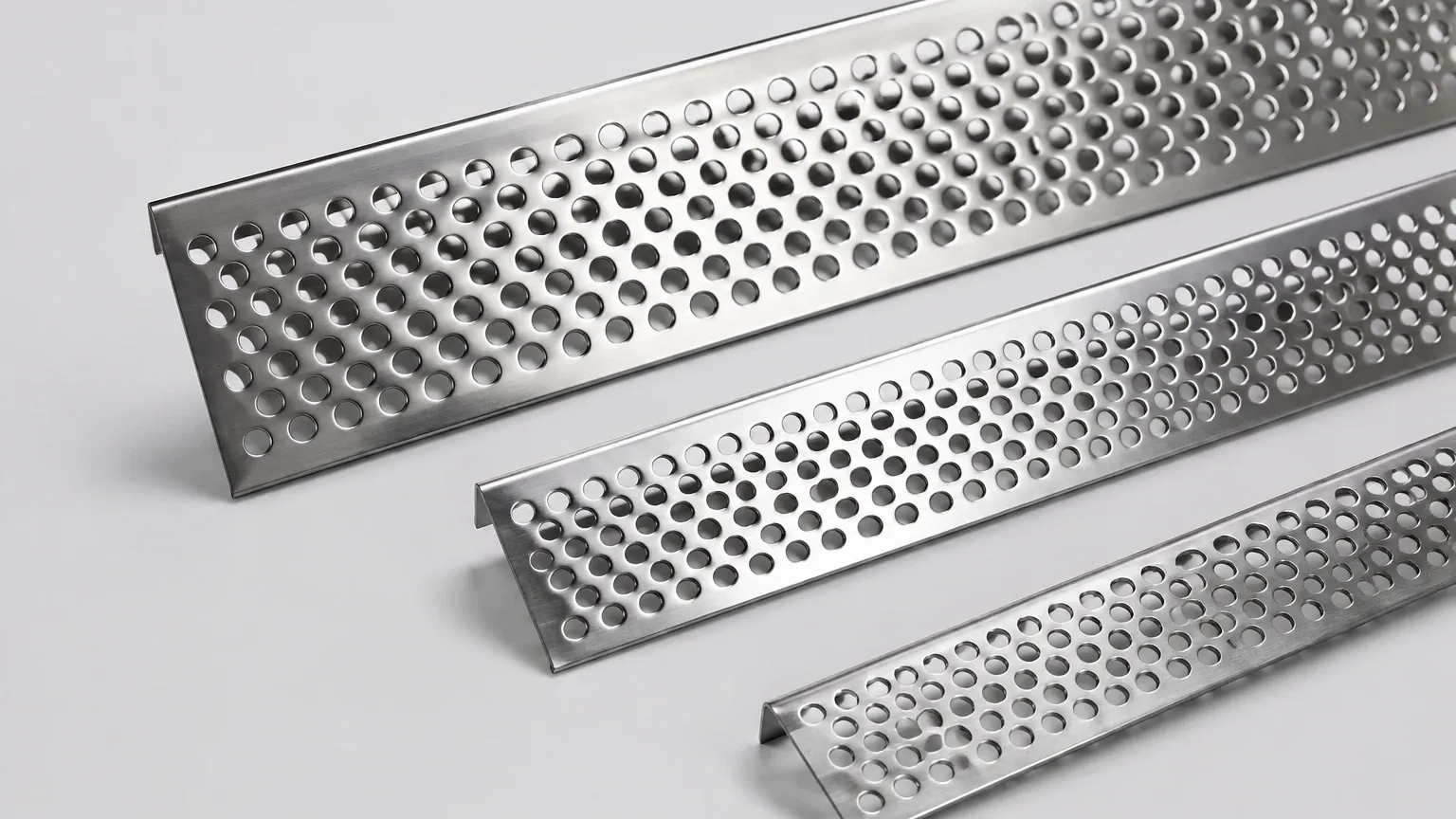
Perforated Metal Vent Strip
In industrial engineering and facility management, the management of airflow, heat dissipation, and particulate exclusion is a critical design requirement. The perforated metal vent strip serves as a fundamental component in achieving these objectives, providing a structured medium that allows for gas exchange while maintaining physical barriers against debris, pests, or unauthorized access. As a specialized subset of Perforated & Expanded Metal, these strips are engineered to meet precise specifications regarding open area, structural rigidity, and environmental resistance.
For engineers and procurement professionals, selecting the appropriate vent strip involves more than simply choosing a hole pattern. It requires a deep understanding of fluid dynamics, material science, and the specific stressors of the application environment. Whether used in high-voltage electrical enclosures, chemical processing vents, or food-grade drying systems, the performance of a perforated metal vent strip is dictated by its geometric configuration and material composition.
Engineering Fundamentals: The Role of Open Area and Airflow
The primary function of a perforated metal vent strip is to facilitate ventilation. The most critical metric in its design is the "Open Area" percentage. This value determines the volume of air that can pass through the strip at a given pressure. In industrial applications, a common challenge is balancing the need for high airflow with the requirement for structural strength.
To calculate the open area of a perforated strip with a staggered round hole pattern, engineers use the formula:
OA% = (d² × 90.69) / p²
Where *d* is the hole diameter and *p* is the center-to-center pitch. A higher open area reduces the pressure drop across the vent, which is essential for passive cooling systems. However, as the open area increases, the "bridge" (the metal remaining between the holes) narrows, potentially compromising the strip's ability to withstand mechanical impact or vibration. For most industrial vent strips, an open area between 40% and 60% provides an optimal balance between ventilation efficiency and physical durability.
Material Selection for Corrosive and High-Temperature Environments
Industrial environments often expose filtration and ventilation components to harsh conditions, including moisture, chemical vapors, and extreme temperatures. Consequently, material selection is the first line of defense against premature failure. While aluminum and galvanized steel are used in light-duty commercial applications, industrial-grade perforated metal vent strips typically utilize stainless steel.
Stainless Steel 304
Grade 304 is the standard choice for most indoor and general outdoor industrial applications. It offers excellent corrosion resistance to most oxidizing acids and is highly durable. In environments where moisture is present but chemical exposure is limited—such as standard HVAC systems or machinery guards—SS304 provides a cost-effective solution with a long service life.
Stainless Steel 316
For more demanding environments, such as chemical processing plants, marine applications, or pharmaceutical cleanrooms, Stainless Steel 316 is required. The addition of molybdenum in SS316 enhances resistance to chloride-induced pitting and crevice corrosion. When a perforated metal vent strip is installed in a facility that uses aggressive cleaning agents or is located near coastal areas, SS316 ensures that the vent does not become a point of structural failure due to oxidation.
Geometric Configurations: Hole Patterns and Their Impact
The geometry of the perforations in a vent strip influences both the airflow characteristics and the filtration capability of the component. While many patterns exist within the broader category of Perforated & Expanded Metal, three patterns are most prevalent in vent strip design:
1. Round Holes (Staggered): This is the most common configuration. The 60-degree staggered pattern provides the highest strength-to-weight ratio and uniform airflow. It is the standard for most industrial enclosures.
2. Square Holes: Square perforations offer a higher open area than round holes of the same width. They are often selected when maximum airflow is required, though they may have slightly lower structural integrity under heavy loads.
3. Slotted Holes: Slotted or oblong perforations are frequently used in applications involving the movement of granular materials or where specific directional airflow is desired. In a perforated metal vent strip, slots can help prevent the accumulation of dust or liquids on the surface.
Beyond the pattern, the "margin"—the unperforated area along the edges of the strip—is a vital consideration for installation. Custom-manufactured strips allow for precise margins that facilitate welding, bolting, or sliding the strip into a frame without interfering with the hole pattern.
Industrial Applications and Integration
Perforated metal vent strips are integrated into a wide array of industrial systems, each with unique performance requirements. Understanding these applications helps in specifying the correct tolerances and finishes.
Electrical and Control Enclosures
In power distribution and automation, heat is a byproduct of operation. Vent strips are installed at the top and bottom of enclosures to create a chimney effect, allowing hot air to escape while preventing the entry of insects or large debris. Here, the precision of the hole size is critical to meet NEMA or IP rating requirements for safety.
HVAC and Air Handling Units
In large-scale climate control systems, vent strips act as pre-filters and diffusers. They normalize the airflow entering the system and protect sensitive internal components from mechanical damage. The use of stainless steel in these strips prevents the rust-related contamination of the air supply.
Food and Pharmaceutical Processing
In these sectors, hygiene is paramount. Perforated metal vent strips used in drying racks or cleanroom ventilation must have smooth, burr-free edges and surfaces. This prevents the entrapment of particles and allows for thorough CIP (Clean-in-Place) or SIP (Sterilize-in-Place) procedures. Electropolishing is often applied to these strips to achieve a mirror-like finish that resists bacterial growth.
Customization and Manufacturing Precision
Off-the-shelf ventilation components rarely meet the specific needs of complex industrial projects. Custom manufacturing of a perforated metal vent strip allows for the optimization of every variable, from the gauge of the metal to the specific hole arrangement.
Kaifil specializes in providing tailored solutions that address the nuances of industrial filtration and ventilation. Our manufacturing process involves precision CNC punching or laser cutting to ensure that every strip meets tight dimensional tolerances. This is particularly important for OEM applications where the vent strip must fit perfectly into a pre-designed assembly.
Customization options include:
* Variable Gauges: Selecting the thickness (from thin foils to heavy plates) based on the required mechanical strength.
* Specialty Finishes: Including powder coating for color-coding, pickling and passivation for enhanced corrosion resistance, or deburring for safety and hygiene.
* Forming and Shaping: Strips can be supplied flat, coiled, or formed into specific profiles (such as L-shapes or U-channels) to simplify the final assembly process.
Selection Criteria: Questions for Engineers and Purchasing Teams
Before finalizing a specification for a perforated metal vent strip, technical teams should evaluate the following factors to ensure the total cost of ownership is optimized:
1. What is the required airflow (CFM)? This will dictate the necessary open area percentage.
2. What size particles must be excluded? The hole diameter must be smaller than the minimum particle size that could damage internal components.
3. Will the strip be exposed to moisture or chemicals? This determines whether SS304, SS316, or a specialized coating is required.
4. What are the mounting requirements? Specifying the exact margins and any mounting holes during the manufacturing phase reduces labor costs during installation.
5. What is the expected vibration load? Thicker gauges or specific hole patterns may be necessary to prevent fatigue cracking in high-vibration environments like engine rooms or heavy machinery.
Maintenance and Longevity of Metal Vent Strips
One of the primary advantages of utilizing stainless steel Perforated & Expanded Metal for ventilation is its low maintenance requirement compared to plastic or mesh alternatives. However, to maintain peak performance, a regular inspection and cleaning schedule should be implemented.
In environments with high dust or oil mist, the perforations can become partially blocked, increasing the pressure drop and reducing cooling efficiency. Cleaning can typically be performed using compressed air, high-pressure water, or mild detergents. Because the strips are made of rigid metal, they do not sag or tear during cleaning, ensuring that the airflow characteristics remain consistent over the life of the equipment.
When a perforated metal vent strip eventually reaches the end of its service life—often after decades of use—it is 100% recyclable, aligning with modern industrial sustainability goals. By choosing high-quality materials and precise manufacturing at the outset, facilities can significantly reduce the frequency of replacements and the risk of system overheating.
Conclusion
The perforated metal vent strip is a deceptively simple component that performs a vital role in industrial infrastructure. By focusing on technical specifications such as open area, material grade, and hole geometry, engineers can ensure that their systems operate efficiently and reliably. As a dedicated manufacturer of custom filtration and metal components, Kaifil provides the technical expertise and production capabilities necessary to deliver high-performance ventilation solutions tailored to the most demanding industrial applications.
