


Perforated Metal Weight
In industrial engineering and filtration design, the physical properties of materials dictate the efficiency, safety, and longevity of the final system. Among these properties, perforated metal weight is a critical variable that influences everything from structural load calculations to shipping logistics and material costs. Understanding how to accurately calculate and evaluate the weight of Perforated & Expanded Metal components is essential for engineers and procurement teams who must balance filtration performance with mechanical stability.
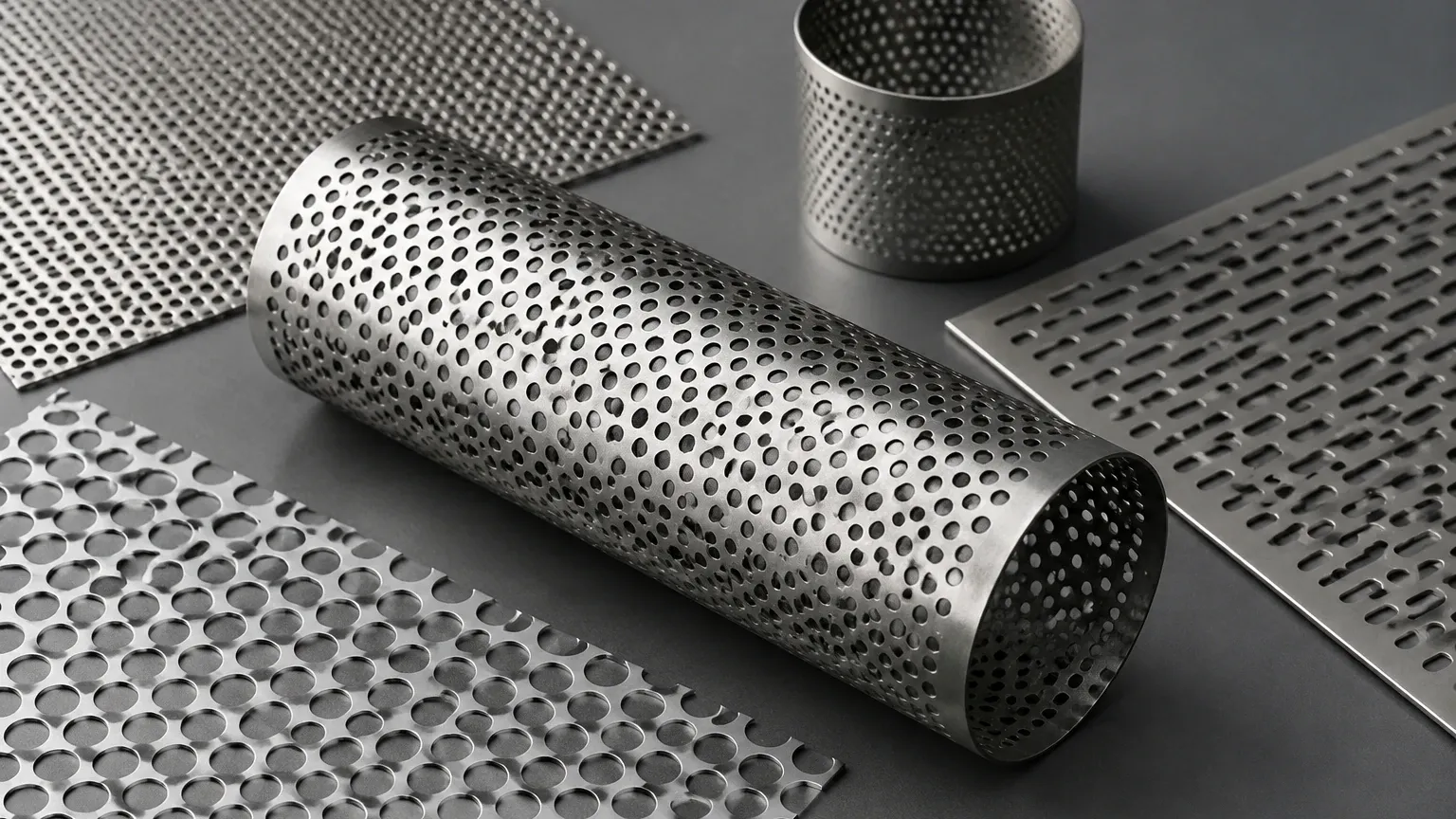
Perforated metal is created by punching a series of holes into a solid metal sheet. This process removes material, thereby reducing the overall weight of the sheet while introducing specific functional characteristics, such as permeability and acoustic dampening. However, the resulting weight is not merely a fraction of the original; it is a precisely calculated value based on the material's density, the geometric pattern of the perforations, and the dimensions of the unperforated margins.
The Importance of Weight in Industrial Filtration and Design
Weight is rarely a standalone metric in B2B industrial applications; it is inextricably linked to the performance and cost-effectiveness of a project. For engineers designing filtration housings or support structures, the weight of the internal components affects the total static and dynamic load of the system.
Structural Integrity and Support
In high-pressure hydraulic or chemical processing environments, perforated metal often serves as a support core for finer wire mesh filters. If the perforated metal weight is too low due to excessive open area or insufficient gauge thickness, the component may succumb to mechanical fatigue or collapse under pressure. Conversely, an unnecessarily heavy component increases the weight of the entire assembly, potentially requiring more robust (and expensive) mounting hardware and support frames.
Logistics and Handling
From a procurement perspective, perforated metal weight directly impacts the total cost of ownership. Shipping costs for bulk industrial components are often calculated by weight. Furthermore, on-site installation requires manual or mechanical handling; knowing the exact weight of perforated panels or cylindrical cartridges ensures that safety protocols and lifting equipment are appropriately rated.
Material Efficiency
In large-scale manufacturing, even a small discrepancy in weight per unit can lead to significant variations in total material usage. By optimizing the weight through precise perforation patterns, manufacturers can reduce waste and align with sustainability goals without compromising the functional requirements of the filtration media.
Fundamental Principles of Perforated Metal Weight Calculation
To determine the weight of a perforated sheet, one must first establish the weight of the solid sheet before the punching process. The weight of a solid metal sheet is calculated using the following formula:
Solid Weight = Length (m) × Width (m) × Thickness (mm) × Density (kg/m³)
Common material densities used in industrial filtration include:
* Stainless Steel 304: Approximately 7,930 kg/m³
* Stainless Steel 316: Approximately 7,980 kg/m³
* Carbon Steel: Approximately 7,850 kg/m³
* Aluminum: Approximately 2,710 kg/m³
Once the solid weight is determined, the perforated metal weight is calculated by accounting for the material removed during perforation. This is expressed as:
Perforated Weight = Solid Weight × (1 – Percentage of Open Area)
This formula assumes that the entire sheet is perforated. In practical applications, however, sheets often feature unperforated margins (borders) for welding or structural mounting. In such cases, the weight of the margins must be added back to the weight of the perforated section to reach the final total weight.
Determining the Percentage of Open Area
The "Percentage of Open Area" is the ratio of the area of the holes to the total area of the sheet. This is the most influential factor in determining perforated metal weight. The calculation varies depending on the hole shape and the arrangement (pattern) of the holes.
Round Holes, 60-Degree Staggered Pattern
This is the most common pattern in industrial filtration because it offers the best balance of strength and open area. The formula for the percentage of open area is:
% Open Area = (D² × 90.69) / P²
Where:
* D = Hole diameter
* P = Center-to-center pitch (the distance between the centers of two adjacent holes)
Round Holes, Straight Line Pattern
In a straight line or square pattern, the holes are aligned both horizontally and vertically. The formula is:
% Open Area = (D² × 78.5) / P²
Because the holes are not nested as tightly as in a staggered pattern, the open area is generally lower for the same hole diameter and pitch, resulting in a higher perforated metal weight compared to staggered arrangements.
Square Holes, Straight Pattern
Square holes provide a high open area but can lead to stress concentrations at the corners. The formula is:
% Open Area = (S² × 100) / P²
Where S is the side length of the square hole. Due to the high percentage of material removed, square hole patterns often result in the lowest weight per square meter, which must be carefully balanced against the required structural rigidity.
Material Selection and Its Impact on Total Weight
While the perforation pattern dictates how much material is removed, the base material determines the starting weight. In the context of Kaifil’s custom filtration solutions, material selection is driven by chemical compatibility and temperature resistance, but weight remains a secondary engineering constraint.
Stainless Steel Alloys
Stainless steel is the standard for industrial filtration due to its corrosion resistance. While SS304 and SS316 have similar densities, the choice between them is usually based on the environment (e.g., chloride exposure). The weight remains relatively constant between these grades, but the mechanical strength allows for thinner gauges in some applications, which can effectively reduce the total weight without losing performance.
Specialty Alloys and Carbon Steel
For high-temperature or highly corrosive environments, alloys like Monel, Inconel, or Hastelloy may be used. These materials often have higher densities than standard stainless steel. For instance, some nickel-based alloys have densities exceeding 8,400 kg/m³, which significantly increases the perforated metal weight even if the open area remains high. Carbon steel is a cost-effective alternative for non-corrosive environments, with a density slightly lower than stainless steel.
Aluminum
When weight reduction is the primary design goal—such as in mobile industrial equipment or aerospace filtration—aluminum is the preferred choice. With a density roughly one-third that of steel, aluminum perforated metal offers a high strength-to-weight ratio, though it may require thicker gauges to match the structural performance of steel.
Engineering Trade-offs: Weight vs. Structural Integrity
In the design of industrial filters and screens, engineers must navigate the "Weight-Strength-Permeability" triangle. Increasing the open area reduces the perforated metal weight and decreases pressure drop (improving flow), but it also reduces the mechanical strength of the sheet.
The Role of Sheet Thickness (Gauge)
Thickness is a linear multiplier in the weight formula. Doubling the thickness doubles the weight. However, thickness also significantly increases the moment of inertia and the resistance to bending. In many filtration applications, a thinner sheet with a smaller open area may provide the same structural integrity as a thicker sheet with a larger open area, but at a lower total weight. This optimization is a key part of the technical support provided during the design phase.
Margin Considerations
Margins are the solid areas around the perimeter of a perforated sheet. They are essential for welding the sheet into a filter cartridge or bolting it into a frame. For a standard 1000mm x 2000mm sheet, a 20mm solid margin on all sides can add a noticeable amount of weight. Engineers must specify these margins accurately in their technical drawings to ensure that the final perforated metal weight aligns with the calculated load-bearing requirements of the assembly.
Practical Considerations for Procurement and Logistics
For purchasing departments, understanding perforated metal weight is vital for verifying quotes and managing supply chain expectations.
Verifying Material Specifications
When receiving a shipment of perforated metal, weighing a sample is a quick way to verify that the material matches the specified gauge and material grade. If the measured weight is significantly lower than the calculated weight, it may indicate that the material is thinner than specified (under-gauge) or that the alloy density is incorrect.
Calculating Shipping Costs
Industrial filtration projects often involve hundreds or thousands of filter components. Accurate weight calculations allow logistics teams to determine whether a shipment requires LTL (Less Than Truckload) or FTL (Full Truckload) shipping. For international orders, weight is a primary factor in air freight costs, making weight optimization an economic necessity.
Packaging and Storage
High-density perforated metal products require specialized packaging to prevent deformation during transit. The weight of the stacked sheets determines the type of pallets or crates required. Furthermore, floor load limits in warehouses must be respected when storing large quantities of stainless steel perforated components.
Customization and Technical Support from Kaifil
At Kaifil, we recognize that every industrial application has unique requirements. Whether you are designing a custom wire mesh filter support or a large-scale industrial screen, the precision of your perforated metal weight calculations is paramount to the project's success.
Our manufacturing capabilities allow for a wide range of customizations, including:
* Variable Hole Patterns: We can adjust hole diameters and pitches to achieve the exact open area required for your flow rate and weight targets.
* Custom Margins: Precise control over unperforated areas ensures ease of integration into your existing systems.
* Material Expertise: We work with a variety of stainless steel grades and specialty metals to meet specific environmental and weight constraints.
* Precision Manufacturing: Our advanced punching equipment ensures consistent gauge thickness and hole geometry, leading to predictable and reliable weight specifications across large production runs.
When selecting a partner for industrial filtration components, it is important to look beyond basic dimensions. A deep understanding of the mechanical and physical properties of Perforated & Expanded Metal ensures that the final product will perform as expected in the most demanding environments. By considering perforated metal weight early in the design phase, engineers can optimize for performance, cost, and durability, ensuring a superior filtration solution.
