


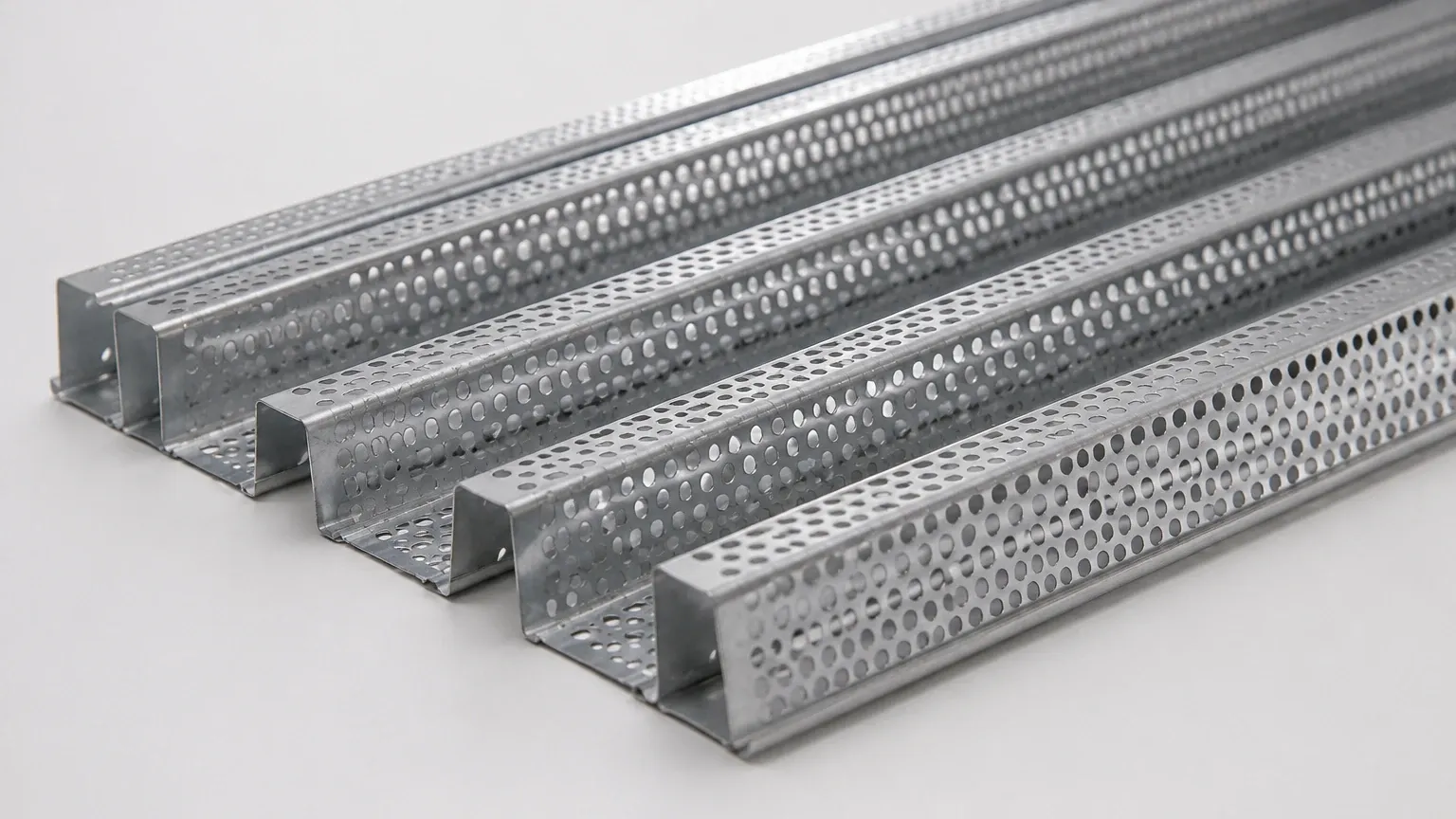
Metal Deck (perforated Channels 75mm Batts)
In industrial architecture and heavy-duty facility design, the integration of structural integrity with environmental control is a primary engineering challenge. The use of a metal deck (perforated channels 75mm batts) system represents a sophisticated solution for managing acoustic energy, thermal insulation, and structural decking requirements simultaneously. These systems rely heavily on the precision of the metal components to ensure that the functional requirements of the building—whether it is a chemical processing plant, a power generation facility, or a high-traffic warehouse—are met without compromising durability.
For engineers and procurement teams, understanding the technical nuances of Perforated & Expanded Metal within these decking systems is essential. This article examines the engineering specifications, material considerations, and performance metrics associated with perforated metal channels used in conjunction with 75mm insulation batts.
The Engineering Logic of Perforated Channels
The primary function of the perforated channel in a metal deck system is to provide a path for sound waves to enter the core of the deck assembly where they can be dissipated. Unlike solid metal decking, which reflects sound and contributes to high reverberation times in industrial spaces, perforated metal allows for high-performance acoustic attenuation.
Open Area and Perforation Patterns
The efficiency of a perforated channel is largely determined by its "open area" percentage. This is the ratio of the area of the holes to the total area of the sheet. For industrial acoustic applications, an open area between 20% and 40% is typically specified.
* Hole Geometry: Round holes are the industry standard due to their structural stability and ease of manufacturing. However, staggered patterns (usually 60-degree orientation) are preferred over straight rows because they maintain higher material strength while providing uniform open area.
* Hole Diameter and Pitch: In systems utilizing 75mm batts, the hole diameter usually ranges from 3mm to 5mm. If the holes are too large, the insulation material (the batts) may sag or migrate through the openings; if they are too small, the acoustic transparency is reduced, and the system may become prone to clogging in dusty environments.
Integration with 75mm Insulation Batts
The "75mm batts" component refers to the fibrous insulation material—typically mineral wool or high-density fiberglass—inserted into the troughs or channels of the metal deck. The 75mm thickness is a standard specification chosen to balance thermal resistance (R-value) and sound absorption (Noise Reduction Coefficient, or NRC).
Acoustic Absorption Mechanism
When sound waves strike the metal deck (perforated channels 75mm batts), they pass through the perforations. The 75mm batts act as a porous medium where the kinetic energy of the air molecules is converted into low-grade heat through friction against the fibers. This process significantly reduces the overall noise level within the facility. For engineers, it is vital to ensure that the density of the 75mm batts is compatible with the perforation pattern to achieve the desired NRC rating, which often exceeds 0.80 in these configurations.
Thermal and Fire Performance
Beyond acoustics, the 75mm batts provide critical thermal insulation. In industrial settings where temperature control is necessary for chemical stability or equipment longevity, the thermal break provided by the decking system is essential. Furthermore, using non-combustible mineral wool batts in the perforated channels enhances the fire rating of the assembly, a key requirement for compliance with industrial building codes.
Material Selection for Industrial Environments
Selecting the correct alloy for the perforated metal is a decision that impacts the total cost of ownership and the lifespan of the structure. While carbon steel is common, specialized industrial environments often require stainless steel solutions.
Stainless Steel vs. Galvanized Steel
* Stainless Steel (304/316): In facilities involving chemical processing, food and beverage production, or pharmaceutical manufacturing, corrosion resistance is non-negotiable. Stainless steel perforated channels prevent rust and material degradation that could otherwise contaminate the environment or lead to structural failure. Grade 316 is specifically recommended for environments with high chloride exposure.
* Galvanized Steel: Suitable for standard dry warehouses or commercial applications where moisture and corrosive vapors are not present. However, the perforation process exposes raw steel edges, which may require post-production galvanization or coating to prevent edge creep corrosion.
Gauge and Structural Integrity
The thickness (gauge) of the metal must be calculated based on the span between structural supports and the expected live/dead loads. Perforating a metal sheet inherently reduces its load-bearing capacity. Engineers must compensate for this by either increasing the material thickness or optimizing the channel profile (the rib height and width). Typically, industrial perforated channels utilize 18-gauge to 22-gauge steel to maintain the necessary rigidity.
Customization and OEM Capabilities
Every industrial project has unique constraints, ranging from specific acoustic targets to unconventional structural spans. Customization is often required to ensure the metal deck (perforated channels 75mm batts) system performs as intended.
At Kaifil, we specialize in the manufacturing of precision metal components, including customized Perforated & Expanded Metal solutions. Our engineering team works with clients to determine the optimal hole pattern, material grade, and channel dimensions to match the specific requirements of their 75mm batt systems. Whether the application requires high-precision filtration or structural acoustic decking, the focus remains on durability and exactness in manufacturing.
Installation and Maintenance Considerations
Proper installation is critical to the performance of the perforated deck system. If the 75mm batts are compressed during installation, their acoustic and thermal properties will be significantly diminished.
Key Installation Steps:
1. Alignment: Ensure that the perforated channels are aligned correctly to prevent gaps where sound or heat could bypass the insulation.
2. Vapor Barriers: In high-humidity environments, a vapor-permeable membrane may be placed between the perforated metal and the batts to prevent moisture accumulation within the insulation while still allowing sound waves to pass.
3. Fastening: Use fasteners that are compatible with the deck material (e.g., stainless steel screws for stainless steel decks) to prevent galvanic corrosion.
Long-Term Maintenance
In industrial environments with high particulate matter, the perforations can become clogged over time. Engineers should specify hole sizes that minimize dust accumulation. Periodic inspection of the perforated surface is recommended to ensure that the acoustic path remains clear. If the system is used in a food-grade environment, the ability to sanitize the stainless steel surface without damaging the 75mm batts is a primary design consideration.
Procurement Checklist for Engineers
Before finalizing a specification for a metal deck (perforated channels 75mm batts) project, technical professionals should confirm the following parameters:
1. Required NRC Rating: Does the combination of the specific perforation pattern and 75mm batt density meet the acoustic targets?
2. Corrosion Environment: Is the facility subject to wash-downs, chemical vapors, or high humidity that necessitates 304 or 316 stainless steel?
3. Load Requirements: Has the structural engineer accounted for the reduction in section modulus caused by the perforations?
4. Open Area Percentage: Is the open area sufficient for acoustic transparency but restrictive enough to support the 75mm batts without sagging?
5. Compliance: Does the assembly meet local fire safety and thermal insulation standards for industrial buildings?
Conclusion
The use of a metal deck (perforated channels 75mm batts) is a highly effective engineering strategy for managing the complex demands of industrial interiors. By selecting high-quality Perforated & Expanded Metal and pairing it with appropriate insulation, facilities can achieve superior sound control and thermal efficiency without sacrificing structural strength.
As a dedicated manufacturer of custom stainless steel and metal filtration and structural components, Kaifil provides the technical expertise and manufacturing precision required for these demanding applications. Our focus on material quality and customized design ensures that every filtration or structural component we produce meets the rigorous standards of the global industrial market. For engineers seeking to optimize their decking systems or filtration solutions, focusing on the technical synergy between the metal substrate and the acoustic media is the key to long-term performance.
Download Metal Deck (perforated Channels 75mm Batts) as a PDF
