


Perforated Sheet Metal 4×8 Nearby
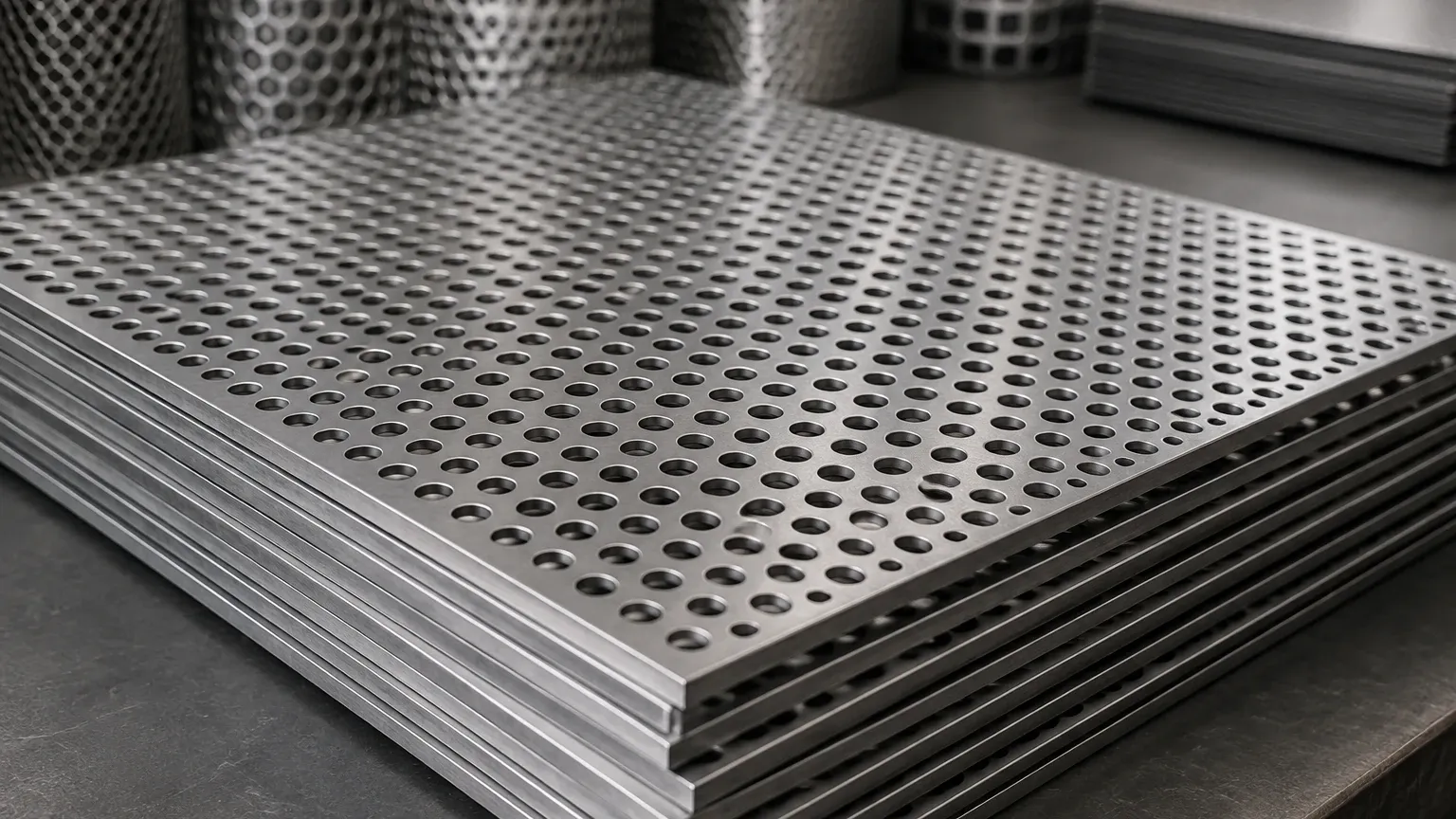
In the industrial procurement landscape, the 4×8 sheet (48 inches by 96 inches) remains the standard dimensional unit for metal substrates. When engineers and purchasing managers search for perforated sheet metal 4×8 nearby, the objective is usually a balance between immediate availability, reduced logistics costs, and the technical precision required for specific industrial applications. Whether the material is intended for high-pressure filtration systems, architectural cladding, or protective machinery guards, understanding the technical nuances of these sheets is critical to ensuring long-term performance and structural integrity.
Selecting the right perforated or expanded metal involves more than just finding a local stockist. It requires a deep dive into material science, perforation patterns, and the mechanical properties that will define the component's behavior under operational stress. This guide explores the technical considerations for sourcing 4×8 perforated sheets and how to evaluate suppliers based on engineering requirements.
Understanding the 4×8 Standard in Industrial Perforation
The 4×8 foot dimension is ubiquitous in the metalworking industry because it aligns with standard CNC punching presses, laser cutting beds, and material handling equipment. For a facility specializing in Perforated & Expanded Metal, this size provides an optimal surface area for high-volume production while remaining manageable for shipping on standard pallets.
However, the term "nearby" is relative in B2B procurement. While a local general metal distributor might stock basic 4×8 sheets, they often lack the specialized alloys or precise hole patterns required for advanced industrial filtration. When sourcing for a project that demands specific flow rates or chemical resistance, the proximity of a supplier’s technical expertise often outweighs the physical distance of their warehouse. Engineers must determine if a standard off-the-shelf sheet meets their tolerances or if a custom-manufactured solution is necessary to prevent premature failure in the field.
Material Selection: The Case for Stainless Steel
When evaluating perforated sheet metal 4×8 nearby, material composition is the primary factor in determining the sheet's lifespan. While carbon steel and aluminum are common, stainless steel is the gold standard for demanding industrial environments, particularly in filtration and chemical processing.
Grade 304 Stainless Steel
Grade 304 is the most versatile and widely used stainless steel. It offers excellent corrosion resistance to a wide range of atmospheric environments and many corrosive media. For most industrial applications where extreme chemical exposure is not a factor, 304 provides a cost-effective balance of durability and workability.
Grade 316 Stainless Steel
For applications involving marine environments, high chloride exposure, or aggressive chemical processing (such as in the pharmaceutical or food and beverage industries), Grade 316 is preferred. The addition of molybdenum enhances its resistance to pitting and crevice corrosion, making it essential for high-performance filtration components.
Specialized Alloys
In niche applications, such as high-temperature exhaust systems or highly acidic environments, exotic alloys like Monel, Inconel, or Hastelloy may be required. While these are rarely found in 4×8 stock at local general distributors, specialized manufacturers can produce these sheets to order, ensuring the material properties align perfectly with the application’s thermal and chemical demands.
Engineering the Hole Pattern and Open Area
The performance of a perforated sheet is defined by its hole pattern, hole size, and the resulting open area percentage. These factors dictate the flow rate, pressure drop, and structural strength of the sheet. When searching for perforated sheet metal 4×8 nearby, engineers should confirm that the supplier can provide precise data on these metrics.
Round Hole Patterns
Round holes are the most popular pattern due to their versatility and the efficiency of the punching process. They can be arranged in a 60-degree staggered pattern, which is the most common because it provides the highest open area and the greatest strength-to-weight ratio. Straight-line patterns are also available but are generally less structurally sound.
Square and Slotted Holes
Square holes offer a higher open area than round holes, which is beneficial for applications requiring maximum airflow or visibility. Slotted holes are often used in screening and sorting applications where the shape of the particles being filtered requires a specific orientation to prevent blinding (clogging) of the screen.
Calculating Open Area
The open area is the ratio of the total area of the holes to the total area of the sheet, expressed as a percentage. For a 60-degree staggered round hole pattern, the formula is:
Open Area % = (D² × 90.69) / R²
*Where D = Hole Diameter and R = Center-to-Center Pitch.*
Accurate calculation of the open area is vital for engineers designing filtration systems, as it directly impacts the pressure across the filter medium. A supplier that cannot provide verified open area calculations may not be suitable for high-precision industrial applications.
Sourcing Perforated & Expanded Metal: Local vs. Specialized Manufacturers
The decision to source perforated sheet metal 4×8 nearby often involves a trade-off between convenience and specialization. Local metal service centers typically stock a limited variety of gauges and hole patterns. If your application is a simple architectural screen or a basic machine guard, local stock may suffice.
However, for technical applications like hydraulic filtration, water treatment, or chemical reactors, the requirements are much more stringent. Specialized manufacturers like Kaifil provide several advantages over general local suppliers:
1. Precision Tolerances: Specialized punch presses can maintain tighter tolerances on hole diameters and margins, which is critical for components that must fit into complex assemblies.
2. Custom Margins: Standard 4×8 sheets often have "random" margins where the pattern is cut off at the edge. Specialized manufacturers can provide finished margins (unperforated borders) on all four sides, which simplifies welding and installation while improving the structural integrity of the final product.
3. Secondary Operations: A dedicated filtration component manufacturer can provide more than just the flat sheet. They offer value-added services such as leveling (to ensure the sheet is perfectly flat), degreasing, deburring, and forming (rolling the sheet into a cylinder for filter cartridges).
When evaluating a provider of Perforated & Expanded Metal, it is important to ask about their quality control processes and their ability to provide material mill test reports (MTRs) to verify the alloy's chemistry.
Quality Control and Compliance Standards
In an industrial B2B context, the quality of a 4×8 perforated sheet is measured by its adherence to international standards. When vetting a supplier, whether they are "nearby" or global, the following criteria should be confirmed:
* Flatness: The punching process introduces internal stresses into the metal, which can cause the sheet to bow or curl. High-quality sheets undergo a leveling process to ensure they meet flatness specifications, which is essential for automated assembly or laser cutting.
* Burr Height: Punching naturally creates a burr on the exit side of the hole. For many applications, particularly in the food and pharmaceutical industries, these burrs must be minimized or removed through mechanical deburring to prevent contamination or injury.
* Dimensional Accuracy: This includes not only the 4×8 overall dimensions but also the hole diameter, the pitch (distance between holes), and the squareness of the sheet.
* Surface Finish: Depending on the application, the sheet may require a specific finish, such as 2B (cold rolled, bright), No. 4 (brushed), or even electropolishing for maximum corrosion resistance in sterile environments.
Total Cost of Ownership (TCO) in Procurement
While the unit price of a 4×8 sheet is a significant factor, the total cost of ownership (TCO) includes several other variables that are often overlooked during the initial search for perforated sheet metal 4×8 nearby.
Logistics and Packaging
Shipping 4×8 sheets requires specialized packaging to prevent edge damage and surface scratching. If a local supplier has the material in stock, shipping costs may be lower, but if they have to order it from a central hub, those costs are often passed on to the buyer. Conversely, a specialized manufacturer may have optimized logistics chains that make shipping from a distance more competitive than expected.
Lead Times vs. Stock Availability
If a project is in a "down" situation, a local stock sheet is the fastest solution. However, if the project is in the design phase, the lead time for a custom-manufactured sheet that perfectly fits the engineering requirements can save significant time and money during the assembly and installation phases by eliminating the need for on-site modifications.
Longevity and Maintenance
Choosing a lower-grade material or a generic perforation pattern because it was available "nearby" can lead to higher maintenance costs and shorter replacement cycles. In the context of industrial filtration, using a 316L stainless steel sheet with a precision-engineered open area will almost always result in a lower TCO than a 304 sheet that was simply convenient to source.
Applications in Industrial Filtration and Beyond
The 4×8 perforated sheet is rarely the end product; it is the raw material for a wide array of industrial components.
* Filter Cartridge Support: Perforated sheets are rolled and welded to form the inner or outer support cores for pleated filter media. The strength of the perforated metal allows the filter to withstand high differential pressures without collapsing.
* Centrifuge Screens: In the sugar and chemical industries, perforated sheets with very fine holes are used in centrifuges to separate solids from liquids.
* Acoustic Dampening: Perforated metal, when combined with sound-absorbing materials, is used to create acoustic panels for industrial machinery rooms and power plants.
* Heat Exchange: In certain drying and cooling processes, perforated sheets provide a controlled surface for airflow, ensuring uniform temperature distribution.
Conclusion: Making an Informed Sourcing Decision
When searching for perforated sheet metal 4×8 nearby, the goal is to find a partner that understands the technical demands of your specific industry. While physical proximity offers certain logistical advantages, the most important factor is the supplier's ability to deliver a product that meets your engineering specifications, material requirements, and quality standards.
For engineers and purchasing teams, the process should begin with a clear definition of the required open area, hole pattern, and material grade. By comparing the capabilities of local distributors against specialized manufacturers of Perforated & Expanded Metal, you can ensure that the 4×8 sheets you procure will provide the reliability and performance necessary for your industrial applications. Whether you require a single standard sheet or a thousand custom-fabricated components, focusing on technical excellence will lead to better outcomes and a more efficient procurement process.
