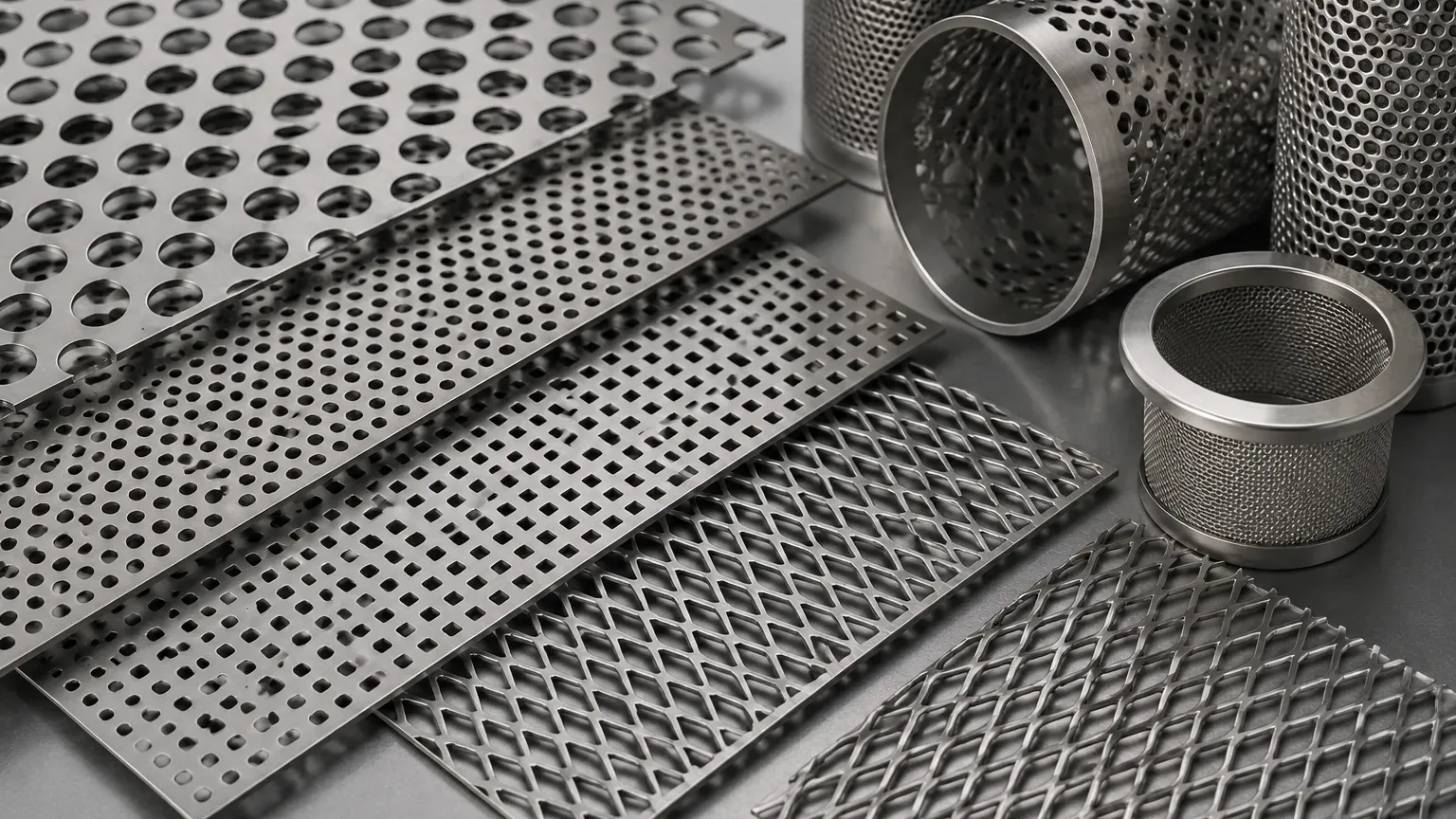
Perforated Steel Sizes
In industrial filtration and structural engineering, the specification of perforated steel sizes is a critical factor that determines the efficiency, durability, and mechanical integrity of the final component. Perforated steel serves as a foundational element in many filtration systems, often acting as a support medium for finer wire mesh or as a primary strainer for high-flow applications. For engineers and procurement specialists, understanding the nuances of hole diameters, pitch, open area, and material thickness is essential for optimizing system performance and ensuring long-term reliability.
Understanding the Geometry of Perforated Metal
When discussing perforated steel sizes, the conversation extends beyond the physical dimensions of the sheet itself. It encompasses a complex set of geometric variables that define the performance characteristics of the metal. The primary parameters include the hole shape, the hole diameter (or width), the pitch (center-to-center distance), and the pattern arrangement.
Most industrial applications utilize round holes due to their structural stability and ease of manufacturing. However, square, hexagonal, and slotted perforations are also utilized for specific flow characteristics or aesthetic requirements. The arrangement of these holes is typically either staggered (usually at a 60-degree angle) or straight-line (90-degree). The 60-degree staggered pattern is the most common specification because it provides the highest open area and superior structural uniformity, which is vital when the material is subjected to high-pressure differentials.
The Significance of Hole Diameter and Pitch
The hole diameter is perhaps the most visible aspect of perforated steel sizes. In filtration, the hole size determines the maximum particle size that can pass through the medium. However, the diameter cannot be viewed in isolation from the pitch. The pitch is the distance from the center of one hole to the center of the adjacent hole.
The relationship between diameter and pitch defines the "bridge"—the solid metal remaining between the perforations. A bridge that is too narrow may compromise the structural integrity of the sheet, leading to deformation or failure under mechanical stress. Conversely, a bridge that is too wide reduces the total number of holes, thereby decreasing the open area and increasing the resistance to flow. Precision in these measurements is paramount for maintaining consistent pressure drop across the filter element.
Material Thickness and the "Rule of One"
A fundamental engineering constraint in the production of perforated steel is the relationship between the hole diameter and the material thickness. In the manufacturing world, this is often referred to as the "Rule of One." Generally, the hole diameter should not be less than the thickness of the steel sheet. For example, if a project requires a 2mm thick stainless steel plate, the hole diameter should ideally be 2mm or larger.
Attempting to punch holes smaller than the material thickness significantly increases the risk of tool breakage and can result in irregular hole shapes or excessive burr formation. While advanced laser cutting or specialized punching techniques can sometimes bypass this rule, it remains a standard guideline for cost-effective and high-quality production. When selecting Perforated & Expanded Metal for industrial use, engineers must balance the need for fine filtration with the physical limitations of the material thickness to ensure a robust product.
Calculating Open Area for Filtration Efficiency
The "Open Area" is a percentage that represents the total area of the holes relative to the total area of the sheet. This is the most critical metric for calculating flow rates and pressure drops in hydraulic and chemical processing systems.
For a standard 60-degree staggered round hole pattern, the formula for calculating the percent open area is:
% Open Area = (D² × 90.69) / P²
*(Where D is the hole diameter and P is the pitch)*
For a straight-line pattern, the formula is:
% Open Area = (D² × 78.5) / P²
High open area percentages (typically 40% to 60%) allow for high flow rates with minimal resistance, which is ideal for cooling systems and high-volume liquid filtration. However, as the open area increases, the mechanical strength of the sheet decreases. In high-pressure applications, such as hydraulic return line filters, a lower open area with thicker material may be necessary to prevent the perforated core from collapsing.
Structural Integrity and Margin Specifications
Another often-overlooked aspect of perforated steel sizes is the "margin." Margins are the unperforated areas along the edges of the sheet. In the context of manufacturing filter cartridges or cylinders, margins are essential for providing a clean surface for welding.
There are several types of margins to consider:
1. Minimum Margins: The perforation pattern goes right to the edge of the sheet, often resulting in partial holes.
2. Standard Margins: A solid border of metal is left around the perimeter.
3. Custom Margins: Specific widths of solid metal are left on certain sides to accommodate mounting brackets or specialized seam welds.
Specifying the correct margin is vital for the assembly process. Without adequate margins, the welding process can become difficult, leading to weak joints or aesthetic defects. Furthermore, the "end pattern"—whether the rows of holes are finished (complete holes) or unfinished (partial holes)—must be confirmed to ensure the component fits perfectly into its housing.
Selecting Perforated Steel Sizes for Industrial Applications
The choice of perforated steel sizes varies significantly across different industries. In the food and beverage sector, for instance, stainless steel (typically 304 or 316L) is the standard due to its corrosion resistance and ease of cleaning. Here, the surface finish is as important as the size; the metal must be free of burrs and pits where bacteria could proliferate.
In chemical processing, the focus shifts to chemical compatibility and the ability to withstand aggressive solvents. Perforated steel used in these environments often acts as a support cage for fine mesh or pleated filter media. The sizing must be precise enough to provide uniform support across the entire surface of the mesh to prevent localized stress points that could lead to mesh fatigue.
For water treatment and desalination, large-scale perforated plates are used as intake screens. In these cases, the perforated steel sizes are much larger, often with diameters ranging from 5mm to 20mm, designed to exclude large debris while maintaining massive flow volumes. The thickness of the plate in these applications is also increased to withstand the constant force of moving water and potential impacts from submerged objects.
Customization and Manufacturing Capabilities
While standard perforated steel sizes are available for general use, many industrial projects require customized solutions. Kaifil specializes in providing OEM and customized filtration components that adhere to strict engineering tolerances. Customization options include not only the diameter and pitch but also the overall shape of the component, such as conical strainers, cylindrical filter cores, or flat discs.
When requesting custom perforated components, it is important to provide the following data points to the manufacturer:
* Material Type: (e.g., Stainless Steel 316L, 304, Carbon Steel).
* Thickness: (Gauge or decimal inches/mm).
* Hole Shape and Size: (e.g., 3mm round).
* Pattern and Pitch: (e.g., 5mm staggered centers).
* Margin Requirements: (e.g., 10mm margins on all sides).
* Secondary Operations: (e.g., Degreasing, deburring, electropolishing, or forming into a cylinder).
Advanced manufacturing techniques allow for high-precision punching that ensures every hole is identical, which is critical for maintaining a predictable flow coefficient across a large production run.
Technical Considerations for Filter Replacement Cycles
The selection of perforated steel sizes also impacts the maintenance and replacement cycles of industrial equipment. In systems where the perforated metal is the primary filter, the accumulation of solids (cake build-up) will eventually lead to an increase in differential pressure. If the hole size is too small for the specific gravity or viscosity of the fluid, the filter will "blind" or clog prematurely.
Engineers must also monitor for erosion and corrosion. In high-velocity systems, the edges of the perforations can wear down over time, effectively increasing the hole size and allowing larger particles to pass through. Regular inspection of the perforated media is necessary to ensure that the filtration efficiency remains within the required specifications. By choosing the correct material grade and thickness at the outset, the total cost of ownership is reduced through extended service life and fewer unscheduled maintenance events.
Conclusion
Selecting the appropriate perforated steel sizes is a balance of fluid dynamics, material science, and mechanical engineering. Whether the application involves a simple strainer or a complex multi-stage filtration system, the geometry of the perforation defines the performance boundaries of the equipment. By carefully considering hole diameter, pitch, material thickness, and open area, engineering teams can design systems that are both efficient and resilient. For those seeking specialized components, leveraging the expertise of a professional manufacturer ensures that the perforated metal meets the exact needs of the application, providing reliable performance in even the most demanding industrial environments.