


Perforated Z Bar
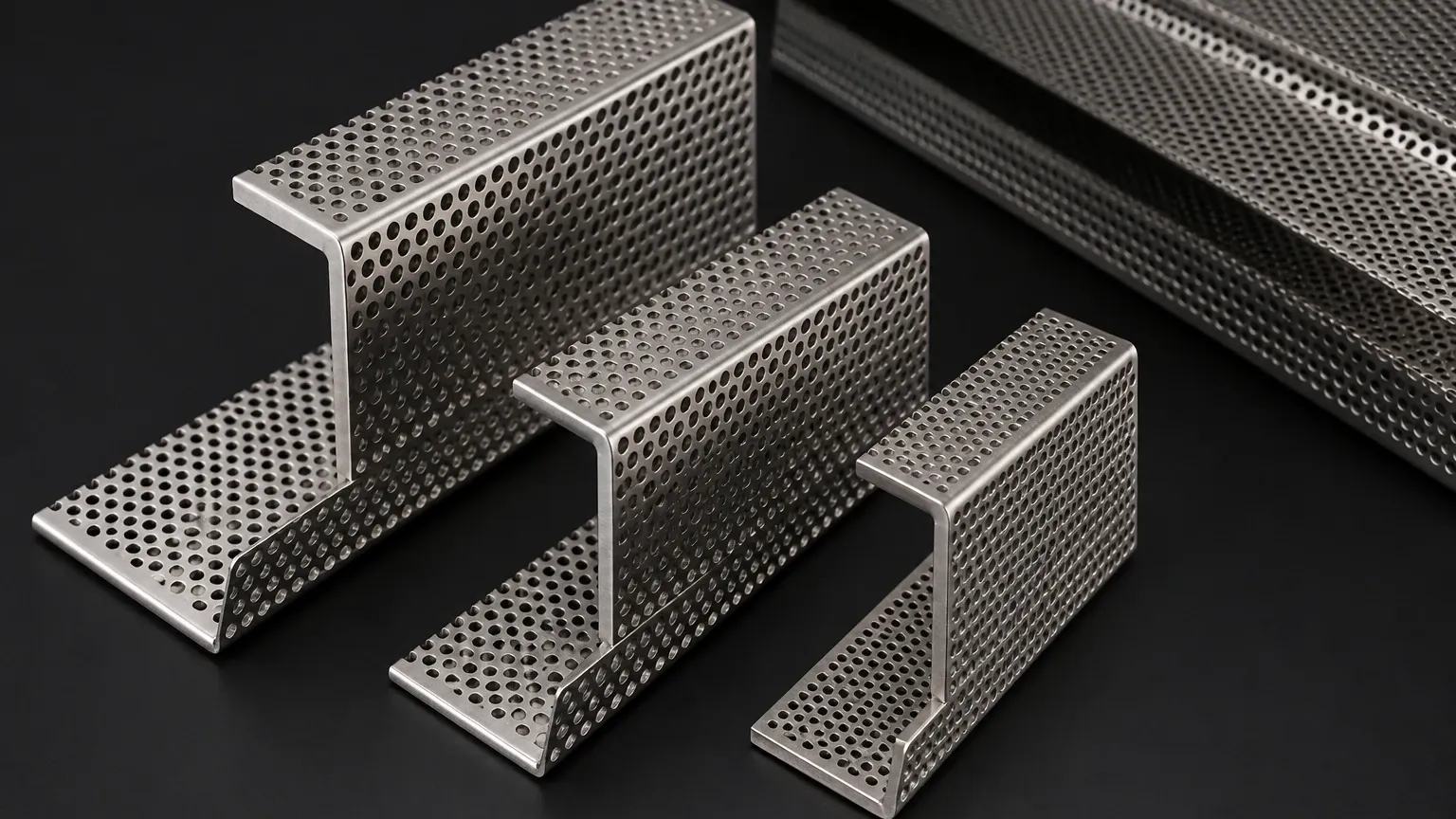
In industrial engineering and filtration system design, structural integrity often depends on components that can provide both support and permeability. The perforated z bar is a specialized structural profile used extensively to mount, reinforce, and frame filtration media and architectural panels. By combining the mechanical advantages of a Z-shaped cross-section with the functional benefits of Perforated & Expanded Metal, these components allow engineers to manage airflow, drainage, and structural loads simultaneously.
For technical professionals and procurement teams, understanding the nuances of perforated z bar specification—ranging from material grade and hole geometry to forming tolerances—is essential for ensuring long-term performance in demanding environments like chemical processing, water treatment, and industrial HVAC systems.
Understanding the Geometry and Structural Role
A perforated z bar is defined by its unique profile, consisting of a central web and two flanges extending in opposite directions. This "Z" shape provides a high strength-to-weight ratio and allows for offset mounting, which is particularly useful when a filter or screen needs to be positioned at a specific distance from a housing wall or support structure.
Unlike standard solid Z-profiles, the perforated version incorporates a pattern of holes across the web, the flanges, or the entire surface. This perforation serves several critical functions:
1. Weight Reduction: It reduces the overall mass of the support structure without compromising the rigidity required for industrial applications.
2. Fluid and Air Dynamics: In filtration and ventilation, it allows for the passage of media, preventing the build-up of pressure differentials that could deform a solid support.
3. Attachment Versatility: The holes can serve as ready-made mounting points for bolts, rivets, or wire ties, simplifying the assembly of complex filter cartridges or screen banks.
Material Selection for Industrial Durability
When specifying a perforated z bar, material selection is the most critical factor influencing the component's lifespan, especially in corrosive or high-temperature environments. As a manufacturer specializing in stainless steel solutions, Kaifil emphasizes the use of alloys that can withstand the rigors of industrial processing.
Stainless Steel 304 and 304L
Grade 304 is the standard choice for most general-purpose industrial applications. It offers excellent formability and weldability, making it ideal for the precision bending required to create a Z-profile. It provides adequate corrosion resistance for many food and beverage and light chemical applications.
Stainless Steel 316 and 316L
For more aggressive environments, such as marine applications, pharmaceutical processing, or heavy chemical handling, Grade 316 is preferred. The addition of molybdenum enhances resistance to pitting and crevice corrosion, particularly in chloride-rich environments. The "L" (low carbon) variants are essential when the Z bar will be welded into a larger assembly, as they prevent carbide precipitation during the welding process.
Other Alloys
In specific high-temperature or highly specialized chemical environments, materials like Monel, Inconel, or specialized aluminum alloys may be utilized. However, stainless steel remains the industry standard for its balance of cost, mechanical strength, and chemical compatibility.
Perforation Patterns and Open Area Calculations
The performance of a perforated z bar is largely dictated by its hole pattern. Engineers must balance the "open area" (the percentage of the surface area that is removed) against the structural requirements of the application.
Round Hole Patterns
Round holes are the most common and cost-effective. They can be arranged in a 60-degree staggered pattern, which provides the highest strength and the most uniform open area, or a straight-line pattern for specific aesthetic or alignment requirements.
Square and Slotted Holes
Square holes offer a higher open area for applications requiring maximum throughput, while slotted holes are often used for screening processes where the orientation of the particles or fluid flow is a factor. Slotted perforations in a Z bar can also provide adjustability when used as a mounting bracket.
Calculating Open Area
For a standard staggered round hole pattern, the open area percentage is calculated using the formula:
* OA% = (d² × 90.69) / p²
Where *d* is the hole diameter and *p* is the pitch (the distance between the centers of the holes). This calculation is vital for engineers to ensure that the support structure does not become a bottleneck in a filtration system.
Manufacturing Precision and Forming Challenges
Transforming a flat sheet of Perforated & Expanded Metal into a precise Z-profile requires advanced manufacturing capabilities. Unlike solid metal, perforated material behaves differently during the bending process.
Bend Radius and Hole Distortion
When a perforated sheet is bent to form the flanges of a Z bar, the holes near the bend line can distort. This distortion can weaken the material or interfere with mounting. Skilled manufacturers use specialized tooling to maintain the integrity of the hole pattern and ensure that the bend radius is appropriate for the material thickness and hole size.
Tolerance Management
In industrial assemblies, dimensional accuracy is paramount. Standard tolerances for Z bars usually cover the flange width, web height, and the angle of the bends (typically 90 degrees). When perforations are involved, the "margin" (the unperforated area at the edges of the bar) must be carefully controlled to ensure that the bends occur on solid metal whenever possible, which increases the structural stability of the finished part.
Applications in Industrial Filtration and Beyond
The perforated z bar is a versatile component that finds its way into numerous technical applications. Its primary role is often as a hidden but essential support element.
Filter Cartridge Reinforcement
In large-scale industrial filter cartridges, perforated z bars can be used as internal longitudinal supports. They provide the necessary rigidity to prevent the filter media from collapsing under high differential pressure while allowing the filtered fluid to pass freely into the center core.
Support Grids for Screens
In water treatment plants and chemical reactors, large screens or wire mesh panels require a robust framework. Z bars are often used to create a grid-like support structure. The Z-profile allows the mesh to be recessed or flush-mounted, depending on the flow requirements of the system.
Machinery Guarding and Safety
Beyond filtration, these bars are used to frame safety guards for industrial machinery. The perforations allow for visibility and ventilation, while the Z-shape provides a secure mounting flange that can be bolted directly to the machine frame.
Architectural and HVAC Louvers
In HVAC systems, perforated z bars serve as the structural ribs for louvers and acoustic panels. They help dampen vibration and provide a mounting point for sound-absorbing materials while maintaining airflow through the system.
Engineering Considerations for Selection
Before finalizing a specification for a perforated z bar, engineers and purchasing teams should evaluate several technical factors to ensure the component is fit for purpose.
1. Load-Bearing Requirements: Determine the static and dynamic loads the bar will support. The thickness of the material and the height of the web are the primary contributors to the bar's stiffness.
2. Environmental Exposure: Identify the chemicals, temperatures, and cleaning protocols the bar will encounter. This dictates the necessary stainless steel grade or surface finish (such as passivating or electropolishing).
3. Flow Characteristics: Ensure the open area of the perforations matches the flow requirements of the filtration media it supports. An insufficient open area can lead to energy inefficiency and system strain.
4. Installation Method: Consider how the bar will be attached. Will it be welded, bolted, or clipped? This may influence the need for specific unperforated margins or custom hole placements for fasteners.
Customization and OEM Capabilities
Because industrial applications vary widely, a "one-size-fits-all" approach rarely works for perforated z bars. Customization is often necessary to meet specific engineering tolerances or unique geometric requirements.
Kaifil provides comprehensive OEM services, allowing customers to specify every aspect of the perforated z bar, from the initial material selection to the final surface treatment. By working closely with a manufacturer that understands the complexities of both perforation and precision metal forming, engineering teams can obtain components that integrate seamlessly into their proprietary systems. This collaborative approach ensures that the final product meets the exact filtration accuracy and durability standards required for demanding industrial environments.
Conclusion: Confirming Technical Details
When moving toward a purchase or a project integration, it is vital to confirm the technical specifications with your supplier. Ensure that the material certifications (MTRs) are available, especially for regulated industries like pharmaceuticals or food processing. Verify that the manufacturing process accounts for the specific hole pattern to avoid structural weak points at the bends.
By focusing on the structural advantages of the Z-profile and the functional utility of Perforated & Expanded Metal, organizations can optimize their filtration and industrial assemblies for both performance and longevity. Whether used as a simple mounting bracket or a critical internal support, the perforated z bar remains a fundamental component in modern industrial design.
