


Perforated Z
In the landscape of industrial filtration and structural engineering, the geometry of a component often dictates its performance as much as the material from which it is fabricated. Among the various profiles utilized to provide structural support, flow distribution, and mechanical protection, the perforated z profile stands out for its unique combination of rigidity and mounting versatility. As a specialized subset of Perforated & Expanded Metal, these Z-shaped sections are engineered to meet the rigorous demands of chemical processing, water treatment, and heavy industrial filtration systems.
Understanding the technical nuances of perforated Z-profiles is essential for engineers and procurement teams who must balance filtration efficiency with the structural integrity of a system. This guide examines the engineering principles, material considerations, and application-specific advantages of integrating perforated Z-components into industrial environments.
Defining the Perforated Z Profile
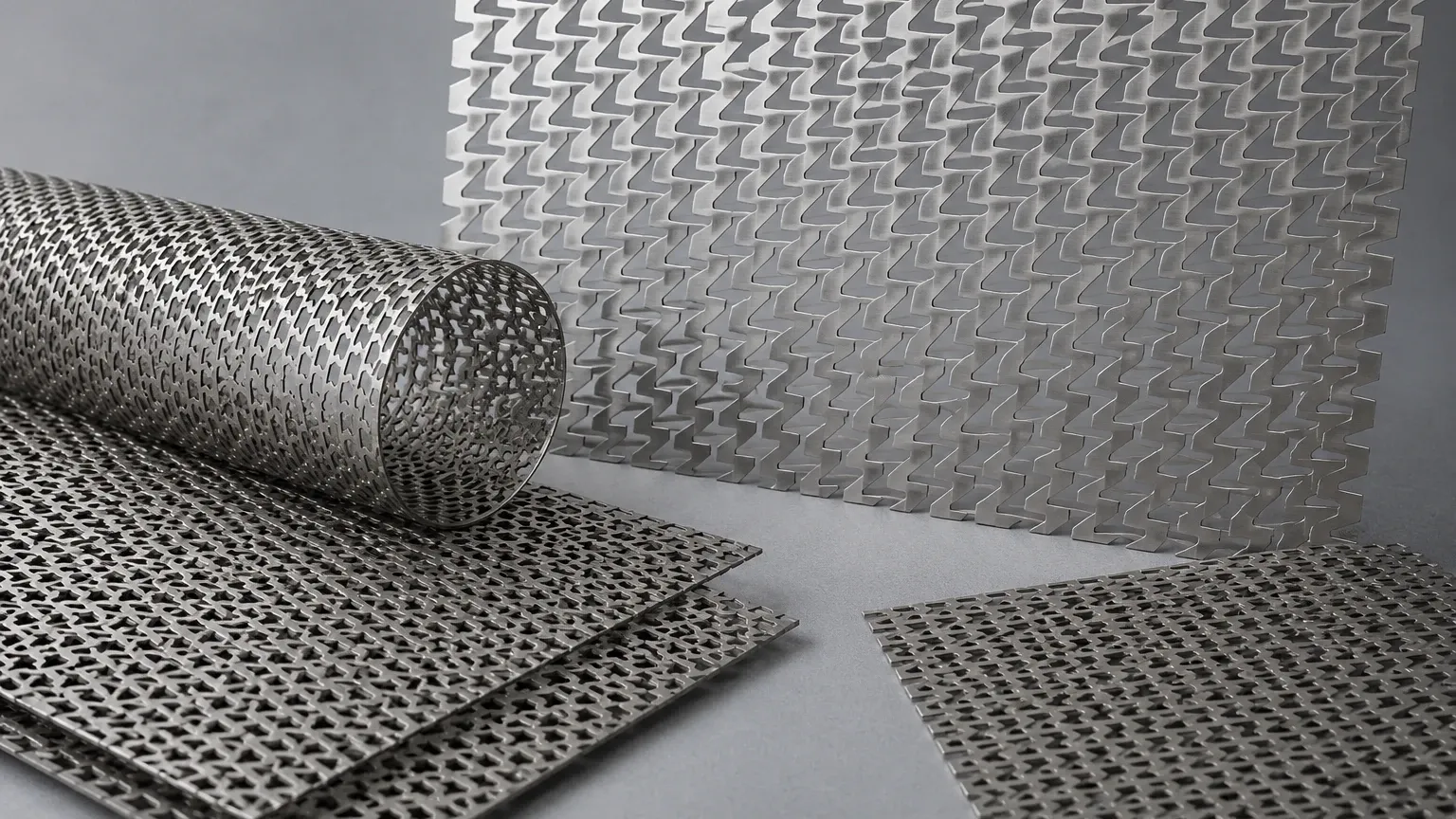
A perforated Z-profile is a metal section formed into a "Z" shape—comprising a central web and two parallel flanges extending in opposite directions—that has been subjected to a perforation process. Unlike standard flat sheets, the Z-shape introduces a three-dimensional structural element that can bridge gaps, provide an offset for filter media, or act as a rigid frame for multi-layered filtration assemblies.
In industrial filtration, the "perforated z" is rarely a standalone product; rather, it is a critical component within a larger assembly. It may serve as a pleat separator in high-capacity cartridges, a support rib for large-scale strainers, or a mounting bracket that allows fluid to pass through the mounting point itself, thereby eliminating "dead zones" in the flow path.
Engineering Fundamentals: Geometry and Strength
The primary reason engineers specify a Z-profile over a simple angle or U-channel is its structural efficiency. The Z-shape offers a high moment of inertia relative to its weight, making it highly resistant to bending and torsion. When this profile is perforated, the engineering challenge lies in maintaining this structural strength while achieving the required open area for fluid or gas passage.
The Impact of Perforation on Structural Integrity
When a metal sheet is perforated, its mechanical properties change. The "equivalent solid material" approach is often used by engineers to calculate the load-bearing capacity of perforated sections. For a perforated Z-profile, the placement of the holes relative to the bends is critical. Perforations located too close to the radius of the bend can lead to stress concentration and potential cracking during the forming process. Precision manufacturing ensures that the hole pattern is indexed correctly, maintaining a solid margin along the bend lines to preserve the profile's geometric stability.
Open Area Calculations
The open area percentage is the ratio of the total area of the holes to the total area of the sheet. In filtration applications, the open area of the perforated Z-component must be calibrated to ensure it does not become a bottleneck in the system. If the Z-profile is supporting a fine wire mesh, its open area should ideally exceed the open area of the mesh to prevent localized pressure drops.
Material Selection for Demanding Environments
Because perforated Z-profiles are frequently exposed to corrosive fluids, high temperatures, and fluctuating pressures, material selection is the foundation of long-term reliability. Kaifil specializes in stainless steel solutions, which are the industry standard for high-performance filtration.
1. Stainless Steel 304/304L: The most common grade for general industrial use, offering excellent formability and good corrosion resistance in non-highly acidic environments.
2. Stainless Steel 316/316L: Containing molybdenum, this grade provides superior resistance to chlorides and marine environments, making it the preferred choice for pharmaceutical and chemical processing applications.
3. Specialty Alloys: For extreme conditions involving high-temperature oxidation or highly aggressive chemicals, alloys such as Duplex stainless steel or Monel may be used to fabricate perforated Z-sections.
Selecting the correct material ensures that the perforated Z-component does not succumb to pitting, crevice corrosion, or stress corrosion cracking, which could lead to catastrophic failure of the entire filtration system.
Applications in Industrial Filtration
The versatility of Perforated & Expanded Metal in a Z-configuration allows it to solve complex engineering problems across various sectors.
Pleat Support and Separation
In high-surface-area filter cartridges, perforated Z-profiles can be used as internal spacers. By maintaining consistent gaps between pleats, they ensure that the entire surface area of the filter media is utilized, preventing pleat collapse under high differential pressure. The Z-shape allows for a secure mechanical lock between the inner core and the outer cage of the filter.
Structural Frames for Coarse Strainers
In large-scale water intake systems or industrial strainers, perforated Z-sections act as the primary structural skeleton. They provide the necessary stiffness to withstand the force of high-velocity debris while allowing the fluid to pass through the frame itself, maximizing the effective filtration area.
Acoustic and Thermal Shielding
Beyond fluid filtration, perforated Z-profiles are used in industrial machinery housings to provide acoustic dampening. The Z-shape allows for easy overlapping of panels, creating a tortuous path for sound waves while permitting airflow for cooling. This is particularly relevant in compressor housings and turbine enclosures.
Manufacturing and Customization Considerations
Fabricating a high-quality perforated Z-profile requires a combination of precision perforation and advanced CNC bending. Several factors must be confirmed during the design and procurement phase:
Hole Patterns and Pitch
* Round Holes: The most common and cost-effective pattern, providing the best balance of strength and open area.
* Square Holes: Offer a higher open area but can lead to higher stress concentrations at the corners.
* Slotted Holes: Ideal for applications requiring directional flow or for filtering elongated particles.
Tolerance Control
In B2B industrial applications, dimensional accuracy is paramount. A perforated Z-profile must fit perfectly within a larger housing. Tight tolerances on the flange lengths, the web height, and the angle of the bends (typically 90 degrees, though custom angles are possible) are necessary to ensure ease of assembly and a leak-proof seal in filtration housings.
Edge Finishing and Deburring
Perforation and shearing processes can leave sharp burrs. In filtration, these burrs can damage delicate filter media or shed metallic particles into the downstream flow (media migration). Professional manufacturers employ various deburring techniques, such as vibratory finishing or electrochemical polishing, to ensure the perforated Z-component is smooth and safe for use.
Evaluating Performance and Replacement Cycles
Engineers must consider the total cost of ownership when selecting perforated components. While a perforated Z-profile is a durable structural element, it is subject to the same wear and fouling as other system components.
* Pressure Drop Monitoring: An unexpected increase in differential pressure may indicate that the perforated support is becoming fouled or that the media it supports has failed.
* Inspection for Erosion: In high-velocity systems, the edges of the perforations can undergo erosion over time. Regular inspection of the Z-profile during routine maintenance cycles helps identify thinning of the material before structural failure occurs.
* Cleaning Compatibility: If the system is designed for Clean-in-Place (CIP) operations, the perforated Z-profile must be designed without "blind spots" where bacteria or contaminants can accumulate. Smooth radii and high-quality surface finishes are essential here.
0
Critical Information for Purchasing Teams
When sourcing perforated Z-profiles for industrial projects, confirming the following technical details with the manufacturer will ensure the final product meets the application requirements:
1. Material Grade and Certification: Ensure the material meets ASTM or ISO standards and request Mill Test Reports (MTRs) for traceability.
2. Perforation Specification: Define the hole diameter, center-to-center pitch, and pattern (staggered vs. straight).
3. Dimensional Drawings: Provide detailed drawings specifying the web height, flange widths, and the thickness of the metal.
4. Load Requirements: Communicate the expected differential pressure and mechanical loads the component will face.
5. Surface Treatment: Specify if any additional treatments, such as passivating, pickling, or powder coating, are required for environmental protection.
Conclusion
The perforated z profile is a vital engineering component that bridges the gap between simple filtration media and robust structural support. By leveraging the inherent strengths of the Z-shape and the functional benefits of Perforated & Expanded Metal, industrial facilities can achieve higher filtration efficiency, greater system longevity, and improved mechanical reliability.
As a manufacturer specializing in custom stainless steel filtration solutions, Kaifil understands that every industrial application has unique constraints. Whether you are designing a new chemical processing line or retrofitting an existing hydraulic system, selecting a precision-engineered perforated Z-component is a strategic decision that impacts the overall performance and safety of your operations. By focusing on material quality, geometric precision, and application-specific design, engineers can ensure their filtration systems operate at peak performance in even the most demanding environments.
