


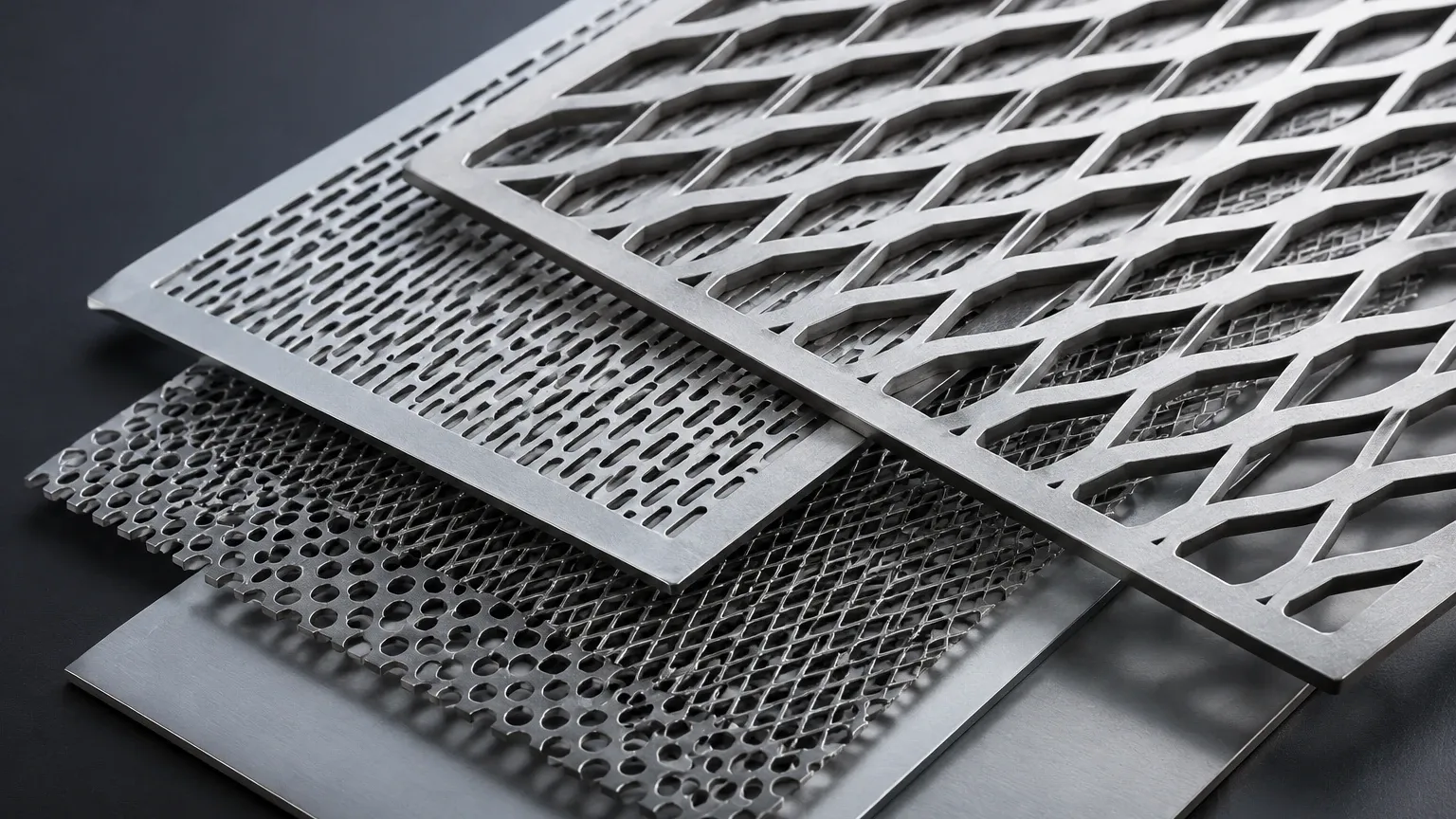
Plate Expanded Metal
Plate expanded metal serves as a foundational component in industrial filtration and structural engineering, offering a unique combination of mechanical strength, open area, and material efficiency. Unlike traditional perforated sheets, plate expanded metal is manufactured through a process of simultaneous slitting and stretching, which transforms a solid metal plate into a continuous, diamond-patterned mesh. For engineers and procurement teams, understanding the technical nuances of this material is essential for optimizing filtration performance and ensuring the structural integrity of industrial components.
At Kaifil, we specialize in the precision manufacturing of Perforated & Expanded Metal solutions tailored for demanding industrial environments. Whether utilized as a support core for pleated filter elements or as a primary screen in heavy-duty liquid-solid separation, plate expanded metal provides a high-performance alternative to woven wire mesh and perforated plate in specific high-pressure or high-load applications.
Understanding the Manufacturing Process and Structural Integrity
The production of plate expanded metal is a cold-forming process that distinguishes it from other metal mesh products. A solid metal plate is fed through a machine equipped with a reciprocating knife that slits the metal while simultaneously stretching it. This process creates a series of diamond-shaped openings. Because the metal is stretched rather than punched, there is zero material waste, making it a highly cost-effective solution for large-scale industrial projects.
From an engineering perspective, the most significant advantage of plate expanded metal is its monolithic structure. Unlike woven wire mesh, which consists of individual wires that can shift or fray, or welded mesh, which relies on bond points, expanded metal is a single piece of material. The "bonds" (the intersections of the diamonds) are part of the original plate, providing inherent structural rigidity. This makes plate expanded metal exceptionally resistant to mechanical stress and vibration, which are common challenges in hydraulic systems and chemical processing plants.
Technical Specifications: SWD, LWD, and Strand Geometry
When specifying plate expanded metal for industrial filtration or structural support, engineers must use standardized terminology to ensure the final product meets application requirements. The geometry of the mesh is defined by several key parameters:
* SWD (Short Way of Design): The distance from the center of one bond to the center of the next bond measured across the short diamond diagonal.
* LWD (Long Way of Design): The distance from the center of one bond to the center of the next bond measured across the long diamond diagonal.
* Strand Thickness: The thickness of the original base metal plate.
* Strand Width: The amount of metal fed into the knives for each slit-and-stretch cycle.
In filtration applications, the relationship between strand width and thickness determines the overall "open area" and the mechanical strength of the mesh. A wider strand increases the load-bearing capacity but reduces the open area, which can lead to higher pressure drops across a filter element. Conversely, a thinner strand maximizes flow but may require additional reinforcement in high-pressure environments.
Material Selection for Corrosive and High-Temperature Environments
The performance of plate expanded metal is heavily dependent on the alloy selected. At Kaifil, we focus on materials that provide durability and chemical compatibility across diverse sectors:
Stainless Steel (304, 316, and 316L)
Stainless steel is the industry standard for food and beverage, pharmaceutical, and chemical processing. Grade 304 offers excellent general corrosion resistance, while Grade 316/316L is preferred for marine environments or applications involving chlorides and high acidity. The chromium-rich oxide layer on stainless steel ensures that the expanded metal maintains its structural integrity even when exposed to aggressive cleaning agents or high-temperature sterilization cycles.
Carbon Steel
For hydraulic oil filtration or structural applications where corrosion is not the primary concern, carbon steel plate expanded metal offers high tensile strength at a lower cost. These components are often galvanized or coated to provide a basic level of oxidation resistance.
Aluminum and Special Alloys
In aerospace or lightweight equipment manufacturing, aluminum expanded metal provides a high strength-to-weight ratio. For specialized chemical reactors, exotic alloys like Monel or Inconel may be used to withstand extreme thermal and chemical stresses.
Raised vs. Flattened Expanded Metal
One of the most critical decisions in the design phase is choosing between raised and flattened expanded metal. Each has distinct characteristics that impact filtration efficiency and mechanical interface.
* Raised (Standard) Expanded Metal: In its raw state, the strands of expanded metal are set at an angle to the plane of the sheet. This creates a three-dimensional surface that provides excellent grip and high rigidity. In filtration, raised expanded metal is often used as a pre-filter or a protective outer guard for filter cartridges, where the angled strands can help deflect larger debris.
* Flattened Expanded Metal: After the expansion process, the sheet can be passed through a cold-rolling mill to flatten the strands back into the original plane of the plate. This results in a smooth, two-dimensional surface. Flattened plate expanded metal is ideal for supporting delicate filter media, such as fine wire mesh or synthetic membranes. The smooth surface prevents the support layer from abrading or puncturing the primary filtration media under pressure fluctuations.
Engineering Considerations for Industrial Filtration
When integrating plate expanded metal into a filtration system, several engineering factors must be evaluated to ensure long-term reliability and efficient operation.
Open Area and Flow Dynamics
The open area of expanded metal determines the flow rate and the initial pressure drop ($ \Delta P $). Engineers must balance the need for structural support with the requirement for low resistance to flow. Unlike perforated metal, where the open area is easily calculated by the hole diameter and pitch, expanded metal open area is influenced by the angle of the strands and the degree of expansion. Accurate calculations are vital to prevent cavitation in pump systems or reduced throughput in gravity-fed filters.
Mechanical Support for Pleated Media
In pleated filter cartridges, plate expanded metal is frequently used as an inner core or an outer wrap. Its role is to prevent the pleats from collapsing under the force of the fluid flow. The diamond pattern provides multi-directional support, which is superior to longitudinal bars in high-pressure hydraulic applications. When used as a core, the expanded metal must be precision-rolled and welded to maintain tight tolerances, ensuring a perfect fit within the filter housing.
Cleaning and Maintenance Cycles
In reusable filtration systems, the ease of cleaning is a primary concern. Plate expanded metal, particularly in its flattened and polished stainless steel form, allows for effective backwashing or ultrasonic cleaning. The lack of hidden crevices (unlike woven mesh) reduces the risk of bacterial growth in food-grade applications and ensures that trapped particulates can be fully removed during maintenance cycles.
Common Applications of Plate Expanded Metal
Given its versatility, plate expanded metal is utilized across a broad spectrum of industrial sectors:
1. Chemical and Petrochemical: Used as catalyst support grids in reactors and as protective screens for intake valves. Its resistance to high temperatures and corrosive chemicals makes it indispensable in refinery operations.
2. Food and Beverage: Employed in large-scale strainers and mash tuns. Stainless steel expanded metal meets the stringent hygiene standards required for processing dairy, beverages, and processed foods.
3. Hydraulic and Lubrication Systems: Serves as the structural backbone for high-pressure oil filters, protecting sensitive machinery from metallic shavings and contaminants.
4. Water Treatment: Used in intake screens for desalination plants and municipal water works to prevent large debris from entering the treatment infrastructure.
5. Industrial Equipment: Acts as safety guards for rotating machinery and as ventilated enclosures for electrical components, providing both protection and airflow.
Procurement Checklist: What Engineers Should Confirm
To ensure the successful procurement of plate expanded metal for a specific project, technical teams should confirm the following details with their manufacturer:
* Material Grade: Specify the exact alloy (e.g., SS316L) and request material mill certificates to verify chemical composition.
* Dimensional Tolerances: Define the acceptable variance in SWD, LWD, and overall sheet dimensions, especially if the metal is to be integrated into a precision-machined housing.
* Surface Finish: Determine if the application requires a mill finish, electropolishing (for food/pharma), or a specific coating (e.g., powder coating for aesthetics or epoxy for chemical resistance).
* Flattening Requirements: Clearly state whether the application requires standard (raised) or flattened mesh to avoid damage to secondary filter layers.
* Load Requirements: Provide data on the expected pressure differentials and mechanical loads the mesh will encounter during operation.
Conclusion
Plate expanded metal is more than just a simple mesh; it is an engineered component that provides essential structural and functional benefits in industrial filtration. Its monolithic design, material efficiency, and high strength-to-weight ratio make it a preferred choice for engineers looking to optimize the durability and performance of their systems. By carefully selecting the material, geometry, and finish, purchasing teams can ensure they receive a filtration solution that meets the rigorous demands of their specific application.
As a professional manufacturer, Kaifil is committed to providing high-quality, customized filtration components. Our expertise in stainless steel fabrication and industrial filtration allows us to support global customers in developing reliable, cost-effective solutions. For more information on how we can assist with your specific requirements for Perforated & Expanded Metal, please consult our technical team to review product options and application support.
