


Png Perforated Metal
In the initial stages of industrial design and engineering, the search for "png perforated metal" often represents a bridge between visual conceptualization and technical specification. For engineers and procurement specialists, a digital representation—whether a high-resolution PNG for a layout or a CAD file for a prototype—is the first step in defining the physical characteristics of a filtration or structural component. However, transitioning from a digital pattern to a functional industrial product requires a deep understanding of material science, mechanical tolerances, and filtration physics.
At the industrial level, Perforated & Expanded Metal serves as a critical substrate for filtration systems, architectural panels, and protective guards. Moving beyond the visual pattern involves specifying the exact hole geometry, pitch, open area, and material grade to ensure the component survives the thermal, chemical, and mechanical stresses of its intended environment.
Understanding Perforated Metal Specifications for Industrial Applications
When an engineering team uses a digital pattern or a "png perforated metal" reference for a project, they are essentially defining the geometric constraints of a future metal component. In industrial manufacturing, these patterns are translated into precise mechanical specifications. The performance of the final product depends on several key variables that must be defined long before the manufacturing process begins.
Hole Shapes and Their Functional Impact
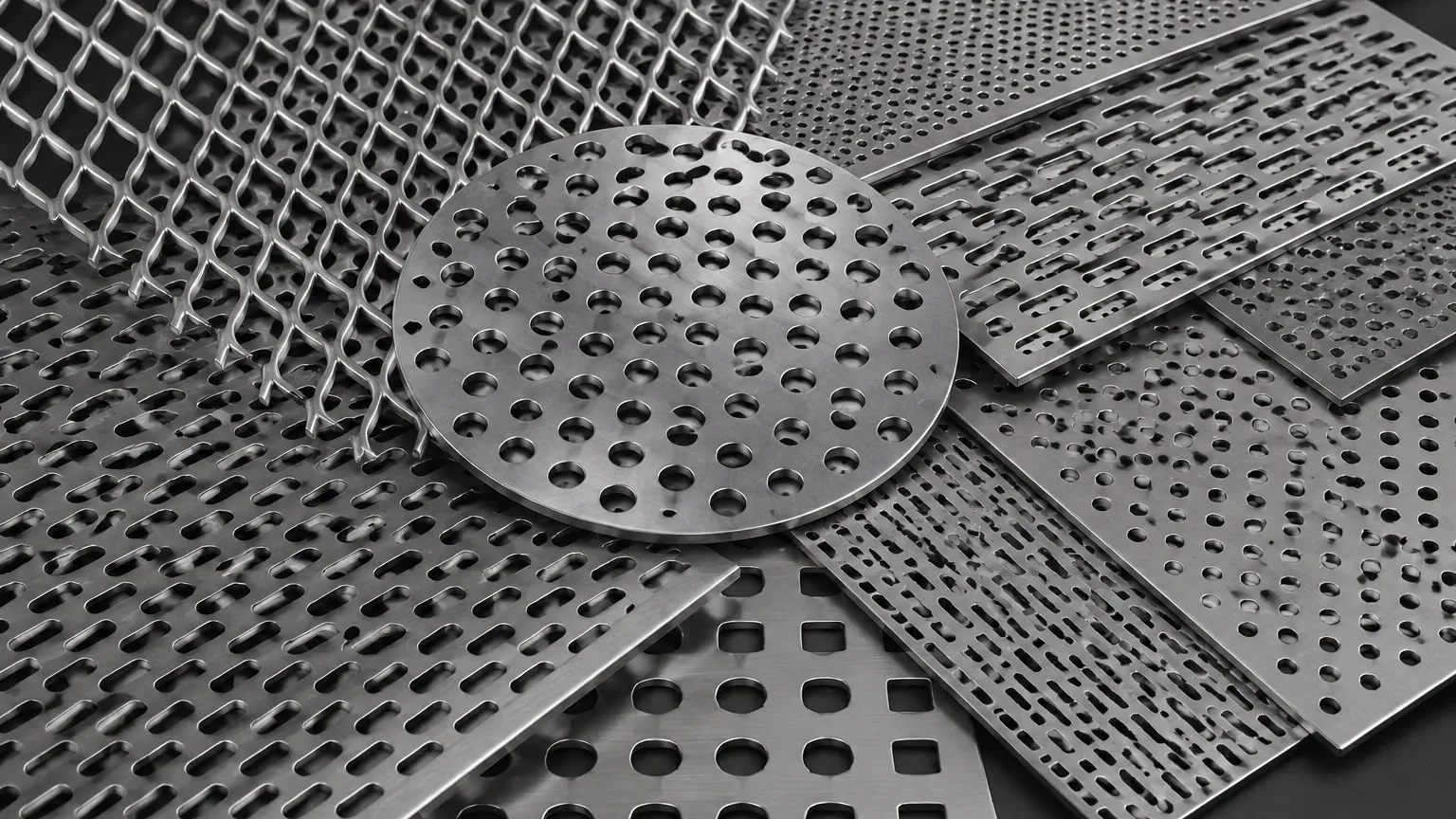
While round holes are the most common due to their structural integrity and ease of manufacturing, other shapes offer specific advantages:
* Round Holes: Provide the best balance of strength and open area. They are the standard for most liquid and gas filtration applications.
* Square Holes: Offer a higher open area compared to round holes of the same diameter, which is beneficial for high-flow applications where pressure drop must be minimized.
* Slotted Holes: Often used in vibrating screens or specialized separators where the orientation of the particles matters.
* Hexagonal Patterns: Provide the maximum possible open area (up to 80% or more), often used in high-ventilation or architectural applications where airflow is the primary concern.
Pitch and Arrangement
The arrangement of the holes—typically staggered (60-degree or 45-degree) or straight—significantly affects the mechanical strength of the sheet. A staggered pattern is generally preferred in industrial filtration because it provides more holes per square inch and maintains higher structural rigidity under pressure.
From Digital Patterns to Physical Performance: The Role of Open Area
One of the most critical calculations in specifying perforated metal is the "Open Area Percentage." This figure determines the flow rate, pressure drop, and particle retention capabilities of the filter or screen. While a digital "png perforated metal" image might look aesthetically pleasing, the engineering reality requires a precise calculation to avoid system failure.
Calculating Open Area
For a standard 60-degree staggered round hole pattern, the formula is:
Open Area % = (D² × 90.69) / P²
*Where D is the hole diameter and P is the pitch (center-to-center distance).*
If the open area is too low, the system will experience a high pressure drop, leading to increased energy consumption and potential pump cavitation. Conversely, if the open area is too high, the structural integrity of the sheet may be compromised, leading to buckling or tearing under the weight of the filter cake or the force of the fluid flow.
The Importance of Margins
Unlike a digital image that can be tiled infinitely, physical perforated sheets require unperforated margins. These margins are essential for welding the sheet into a filter cartridge or securing it within a housing. Engineering drawings must specify the width of these margins to ensure compatibility with the final assembly.
Material Selection: Stainless Steel vs. Other Alloys
Kaifil specializes in custom stainless steel filtration solutions, and for most industrial environments, stainless steel is the gold standard for perforated and expanded metal. The choice of alloy is dictated by the chemical composition of the fluid being filtered and the operating temperature.
Stainless Steel 304 vs. 316L
* Grade 304: Suitable for general-purpose applications, including food and beverage processing and standard industrial filtration where corrosion risk is moderate.
* Grade 316L: Contains molybdenum, which provides superior resistance to chlorides and pitting. This is the preferred material for marine environments, chemical processing, and pharmaceutical applications where strict hygiene and corrosion resistance are mandatory.
Specialty Alloys
In extreme environments involving high-temperature oxidation or highly acidic conditions, alloys such as Hastelloy or Monel may be required. While these materials are more difficult to perforate than standard carbon steel or aluminum, they ensure a longer service life and lower total cost of ownership in demanding applications.
Engineering Considerations for Custom Perforated Metal Components
When moving from a conceptual design to a procurement-ready specification, engineers must consider the mechanical processing that occurs after the metal is perforated. Perforated metal is rarely used as a flat sheet in industrial filtration; it is often rolled, welded, or pleated.
Forming and Welding
Perforating metal introduces internal stresses into the material. When these sheets are rolled into cylinders for filter cartridges, the integrity of the weld seam is paramount. If the perforation pattern extends too close to the edge, the weld may be weak. Custom manufacturers like Kaifil ensure that the perforation pattern is designed with welding "land" areas to provide a robust, leak-proof seam.
Burrs and Surface Finish
The process of punching holes in metal inevitably creates burrs on the exit side of the punch. In high-precision filtration, these burrs can cause turbulence or trap contaminants, making the filter difficult to clean. Industrial-grade perforated metal undergoes deburring and, in many cases, electropolishing to ensure a smooth, passive surface that meets pharmaceutical or food-grade standards.
Common Risks and Quality Control in Production
Sourcing perforated metal based solely on visual patterns or low-cost quotes often leads to operational risks. Understanding these risks is essential for purchasing teams.
1. Hole Distortion: In thinner materials with high open areas, the punching process can cause the holes to become elliptical rather than perfectly round. This changes the filtration accuracy.
2. Edge Cracking: If the bridge (the space between holes) is too narrow, the material may crack during the forming process.
3. Material Substitution: Lower-quality stainless steel may not meet the specified chemical composition, leading to premature corrosion. Verification of Material Test Reports (MTRs) is a critical step in the quality control process.
Kaifil addresses these risks through advanced manufacturing capabilities and rigorous inspection protocols, ensuring that the physical product matches the engineering requirements exactly.
Selection Guide: How to Specify Perforated Metal for Filtration
To move from a "png perforated metal" visual to a technical order, engineers should confirm the following parameters with their manufacturer:
* Material Grade: (e.g., SS316L, SS304).
* Thickness: Specified in gauge or millimeters (must account for pressure requirements).
* Hole Diameter: The primary factor for particle retention.
* Pitch and Pattern: Staggered vs. straight (affects flow and strength).
* Open Area Percentage: Calculated based on flow requirements.
* Sheet Dimensions and Margins: Necessary for integration into larger assemblies.
* Post-Processing: Deburring, annealing, or surface coating.
Total Cost of Ownership (TCO)
While the initial cost of a custom-engineered perforated metal component may be higher than a standard off-the-shelf sheet, the TCO is often lower. Properly specified materials and patterns lead to longer replacement cycles, reduced downtime for cleaning, and higher filtration efficiency, which directly impacts the bottom line of industrial operations.
Customization and OEM Capabilities
In many industrial sectors, such as hydraulic systems or chemical reactors, a standard perforated sheet is insufficient. Customization allows for the integration of perforated metal with other filtration media, such as fine wire mesh or sintered metal fibers.
Kaifil provides comprehensive OEM services, working closely with global customers to develop high-performance filter products. This includes selecting the optimal Perforated & Expanded Metal to serve as a support core for multi-layered filter cartridges. By combining manufacturing expertise with engineering knowledge, Kaifil helps technical teams achieve precise filtration performance in demanding environments.
Conclusion: Bridging the Gap
Whether you are starting with a digital mockup or a complex CAD assembly, the transition to physical perforated metal requires a focus on technical accuracy and material integrity. By understanding the relationship between hole geometry, open area, and material properties, engineers can ensure that their filtration systems operate reliably and efficiently.
When specifying components for your next project, look beyond the visual pattern and focus on the engineering realities of the application. Partnering with a manufacturer that understands the nuances of custom stainless steel filtration ensures that your digital designs are successfully translated into high-performance industrial solutions.
