


Powder Coated Perforated Metal Sheet
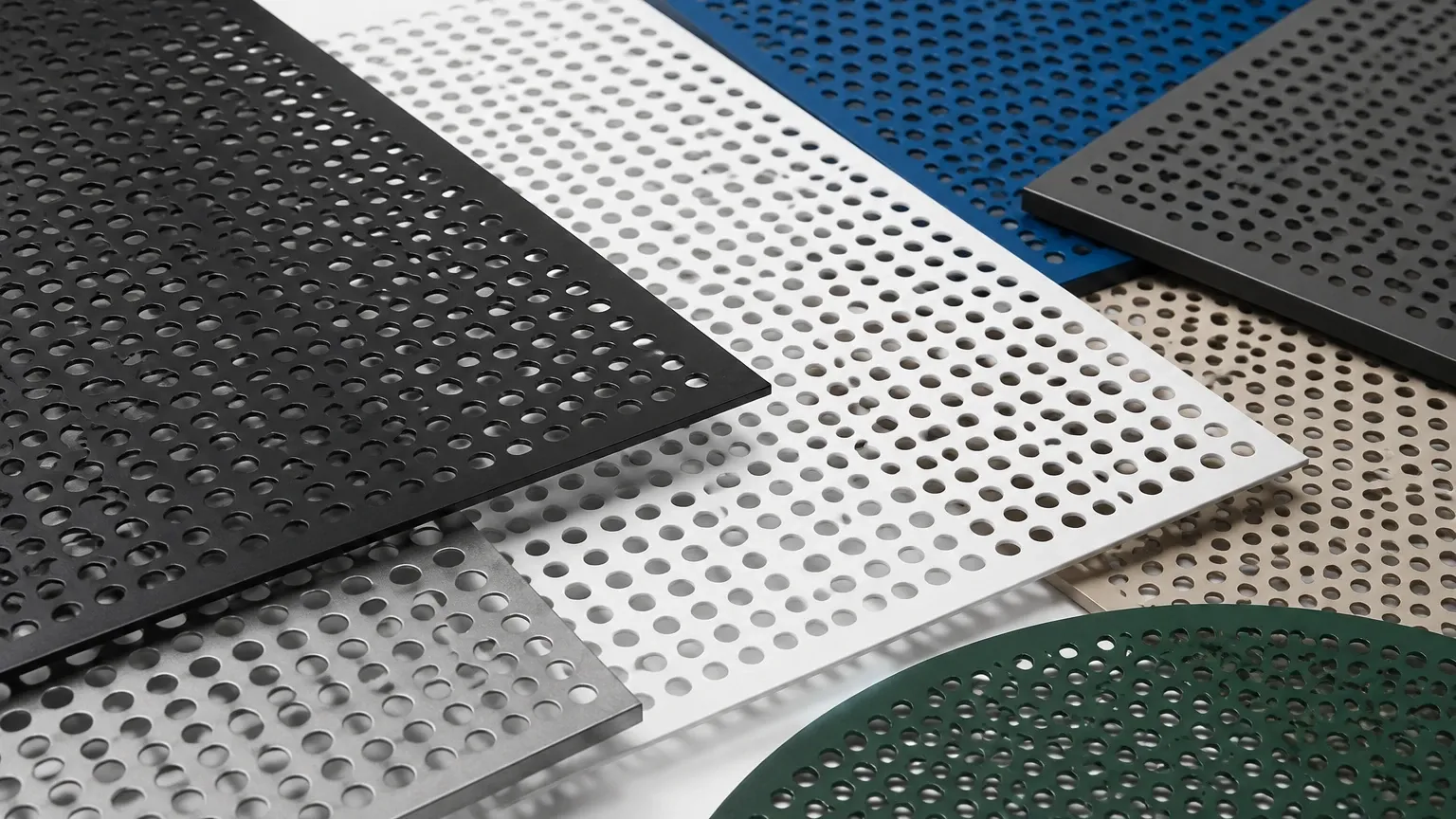
In industrial engineering and filtration, the selection of materials often requires a balance between mechanical strength, chemical resistance, and specific flow characteristics. A powder coated perforated metal sheet represents a specialized solution that addresses these requirements by combining the structural integrity of Perforated & Expanded Metal with the protective and functional benefits of advanced polymer coatings.
For engineers and procurement teams, understanding the technical nuances of how powder coating interacts with perforated substrates is essential for ensuring long-term performance in demanding environments such as chemical processing, food production, and heavy machinery manufacturing. This article explores the engineering considerations, manufacturing processes, and selection criteria for powder-coated filtration and structural components.
The Fundamentals of Powder Coated Perforated Metal
Perforated metal is produced through a cold-stamping process where a series of holes are punched into a metal sheet (typically stainless steel, carbon steel, or aluminum). While the base material provides the necessary rigidity and filtration aperture, it is often susceptible to environmental degradation or may lack the specific surface properties required for certain industrial applications.
Powder coating is a dry finishing process where thermoplastic or thermosetting polymer powder is electrostatically applied to the metal surface. The sheet is then cured under heat, allowing the powder to flow and form a hard, continuous "skin." Unlike liquid paint, powder coating provides a thicker, more uniform layer that adheres tenaciously to the complex geometries of perforated holes and edges.
Material Compatibility
Choosing the right base metal is the first step in specifying a powder coated perforated metal sheet:
* Stainless Steel (304/316): Often used in highly corrosive environments. While stainless steel is naturally corrosion-resistant, powder coating can provide an additional layer of protection against specific chemicals or serve as a color-coded safety indicator in industrial plants.
* Carbon Steel: The most common substrate for powder coating. The coating is essential here to prevent oxidation (rust), making it a cost-effective alternative to stainless steel for indoor or non-acidic outdoor applications.
* Aluminum: Lightweight and naturally resistant to corrosion, aluminum is often powder-coated for aesthetic consistency or to enhance its surface hardness in filtration housings.
Technical Engineering Considerations
When specifying a powder coated perforated metal sheet, engineers must account for how the coating thickness affects the mechanical and hydraulic properties of the component. A common oversight is failing to calculate the reduction in "open area" caused by the coating layer.
The Impact on Open Area and Flow Rates
In filtration and ventilation applications, the "open area" percentage determines the pressure drop and flow velocity. Powder coating typically adds a thickness of 60 to 120 microns (2.4 to 4.7 mils) to the surface. Because the coating wraps around the edges of every perforation, the diameter of each hole is effectively reduced by twice the coating thickness.
For example, if a sheet has 2.0 mm round holes and a powder coating thickness of 0.1 mm is applied, the final effective aperture becomes 1.8 mm. In high-precision filtration, this 10% reduction in hole diameter can significantly increase backpressure. Engineering teams must specify "pre-coat" or "post-coat" dimensions to ensure the final product meets the required flow specifications.
Edge Coverage and the Faraday Cage Effect
One of the primary challenges in coating Perforated & Expanded Metal is ensuring uniform coverage inside the holes. In electrostatic spraying, a phenomenon known as the "Faraday Cage effect" can occur, where the electrical field prevents powder from reaching the interior recesses of small apertures.
Advanced OEM manufacturers like Kaifil utilize specialized spray parameters and pre-treatment protocols to ensure that the interior walls of the perforations are fully encapsulated. This is critical because any exposed metal at the hole edges will become the primary site for corrosion, leading to premature failure of the filter or guard.
The Manufacturing and Coating Process
To achieve a high-performance finish, the manufacturing sequence must be strictly controlled. The process generally follows these stages:
1. Perforation: The metal is punched to the desired pattern (round, square, slotted, or hexagonal).
2. Degreasing and Pre-treatment: The sheets are cleaned to remove oils, lubricants, and metal fines from the punching process. For carbon steel, a phosphate conversion coating is often applied to enhance adhesion. For aluminum, a chromate or non-chrome conversion coating is used.
3. Electrostatic Application: The powder is charged and sprayed onto the grounded metal sheet. The charge ensures that the powder wraps around the edges of the perforations.
4. Curing: The sheet enters an oven (typically between 180°C and 200°C). The powder melts, chemically reacts to form a cross-linked polymer network, and hardens into a durable finish.
Performance Benefits in Industrial Applications
Integrating a powder coated perforated metal sheet into industrial systems offers several advantages over bare metal or liquid-painted alternatives.
Enhanced Chemical and Corrosion Resistance
In chemical processing and wastewater treatment, components are exposed to harsh reagents and fluctuating pH levels. Epoxy-based powder coatings offer excellent chemical resistance, while polyester-based powders provide superior UV stability for outdoor installations. This encapsulation prevents the substrate from reacting with the process media, extending the service life of the filtration component.
Abrasion Resistance and Durability
Industrial filters and guards are often subjected to high-velocity particulate flow. Powder coating is significantly harder than liquid paint, offering better resistance to chipping, scratching, and erosion. This is particularly important in the food and beverage industry, where equipment undergoes frequent high-pressure washdowns and mechanical cleaning.
Thermal Stability
Many industrial processes operate at elevated temperatures. High-temperature powder coatings (such as silicone-based formulations) can withstand continuous operating temperatures of up to 200°C without degrading or outgassing, making them suitable for hot air filtration and engine exhaust guards.
Selection Criteria for Engineers and Buyers
When sourcing powder-coated components, it is important to confirm several technical details with the manufacturer to ensure the product is fit for purpose.
1. Powder Chemistry Selection
* Epoxy: Best for indoor industrial use where high chemical resistance and hardness are required. It is prone to "chalking" if exposed to UV light.
* Polyester (TGIC or TGIC-free): The standard for outdoor applications due to its excellent weatherability and UV resistance.
* Hybrids: A blend of epoxy and polyester, offering a balance of chemical resistance and flexibility, commonly used for general machinery guards.
2. Dimensional Tolerances
Confirm whether the tolerances provided in the technical drawings apply to the bare metal or the finished coated product. For precision fitment in hydraulic systems or filter housings, the added thickness of the powder must be accounted for in the assembly clearances.
3. Quality Testing and Certification
For critical B2B applications, request documentation regarding:
* Cross-hatch Adhesion Testing (ASTM D3359): Ensures the coating will not peel under mechanical stress.
* Salt Spray Testing (ASTM B117): Validates the corrosion resistance of the coating system.
* Impact Resistance: Critical for sheets used as protective guards in heavy industry.
Maintenance and Lifecycle Considerations
A powder coated perforated metal sheet generally requires less maintenance than untreated metal. However, in filtration applications, the cleaning protocol must be compatible with the polymer coating.
Avoid using abrasive tools or harsh solvent-based cleaners that could soften or scratch the coating. For most industrial environments, a mild detergent and low-pressure water wash are sufficient to remove surface buildup. If the coating is compromised by deep scratches, it should be repaired promptly with a compatible touch-up system to prevent sub-film corrosion from spreading.
From a total cost of ownership (TCO) perspective, the initial higher cost of a powder-coated product is often offset by the reduction in replacement frequency and the prevention of process contamination caused by corroding metal particles.
Conclusion
Powder coated perforated metal sheets are more than just aesthetic components; they are engineered solutions designed to survive the rigors of industrial environments. By carefully selecting the substrate, the powder chemistry, and accounting for the physical changes introduced by the coating process, engineers can optimize their systems for durability and efficiency.
Whether used in complex filtration assemblies or as robust protective barriers, Perforated & Expanded Metal with a high-quality powder finish provides a reliable, long-term solution for modern industrial challenges. For custom requirements, working with a manufacturer that understands both the precision of metal perforation and the science of polymer coatings is the key to achieving optimal performance.
