


Perforated Metal Panel Revit Family
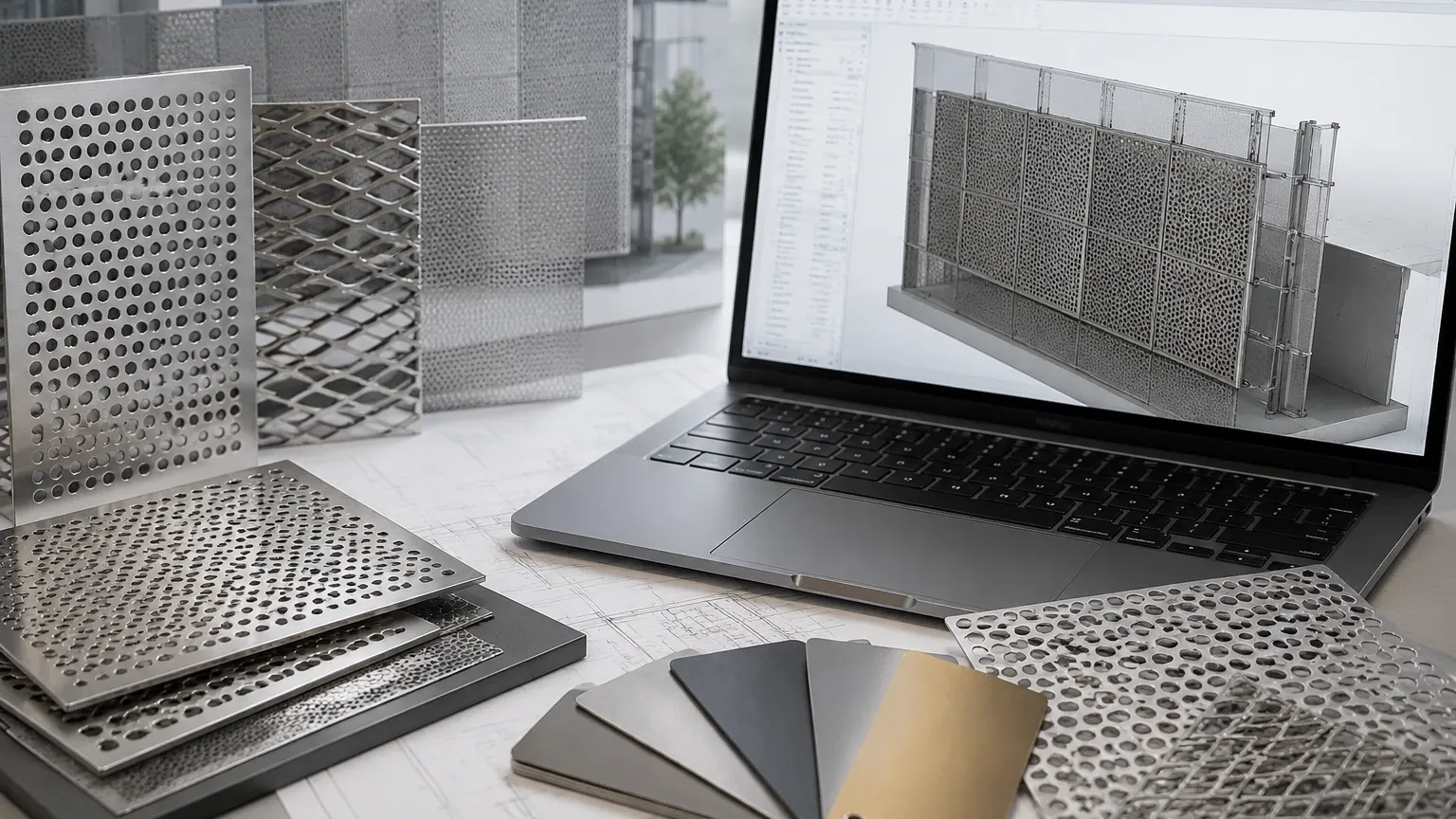
In modern industrial design and architectural engineering, the integration of Building Information Modeling (BIM) has transformed how filtration systems and structural components are specified. A perforated metal panel revit family serves as a digital representation of physical components, allowing engineers to simulate performance, spatial requirements, and aesthetic integration before a single sheet of metal is punched or expanded. For manufacturers like Kaifil, providing technical data that aligns with these digital models is essential for ensuring that the transition from a virtual design to a physical filtration solution is seamless and accurate.
Understanding the nuances of a Revit family for perforated metal requires a balance between visual representation and engineering data. Whether the application involves chemical processing, food and beverage production, or hydraulic systems, the digital model must accurately reflect the physical properties of Perforated & Expanded Metal to avoid costly errors during the procurement and installation phases.
The Role of Revit Families in Industrial Filtration Design
A Revit family is essentially a grouping of 2D and 3D information that defines a specific component within a BIM environment. For perforated metal panels, these families are often "parametric," meaning they can be adjusted for height, width, thickness, and hole patterns based on specific project requirements.
In industrial filtration, the Revit family is more than just a visual placeholder. It acts as a data repository for critical engineering metrics. When an engineer selects a perforated metal panel for a filtration housing or a protective screen, the Revit model should ideally contain information regarding material grade (such as 304 or 316 stainless steel), hole diameter, pitch, and the resulting open area percentage. This data allows for automated calculations within the BIM software, such as air or fluid flow rates and pressure drop estimations, which are vital for the performance of the overall system.
Technical Parameters and Engineering Considerations
When working with a perforated metal panel revit family, several technical parameters must be defined to ensure the digital model remains a factual representation of the manufactured product. These parameters directly influence the performance of the filtration component in demanding environments.
Open Area Percentage
One of the most critical factors in filtration is the open area percentage. This is the ratio of the total area of the holes to the total area of the panel. In a Revit family, this should be a calculated parameter. If the digital model specifies a 40% open area to meet flow requirements, the physical manufacturing process must be able to replicate this without compromising the structural integrity of the panel. Kaifil’s expertise in precision metal filter components ensures that these calculations translate accurately into the final product.
Hole Patterns and Pitch
The arrangement of holes—whether staggered or straight—significantly impacts both the filtration efficiency and the strength of the panel. Staggered patterns (usually at 60 degrees) are the most common in industrial applications because they provide the highest open area while maintaining structural rigidity. The "pitch" is the distance from the center of one hole to the center of the next. In a Revit environment, these details must be precisely defined so that the visual "texture" of the panel matches the physical reality of the Perforated & Expanded Metal being ordered.
Material Thickness and Gauge
The thickness of the stainless steel sheet determines the durability of the filter under pressure. Industrial applications often require specific gauges to withstand hydraulic forces or chemical erosion. The Revit family should include a parameter for "nominal thickness" that accounts for standard manufacturing tolerances. Providing this information early in the design phase helps purchasing teams avoid selecting materials that are either too thin for the application or unnecessarily heavy, which increases total cost.
Selection Criteria for Accurate Digital Modeling
Engineers and architects must evaluate a perforated metal panel revit family based on its utility rather than just its appearance. High-quality BIM content should provide the following functionality:
1. Level of Detail (LOD) Control: A common mistake in BIM is over-modeling. A panel with thousands of physically modeled holes can significantly slow down software performance. Professional Revit families often use "symbolic lines" or high-quality textures for lower LODs, while reserving detailed geometry for high-resolution renderings or specific engineering checks.
2. Material Specifications: The family should allow users to toggle between different stainless steel grades. For example, in pharmaceutical or food and beverage applications, 316L stainless steel is often required for its superior corrosion resistance and ease of sterilization. Having this data embedded in the Revit family ensures that the specification is carried through to the final bill of materials (BOM).
3. Customization Flexibility: Since industrial filtration often requires bespoke solutions, the Revit family should be flexible enough to accommodate custom dimensions and non-standard hole shapes (such as slots or square holes) that Kaifil can manufacture through specialized OEM processes.
Common Risks and Challenges in Digital Specification
While BIM offers numerous advantages, there are inherent risks when the digital model deviates from manufacturing realities. One of the primary risks is the "unbuildable" design. A Revit user might create a perforated pattern that leaves insufficient margins at the edges of the panel, making it impossible to weld the component into a filter cartridge or frame.
Another risk involves the discrepancy between "nominal" and "actual" dimensions. In the world of Perforated & Expanded Metal, the expansion process for metal sheets can result in slight variations in thickness and overall dimensions. If the Revit family does not account for these manufacturing tolerances, the panels may not fit correctly within their housings during assembly.
Furthermore, engineers must be cautious of "generic" Revit families found online. These models often lack the specific performance data required for industrial-grade filtration. A generic model might look like a perforated panel but fail to provide the flow coefficient data or the weight calculations necessary for structural support design.
Bridging the Gap: From Revit to Kaifil Production
To ensure that a project moves successfully from the design phase to the installation phase, clear communication between the design team and the manufacturer is paramount. When using a perforated metal panel revit family, the following steps should be taken to confirm the feasibility of the design:
Confirming Hole-to-Bar Ratios
In filtration, the "bar" is the metal remaining between the holes. If the bar is too narrow relative to the hole size and material thickness, the panel may warp during the punching process or fail under operational pressure. Engineers should verify these ratios with Kaifil’s technical team to ensure the design is robust enough for the intended environment, such as high-pressure hydraulic systems.
Edge and Margin Requirements
Physical panels require "margins"—solid metal borders—for structural stability and for attachment to other components. A Revit model that shows perforations running off the edge of the sheet is often inaccurate. Specifying the required margin width in the Revit family parameters helps the manufacturer understand where the holes should stop, ensuring a clean and functional finish.
Surface Treatments and Finishing
Industrial filters often require specific surface treatments, such as electropolishing for pharmaceutical applications or specialized coatings for chemical resistance. While these are difficult to represent visually in a Revit model, they should be included as "identity data" within the family. This ensures that the purchasing department receives a complete specification that includes both the physical geometry and the necessary chemical properties.
Total Cost Considerations and Performance Expectations
Integrating a highly accurate perforated metal panel revit family into the project workflow can lead to significant cost savings. By simulating the filtration system in a BIM environment, engineers can optimize the size and number of panels required, reducing material waste.
Furthermore, accurate digital modeling allows for better lifecycle management. When a filter cartridge reaches the end of its service life, the original Revit model provides an immediate reference for the exact specifications needed for a replacement. This reduces downtime in critical industrial processes, such as water treatment or chemical manufacturing, where every hour of maintenance counts.
Kaifil supports this technical approach by providing high-performance Perforated & Expanded Metal components that meet the rigorous standards set during the digital design phase. By focusing on durability, precise filtration performance, and reliable manufacturing, Kaifil ensures that the physical product lives up to the expectations established by the Revit model.
Conclusion: The Importance of Technical Verification
The use of a perforated metal panel revit family is a powerful tool for modern industrial engineering, but it is only as effective as the data it contains. To achieve optimal filtration performance and structural integrity, engineers must move beyond simple 3D geometry and focus on the technical realities of metal fabrication.
Before proceeding with a large-scale order, it is recommended that technical professionals confirm their digital specifications against actual manufacturing capabilities. This includes verifying material compatibility, open area calculations, and mounting requirements. By aligning the digital "family" with the physical expertise of a manufacturer like Kaifil, organizations can ensure that their filtration solutions are not only efficient and cost-effective but also durable enough to withstand the most demanding industrial environments.
