


Powder Coated Perforated Metal
In industrial engineering and filtration design, the selection of materials often requires a balance between structural integrity, chemical resistance, and environmental durability. Powder coated perforated metal represents a specialized category of processed materials where mechanical perforation meets advanced surface finishing. While perforated metal provides the necessary open area for airflow, liquid filtration, or sound attenuation, the powder coating process adds a protective and functional layer that significantly extends the service life of the component in demanding environments.
For engineers and procurement teams, understanding the technical nuances of powder coated perforated metal is essential for ensuring that the final product meets both performance specifications and long-term maintenance requirements. This guide examines the manufacturing processes, material considerations, and engineering trade-offs associated with these components.
The Technical Fundamentals of Perforation and Coating
Perforated metal is produced by mechanically punching or laser-cutting a series of holes into a metal sheet. The resulting pattern determines the "open area" percentage, which is a critical calculation for any application involving fluid dynamics or filtration. When these sheets are integrated into Perforated & Expanded Metal solutions, they often serve as the primary screening element or as a high-strength support structure for finer wire mesh filters.
Powder coating is a dry finishing process where thermoplastic or thermoset polymer powder is electrostatically applied to the metal surface. The coated metal is then cured under heat, allowing the powder to flow and form a continuous, hard-wearing "skin." Unlike liquid paint, powder coating does not require a solvent to keep the binder and filler parts in a liquid suspension form, resulting in a thicker, more uniform layer without the risk of runs or sags.
Impact on Filtration Geometry
One of the most critical engineering considerations for powder coated perforated metal is the change in hole dimensions. The coating thickness—typically ranging from 60 to 120 microns—effectively reduces the diameter of each perforation. For high-precision filtration applications, engineers must calculate the "post-coating" open area. If a design requires a specific micron rating or flow rate, the initial punch size must be slightly oversized to compensate for the inward growth of the coating layer during the curing process.
Material Substrates and Compatibility
While powder coating can be applied to various metals, the choice of the base substrate is governed by the mechanical requirements of the application. At Kaifil, the focus remains on high-performance alloys that provide the structural foundation necessary for industrial filtration.
1. Stainless Steel (304, 316, 316L): Often chosen for its inherent corrosion resistance. Powder coating stainless steel is typically done for added chemical protection in highly acidic or alkaline environments, or for color-coding components in complex industrial systems to prevent installation errors.
2. Aluminum: Lightweight and naturally resistant to atmospheric corrosion. Aluminum is frequently used in architectural screening and lightweight filtration housings where weight reduction is a priority.
3. Carbon Steel: The most common substrate for powder coating. Since carbon steel is highly susceptible to oxidation, the powder coating serves as the primary barrier against rust. It is a cost-effective solution for indoor industrial environments or controlled outdoor settings.
Before the coating is applied, the perforated metal must undergo a rigorous pre-treatment process. This usually involves degreasing, pickling, or phosphate conversion coating to ensure maximum adhesion. For stainless steel substrates, specialized primers may be required to prevent delamination under thermal stress.
Engineering Advantages of Powder Coated Perforated Metal
Beyond the aesthetic possibilities, powder coating provides several functional advantages that are vital in B2B and industrial contexts:
Enhanced Chemical and Corrosion Resistance
In chemical processing and water treatment, filters are exposed to aggressive media. A high-quality powder coat, such as an epoxy or polyester-TGIC (Triglycidyl Isocyanurate) resin, provides a non-reactive barrier that prevents the substrate from reacting with the processed fluids. This is particularly important for carbon steel components that would otherwise fail rapidly in humid or chemically active environments.
Abrasion and Impact Resistance
Industrial filtration systems often handle slurries or air streams containing particulate matter. These particles can cause erosive wear on the filter surface. Powder coating is significantly harder than conventional liquid paint, offering superior resistance to chipping, scratching, and abrasion. This durability ensures that the protective barrier remains intact even when subjected to high-velocity debris.
Thermal Stability
Modern powder coatings are engineered to withstand specific temperature ranges. For hydraulic systems or steam filtration support, thermosetting powders are used because they undergo a chemical cross-linking reaction during curing. This prevents the coating from melting or softening when exposed to operational heat, maintaining the integrity of the perforation pattern.
Design Considerations: Hole Patterns and Open Area
The performance of powder coated perforated metal is largely dictated by its geometry. Engineers must select patterns that balance structural strength with the required throughput.
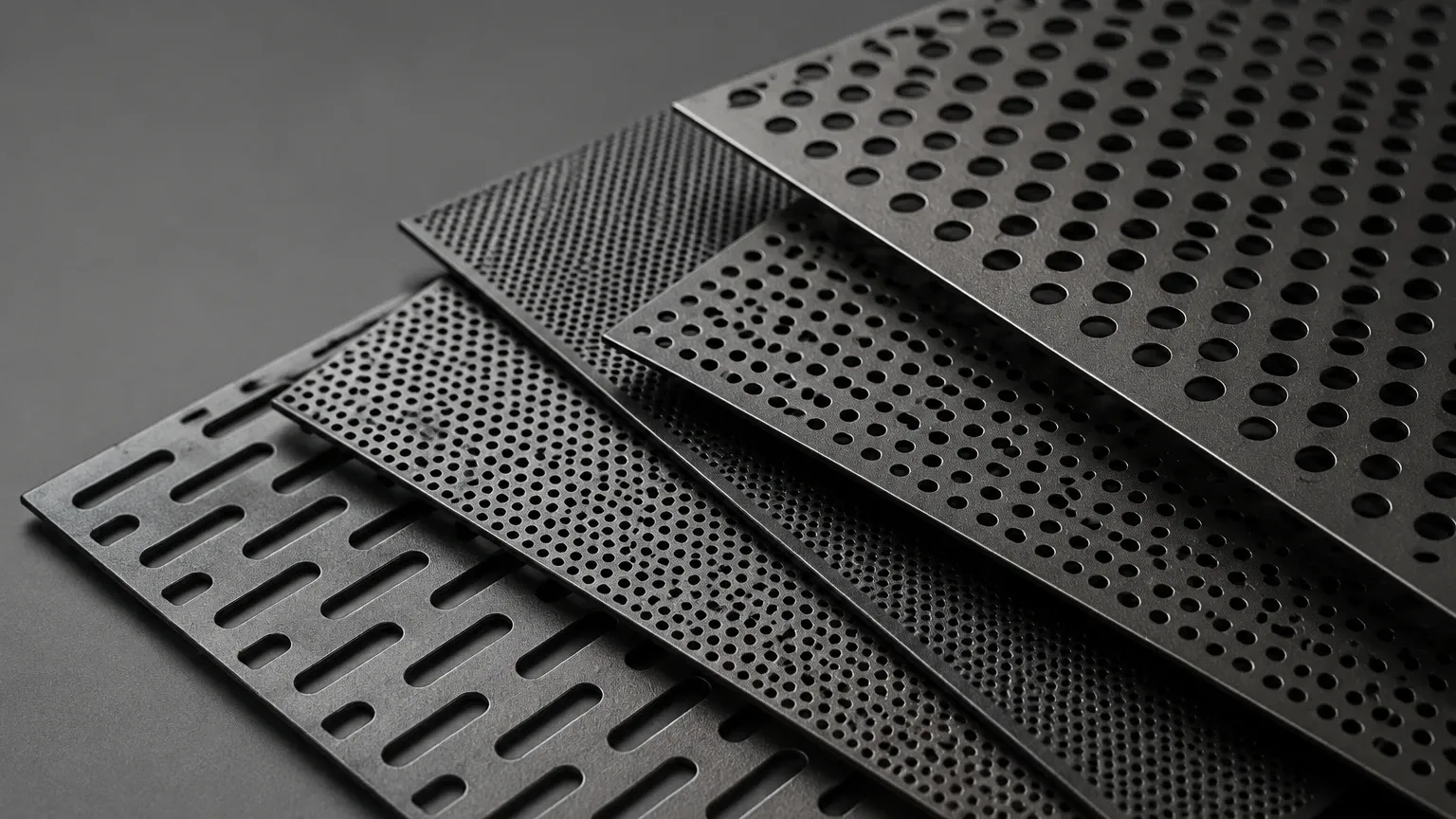
* Round Holes: The most common and versatile pattern. Round holes offer the best structural integrity and are the easiest to coat uniformly. They are typically arranged in a 60-degree staggered pattern, which maximizes the open area while maintaining sheet strength.
* Square Holes: Often used when a higher open area is required. However, square holes have sharp corners where the powder coating may build up or thin out (the "edge effect"), potentially leading to premature coating failure at the stress points.
* Slotted Holes: Ideal for screening elongated materials or for use in drainage systems. The orientation of the slots (parallel or staggered) affects the directional strength of the sheet.
When specifying powder coated perforated metal, it is essential to define the Pitch (the distance from the center of one hole to the center of the next) and the Margin (the unperforated area around the edges of the sheet). Large margins are often necessary for welding the perforated sheet into a filter cartridge frame or housing.
Quality Control and Evaluation Criteria
To ensure the reliability of filtration components, several standardized tests should be employed to evaluate the quality of the powder coating on perforated metal:
1. Adhesion Testing (ASTM D3359): Often performed using the cross-hatch tape test, this ensures the coating is chemically and mechanically bonded to the substrate. Poor adhesion in a filter could lead to coating flakes entering the downstream fluid, causing contamination.
2. Salt Spray Testing (ASTM B117): This test evaluates the corrosion resistance of the coated part by exposing it to a salt-saturated mist for a specified duration (e.g., 500, 1000, or 2000 hours). It is a standard requirement for components used in marine or outdoor industrial environments.
3. Coating Thickness Measurement: Using ultrasonic or magnetic gauges to ensure the coating meets the specified micron range. Consistency across the entire sheet is vital to maintain uniform flow characteristics.
4. Flexibility and Impact Tests: These confirm that the coating will not crack if the perforated sheet is rolled into a cylindrical filter cartridge after the coating process.
Applications in Industrial Filtration and Beyond
Powder coated perforated metal is utilized across a broad spectrum of industries due to its versatility:
* Food and Beverage: Used in non-contact areas of processing plants where wash-down procedures require materials that can withstand harsh cleaning agents without corroding.
* Acoustic Insulation: Perforated metal acts as a protective face for sound-absorbing materials in engine rooms or industrial enclosures. The powder coating prevents the metal from vibrating and adds to the longevity of the enclosure.
* HVAC Systems: In large-scale ventilation, powder coated screens protect sensitive filtration media from large debris while resisting the moisture found in outdoor air intakes.
* Protective Guarding: In machinery manufacturing, these sheets provide safety barriers that allow for visibility and airflow while protecting operators from moving parts. The coating ensures the guards remain visible (through safety colors) and rust-free.
Specification Checklist for Engineers
When requesting a quote or designing a component involving powder coated perforated metal, the following technical details should be confirmed:
* Base Material: Specify the exact alloy (e.g., Stainless Steel 316L vs. Cold Rolled Steel).
* Hole Shape and Size: Define the diameter and the arrangement (staggered or straight).
* Open Area Percentage: Calculate this based on the final coated dimensions, not the raw punch size.
* Sheet Thickness: Specify the gauge of the metal before coating.
* Powder Type: Choose between Epoxy (chemical resistance), Polyester (UV resistance), or Fluoropolymer (extreme weather/heat).
* Color and Finish: Select the RAL color and the gloss level (matte, satin, or high-gloss).
* Post-Processing: Determine if the sheet needs to be formed, welded, or degreased after coating, as these actions can damage the finish if not planned correctly.
By addressing these factors during the design phase, engineers can leverage the benefits of powder coated perforated metal to create filtration and screening solutions that are both functional and durable. Whether used as a standalone screen or as a support structure within a complex filter assembly, the synergy between precision perforation and advanced coating technology provides a reliable solution for modern industrial challenges.
