


Piece of Perforated Metal Forever
In industrial engineering, the term "forever" is rarely used literally, yet it serves as a benchmark for components designed with such high durability and corrosion resistance that their service life spans decades. When selecting materials for filtration, support structures, or protective barriers, achieving a piece of perforated metal forever—or as close to it as possible—requires a deep understanding of metallurgy, mechanical stresses, and environmental interactions.
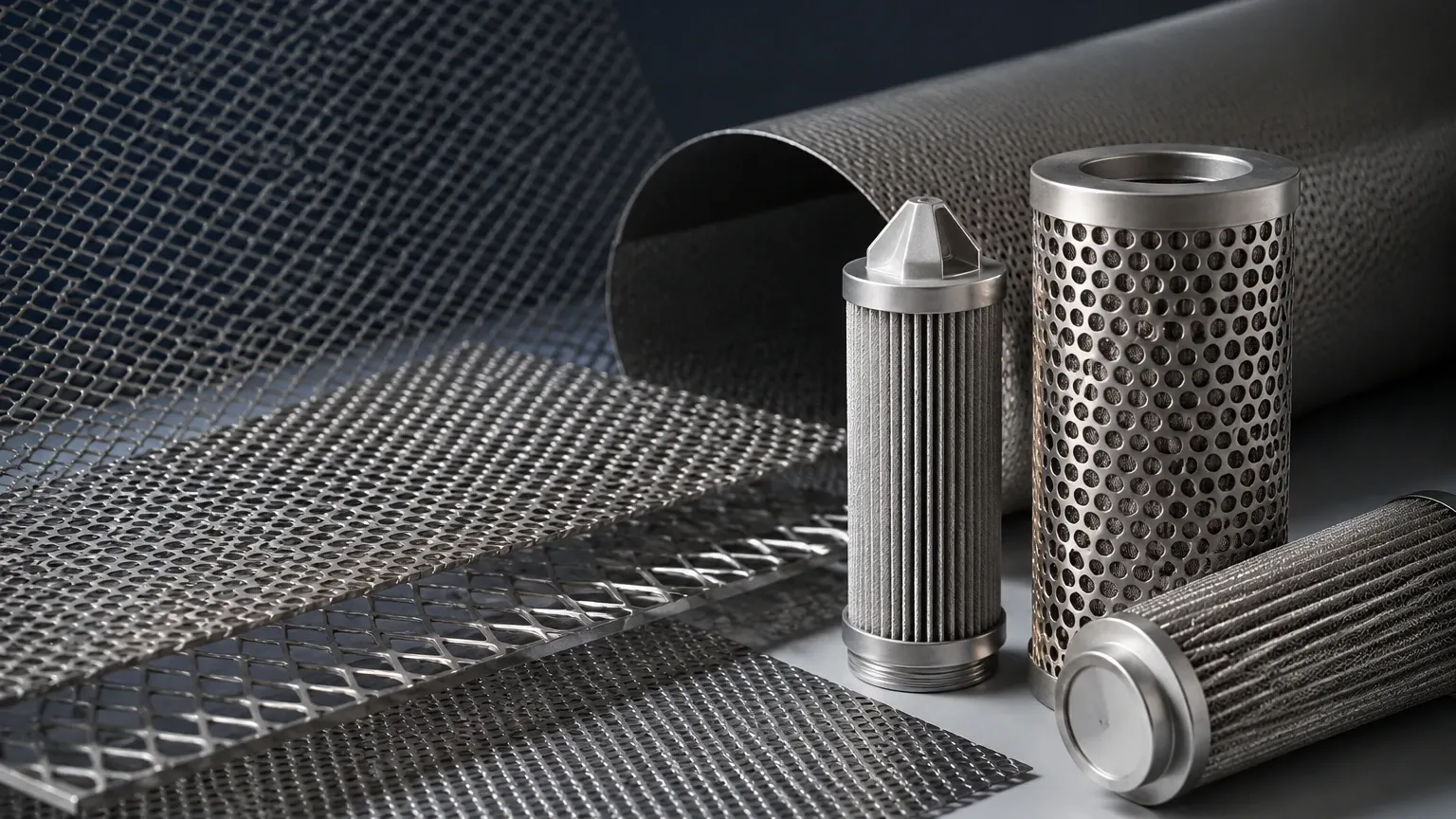
Perforated & Expanded Metal serves as the backbone for countless industrial systems. Whether it is used as a support core for high-pressure filter cartridges or as a primary screen in chemical processing, the longevity of these components is not a matter of luck; it is a result of precise engineering and material selection. This guide explores the technical factors that determine the lifespan of metal filtration components and how engineers can optimize their designs for maximum durability.
Engineering for Longevity: Material Selection and Metallurgy
The most critical factor in ensuring a piece of perforated metal remains functional indefinitely is the choice of alloy. In industrial environments where moisture, chemicals, and temperature fluctuations are constant, standard carbon steel often fails prematurely due to oxidation. To achieve long-term reliability, engineers typically turn to stainless steel or specialized alloys.
Stainless Steel 304 and 316L
Stainless steel is the industry standard for durable perforated components. Grade 304 offers excellent resistance to atmospheric corrosion and is suitable for many food and beverage applications. However, for environments involving chlorides or marine conditions, Grade 316L is preferred. The addition of molybdenum in 316L provides superior resistance to pitting and crevice corrosion, which are the primary causes of failure in perforated screens.
High-Nickel Alloys
In extreme chemical processing or high-temperature applications, even 316L may not suffice. Alloys such as Monel, Inconel, or Hastelloy are utilized when the goal is to install a component that will withstand aggressive acids or temperatures exceeding 800°C. These materials ensure that the structural integrity of the perforation pattern remains intact despite the harshness of the operating medium.
Understanding Perforation Patterns and Structural Integrity
The longevity of a piece of perforated metal forever is also dictated by its geometric configuration. Perforating a metal sheet inherently introduces stress concentrators. If the pattern is not engineered correctly, the sheet may succumb to fatigue or mechanical deformation under pressure.
Hole Shapes and Stress Distribution
Round holes are the most common and generally the most durable. They offer a natural resistance to stress cracking because the load is distributed evenly around the circumference of the hole. In contrast, square or hexagonal holes, while offering higher open areas, have sharp corners that can act as initiation points for cracks, especially in high-vibration environments like hydraulic systems.
The Importance of Margins and Bridges
The "bridge" is the distance between two adjacent holes. If the bridge is too narrow, the material becomes flimsy and prone to stretching. Conversely, a bridge that is too wide reduces the filtration efficiency (open area). For a component intended for long-term use, the bridge-to-thickness ratio must be carefully calculated. As a general rule, the bridge width should not be less than the material thickness to maintain structural rigidity over time.
Expanded Metal vs. Perforated Metal: Durability Trade-offs
When specifying Perforated & Expanded Metal, it is essential to understand how the manufacturing process affects the final product's lifespan. While both serve similar functions, their mechanical properties differ significantly.
The Expanded Metal Advantage
Expanded metal is produced by slitting and stretching a single sheet of metal. This process creates a diamond-shaped pattern without any waste of material. Because the strands and bonds are part of the original sheet, the structure is incredibly rigid. Expanded metal does not unravel, making it an excellent choice for heavy-duty protective grilles or secondary support layers in multi-stage filtration systems. Its monolithic structure contributes to its reputation as a component that can last "forever" under heavy mechanical loads.
The Precision of Perforated Metal
Perforated metal is created by punching holes out of a solid sheet. While this results in some material waste, it allows for much higher precision in hole size and placement. For fine filtration applications where a specific micron rating must be maintained, perforated metal is the superior choice. Its flat surface is also easier to clean, which is a vital factor in extending its service life through multiple maintenance cycles.
Environmental Factors Affecting Service Life
To ensure a piece of perforated metal forever, engineers must account for the specific environmental stresses the component will face. Failure to do so can lead to premature degradation, even with high-quality materials.
Corrosion and Chemical Compatibility
Chemical erosion is the most common threat to metal longevity. In water treatment or chemical manufacturing, the pH levels and the presence of oxidizing agents must be analyzed. For example, a perforated screen in a desalination plant faces constant chloride attack. Using a duplex stainless steel or a specialized coating can prevent the localized corrosion that would otherwise shorten the component's life.
Pressure Drops and Mechanical Fatigue
In filtration, the pressure differential (delta P) across a perforated plate increases as the filter captures debris. If the plate is not thick enough to withstand the maximum expected pressure, it will eventually bow or burst. Calculating the yield strength of the material relative to the open area is essential. A thicker gauge of metal may increase initial costs but is a prerequisite for a component intended for permanent installation.
Maintenance and Cleaning for Permanent Performance
No industrial component is truly "set and forget." The longevity of a piece of perforated metal forever is highly dependent on the ability to restore its original performance through cleaning.
Cleanability and Surface Finish
In the food, beverage, and pharmaceutical industries, surface finish is paramount. A rough surface allows bacteria and particulates to adhere, leading to bio-corrosion and clogging. Electropolishing or passivating the perforated metal creates a smooth, chromium-rich surface that is highly resistant to fouling. This makes the cleaning process—whether through backwashing, ultrasonic cleaning, or chemical CIP (Clean-In-Place) systems—more effective, thereby extending the life of the filter.
Replacement Cycles vs. Permanent Components
While some filters are designed to be disposable, perforated metal components are often intended to be permanent parts of the machinery. By selecting the correct gauge and material, the "replacement cycle" can be extended from months to years, or even decades. Engineers should evaluate the Total Cost of Ownership (TCO); a higher upfront investment in a precision-engineered perforated component often pays for itself by eliminating the downtime associated with frequent replacements.
Customization for Specific Industrial Requirements
Standard off-the-shelf perforated sheets rarely meet the rigorous demands of specialized industrial applications. Customization is the key to achieving a piece of perforated metal forever.
Tailored Open Areas
The open area percentage determines both the flow rate and the strength of the sheet. For high-viscosity fluids, a larger open area is needed to prevent excessive pressure buildup. However, for structural support, a lower open area provides more metal mass to resist deformation. Custom manufacturing allows for the optimization of these variables based on the specific flow dynamics of the application.
Specialized Fabrication
Beyond the perforation pattern, the way the metal is formed—rolled into cylinders, welded into cones, or framed with reinforced edges—impacts its durability. High-quality welding techniques, such as TIG or plasma welding, ensure that the seams of a perforated filter cartridge are as strong as the base material, preventing failure at the joints.
Conclusion: Selecting the Right Partner for Durable Solutions
Achieving the goal of a piece of perforated metal forever requires more than just buying a sheet of metal with holes. It requires a partnership with a manufacturer that understands the nuances of filtration physics and material science.
When evaluating Perforated & Expanded Metal for your next project, consider the following checklist to ensure maximum longevity:
1. Material Grade: Is the alloy compatible with the chemical and thermal profile of the process?
2. Gauge and Thickness: Does the material have the structural integrity to withstand maximum pressure differentials?
3. Pattern Optimization: Is the hole size and bridge width balanced for both flow efficiency and mechanical strength?
4. Surface Treatment: Would passivation or electropolishing improve cleanability and corrosion resistance?
5. Fabrication Quality: Are the welds and forming processes performed to industrial standards to prevent stress points?
By addressing these technical considerations during the design phase, engineers can specify components that provide reliable, high-performance filtration for the long term, reducing maintenance overhead and ensuring the continuous operation of critical industrial systems.
