


Price of Perforated Sheet Metal
In industrial procurement, understanding the price of perforated sheet metal requires a comprehensive analysis of material science, mechanical engineering, and manufacturing logistics. For engineers and purchasing teams in the chemical, food and beverage, and pharmaceutical sectors, perforated metal is rarely a commodity purchase; it is a precision component designed to meet specific filtration, separation, or structural requirements.
At Kaifil, we recognize that the total cost of a filtration component is influenced by more than just the raw material weight. Factors such as aperture precision, open area ratios, and secondary processing significantly impact the final quote. This guide examines the technical variables that determine the price of perforated sheet metal and provides actionable insights for optimizing procurement costs without compromising performance.
Core Factors Influencing Material Costs
The primary driver of the price of perforated sheet metal is the base material. Because these components are often deployed in corrosive or high-temperature environments, material selection is the first technical decision that dictates the budget.
Stainless Steel Grades
Stainless steel is the industry standard for high-performance filtration.
* SS304/304L: This is the most common grade for general industrial use. It offers excellent corrosion resistance and formability at a mid-range price point.
* SS316/316L: Containing molybdenum, this grade provides superior resistance to chlorides and acids. It is essential for marine, pharmaceutical, and chemical processing applications but carries a higher price premium compared to 304.
* Specialty Alloys: For extreme environments, materials like Duplex stainless steel or Monel may be required. These materials significantly increase the cost due to both higher raw material prices and increased difficulty in perforation.
Gauge and Thickness
The thickness of the sheet—often measured in gauge or millimeters—affects the price in two ways: material volume and machine wear. Thicker sheets require more force to perforate, which can slow down production speeds and increase tool maintenance costs. Conversely, extremely thin foils require specialized handling to prevent warping during the punching process, which can also add a technical premium to the price.
Technical Specifications and Production Economics
The geometry of the perforation pattern is a critical technical variable. While standard patterns are cost-effective, custom configurations designed for specific flow rates or pressure drops will influence the manufacturing overhead.
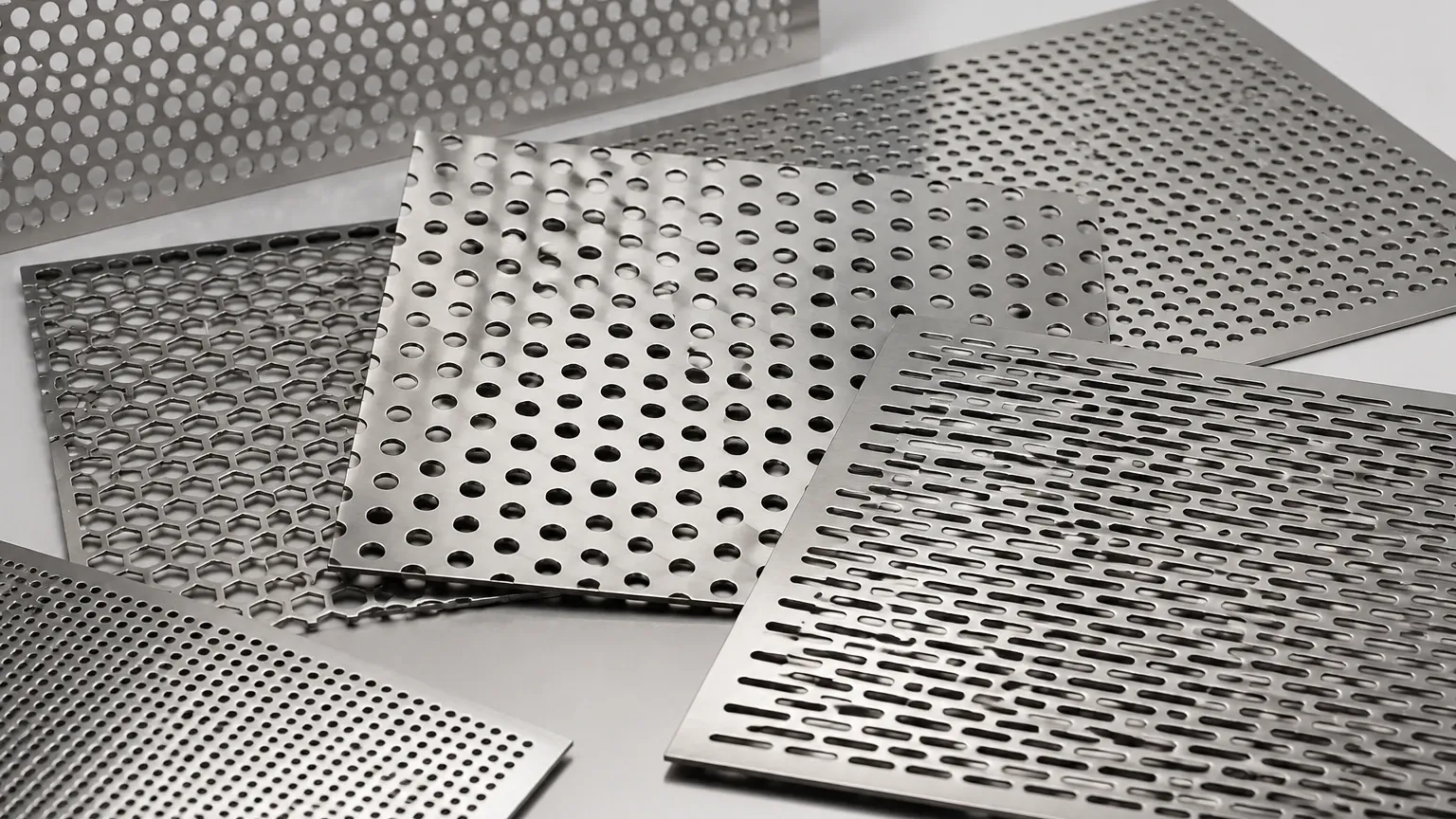
Hole Shape and Pattern
* Round Holes: These are the most economical to produce. Round punches are structurally robust and easier to maintain, leading to lower tooling costs. Most industrial filtration applications utilize 60-degree staggered round holes because they provide the highest open area and structural integrity.
* Square and Slotted Holes: These shapes are often used for specific aesthetic or mechanical screening purposes. However, square punches have corners that are prone to wear and breakage, which can increase the production cost compared to round holes.
* Custom Shapes: Hexagonal or decorative patterns require custom-made dies. The initial investment in tooling for custom patterns can be substantial, making them more suitable for high-volume production runs.
Open Area and Pitch
The "open area" is the percentage of the sheet that consists of holes. A higher open area generally means more hits per square foot. While this reduces the total weight of the finished sheet, it increases the machine time required for perforation. Engineers must balance the need for high flow rates (high open area) with the structural requirement of the sheet. If the pitch (the distance between hole centers) is too small, the material between the holes (the "bridge") may become brittle or prone to distortion during the manufacturing process.
Perforated vs. Expanded Metal: A Cost Comparison
When evaluating Perforated & Expanded Metal, it is important to understand the fundamental differences in their manufacturing processes, as these directly affect the price of perforated sheet metal relative to its alternatives.
Manufacturing Efficiency
Perforated metal is created by punching holes out of a solid sheet. The material removed (the slugs) is typically recycled, but the process inherently involves material loss during the initial phase. Expanded metal, on the other hand, is produced by slitting and stretching the sheet simultaneously. There is virtually no material waste in the expansion process. This makes expanded metal a more cost-effective solution for applications where high precision and specific hole shapes are less critical than general screening or structural support.
Performance Trade-offs
While expanded metal is often cheaper, perforated metal offers superior precision in terms of hole size and placement. For precision filtration cartridges or chemical processing screens where a specific micron rating or flow coefficient is required, perforated metal is the necessary choice despite the higher price point. The ability to maintain solid margins (unperforated areas) for welding and mounting is another advantage that justifies the cost of perforated sheets in complex assemblies.
Customization and Secondary Processing Costs
For many B2B applications, the raw perforated sheet is only the starting point. The final price of perforated sheet metal is often determined by the additional engineering steps required to turn a flat sheet into a functional component.
Precision Cutting and Forming
Standard sheets usually come in 4'x8' or 1m x 2m sizes. If your application requires specific circular discs, narrow strips, or complex geometries, CNC laser or waterjet cutting is required. Furthermore, if the filter needs to be rolled into a cylinder for a filter cartridge or bent into a frame, these forming operations add to the labor and machine time.
Surface Treatments and Finishing
In the pharmaceutical and food industries, surface finish is paramount to prevent bacterial growth and ensure cleanability.
* Degreasing: Removing lubricants used during the punching process.
* Passivation: A chemical treatment for stainless steel to enhance its natural corrosion resistance.
* Electropolishing: A process that removes a microscopic layer of material to create a mirror-like, ultra-smooth finish. This is common in high-purity applications but adds a significant percentage to the total cost.
* Powder Coating/Galvanizing: For carbon steel applications, these finishes are necessary for longevity but increase the per-unit price.
Quantity, Lead Times, and Logistics
In the B2B manufacturing sector, volume is one of the most effective levers for reducing the price of perforated sheet metal.
Economies of Scale
The setup time for a perforation press—including installing the die sets, calibrating the feed mechanism, and performing test runs—is roughly the same whether you are producing five sheets or five hundred. Consequently, small-batch or prototype orders carry a much higher unit cost due to the proportional impact of setup charges. For recurring industrial needs, ordering in larger quantities or establishing a blanket purchase order can significantly lower the price per piece.
Shipping and Packaging
Perforated metal is heavy and, depending on the thickness and open area, can be susceptible to bending or edge damage during transit. Specialized packaging, such as custom wooden crates or heavy-duty palletizing, is often required to ensure the material arrives flat and within tolerance. These logistics costs should be accounted for in the total procurement budget, especially for international shipments.
Total Cost of Ownership (TCO) in Filtration
When engineers evaluate the price of perforated sheet metal, they must look beyond the initial purchase price and consider the Total Cost of Ownership. A cheaper material or a less precise perforation pattern may lead to higher costs in the long run.
1. Maintenance and Cleaning: A high-quality stainless steel perforated filter with a smooth finish will be easier to backwash or chemically clean, reducing downtime in a production line.
2. Durability: Using the correct gauge and grade (e.g., SS316L instead of SS304) may increase the initial price by 20%, but if it doubles the service life of the component in a corrosive environment, the lifecycle cost is significantly lower.
3. System Efficiency: A precisely engineered open area reduces pressure drop across the filter. This means pumps do not have to work as hard, leading to measurable energy savings over the life of the equipment.
Technical Confirmation Before Purchasing
To ensure you receive an accurate and competitive quote for perforated metal components, it is essential to provide detailed technical specifications. Before contacting a manufacturer, confirm the following data points:
* Material Grade: Specify the exact alloy (e.g., SS316L vs. SS316).
* Hole Dimensions: Diameter of the hole and the pitch (center-to-center distance).
* Pattern Orientation: Staggered (60 or 45 degrees) or straight line.
* Margins: Specify the required solid borders on all four sides of the sheet. This is critical for welding and structural integrity.
* Flatness Tolerances: Industrial perforation can cause internal stresses that lead to bowing; specify if high-precision leveling is required.
By focusing on these technical details, procurement teams can avoid the hidden costs associated with miscommunication and ensure that the Perforated & Expanded Metal they receive meets the rigorous demands of their industrial applications.
At Kaifil, we combine advanced manufacturing capabilities with deep engineering expertise to provide custom filtration solutions. Whether you require standard perforated sheets or complex, multi-stage filter cartridges, our team works closely with you to optimize the design for both performance and cost-effectiveness. Understanding the nuances of the price of perforated sheet metal allows for better budgeting and more reliable industrial operations.
