


Quartered Perforated Paper
In the specialized field of industrial filtration, the term "quartered perforated paper" often refers to specific configurations of filter media used in laboratory analysis, pilot plant testing, and certain low-pressure liquid-solid separation processes. While paper-based media offer a cost-effective solution for single-use or batch-specific applications, their performance is fundamentally limited by their structural integrity. For engineers and procurement teams in the chemical, pharmaceutical, and food processing industries, understanding the relationship between consumable media like quartered perforated paper and the rigid structural supports provided by Perforated & Expanded Metal is essential for optimizing filtration efficiency and ensuring system reliability.
This guide examines the technical role of perforated media, the engineering considerations for selecting support structures, and the transition from disposable paper solutions to durable stainless steel filtration components.
The Engineering Role of Perforated Media in Filtration
Filtration is rarely a single-component process. In most industrial settings, the filtration "septum"—the actual barrier that captures particles—requires a secondary structure to prevent mechanical failure under pressure. Quartered perforated paper is frequently employed in Buchner funnels or specialized industrial filter presses where the flow is divided into segments or "quarters" to ensure even distribution and prevent the media from tearing.
However, as flow rates increase and pressure differentials (ΔP) become more significant, the paper media must be backed by a precision-engineered substrate. This is where Perforated & Expanded Metal becomes critical. The perforated metal plate acts as the primary load-bearing component, allowing the paper to perform its fine filtration task without collapsing into the drainage collection system.
Structural Support and Flow Distribution
From an engineering perspective, the support structure must satisfy two conflicting requirements: it must be rigid enough to withstand the hydraulic force of the process fluid, and it must have a high enough open area to minimize resistance to flow. When using quartered perforated paper, the underlying metal support's hole pattern must align with the paper’s permeability to avoid "shadowing," where the solid portions of the metal plate block the active filtration area of the paper.
Key Evaluation Criteria for Perforated Support Systems
When specifying a filtration system that utilizes perforated media, engineers must evaluate several technical parameters to ensure long-term performance. Whether the goal is to support quartered perforated paper or to utilize a standalone metal filter, the following criteria are paramount:
1. Open Area Percentage
The open area is the ratio of the total area of the holes to the total area of the sheet. For applications involving paper media, an open area of 30% to 50% is typical. If the open area is too low, the pressure drop across the filter increases, leading to higher energy costs and potential media rupture. If it is too high, the structural integrity of the plate may be compromised, leading to bowing or permanent deformation.
2. Hole Geometry and Pitch
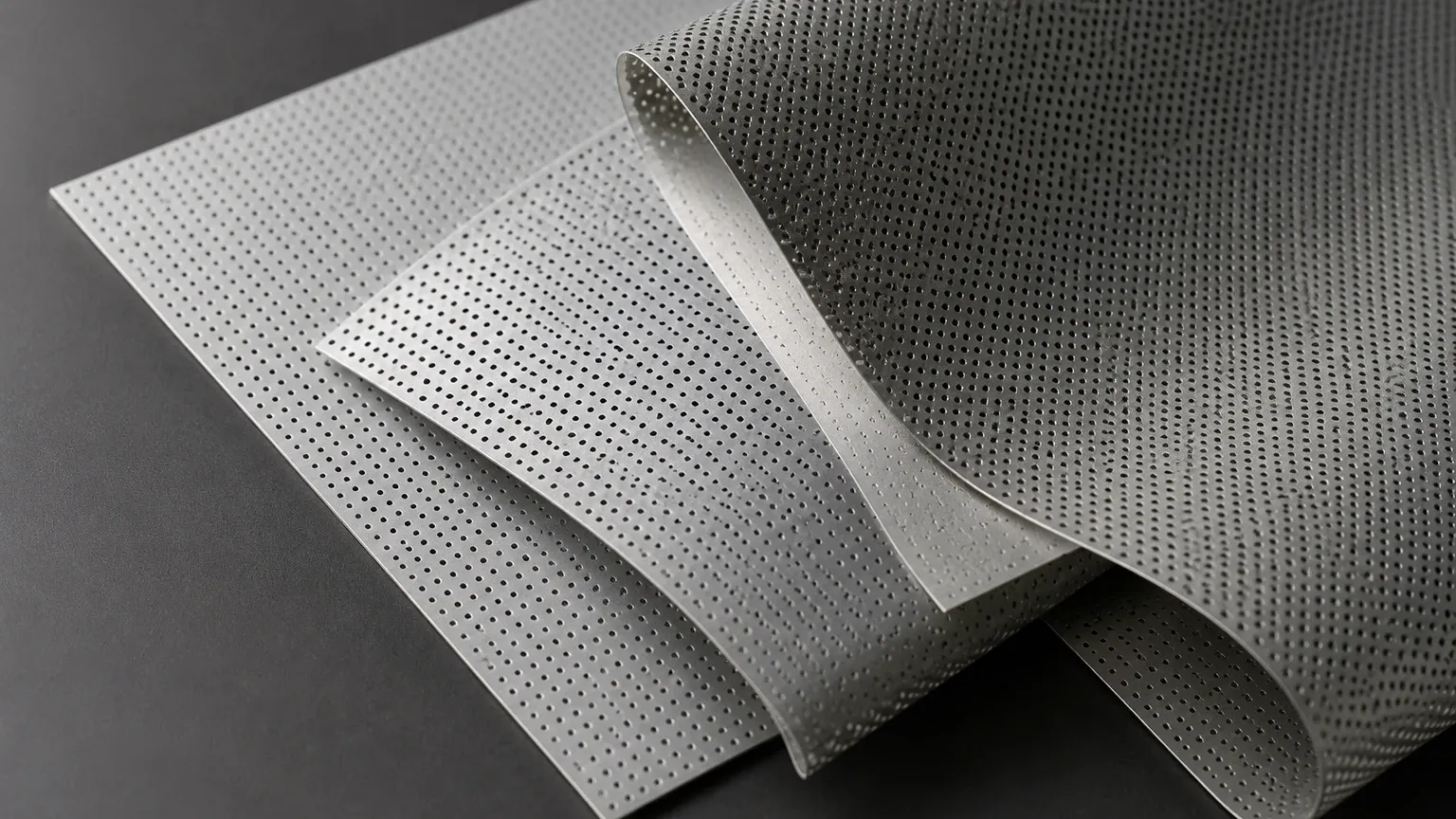
The arrangement of holes—whether round, square, or hexagonal—affects both the strength of the plate and the turbulence of the fluid. A staggered round hole pattern is the most common for supporting quartered perforated paper because it provides a uniform distribution of stress and flow. The "pitch" (the distance between the centers of adjacent holes) must be calculated to provide sufficient "bridge" width (the metal between holes) to maintain mechanical strength.
3. Material Compatibility
In industries such as chemical processing and pharmaceuticals, the material of the perforated support must be chemically inert relative to the process fluid. While quartered perforated paper is often treated for wet strength, the metal support is typically fabricated from 304 or 316L stainless steel. 316L is preferred in environments containing chlorides or acidic compounds due to its superior pitting resistance.
Comparing Paper Media to Stainless Steel Alternatives
While quartered perforated paper serves a purpose in specific batch operations, many industrial facilities are moving toward permanent, cleanable stainless steel filtration solutions. Understanding the trade-offs is vital for total cost of ownership (TCO) analysis.
| Feature | Quartered Perforated Paper | Stainless Steel Perforated/Mesh |
| :— | :— | :— |
| Durability | Low (Single-use) | High (Multi-year lifespan) |
| Pressure Rating | Limited by paper burst strength | High (Engineered for ΔP) |
| Chemical Resistance | Variable (Depends on treatment) | Excellent (SS304/316L) |
| Cleaning | Disposable | Backwashable / Ultrasonic cleaning |
| Environmental Impact | High waste generation | Low (Sustainable/Reusable) |
For engineers managing high-volume production lines, the frequent replacement of quartered perforated paper can lead to significant downtime. Transitioning to a custom-designed Perforated & Expanded Metal assembly or a multi-layer sintered mesh element can eliminate the need for consumables while providing more consistent filtration accuracy.
Technical Specifications for Industrial Perforated Components
When ordering perforated components to replace or support paper media, technical precision is required. Manufacturers like Kaifil utilize advanced CNC punching and laser cutting to meet tight tolerances. Key specifications to confirm include:
* Thickness (Gauge): Thicker plates offer more rigidity but may reduce the effective open area if the hole diameter is small. For most industrial supports, thicknesses range from 0.5mm to 3.0mm.
* Edge Margins: Unperforated areas around the perimeter of the sheet are necessary for welding or mechanical clamping within a filter housing. Specifying "no-hole" margins prevents fluid bypass.
* Flatness Tolerances: In high-precision assemblies, the perforated plate must be perfectly flat to ensure a seal with the quartered perforated paper. Any warping can lead to "channeling," where the fluid bypasses the media entirely.
* Surface Finish: For food and beverage or pharmaceutical applications, a 2B mill finish or an electropolished surface is often required to prevent bacterial growth and facilitate cleaning.
Common Risks in Perforated Media Selection
Failure to properly specify the support structure for quartered perforated paper can lead to several operational risks:
Media Migration and Rupture
If the hole size of the perforated metal is too large relative to the thickness and strength of the paper, the paper may "dimple" into the holes. Under pressure, this leads to localized thinning and eventual rupture, allowing unfiltered bypass (media migration) into the downstream flow.
Galvanic Corrosion
If the perforated support is made of a different metal than the filter housing, galvanic corrosion can occur in the presence of an electrolyte. This is why ensuring material consistency—typically using high-grade stainless steel across all wetted parts—is a standard engineering requirement.
Blinding and Scaling
In certain water treatment or chemical applications, minerals or polymers can deposit on the surface of the perforated plate. Unlike quartered perforated paper, which is discarded, the metal support must be designed for accessibility. If the hole geometry is too complex, cleaning becomes difficult, leading to permanent "blinding" of the support structure.
Customization and OEM Considerations
Industrial filtration requirements are rarely "off-the-shelf." For OEMs building specialized equipment, the ability to customize the perforated support is a competitive advantage. Customization options include:
* Segmented Designs: Matching the "quartered" layout of the paper media with reinforced ribs in the metal support to handle extreme pressure spikes.
* Integrated Frames: Welding the perforated sheet into a rigid flange or ring for easy installation and removal during maintenance cycles.
* Conical or Cylindrical Forms: Rolling Perforated & Expanded Metal into baskets or cartridges to provide 360-degree filtration surface area.
Engineers should work closely with manufacturers to determine the optimal balance between hole size, pitch, and plate thickness. Advanced manufacturing capabilities allow for the production of components that meet the exact mechanical requirements of the housing while maximizing the throughput of the process.
Conclusion: Making Informed Purchasing Decisions
Quartered perforated paper remains a viable choice for specific, low-demand applications and laboratory testing. However, for industrial-scale operations, the focus must shift toward the robustness of the support system and the potential for upgrading to permanent metal media.
Before finalizing a purchase or design specification, engineering teams should confirm:
1. The maximum expected pressure drop across the media.
2. The chemical compatibility of the support structure with the process fluid.
3. The required open area to maintain flow rates without excessive energy consumption.
4. The feasibility of transitioning from disposable paper to a reusable stainless steel solution to reduce long-term operational costs.
By prioritizing the technical integrity of the Perforated & Expanded Metal components, facilities can achieve higher filtration precision, reduced downtime, and a more sustainable production process. Whether you are looking to optimize an existing system using quartered perforated paper or seeking to engineer a new high-performance filtration solution, focusing on material quality and precise manufacturing tolerances is the key to industrial success.
