


Raised Expanded Metal Sizes
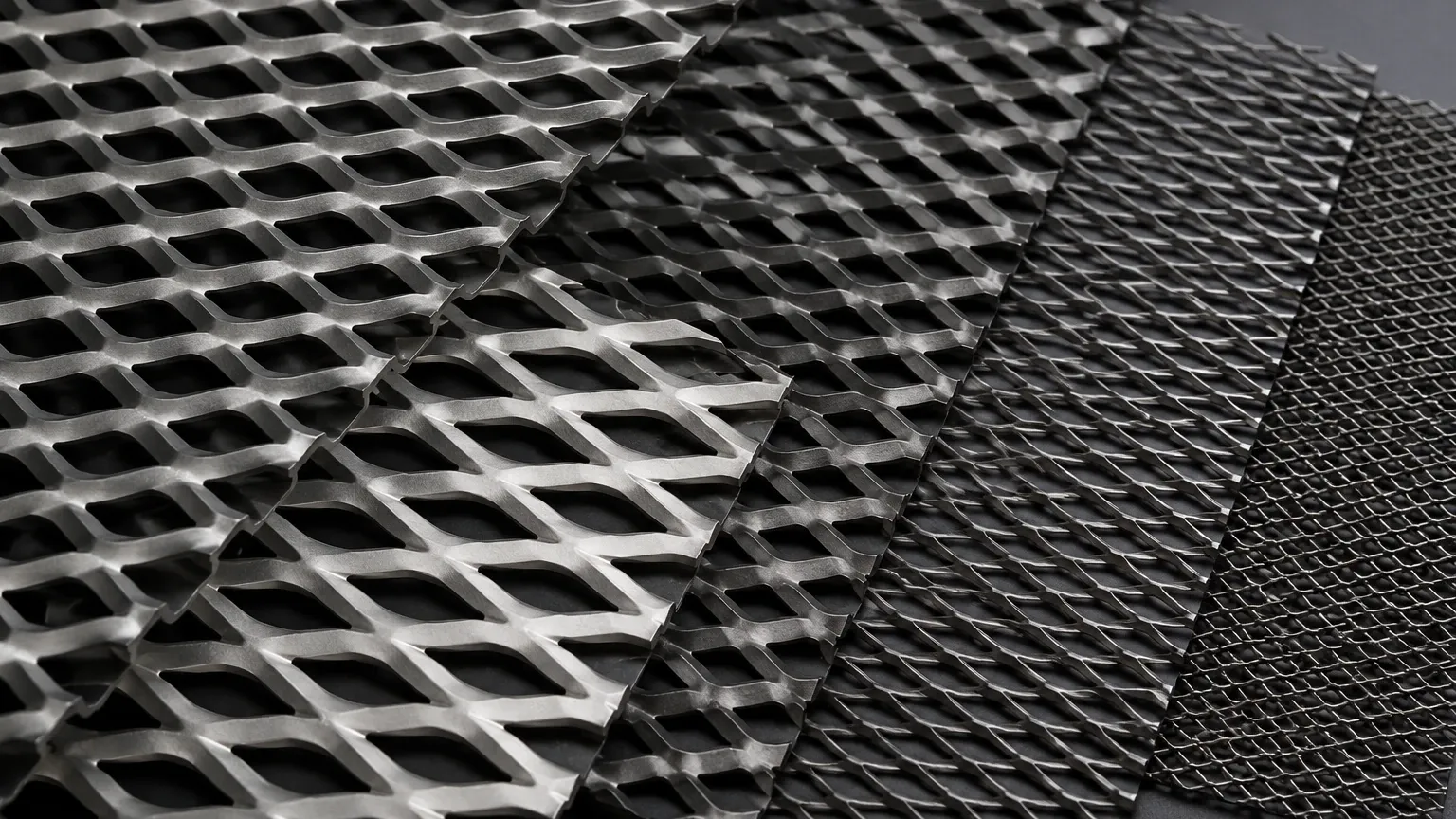
In industrial filtration and structural engineering, selecting the correct material geometry is critical for ensuring system efficiency, mechanical integrity, and longevity. Raised expanded metal, a versatile material produced by simultaneously slitting and stretching metal sheets, offers a unique three-dimensional profile that provides high strength-to-weight ratios and excellent flow characteristics. Unlike flattened expanded metal, which undergoes a secondary cold-rolling process to level the surface, raised expanded metal retains the original angular orientation of its strands. For engineers and procurement specialists, understanding the nuances of raised expanded metal sizes is the first step in specifying components that meet rigorous performance standards.
Understanding the Geometry of Raised Expanded Metal
To accurately specify raised expanded metal sizes, one must first master the terminology used to describe its diamond-shaped openings. The dimensions are not measured simply by the hole size, but by a set of interconnected parameters that define the material’s physical properties.
1. Short Way of Diamond (SWD): This is the distance from the center of one bond to the center of the next bond across the short dimension of the diamond. It is a primary indicator of the mesh density.
2. Long Way of Diamond (LWD): This measures the distance from the center of one bond to the center of the next bond across the long dimension. Together with the SWD, it defines the overall pitch of the pattern.
3. Short Way of Opening (SWO): This represents the actual clear distance between the inside edges of the strands across the short dimension. This is a critical metric for filtration applications where particle retention is the primary concern.
4. Long Way of Opening (LWO): The clear distance between the inside edges of the strands across the long dimension.
5. Strand Thickness: The thickness of the base metal used to produce the expanded sheet.
6. Strand Width: The amount of metal fed into the machine for each stroke of the expanding die.
Because the strands in raised expanded metal are set at an angle to the plane of the sheet, the "overall thickness" of the finished product is significantly greater than the original gauge of the metal. This angularity is what provides the material with its inherent rigidity and directional flow properties.
Technical Specifications and Dimensional Standards
When evaluating Perforated & Expanded Metal for industrial use, engineers often refer to standard designations that combine the style and the material gauge. For example, a common specification might be "1/2#13," where "1/2" refers to the nominal SWD dimension and "#13" refers to the metal gauge.
However, in high-precision environments such as chemical processing or pharmaceutical manufacturing, standard off-the-shelf sizes may not suffice. Custom raised expanded metal sizes allow for the optimization of the open area percentage, which directly impacts pressure drop and flow velocity.
Open Area Calculations
For filtration applications, the percentage of open area is a vital calculation. In raised expanded metal, the open area is determined by the relationship between the strand width and the SWD/LWD. Because the strands are tilted, the "effective" open area can change depending on the angle of the fluid or gas flow. This directional characteristic can be leveraged to deflect debris or to encourage laminar flow in specific directions.
The Impact of Size on Filtration Performance
In the context of industrial filtration, raised expanded metal often serves as a support structure for finer filter media, such as wire mesh or synthetic membranes. The choice of size here is a balance between mechanical support and flow resistance.
* Support and Rigidity: If the SWD and LWD are too large, the fine filter media may sag or fail under high pressure (the "ballooning" effect). Conversely, if the openings are too small, the expanded metal itself may contribute to an unnecessary increase in pressure drop.
* Turbulence Induction: The raised strands of expanded metal can act as static mixers in certain fluid streams. By selecting specific strand widths and angles, engineers can induce controlled turbulence, which may be beneficial in heat exchange applications or to prevent the buildup of a filter cake on the primary media.
* Debris Pre-Filtration: In many water treatment or hydraulic systems, a coarse raised expanded metal layer acts as a primary guard, capturing large contaminants before they reach the precision filtration stages. In these cases, the SWO must be sized slightly smaller than the largest allowable particle to protect downstream components.
Material Selection and Environmental Compatibility
While the physical dimensions are paramount, the material composition must align with the operational environment. Kaifil specializes in stainless steel filtration solutions, where grades like 304, 316, and 316L are frequently used for their corrosion resistance and thermal stability.
When specifying raised expanded metal sizes in stainless steel, engineers must account for the material's work-hardening properties. The process of expanding the metal involves significant mechanical stress; choosing the right gauge and strand width ensures that the material retains its structural integrity without becoming overly brittle at the bonds (the points where the strands intersect).
In pharmaceutical and food-grade applications, the "raised" nature of the metal requires careful cleaning protocols. The crevices created by the angled strands can trap particles, so the size of the openings must be large enough to allow for effective Clean-in-Place (CIP) or ultrasonic cleaning procedures.
Customization and OEM Requirements
One of the primary advantages of working with a specialized manufacturer like Kaifil is the ability to move beyond standard catalog sizes. OEM applications often require precise dimensional tolerances that standard industrial grades cannot meet.
Critical Considerations for Custom Orders:
* Tolerances: Standard expanded metal tolerances can be relatively broad. For precision filtration housings, specify tighter tolerances on the SWD and LWD to ensure a perfect fit within the filter cartridge or frame.
* Edge Configurations: Raised expanded metal can be supplied with "random sheared" edges or "bond sheared" edges. Bond shearing provides a smoother, safer edge and more consistent dimensions for welding into assemblies.
* Surface Finishes: Depending on the application, the metal may require electropolishing to remove burrs and improve corrosion resistance, or degreasing to meet oxygen-service standards.
Evaluating Total Cost and Replacement Cycles
When selecting raised expanded metal sizes, the total cost of ownership must be considered alongside the initial purchase price. A thinner gauge with larger openings may be cheaper initially, but if it lacks the structural strength to withstand pressure surges, the cost of frequent replacements and potential downstream damage will far outweigh the savings.
In high-demand hydraulic or chemical systems, the expanded metal support should be designed to last through multiple cleaning cycles of the primary filter media. If the expanded metal begins to deform (permanent set), it can create bypass paths or damage the delicate wire mesh it is intended to protect. Engineers should confirm the maximum allowable differential pressure (collapse pressure) for a given size and material thickness before finalizing a design.
Conclusion: Selecting the Right Specification
Choosing the correct raised expanded metal sizes is a technical process that requires a deep understanding of fluid dynamics, material science, and mechanical engineering. By focusing on the specific SWD, LWD, and strand dimensions, and by considering how these factors interact with flow rates and pressure requirements, purchasing teams can ensure they are acquiring components that offer both performance and durability.
For those developing complex filtration systems, consulting with a manufacturer that understands the intricacies of metal expansion and stainless steel fabrication is essential. Whether the goal is to provide a robust support for a pleated filter cartridge or to create a durable pre-filter for industrial water treatment, the precision of the expanded metal specification remains the foundation of a successful filtration solution.
