


Round Hole Perforated Metal
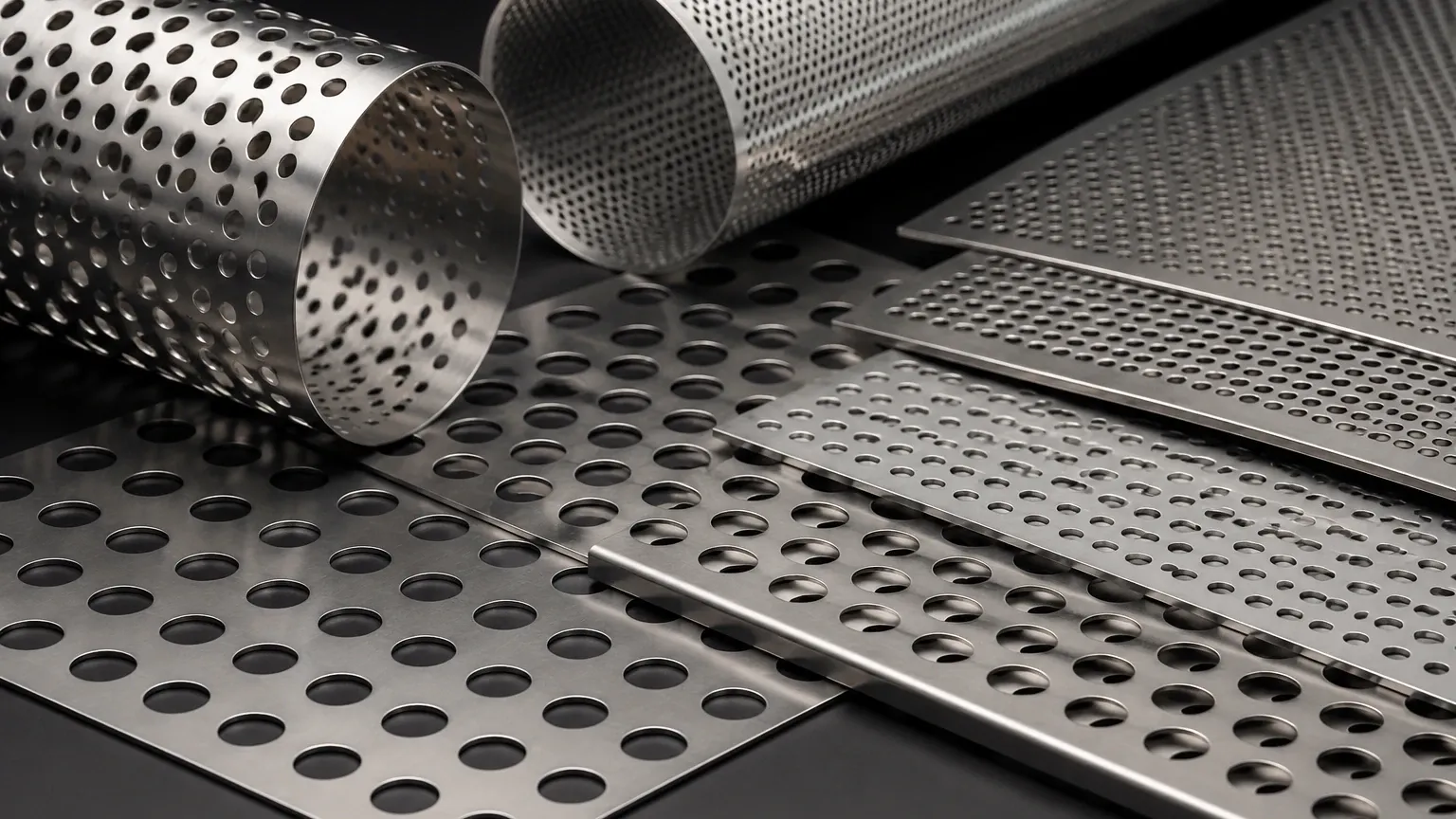
In the landscape of industrial filtration and structural engineering, round hole perforated metal remains the most versatile and widely utilized pattern. Its popularity stems from a balance of structural integrity, ease of manufacturing, and predictable fluid dynamics. As a core component within the broader category of Perforated & Expanded Metal, round hole patterns are essential for everything from coarse straining to providing the rigid support structure for fine wire mesh filter cartridges.
For engineers and procurement teams, selecting the correct round hole perforated metal involves more than choosing a hole size. It requires a technical understanding of open area ratios, material mechanical properties, and how the perforation process affects the final component's performance in demanding environments like chemical processing or hydraulic systems.
Understanding Geometric Patterns and Open Area Calculations
The performance of round hole perforated metal is primarily dictated by its geometry. Unlike square or slotted holes, round holes distribute mechanical stress more evenly across the metal sheet, reducing the likelihood of stress fractures during forming or high-pressure operation. There are two primary configurations for round holes: staggered and straight.
Staggered vs. Straight Patterns
The 60-degree staggered pattern is the industry standard for industrial filtration. In this configuration, each row of holes is offset from the previous one, creating an equilateral triangle between the centers of three adjacent holes. This layout provides the highest possible open area while maintaining the structural rigidity of the "bridges" (the metal between the holes). It also ensures a more uniform flow of liquids or gases across the surface.
Straight patterns, where holes are aligned both horizontally and vertically, are less common in high-pressure filtration. While they offer simpler aesthetics, they provide lower structural strength and a reduced open area compared to staggered designs of the same hole size and pitch.
Calculating Open Area
The "Open Area" is the percentage of the sheet that is comprised of holes, and it is the most critical variable for determining flow rate and pressure drop. For a standard 60-degree staggered pattern, the formula is:
Open Area % = (D² × 90.69) / P²
Where:
* D = Hole Diameter
* P = Pitch (the distance from the center of one hole to the center of the next)
An accurate calculation of the open area is vital for engineers to ensure that the filter does not create an excessive pressure drop that could damage pumps or reduce the efficiency of the entire system.
Material Considerations for Industrial Filtration
While round hole perforated metal can be produced from various alloys, stainless steel is the preferred choice for industrial applications due to its durability and resistance to environmental degradation. At Kaifil, the focus is on high-performance alloys that can withstand the rigors of industrial processing.
Stainless Steel 304 and 304L
Grade 304 is the most common stainless steel used for general-purpose filtration. It offers excellent corrosion resistance in most atmospheric conditions and is easily formed into cylindrical shapes for filter cartridges. The "L" (low carbon) version is preferred for components that require extensive welding, as it prevents carbide precipitation that can lead to corrosion at the weld sites.
Stainless Steel 316 and 316L
For more aggressive environments, such as chemical processing or marine applications, Grade 316 is specified. The addition of molybdenum enhances resistance to pitting and crevice corrosion, particularly in chloride-rich environments. 316L is frequently used in the pharmaceutical and food and beverage industries where high-purity standards and frequent chemical cleaning are required.
Specialized Alloys
In high-temperature or highly acidic environments, specialized alloys such as Duplex stainless steel or Monel may be used. These materials provide the necessary mechanical strength and chemical stability to ensure a long service life under extreme conditions.
Manufacturing Precision and Quality Control
The manufacturing of round hole perforated metal involves high-speed CNC punching or rotary pinning. Precision in this process is paramount, as even minor deviations in hole diameter or pitch can lead to uneven flow and premature filter failure.
Tolerance and Flatness
During the punching process, the metal sheet is subjected to significant mechanical stress, which can cause the material to curl or warp. Industrial-grade perforated metal must undergo a leveling process to restore flatness. This is particularly important if the sheet is to be subsequently rolled into a cylinder or welded into a housing. Standard tolerances for hole diameter and pitch are typically within +/- 0.05mm to 0.1mm, depending on the thickness of the material.
Deburring and Surface Finish
Punching naturally creates a "burr" or a sharp edge on the exit side of the hole. In filtration applications, these burrs can trap debris, cause turbulence, or even damage delicate outer layers of wire mesh. Professional manufacturers utilize mechanical or chemical deburring processes to ensure a smooth surface finish. For the food and pharmaceutical sectors, electropolishing is often employed to create a microscopically smooth surface that prevents bacterial growth and facilitates cleaning.
Filtration Performance and Fluid Dynamics
In a filtration system, round hole perforated metal serves two primary functions: as a primary filter for large particles or as a support structure for finer media. Understanding its role in fluid dynamics is key to system design.
Pressure Drop and Flow Rate
The pressure drop across a perforated plate is a function of the fluid's velocity, viscosity, and the plate's open area. A higher open area generally results in a lower pressure drop, but it also reduces the mechanical strength of the plate. Engineers must find the "sweet spot" where the plate is strong enough to withstand the system pressure but open enough to allow efficient flow.
Particle Retention
Round hole perforated metal is highly effective at capturing spherical or near-spherical particles. Because the hole size is consistent across the entire sheet, it provides a very reliable "absolute" filtration rating for larger contaminants. This makes it ideal for use in intake strainers, basket filters, and pre-filtration stages where it protects more sensitive downstream equipment.
Industrial Applications and Service Life
The versatility of round hole perforated metal allows it to be integrated into a wide range of industrial processes. Its durability ensures a long service life, often outlasting synthetic or less robust metal alternatives.
* Chemical Processing: Used in reactors and separators to support catalyst beds or to strain out solid impurities from liquid streams. The chemical compatibility of stainless steel is critical here.
* Food and Beverage: Employed in mashing tuns, juice extraction, and dairy processing. The round hole pattern is easy to clean (CIP – Clean In Place), which is essential for maintaining hygiene standards.
* Pharmaceuticals: Used in centrifugal separators and fluid bed dryers. The precision of the perforation ensures consistent results in delicate drug manufacturing processes.
* Hydraulics and Water Treatment: Acts as the internal support core for pleated filter elements or as outer protective shrouds. In high-pressure hydraulic systems, the round hole pattern provides the necessary burst strength to prevent filter collapse.
Customization Options for OEM Integration
One of the primary advantages of working with a specialized manufacturer like Kaifil is the ability to customize round hole perforated metal to meet specific application requirements. Standard off-the-shelf sheets are rarely sufficient for complex industrial equipment.
Margins and Blank Areas
Custom perforation allows for the inclusion of "margins"—solid metal borders around the perforated area. These margins simplify welding and installation into housings. Additionally, specific "blank" or unperforated areas can be designed into the sheet to accommodate bolt holes, mounting brackets, or structural reinforcements.
Forming and Fabrication
Perforated metal is frequently fabricated into 3D shapes. This includes rolling into cylinders for filter cores, forming into cones for temporary strainers, or bending into U-shapes for trough screens. The choice of hole pattern and material thickness must account for the stresses of these forming processes to prevent hole distortion.
Procurement and Technical Evaluation Criteria
When sourcing round hole perforated metal for industrial projects, purchasing teams and engineers should confirm several technical details to ensure the product is fit for purpose. Relying on a manufacturer with deep expertise in Perforated & Expanded Metal is essential for project success.
1. Hole Diameter and Pitch: Specify the exact dimensions required for the target filtration rating.
2. Material Grade: Ensure the alloy is compatible with the process fluid and temperature.
3. Sheet Thickness: Balance the need for structural strength with the limitations of the punching process (generally, hole diameter should not be smaller than the material thickness).
4. Open Area Percentage: Verify that the calculated open area meets the system's flow requirements.
5. Surface Treatment: Determine if deburring, pickling, or electropolishing is necessary for the application.
6. Quantity and Lead Time: For OEM applications, consistent quality across large batches is critical for assembly line efficiency.
By addressing these factors during the design and procurement phase, industrial operators can ensure they receive a filtration component that provides reliable performance, minimizes maintenance downtime, and offers a low total cost of ownership. Round hole perforated metal, when engineered correctly, remains a cornerstone of efficient industrial filtration systems.
