


Rothley Stretched Perforated Metal Sheet
In the landscape of industrial filtration and structural engineering, the selection of the correct media is a critical decision that influences the efficiency, durability, and cost-effectiveness of a system. Among the various options available, the rothley stretched perforated metal sheet—a term often used interchangeably with expanded metal—represents a versatile solution for engineers and purchasing professionals. While traditional perforation involves punching holes out of a solid sheet, the stretching or expanding process provides a unique set of mechanical properties that are particularly beneficial in demanding B2B environments.
Understanding the technical nuances of Perforated & Expanded Metal is essential for optimizing filtration performance. This guide examines the engineering characteristics, manufacturing processes, and application criteria for stretched metal sheets, providing the factual foundation necessary for informed industrial procurement.
Technical Definitions: Stretched vs. Perforated Metal
To specify the correct component, it is vital to distinguish between the two primary methods of creating open-area metal sheets. Traditional perforated metal is produced by mechanically punching a pattern of holes into a sheet. This process removes material, which can lead to waste and, in some instances, a reduction in the overall structural integrity of the remaining "bridge" between holes.
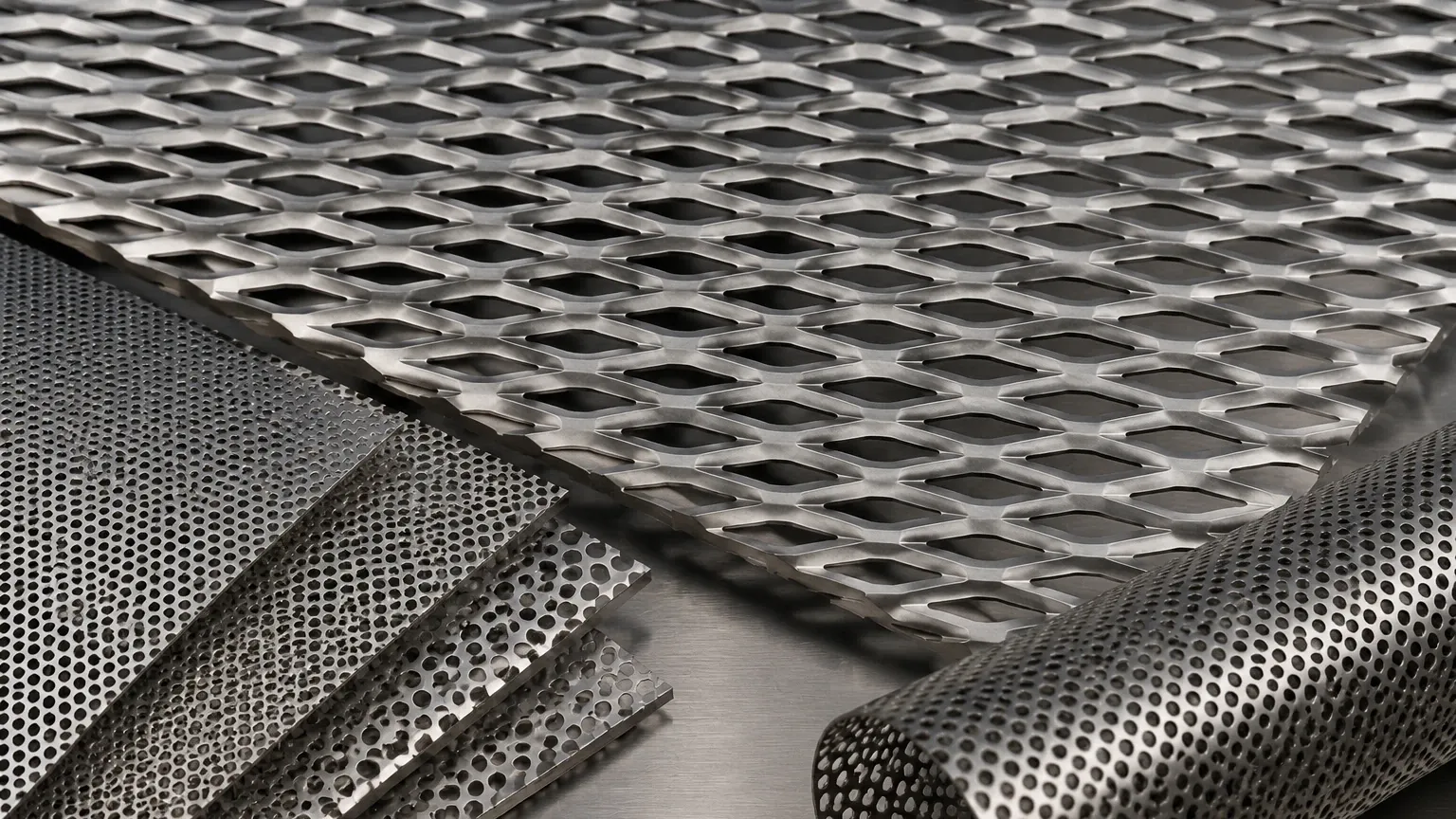
In contrast, a rothley stretched perforated metal sheet is manufactured through a process of simultaneous slitting and stretching. The metal is cut but not removed; instead, it is pulled to create a diamond-shaped or hexagonal mesh. This process results in several key advantages for industrial users:
1. Material Efficiency: Since no metal is punched out and discarded, the process is highly resource-efficient, often resulting in a lower material cost per square meter compared to perforated sheets of similar thickness.
2. Structural Continuity: Because the strands of the metal remain connected without welds or joints, the material maintains excellent structural integrity. The "truss-like" characteristic of the expanded diamonds allows for high load-bearing capacity relative to its weight.
3. Enhanced Surface Area: The stretching process creates a three-sided profile (unless flattened), which can increase the effective surface area for certain types of air filtration or catalytic reactions.
Material Selection for Industrial Filtration
For B2B applications, particularly in chemical processing, pharmaceuticals, and food production, the choice of alloy is as important as the mesh geometry. Kaifil specializes in stainless steel solutions, which are the industry standard for durability and hygiene.
Stainless Steel 304 vs. 316L
* Grade 304: This is the most common stainless steel used for stretched metal sheets. It offers excellent corrosion resistance in most atmospheric conditions and is suitable for many food-grade applications. It is often used for protective cages and pre-filtration supports where extreme chemical exposure is not a primary concern.
* Grade 316L: For more aggressive environments, such as marine applications or chemical processing involving chlorides, Grade 316L is preferred. The addition of molybdenum provides superior resistance to pitting and crevice corrosion. In filtration, 316L is frequently specified for the inner support cores of filter cartridges that handle corrosive fluids.
Specialty Alloys
In high-temperature or highly specialized environments, engineers may require nickel alloys or titanium. These materials ensure that the rothley stretched perforated metal sheet does not undergo thermal degradation or chemical breakdown during continuous operation cycles.
Engineering Considerations: Geometry and Open Area
The performance of a filter or a protective screen is largely dictated by its geometric configuration. When specifying stretched metal, engineers must evaluate three primary dimensions: the Long Way of the Design (LWD), the Short Way of the Design (SWD), and the strand width/thickness.
Calculating Open Area
The percentage of open area determines the flow rate and pressure drop across the metal sheet. Unlike simple perforated holes, the open area in expanded metal is influenced by the angle of the strands. A higher expansion ratio creates a larger open area but may reduce the structural rigidity of the sheet. For hydraulic systems, a precise balance must be struck to ensure that the support layer does not impede fluid flow while still providing enough surface area to support a fine wire mesh overlay.
Raised vs. Flattened Expanded Metal
* Raised (Standard): Directly from the expanding machine, the strands are set at an angle to the plane of the sheet. This creates a slip-resistant surface and provides a 3D structure that can help break up laminar flow in fluid dynamics applications.
* Flattened: The raised sheet is passed through a cold-rolling mill, which flattens the strands back into a single plane. Flattened rothley stretched perforated metal sheets are often used when a smooth surface is required, such as when the sheet serves as a backing for a delicate filter membrane or when it must fit into a tight-tolerance housing.
Applications in Industrial Filtration and Protection
The versatility of Perforated & Expanded Metal allows it to serve multiple roles within an industrial facility. At Kaifil, we see these components integrated into complex filtration assemblies across various sectors.
Support Layers for Filter Cartridges
In high-pressure filtration, fine wire mesh or fiber media lack the structural strength to withstand the differential pressure. A stretched metal sheet is rolled into a cylinder to act as an internal core or external shroud. Its high strength-to-weight ratio ensures the filter element does not collapse or burst under surge conditions.
Pre-Filtration and Strainers
For water treatment and large-scale industrial intake systems, stretched metal sheets act as the primary defense against large debris. The diamond pattern is effective at catching irregular solids while maintaining a high flow rate. Because the material is easy to clean and resistant to fouling, it reduces the frequency of maintenance shutdowns.
Machine Guarding and Safety
Beyond filtration, the rothley stretched perforated metal sheet is a staple in plant safety. It is used to create guards for rotating equipment, allowing for ventilation and visibility while preventing personnel contact with moving parts. The structural rigidity of the expanded metal ensures that the guards do not deform easily under impact.
Evaluation Criteria for Purchasing Teams
When sourcing rothley stretched perforated metal sheets for an OEM project or a facility upgrade, purchasing teams should confirm several technical factors to ensure long-term performance and total cost optimization.
1. Dimensional Tolerances
Industrial applications often require precise fitment into housings or frames. It is essential to confirm the manufacturer’s ability to maintain tight tolerances on sheet length, width, and flatness. Variations in the expansion process can lead to "camber" (a slight curve in the sheet), which must be minimized for automated assembly processes.
2. Edge Finishing
Expanded metal can have sharp edges where the diamonds are cut. For components that will be handled frequently or integrated into sensitive equipment, specifying "bond edges" (where the cut happens at the intersection of the diamonds) or deburring processes is critical for safety and equipment integrity.
3. Compliance and Certification
In the pharmaceutical and food and beverage industries, material traceability is non-negotiable. Ensure that the supplier can provide Mill Test Reports (MTRs) confirming the chemical composition of the stainless steel. Furthermore, compliance with standards such as FDA or EU food contact regulations may be required depending on the application.
Maintenance and Replacement Cycles
The longevity of a rothley stretched perforated metal sheet is one of its primary selling points in a B2B context. However, durability is contingent upon proper maintenance. In filtration systems, the buildup of particulates (blinding) can increase pressure drop and lead to mechanical stress.
* Cleaning Methods: Stainless steel expanded metal can typically be cleaned using high-pressure water jets, ultrasonic baths, or chemical cleaning agents, depending on the contaminant. Its robust nature allows for repeated cleaning cycles without the risk of tearing or fraying associated with thinner woven meshes.
* Inspection: Regular visual inspections should look for signs of stress cracking at the strand intersections or localized corrosion. If the sheet is used as a support for a finer media, the integrity of the bond between the two layers should be checked to prevent bypass.
Customization and OEM Solutions
Every industrial environment presents unique challenges, from specific flow requirements to spatial constraints. Off-the-shelf solutions rarely provide the optimal balance of performance and cost. Kaifil works closely with engineering teams to develop customized filtration components that utilize the unique properties of stretched metal.
By adjusting the expansion ratio, material thickness, and alloy, we can tailor a rothley stretched perforated metal sheet to meet the exact pressure drop and filtration efficiency required for your system. Whether you are designing a new hydraulic filter or seeking a more durable solution for a chemical strainer, understanding the technical boundaries of expanded metal is the first step toward an optimized design.
For engineers looking to integrate these materials into their next project, focusing on the mechanical requirements—such as burst strength, chemical compatibility, and open area—will ensure that the selected Perforated & Expanded Metal delivers the reliability and performance expected in modern industrial operations.
