


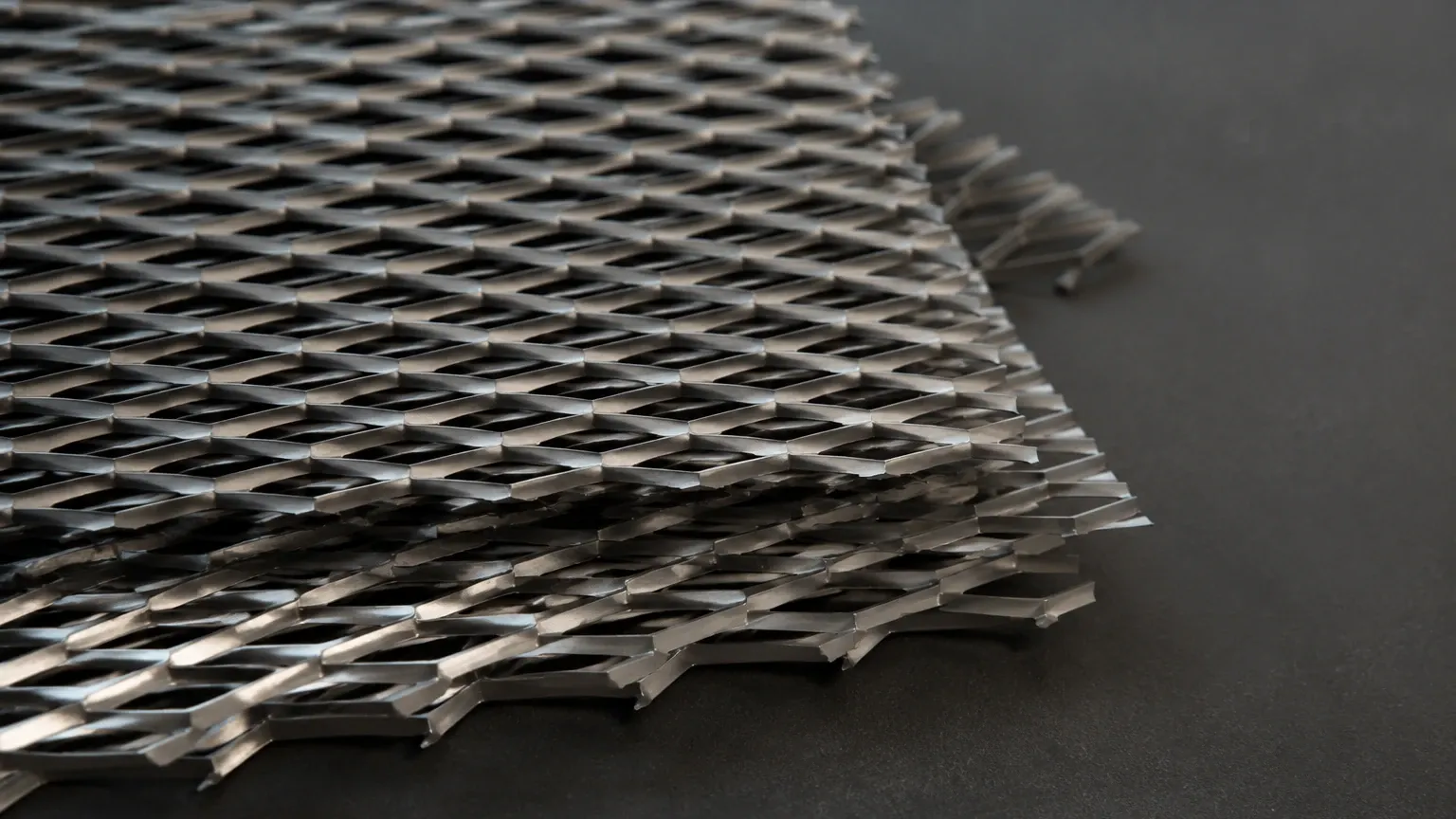
Sheet of Expanded Metal
In industrial engineering and filtration design, selecting the right substrate for media support or primary debris separation is critical to the longevity and efficiency of a system. A sheet of expanded metal is a versatile, cost-effective, and structurally sound component used extensively across the chemical, pharmaceutical, and water treatment sectors. Unlike perforated metal, which is created by punching holes and removing material, expanded metal is produced by simultaneously slitting and stretching a solid metal sheet. This process creates a diamond-shaped pattern that remains part of a single, continuous piece of material, offering unique mechanical advantages.
For engineers and procurement specialists, understanding the technical nuances of expanded metal—from its geometric properties to its performance under high-pressure flow—is essential for optimizing filtration systems. This guide explores the engineering considerations, manufacturing variations, and application-specific benefits of utilizing expanded metal in industrial environments.
Understanding the Manufacturing Process and Structural Integrity
The production of a sheet of expanded metal is a precision process that determines its final mechanical properties. A solid sheet of metal, typically stainless steel in high-performance filtration applications, is fed through an expanding machine. The machine uses a set of knives to create staggered slits while simultaneously stretching the material. This expansion can increase the surface area of the original sheet by up to ten times, depending on the desired pattern and open area.
Because the metal is stretched rather than cut out, there is zero material waste. This makes expanded metal an environmentally and economically superior choice compared to perforated metal for many projects. Furthermore, because the "strands" and "bonds" (the intersections where strands meet) are part of a single piece of metal, the sheet maintains excellent structural integrity. There are no welds to fail and no joints to loosen under vibration or thermal cycling.
Raised vs. Flattened Expanded Metal
When specifying a sheet of expanded metal, engineers must choose between two primary finishes:
1. Standard (Raised) Expanded Metal: In its raw state after expansion, the strands are set at an angle to the plane of the sheet. This creates a three-dimensional surface that provides excellent mechanical grip and can help break up laminar flow in fluid applications, creating beneficial turbulence for certain types of filtration.
2. Flattened Expanded Metal: The raised sheet is passed through a cold-rolling reducing mill. This process flattens the strands and bonds into the same plane as the original sheet. Flattened sheets are thinner, smoother, and easier to clean, making them ideal for applications where a low-profile support structure is required for delicate wire mesh layers.
Technical Specifications and Terminology
To ensure accurate communication between engineering teams and manufacturers like Kaifil, it is necessary to use standardized terminology when describing the dimensions of a sheet of expanded metal. The geometry of the diamond pattern is defined by several key metrics:
* SWD (Short Way of Design): The distance from the center of one bond to the center of the next bond across the short axis of the diamond.
* LWD (Long Way of Design): The distance from the center of one bond to the center of the next bond across the long axis of the diamond.
* SWO (Short Way of Opening): The actual width of the opening, excluding the strand width.
* LWO (Long Way of Opening): The actual length of the opening, excluding the strand width.
* Strand Thickness: The thickness of the original base metal.
* Strand Width: The amount of metal fed into the knives for each slit.
By adjusting these variables, manufacturers can create a Perforated & Expanded Metal solution tailored to specific flow rates and structural loads. For instance, increasing the strand width enhances the rigidity of the sheet but reduces the percentage of open area.
Comparing Perforated & Expanded Metal for Industrial Use
While both perforated and expanded metals serve as effective filtration substrates, they offer different performance profiles. Choosing the correct one depends on the specific requirements of the application.
Strength-to-Weight Ratio
Expanded metal generally offers a higher strength-to-weight ratio than perforated metal. Because the material is stretched and the strands are angled (in the raised version), it acts like a series of interconnected trusses. This allows for the use of lighter-gauge materials without sacrificing the ability to withstand high differential pressures across a filter cartridge.
Cost-Effectiveness
As previously mentioned, the lack of scrap material in the expansion process translates to lower material costs. In large-scale industrial projects where high-grade alloys like 316L stainless steel are required, the cost savings between a sheet of expanded metal and a perforated sheet can be substantial.
Flow Characteristics
Perforated metal provides a consistent, flat surface with predictable flow patterns. Expanded metal, particularly in its raised form, introduces a three-dimensional element to the flow. This can be an advantage in systems where fluid needs to be redirected or where the filter must capture irregularly shaped debris that might otherwise blind a flat perforated surface.
Applications in Industrial Filtration and Support
In the context of Kaifil’s expertise in custom stainless steel filtration, the sheet of expanded metal serves several critical functions. It is rarely the primary filtration medium for fine particles but is indispensable as a support or protection component.
Support Cores for Filter Cartridges
In high-pressure hydraulic or chemical processing systems, fine wire mesh filters can collapse under the force of the fluid flow. A cylindrical sleeve made from a sheet of expanded metal provides a rigid internal core or external cage. This ensures the filter maintains its shape and prevents the pleats of the mesh from pinching together, which would otherwise reduce the effective filtration area.
Pre-Filtration and Debris Guards
In water treatment and intake systems, expanded metal acts as a robust primary barrier. It captures large debris—such as stones, vegetation, or plastic—before the fluid reaches more sensitive downstream components like pumps or fine-membrane filters. Its high open area ensures that these guards do not cause significant pressure drops.
Catalyst Support in Chemical Reactors
In chemical processing, expanded metal sheets are often used to hold catalyst beds in place. The diamond pattern allows for uniform gas or liquid distribution through the catalyst while providing the thermal and chemical resistance necessary for harsh reactor environments.
Engineering Selection Criteria: Material and Compatibility
Selecting the right material for a sheet of expanded metal is as important as the geometry itself. For most industrial B2B applications, stainless steel is the standard due to its durability and resistance to oxidation.
* Stainless Steel 304: Suitable for general industrial use, food and beverage processing, and applications where moderate corrosion resistance is required.
* Stainless Steel 316/316L: The preferred choice for pharmaceutical, marine, and chemical processing environments. The addition of molybdenum provides superior resistance to chlorides and pitting corrosion.
* Specialty Alloys: In extreme environments involving high temperatures or highly acidic/alkaline fluids, alloys like Monel, Inconel, or Hastelloy may be used for the expansion process.
Engineers must also consider the "percent open area." This is the ratio of the area of the openings to the total area of the sheet. In filtration, a higher open area reduces the initial pressure drop but may decrease the structural support provided to the primary filter media. Finding the equilibrium between these two factors is a core part of the design phase.
Procurement and Quality Assurance Checklist
When sourcing a sheet of expanded metal for a technical project, purchasing teams and engineers should confirm several factors to ensure the product meets the required performance standards:
1. Dimensional Tolerances: Confirm the acceptable variance in SWD, LWD, and overall sheet dimensions. In precision filtration, even small deviations can affect the fit of a filter cartridge.
2. Material Certification: Ensure the manufacturer provides Mill Test Reports (MTRs) to verify the chemical composition of the stainless steel, particularly for 316L applications where carbon content is critical for welding.
3. Edge Configuration: Specify whether the sheet should have "random sheared" edges (where diamonds are cut through) or "bond sheared" edges (where the cut follows the bond for a cleaner, safer edge).
4. Surface Finish: For food-grade or pharmaceutical applications, the metal may require electropolishing or ultrasonic cleaning to remove any residual oils or burrs from the manufacturing process.
5. Flattening Requirements: If the sheet will be used as a support for a fine mesh, ensure it is specified as "flattened" to avoid puncturing the delicate wire cloth.
Conclusion
A sheet of expanded metal is more than just a structural component; it is a precision-engineered tool that enhances the reliability of industrial filtration systems. By offering a high strength-to-weight ratio, zero-waste manufacturing, and versatile geometric configurations, it remains a staple for engineers designing solutions for demanding environments. Whether used as a support core in a stainless steel filter cartridge or as a protective guard in a water treatment plant, the correct specification of expanded metal is vital for operational efficiency. Working with a specialist manufacturer like Kaifil ensures that material selection, diamond geometry, and finishing processes are aligned with the rigorous demands of modern industrial applications.
