


Types of Expanded Metal
In industrial engineering and filtration design, selecting the appropriate structural medium is critical for ensuring both mechanical integrity and operational efficiency. Expanded metal, a versatile material produced by simultaneously slitting and stretching metal sheets, is a staple in high-performance environments. Unlike perforated metal, which involves punching holes and generating scrap, the expansion process creates a diamond-shaped mesh without material waste, resulting in a high strength-to-weight ratio.
For engineers and purchasing teams, understanding the different types of expanded metal is essential for optimizing fluid dynamics, structural support, and longevity in demanding applications. This guide examines the technical variations of expanded metal, material considerations, and their specific roles within industrial filtration and support systems.
1. Standard (Raised) Expanded Metal
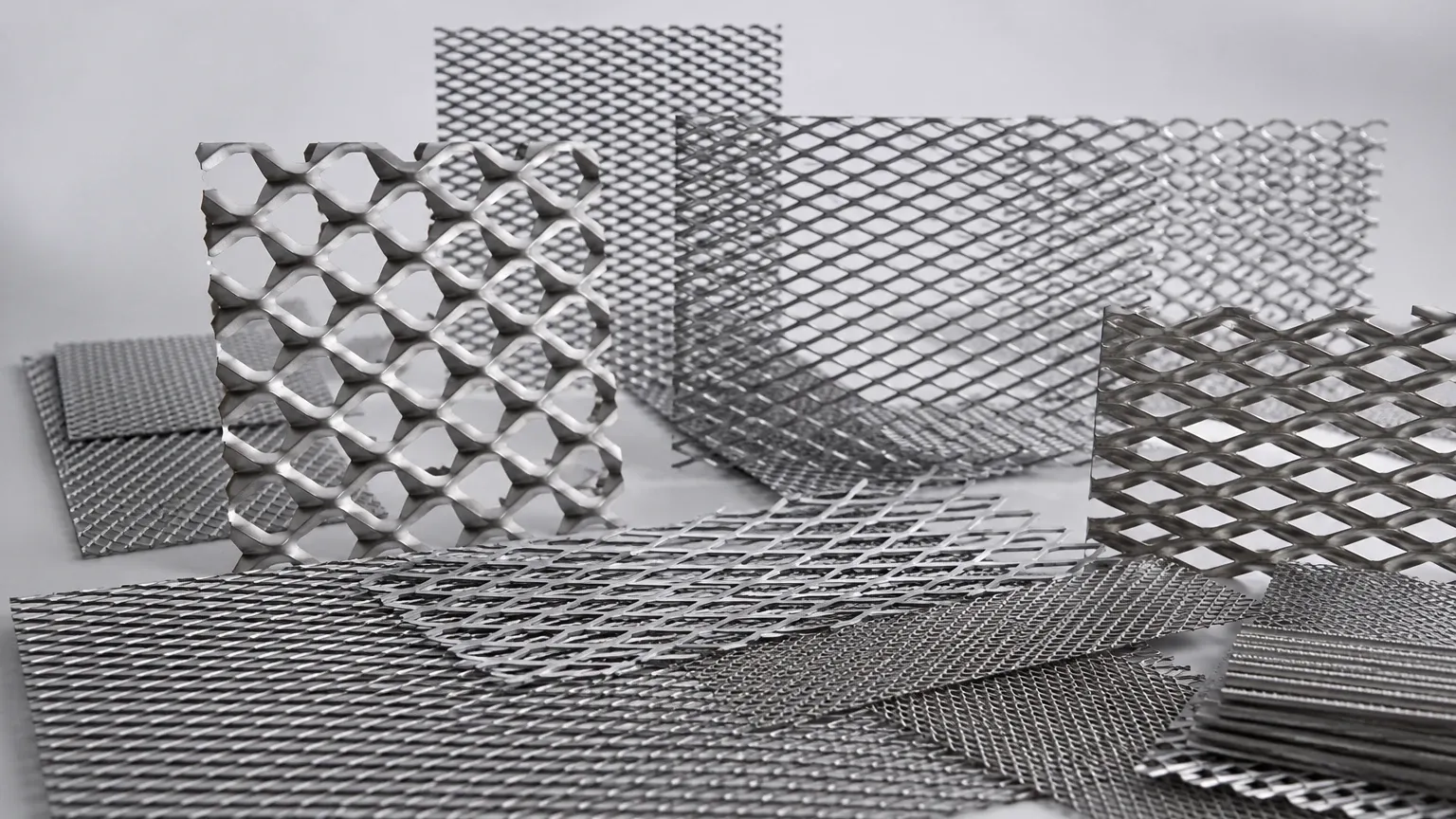
Standard expanded metal, often referred to as "raised" expanded metal, is the product as it comes directly from the expanding press. The strands and bonds (the intersections of the strands) are set at a uniform angle to the plane of the sheet. This creates a three-dimensional surface that provides several functional advantages in industrial settings.
Structural Characteristics
Because the strands are angled, standard expanded metal offers exceptional rigidity. The 3D geometry acts as a series of small structural beams, providing high resistance to deflection under load. This makes it an ideal choice for heavy-duty support in large-scale filtration housings or as a protective outer cage for industrial filter elements.
Functional Benefits
* Enhanced Grip and Friction: The raised surface provides natural slip resistance, which is useful in walkways or drainage grates within chemical processing plants.
* Flow Turbulence: In certain filtration or heat exchange applications, the angled strands can be used to induce controlled turbulence, which may be beneficial for specific fluid mixing requirements.
* Maximum Strength: The integrity of the original metal sheet is maintained because no material is removed, making it stronger than a perforated sheet of the same weight and material.
2. Flattened Expanded Metal
Flattened expanded metal is manufactured by passing standard expanded metal through a cold-rolling reducing mill. This process flattens the strands and bonds into a single horizontal plane, resulting in a smooth, flat surface.
Engineering Considerations
Flattening the metal reduces the overall thickness of the sheet (usually by about 5% to 10%) and slightly elongates the diamond pattern. While this process slightly reduces the structural rigidity compared to the raised version, it introduces critical benefits for precision filtration.
Applications in Filtration
In the production of stainless steel filter cartridges, flattened expanded metal is often preferred as an internal support core or an outer wrap. The smooth surface ensures that delicate filter media—such as fine wire mesh, non-woven fabrics, or membranes—are not punctured or abraded by raised edges. This is particularly important in high-pressure hydraulic systems or pharmaceutical filtration where media migration and contamination must be strictly avoided.
3. Micro Expanded Metal
Micro expanded metal refers to mesh produced with extremely small apertures, often with a Long Way of Design (LWD) of less than 0.125 inches. This requires high-precision tooling and specialized manufacturing capabilities, which are central to the production of precision metal filter components.
Technical Specifications
Micro expanded metal can be produced from very thin foils, resulting in a lightweight yet durable mesh. It offers a high percentage of open area, which is vital for maintaining low pressure drops in sensitive filtration applications.
Specialized Use Cases
* Fine Particle Filtration: Used as a primary filter medium for coarse particles or as a support for micro-porous membranes.
* Acoustic Damping: Employed in industrial machinery to reduce noise while allowing airflow.
* EMI/RFI Shielding: The continuous metal structure provides excellent electrical conductivity, making it suitable for shielding sensitive electronic components in industrial control systems.
4. Material Selection for Industrial Environments
The performance of different types of expanded metal is heavily influenced by the base material. In the sectors served by Kaifil, such as chemical processing and food and beverage, material compatibility is a primary engineering concern.
Stainless Steel (304, 316, 316L)
Stainless steel is the gold standard for industrial filtration.
* Grade 304: Offers excellent corrosion resistance and formability for general industrial use.
* Grade 316/316L: Contains molybdenum, providing superior resistance to chlorides and acetic acids. It is the preferred choice for marine environments, pharmaceutical manufacturing, and corrosive chemical processing.
Aluminum
Aluminum expanded metal is lightweight and naturally resistant to atmospheric corrosion. While it lacks the high-temperature resistance and tensile strength of stainless steel, it is an excellent choice for HVAC filters and lightweight protective screens.
Carbon Steel
Often used for heavy-duty structural applications where corrosion is not a primary concern or where the metal will be subsequently galvanized or powder-coated. It provides the most cost-effective solution for large-scale industrial guards and partitions.
5. Key Evaluation Criteria for Engineers
When specifying Perforated & Expanded Metal for a project, engineers must define several geometric and performance parameters to ensure the component meets the application requirements.
Geometric Parameters
* LWD (Long Way of Design): The distance from the center of one bond to the center of the next bond across the long axis of the diamond.
* SWD (Short Way of Design): The distance across the short axis of the diamond.
* Strand Width: The amount of metal fed into the machine between slits.
* Strand Thickness: The thickness of the original base metal.
* Open Area: Calculated as a percentage, this determines the flow capacity and the size of particles that can pass through the mesh.
Performance Expectations
Engineers must calculate the expected pressure drop ($ΔP$) across the expanded metal, especially when it is used as a support for high-efficiency filter media. A mesh with insufficient open area will increase energy consumption and reduce the service life of the filter element. Conversely, a mesh that is too light may fail under the mechanical stress of backwashing or high-viscosity fluid flow.
6. Applications in Industrial Filtration and Support
Expanded metal is integrated into various filtration components, each requiring a specific type of mesh to function correctly.
Filter Cartridge Support Cores
In pleated filter cartridges, the expanded metal core provides the necessary collapse strength. As fluid flows from the outside in, the core must withstand the differential pressure as the filter media becomes loaded with contaminants. Flattened stainless steel expanded metal is typically used here to provide a smooth interface for the pleat tips.
Protective Sleeves and Cages
For filters used in harsh environments—such as oil and gas or water treatment—an outer expanded metal cage protects the inner filter media from mechanical damage during installation and operation. This cage also helps distribute the flow evenly across the surface of the filter.
Strainers and Pre-filters
In many hydraulic and cooling systems, expanded metal serves as a rugged pre-filter or strainer, removing large debris before the fluid reaches more sensitive downstream components. The choice between raised or flattened mesh depends on whether the priority is maximum debris retention (raised) or ease of cleaning (flattened).
7. Customization and Technical Procurement
Standard off-the-shelf expanded metal rarely meets the exacting requirements of specialized industrial filtration. Customization is often necessary to achieve the precise balance of filtration accuracy and structural durability.
Customization Options
* Bespoke Diamond Sizes: Tailoring the LWD and SWD to match specific flow rates.
* Edge Treatments: Providing solid borders or specialized edge shearing to facilitate welding and assembly into larger filter housings.
* Material Certification: Ensuring all materials meet ASTM or ISO standards, particularly for food-grade or pharmaceutical applications.
Before finalizing a purchase or design, technical teams should confirm the total cost of ownership. While stainless steel expanded metal may have a higher initial cost than carbon steel or synthetic alternatives, its durability, cleanability, and resistance to high temperatures often result in a lower total cost over the equipment's lifecycle.
Conclusion
Understanding the various types of expanded metal allows engineers to select the most efficient material for their specific industrial application. Whether the goal is to provide a smooth support surface for a delicate membrane or to create a high-strength cage for a heavy-duty hydraulic filter, the geometric and material properties of expanded metal offer a range of solutions. By focusing on technical specifications like LWD, SWD, and material grade, purchasing teams can ensure they receive components that meet both performance and regulatory standards.
For those seeking specialized filtration components, reviewing Perforated & Expanded Metal options is the first step toward achieving an optimized, reliable filtration system.
