


Stainless Steel Expanded Metal Sheet
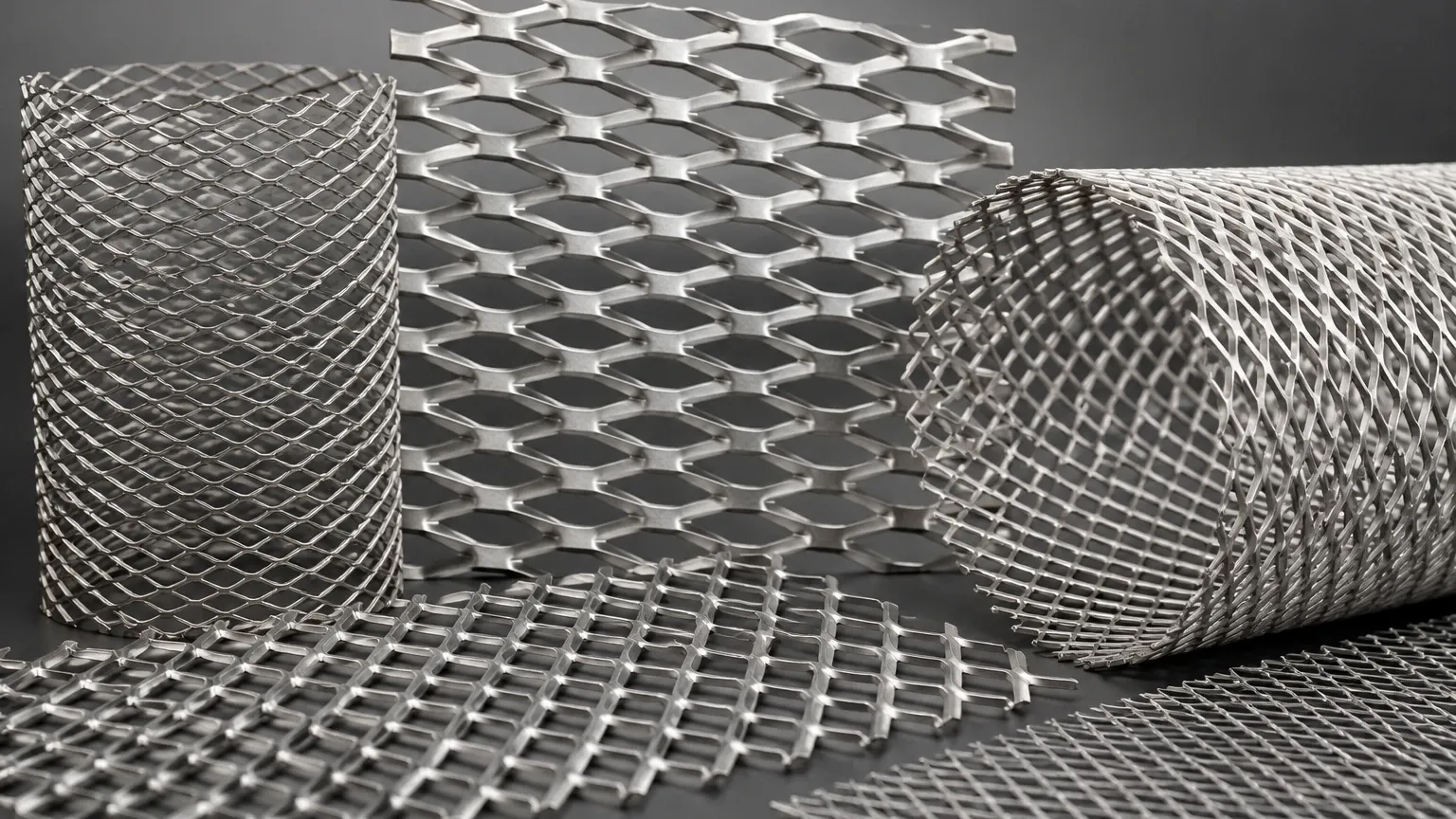
In industrial filtration and structural engineering, the selection of media is a critical factor that determines the efficiency, durability, and cost-effectiveness of a system. Stainless steel expanded metal sheet is a versatile material produced by simultaneously slitting and stretching a solid sheet of stainless steel. Unlike perforated metal, which involves punching holes and creating material waste, the expanding process results in a diamond-shaped or hexagonal pattern without any loss of material. This manufacturing technique creates a rigid, one-piece structure that offers a high strength-to-weight ratio, making it an essential component in demanding industrial environments.
For engineers and procurement specialists, understanding the technical nuances of stainless steel expanded metal is vital for optimizing filtration performance and ensuring mechanical integrity. This guide examines the manufacturing processes, material specifications, and engineering considerations required to select the appropriate expanded metal for industrial applications.
Understanding the Manufacturing and Structure of Expanded Metal
The production of expanded metal is a precision process that transforms a solid metal plate or coil into a mesh-like structure. The stainless steel sheet is fed through a machine equipped with a reciprocating knife that slits the metal while simultaneously stretching it. This mechanical expansion creates uniform openings. Because the strands and bonds are set at a uniform angle to the plane of the sheet, the material gains structural rigidity that a flat sheet lacks.
Standard vs. Flattened Expanded Metal
There are two primary forms of expanded metal used in industrial settings:
1. Standard (Raised) Expanded Metal: This is the material as it comes off the expanding machine. The strands and bonds are set at a sharp angle, providing a three-sided surface that offers excellent grip and high structural strength. In filtration, the raised profile can help create turbulence or provide a mechanical lock for secondary filter media.
2. Flattened Expanded Metal: This is produced by passing standard expanded metal through a cold-roll reducing mill. The process flattens the strands and bonds into a single plane, creating a smooth, flat surface. Flattened sheets are often preferred when the expanded metal serves as an outer guard or an internal support core for delicate filter membranes, as the smooth surface prevents abrasion or puncturing of the finer mesh.
Key Dimensional Terminology
When specifying stainless steel expanded metal sheet, engineers must use standardized terminology to ensure accuracy:
* Long Way of Design (LWD): The distance from a point on one diamond to the corresponding point on the next diamond, measured across the long axis.
* Short Way of Design (SWD): The distance measured across the short axis of the diamond.
* Strand Width: The amount of metal fed into the machine between slits.
* Strand Thickness: The thickness of the original base metal.
* Opening Size: The clear area between the strands, which determines the filtration threshold or the size of particles that can pass through.
Material Selection: Why Stainless Steel is Essential for Industrial Use
The choice of material is the most significant factor in determining the lifespan of an expanded metal sheet, particularly in corrosive or high-temperature environments. While expanded metal can be made from various alloys, stainless steel is the industry standard for filtration and chemical processing due to its inherent resistance to oxidation and chemical attack.
Grade 304 Stainless Steel
Grade 304 is the most common stainless steel used in industrial applications. It provides excellent corrosion resistance to a wide range of atmospheric environments and many corrosive media. It is frequently used in food and beverage processing, as well as general industrial filtration where extreme chemical exposure is not a primary concern.
Grade 316 and 316L Stainless Steel
For more demanding environments, Grade 316 is the preferred choice. It contains molybdenum, which significantly increases resistance to pitting and crevice corrosion in chloride-rich environments, such as marine applications or chemical processing plants. Grade 316L (low carbon) is utilized when welding is required, as it prevents carbide precipitation that can lead to intergranular corrosion in the heat-affected zone of the weld.
Temperature and Chemical Compatibility
Stainless steel expanded metal maintains its mechanical properties at elevated temperatures, which is critical for steam filtration or hot gas exhaust systems. When selecting a grade, engineers must consult chemical compatibility charts to ensure the alloy can withstand the specific acids, alkalis, or salts present in the process stream. Failure to match the material to the environment can lead to premature structural failure or contamination of the filtrate.
Key Performance Advantages in Industrial Filtration
In the context of Perforated & Expanded Metal solutions, expanded metal offers unique advantages over other media like woven wire mesh or perforated plate. Its role in a filtration system is often dual-purpose: providing a physical barrier and acting as a structural support.
Structural Rigidity and Support
One of the primary uses of stainless steel expanded metal sheet in filtration is as a support core or outer cage for filter cartridges. Because it is a single piece of metal with no joins or weaves, it does not unravel or fray. In high-pressure hydraulic systems or liquid filtration, the expanded metal prevents the finer filter media (such as sintered mesh or paper) from collapsing under the force of the flow.
High Open Area and Flow Efficiency
Expanded metal can be manufactured with a very high percentage of open area—often exceeding 70% or 80%. This allows for high flow rates with minimal pressure drop. For engineers, minimizing pressure drop is essential for reducing energy consumption in pumps and ensuring the overall efficiency of the filtration system. The geometry of the diamond openings also helps in distributing the flow evenly across the surface of the primary filter media.
Material Efficiency and Cost-Effectiveness
Since the expansion process involves stretching rather than punching, there is zero material waste. This makes expanded metal a more cost-effective option than perforated metal for many applications, especially when using expensive alloys like 316L stainless steel. The weight-to-strength ratio is also superior; a sheet of expanded metal can provide the same structural support as a much heavier solid plate, reducing the overall weight of the filter assembly.
Comparing Perforated & Expanded Metal for Filtration Systems
While both perforated and expanded metals are used in industrial filtration, they serve different engineering requirements. Choosing between them requires an analysis of the mechanical load, flow dynamics, and the specific nature of the particulate being filtered.
| Feature | Expanded Metal | Perforated Metal |
| :— | :— | :— |
| Manufacturing | Slit and stretched; no waste. | Punched holes; significant scrap. |
| Structural Integrity | One-piece construction; high rigidity. | High integrity; depends on hole pattern. |
| Surface Profile | Raised (standard) or flat. | Naturally flat. |
| Open Area | Highly customizable, up to 90%+. | Generally limited to 50-60% for structural stability. |
| Flow Dynamics | Creates slight turbulence (raised). | Smooth, laminar flow (flat). |
In applications where the filter must withstand high mechanical stress or vibration, the truss-like structure of expanded metal provides better resistance to deformation. However, if a perfectly smooth surface or very specific hole geometries (such as round or square) are required for precise particle separation, perforated metal may be the better choice. In many custom filtration designs, both materials are used in tandem—perforated metal for the outer housing and expanded metal for the internal support pleats.
Engineering Considerations for Custom Filter Design
When integrating stainless steel expanded metal sheet into an OEM filtration product, several engineering factors must be confirmed to ensure the component meets the application's performance specifications.
Load-Bearing Requirements
Engineers must calculate the maximum differential pressure the filter will encounter. The LWD and SWD dimensions, combined with the strand thickness, dictate the load-bearing capacity of the mesh. For internal support cores, the collapse strength must be tested to ensure the filter remains functional even as it becomes loaded with contaminants.
Precision Tolerances and Edge Finishing
For custom filter cartridges, the tolerances of the expanded metal sheet are critical. If the sheet is to be rolled into a cylinder and welded, the edges must be trimmed precisely to ensure a clean seam. "Bond shearing" (cutting through the intersection of the diamonds) or "random shearing" (cutting anywhere) will affect the final dimensions and the ease of welding. In many cases, deburring or electropolishing is required to remove sharp edges that could trap debris or injure personnel during maintenance.
Customization Options
Manufacturers like Kaifil provide customized expanded metal solutions tailored to specific industrial needs. This includes:
* Custom Mesh Sizes: Adjusting the LWD and SWD to achieve a specific filtration grade.
* Specialty Alloys: Utilizing Duplex stainless steel or Monel for extreme environments.
* Secondary Processing: Including pleating, forming, and welding into finished filter components.
Maintenance, Durability, and Total Cost of Ownership
The total cost of ownership (TCO) for a filtration system is not just the initial purchase price, but also the costs associated with maintenance, energy consumption, and replacement cycles. Stainless steel expanded metal contributes to a lower TCO through its durability and cleanability.
Cleaning and Reuse
Unlike disposable fiber filters, stainless steel expanded metal components are often cleanable. Depending on the contaminant, they can be cleaned using ultrasonic baths, high-pressure water jets, or chemical solvents. This ability to regenerate the filter media extends the service life of the equipment and reduces waste. For systems handling sticky or viscous fluids, flattened expanded metal is easier to clean as it lacks the crevices found in the raised version.
Replacement Cycles
In abrasive environments where the process fluid contains hard particles, the strands of the expanded metal will eventually wear down. However, the hardness of stainless steel (especially when work-hardened during the expansion process) provides significant resistance to erosion. Regular inspection of the strand thickness and the integrity of the bonds can help predict replacement cycles, preventing unexpected downtime.
Conclusion for Procurement and Engineering Teams
Selecting the right stainless steel expanded metal sheet requires a balance of material science and mechanical engineering. By evaluating the chemical environment, the required flow rates, and the structural stresses of the application, technical teams can specify a solution that maximizes filtration efficiency while ensuring long-term reliability. Whether used as a primary filter or a support structure, the unique properties of expanded metal make it an indispensable tool in modern industrial processing.
