


Spantek Expanded Metal
In the realm of industrial filtration and structural reinforcement, material selection is dictated by the balance between mechanical strength, open area, and chemical compatibility. Among the various options available to engineers, expanded metal stands out as a versatile and cost-effective solution. Specifically, products within the category of spantek expanded metal have set industry benchmarks for precision and durability. For technical professionals designing filtration systems or protective enclosures, understanding the nuances of how these materials are manufactured, measured, and applied is essential for optimizing system performance.
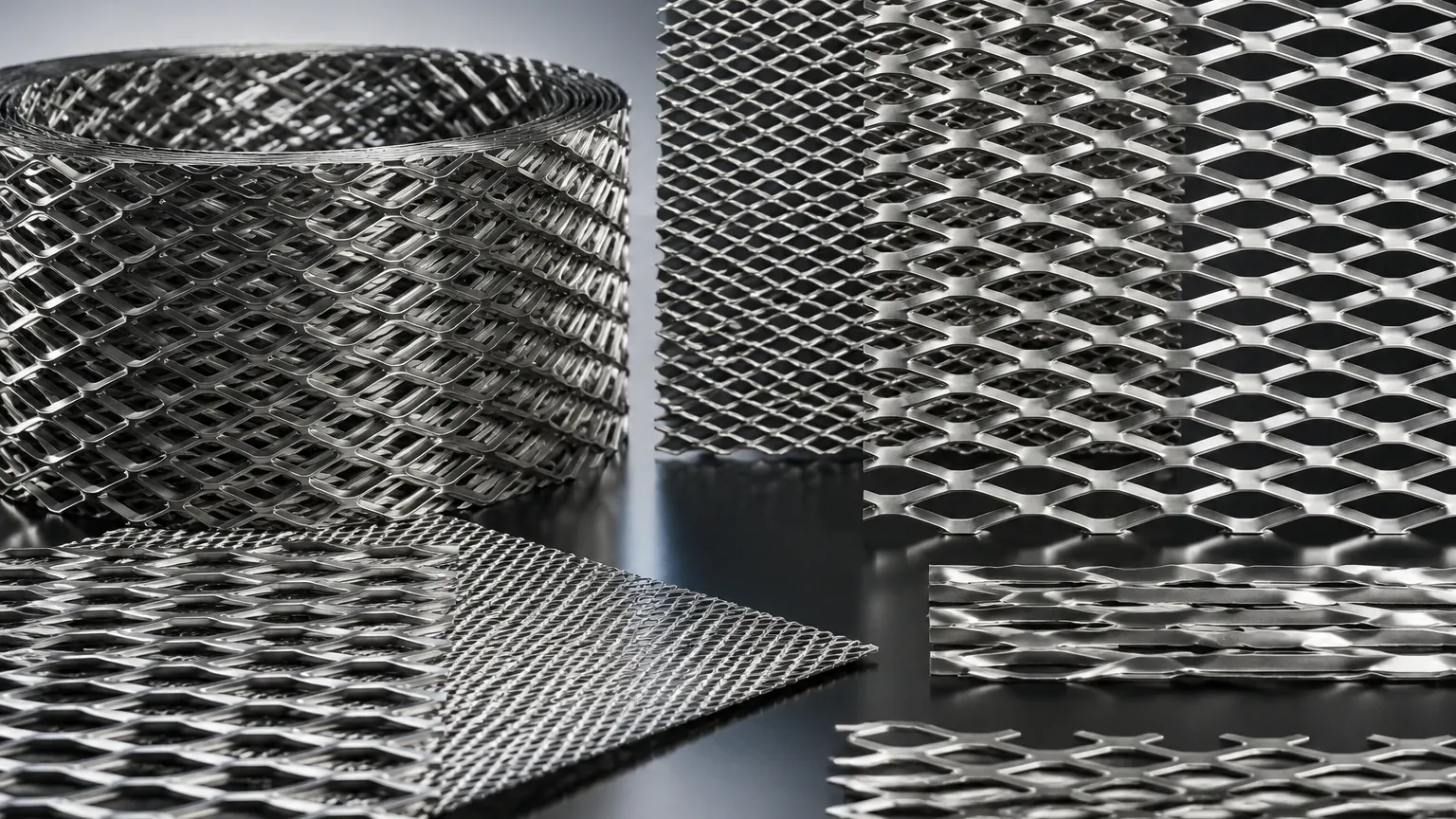
At its core, expanded metal is a unique material produced through a process of simultaneous slitting and stretching. Unlike perforated metal, which involves punching holes out of a sheet and creating scrap, expanded metal is formed without any material loss. This makes it an inherently sustainable and cost-efficient choice for large-scale industrial projects. When integrated into filtration assemblies, it often serves as a robust support structure for finer mesh layers or as a primary coarse filter in heavy-duty applications.
The Engineering Principles of Expanded Metal
To specify the correct Perforated & Expanded Metal for a project, engineers must be familiar with the geometric terminology that defines these products. The manufacturing process creates a diamond-shaped pattern that is characterized by several key dimensions:
1. SWD (Short Way of Diamond): This refers to the distance from the center of a bond to the center of the next bond measured across the short diamond diagonal.
2. LWD (Long Way of Diamond): This is the distance measured across the long diamond diagonal.
3. Strand Width: The amount of metal fed into the expanding machine between the slits.
4. Strand Thickness: The original thickness of the base metal sheet.
5. Bond: The intersection where two strands meet, creating a solid junction that provides the material’s structural integrity.
There are two primary forms of expanded metal: Raised (or Standard) and Flattened. Raised expanded metal retains the natural angularity of the strands, which provides maximum rigidity and a high strength-to-weight ratio. This form is often used in walkways, grates, or as a high-surface-area substrate in chemical reactors. Flattened expanded metal undergoes an additional cold-rolling process that levels the strands and bonds, resulting in a smooth, flat surface. In filtration applications, flattened metal is often preferred because it prevents damage to delicate filter media and allows for easier cleaning and maintenance.
Comparative Analysis: Expanded vs. Perforated Metal
When deciding between expanded metal and perforated metal, engineers must evaluate the specific requirements of the application. While both fall under the broader category of Perforated & Expanded Metal, their performance characteristics differ significantly.
Perforated metal is created by punching holes of various shapes (round, square, slotted) into a solid sheet. This allows for extremely precise control over the open area and the specific hole size, which is critical for fine filtration and sorting applications. However, the punching process creates "slugs" or scrap material, which can increase the cost, especially when using expensive alloys like 316L stainless steel.
In contrast, spantek expanded metal offers superior structural strength because the strands are not cut but rather stretched into a continuous web. The bonds act as structural nodes that distribute stress across the entire sheet. This makes expanded metal highly resistant to impact and deformation. Furthermore, the three-dimensional nature of raised expanded metal can assist in breaking up flow patterns in fluid dynamics, which is sometimes a desired trait in mixing or aeration tanks. However, because the openings are diamond-shaped, expanded metal is generally less suited for applications requiring precise particle size exclusion compared to round-hole perforated sheets.
Material Considerations for Industrial Filtration
For B2B applications in the chemical, pharmaceutical, and food and beverage industries, material composition is as important as the physical structure. Kaifil specializes in custom stainless steel solutions, recognizing that the longevity of a filter component depends heavily on its resistance to corrosion and temperature extremes.
* 304 Stainless Steel: This is the most common grade used for general industrial applications. It offers good corrosion resistance and excellent forming characteristics. It is suitable for water treatment and standard hydraulic systems.
* 316/316L Stainless Steel: For more demanding environments, such as pharmaceutical processing or marine applications, 316 stainless steel is preferred. The addition of molybdenum enhances resistance to pitting and crevice corrosion in chloride-rich environments. The "L" (low carbon) version is essential if the expanded metal will be welded into a housing, as it prevents carbide precipitation that can lead to intergranular corrosion.
* Specialty Alloys: In highly aggressive chemical processing, materials like Monel, Inconel, or Hastelloy may be required. While these are more difficult to expand than standard carbon steel or aluminum, they provide the necessary durability for extreme pH levels or high-temperature oxidation resistance.
Technical Specifications and Measurement Standards
When sourcing spantek expanded metal for OEM projects, technical professionals must confirm that the tolerances meet their specific design requirements. Standard industrial tolerances for expanded metal typically allow for slight variations in the SWD and LWD, as well as the overall sheet dimensions. However, for precision filtration components, tighter tolerances are often necessary to ensure a proper fit within a filter housing or cartridge.
Another critical metric is the Percentage of Open Area. This value determines the flow rate and pressure drop across the filter. In expanded metal, the open area is calculated based on the strand width and the SWD. A larger open area reduces the pressure drop but may compromise the structural rigidity of the sheet. Engineers must balance these two factors to ensure the filter can withstand the operational pressures of the system without collapsing or vibrating excessively.
Customization Options for OEM Applications
One of the primary advantages of working with a specialized manufacturer like Kaifil is the ability to customize Perforated & Expanded Metal to meet unique application needs. Standard off-the-shelf expanded metal may not always align with the specific flow dynamics or spatial constraints of a custom-built industrial machine.
Customization options include:
* Custom Diamond Sizes: Adjusting the SWD and LWD to create specific aperture sizes for coarse filtration or to provide optimal support for a secondary wire mesh layer.
* Edge Treatments: Expanded metal can be supplied with "random sheared" edges or "bond sheared" edges. For filtration cartridges, bond shearing is often preferred to provide a cleaner, safer edge for welding and assembly.
* Forming and Fabrication: Expanded metal can be rolled into cylinders for use in filter cartridges, pleated for increased surface area, or framed for use as industrial strainers.
* Surface Finishes: Beyond flattening, stainless steel expanded metal can be electropolished to remove burrs and improve surface smoothness. This is particularly important in the food and pharmaceutical sectors to prevent bacterial growth and ensure the equipment meets sanitary standards.
Application Analysis: From Architectural to Industrial Filtration
While spantek expanded metal is frequently cited in architectural contexts for its aesthetic appeal and sun-shading capabilities, its industrial utility is even more profound. In the B2B sector, its applications are diverse:
* Hydraulic Filtration: Used as a support tube for pleated paper or synthetic media, expanded metal prevents the media from collapsing under high-pressure flow.
* Chemical Processing: Serving as catalyst support grids or as protective screens for intake valves in corrosive fluid lines.
* Food and Beverage: Utilized in large-scale drying trays or as pre-filters in water purification systems where high flow rates are required.
* Acoustic Dampening: In industrial machinery, expanded metal can be used as a facing for sound-absorbing materials, providing protection while allowing sound waves to pass through to the insulation.
Procurement and Quality Assurance Checklist
Before finalizing a purchase order for expanded metal components, purchasing teams and engineers should confirm several key details with their supplier to avoid costly errors or performance failures:
1. Material Certification: Ensure the supplier can provide Mill Test Reports (MTRs) to verify the chemical composition of the stainless steel or alloy.
2. Dimensional Accuracy: Confirm the SWD, LWD, strand width, and thickness. If the part must fit into a specific assembly, request a sample or a detailed technical drawing.
3. Flattening Requirements: Specify whether the material must be flattened or if the raised profile is acceptable. If flattened, confirm the maximum allowable thickness after rolling.
4. Cleaning and Degreasing: Industrial filters often require the removal of lubricants used during the expanding process. Confirm that the parts will be properly degreased, especially for oxygen-service or food-grade applications.
5. Burr and Sharp Edge Management: Expanded metal naturally has sharp edges. Determine if the application requires deburring or if the edges will be encapsulated in a frame or weldment.
Conclusion
Selecting the right Perforated & Expanded Metal is a critical decision that impacts the efficiency, safety, and longevity of industrial systems. Whether the requirement is for a high-strength support structure in a hydraulic system or a corrosion-resistant screen in a chemical plant, spantek expanded metal offers a combination of structural integrity and material efficiency that is difficult to match. By focusing on technical specifications—such as SWD/LWD dimensions, material grades, and open area percentages—engineers can ensure they are choosing a solution that meets the rigorous demands of modern industrial environments.
Kaifil continues to support global industries by providing high-performance, customized filtration components. By combining advanced manufacturing capabilities with deep engineering expertise, Kaifil helps technical teams navigate the complexities of material selection and design, delivering reliable filtration solutions that optimize total cost of ownership and operational uptime.
