


Stretched Perforated Metal Sheet Steel
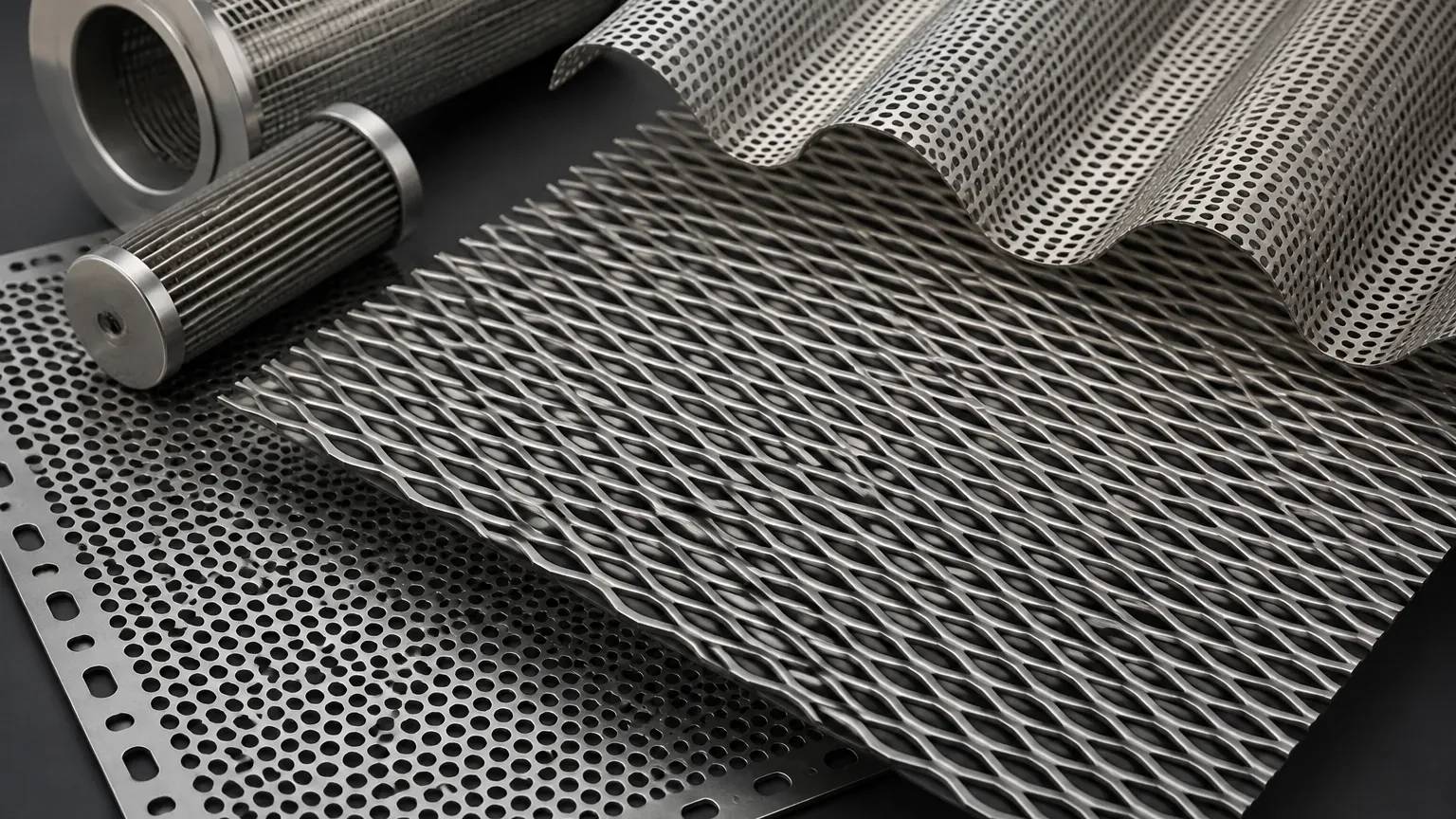
In the landscape of industrial filtration and structural engineering, the terms used to describe metal components often overlap, leading to confusion during the procurement process. One such term is "stretched perforated metal sheet steel." While technically distinct in their manufacturing processes, perforated metal and stretched (expanded) metal are frequently grouped together because they serve similar functions: providing a controlled open area for fluid flow, gas exchange, or structural support.
For engineers and purchasing teams, understanding the nuances of how these materials are manufactured, their mechanical properties, and their performance in demanding environments is critical. Whether used as a support core for a high-pressure hydraulic filter or as a protective outer sleeve for a chemical processing cartridge, the choice of material and geometry directly impacts the efficiency and longevity of the filtration system. This guide examines the technical aspects of stretched perforated metal sheet steel, focusing on its role in industrial applications.
Understanding the Manufacturing Process: Expansion vs. Perforation
To specify the correct component, it is essential to distinguish between the two primary methods of creating open-area metal sheets.
Perforated Metal
Perforated metal is produced by punching holes into a solid sheet of steel. This is a subtractive process where the "slugs" (the metal removed to create the holes) are discarded or recycled. This method allows for high precision in hole shape—ranging from standard rounds and squares to complex decorative or functional patterns. However, because it involves waste material, the cost per square foot can be higher than other methods, especially when using expensive alloys like 316L stainless steel.
Stretched (Expanded) Metal
Stretched metal, commonly referred to as expanded metal, is produced through a simultaneous slitting and stretching process. A machine blades the metal sheet and then pulls it, expanding the slits into diamond-shaped openings. Because no material is removed, this is a zero-waste process. The resulting "stretched perforated metal sheet steel" is typically stronger than the original sheet on a weight-for-weight basis because the strands are interconnected without welds or joins.
For filtration applications, the expansion process creates a three-tiered structure that can be left "raised" for maximum grip and turbulence or "flattened" for a smooth surface that won't damage delicate filter media like fine wire mesh.
Material Selection for Industrial Filtration
The performance of Perforated & Expanded Metal is largely dictated by the base alloy. In industrial filtration, where exposure to corrosive chemicals, high temperatures, and high pressures is common, material selection is the first line of defense against premature failure.
Stainless Steel (304 and 316L)
Stainless steel is the industry standard for most filtration components.
* Grade 304: Offers excellent strength and basic corrosion resistance. It is suitable for water treatment and general industrial applications where chemical exposure is minimal.
* Grade 316L: The "L" stands for low carbon, which improves weldability and resistance to intergranular corrosion. The addition of molybdenum makes 316L the preferred choice for pharmaceutical, food and beverage, and marine applications where chloride exposure is a concern.
Carbon Steel and Galvanized Steel
In applications where corrosion is not a primary risk—such as oil-based hydraulic systems or indoor air filtration—carbon steel provides a cost-effective alternative. Galvanized steel offers a middle ground, providing a protective zinc coating that prevents oxidation in humid environments.
Specialty Alloys
For extreme environments, such as those found in petrochemical refining or aerospace, specialty alloys like Monel, Inconel, or Titanium may be used. These materials maintain their structural integrity at temperatures that would cause standard steel to deform or oxidize.
Key Engineering Specifications: LWD, SWD, and Open Area
When designing or ordering stretched perforated metal sheet steel, engineers must define several geometric parameters that dictate the material’s performance. In expanded metal terminology, these are defined by the diamond shape created during the stretching process.
1. LWD (Long Way of Design): The distance from the center of one bond to the center of the next bond across the long axis of the diamond.
2. SWD (Short Way of Design): The distance across the short axis of the diamond.
3. Strand Width and Thickness: The width of the metal slit and the thickness of the original sheet. These two factors determine the mechanical strength and the weight of the final product.
4. Open Area Percentage: This is perhaps the most critical metric for filtration. It represents the ratio of the area of the openings to the total area of the sheet. A higher open area reduces pressure drop (resistance to flow) but may decrease the structural rigidity of the component.
Calculating the precise open area is vital for ensuring that a filter cartridge can handle the required flow rate without causing a significant drop in system pressure, which could lead to pump cavitation or energy inefficiency.
Applications in Industrial Filtration Systems
Stretched perforated metal sheet steel serves multiple roles within a filtration assembly. Its versatility allows it to be used in both primary and secondary capacities.
Support Cores and Outer Cages
In many liquid and gas filters, the actual filtration is performed by a delicate layer of fine wire mesh or synthetic fiber. These materials lack the structural strength to withstand the pressure of the fluid flow. Stretched metal is often rolled into cylinders to serve as an internal support core or an external protective cage. The interconnected strands provide the necessary hoop strength to prevent the filter media from collapsing or bursting under high differential pressure.
Pre-Filtration and Coarse Screening
In systems dealing with large particulate matter—such as raw water intake or heavy industrial wastewater—expanded metal sheets act as a pre-filter. They capture large debris (leaves, plastic, metal shavings) before the fluid reaches the finer, more expensive filtration stages. This extends the service life of the entire system and reduces maintenance costs.
Flow Diffusers
In chemical reactors and large-scale separators, stretched metal sheets are used to break up the flow of liquids or gases. The three-dimensional nature of raised expanded metal creates controlled turbulence, which can help in distributing the fluid evenly across a catalyst bed or a secondary filter medium.
Customization and Post-Processing
Standard off-the-shelf metal sheets rarely meet the specific requirements of advanced industrial equipment. Customization is often necessary to ensure a perfect fit and optimal performance.
Flattening vs. Raising
As mentioned previously, the expansion process leaves the strands at an angle to the plane of the sheet. "Flattening" involves passing the expanded metal through a cold-roll reducing mill. This makes the sheet smoother and thinner, which is ideal when the metal needs to be in direct contact with fragile filter membranes. Raised metal, however, retains its 3D structure and offers higher rigidity.
Surface Treatments
To enhance the properties of the steel, several surface treatments can be applied:
* Passivation: A chemical process for stainless steel that removes free iron from the surface, enhancing the protective chromium oxide layer.
* Electropolishing: Removes a microscopic layer of material, resulting in a mirror-like finish that is extremely easy to clean—a requirement in the pharmaceutical and biotech industries.
* Degreasing: Essential for oxygen service or high-purity applications where any residual manufacturing oils could contaminate the process.
Fabrication and Welding
Stretched perforated metal sheet steel can be cut to size, notched, and formed into complex shapes. For filtration components, this usually involves longitudinal welding to create tubes or spot welding to attach end caps. Precision in fabrication ensures that there are no gaps where unfiltered fluid could "bypass" the filter media.
Evaluating Total Cost of Ownership (TCO)
When purchasing filtration components, looking at the initial purchase price in isolation can be misleading. Engineers should consider the Total Cost of Ownership, which includes:
* Durability: A higher-grade 316L stainless steel component may cost more upfront but will outlast a 304 stainless steel part in a corrosive environment, reducing the frequency of replacements.
* Cleaning and Reuse: Metal filters, unlike disposable synthetic filters, can often be cleaned (via backwashing or ultrasonic cleaning) and reused. The structural integrity of the stretched metal support determines how many cleaning cycles the filter can withstand.
* System Efficiency: A well-designed expanded metal core with an optimized open area reduces energy consumption by minimizing pressure drop across the filter.
Why Technical Expertise Matters in Selection
Selecting the right stretched perforated metal sheet steel requires a balance between flow requirements, structural demands, and chemical compatibility. Working with a manufacturer that understands these engineering trade-offs is essential. A professional manufacturer like Kaifil provides the technical insight needed to move from a generic specification to a high-performance filtration solution.
Before finalizing a purchase, technical teams should confirm the following with their supplier:
* The exact alloy and its certification (MTR – Material Test Reports).
* The precise LWD/SWD and strand dimensions to ensure flow calculations are accurate.
* The required tolerances for fabrication, especially if the part must fit into a precision-machined housing.
* Any necessary post-processing steps to meet industry-specific hygiene or safety standards.
By focusing on these technical details, engineers can ensure that their filtration systems operate reliably, even in the most demanding industrial environments.
