


Tangga Perforated Metal
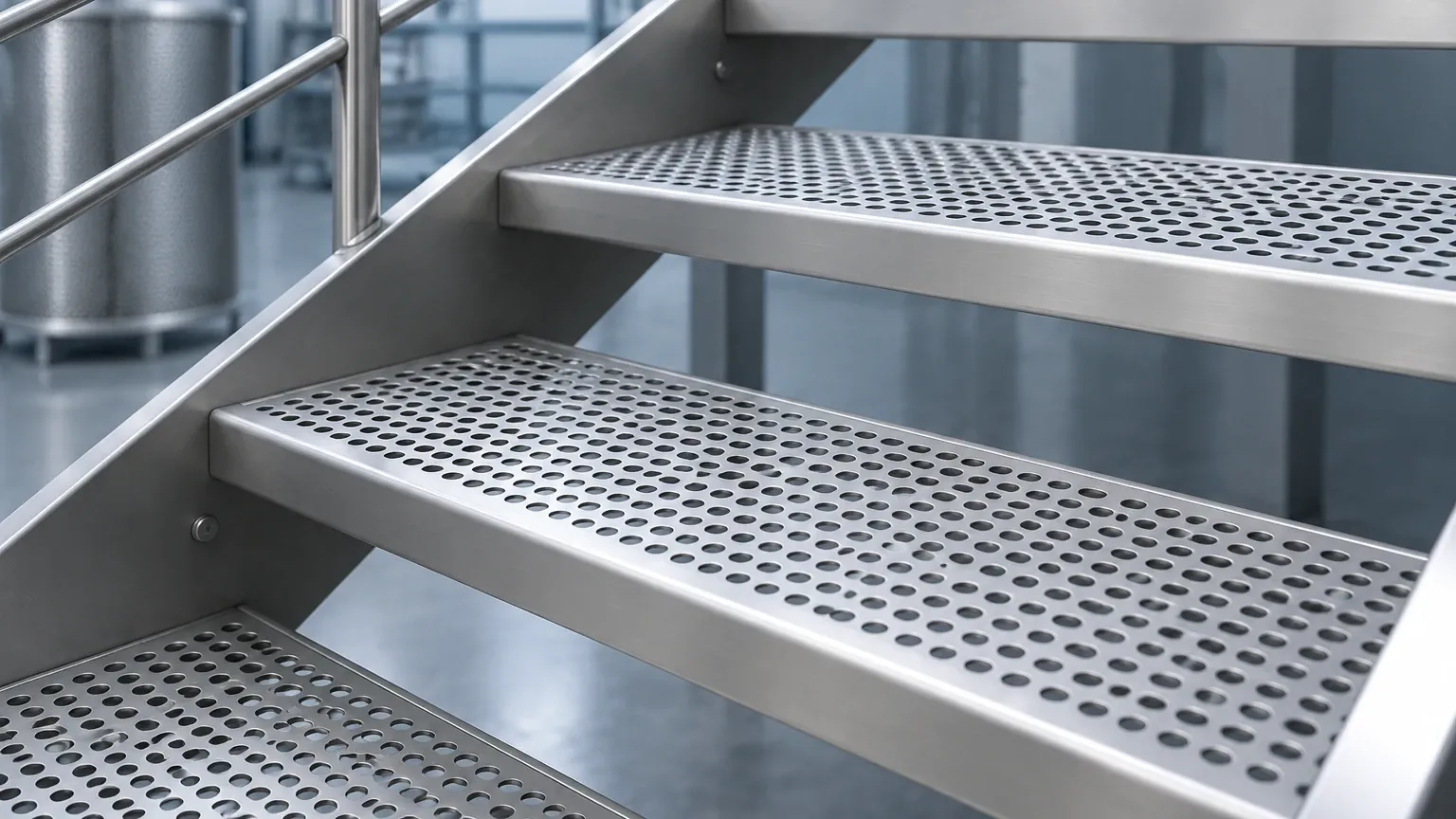
In industrial architecture and facility engineering, the selection of materials for access systems—specifically stairways, walkways, and platforms—is a critical decision that impacts safety, durability, and operational efficiency. The term "tangga perforated metal," referring to perforated metal stairs, describes a specialized structural solution where metal sheets are mechanically punched or stamped to create a pattern of holes. These components are essential in environments ranging from chemical processing plants to offshore platforms, where standard solid surfaces pose risks related to liquid accumulation, lack of ventilation, or insufficient traction.
As a professional manufacturer of precision metal components, Kaifil provides high-performance Perforated & Expanded Metal solutions designed to meet the rigorous demands of industrial access. Understanding the technical specifications, material properties, and engineering advantages of these systems is vital for procurement teams and project engineers tasked with maintaining facility safety and longevity.
The Engineering Logic Behind Perforated Metal Stairs
The primary function of a stair tread in an industrial setting is to provide a stable, high-traction surface for personnel. Unlike solid steel plating, perforated metal offers a unique combination of structural rigidity and transparency. This transparency is not merely aesthetic; it allows for the passage of light, air, and fluids. In multi-level industrial facilities, the ability for light to pass through stair treads improves visibility in lower sections, reducing the need for excessive artificial lighting and enhancing overall safety.
From a structural perspective, the perforation process allows engineers to reduce the overall weight of the stairway without a proportional loss in strength. By selecting specific hole patterns and margins, manufacturers can optimize the weight-to-strength ratio. This is particularly important in modular construction or on mobile industrial equipment where weight savings contribute to lower shipping costs and easier installation. The use of Perforated & Expanded Metal ensures that the "tangga perforated metal" remains light enough for efficient handling while remaining robust enough to handle high-traffic loads.
Material Integrity: Why Stainless Steel Dominates
When specifying perforated metal for industrial stairs, material selection is the most significant factor in determining the service life of the component. While carbon steel and aluminum are options, stainless steel remains the industry standard for demanding environments. Kaifil specializes in stainless steel filtration and structural components, utilizing grades such as SS304 and SS316 to ensure maximum resistance to environmental stressors.
1. Corrosion Resistance: In chemical processing, food and beverage production, and marine applications, stairs are frequently exposed to corrosive agents, moisture, and extreme temperatures. SS316, containing molybdenum, offers superior resistance to chlorides and acidic environments, preventing the structural degradation that often leads to safety failures in carbon steel alternatives.
2. Hygiene and Cleanability: In pharmaceutical and food-grade facilities, the ability to sanitize surfaces is paramount. Stainless steel perforated treads do not harbor bacteria and can withstand high-pressure washdowns and aggressive cleaning chemicals without pitting or rusting.
3. Thermal Stability: Industrial stairs often exist near high-heat machinery or in cryogenic environments. Stainless steel maintains its mechanical properties across a wide temperature range, ensuring that the stairs remain safe and predictable under thermal stress.
Technical Parameters: Hole Patterns and Open Area
The performance of a perforated metal stair tread is defined by its geometric configuration. Engineers must consider the "open area percentage," which is the ratio of the area of the holes to the total area of the sheet. For industrial stairs, an open area of 30% to 50% is common, though this varies based on the specific application.
Hole Shapes
* Round Holes: The most common and cost-effective pattern. Round holes provide excellent structural integrity and are easier to manufacture with high precision. They are ideal for general industrial use where drainage and airflow are required.
* Square Holes: These offer a higher open area percentage, which is beneficial for maximum ventilation or when the stairs are used as part of a filtration or screening system in a gravity-fed process.
* Slotted Holes: Often used in applications where specific drainage directions are required or to provide a unique aesthetic in architectural-industrial hybrids.
Pitch and Arrangement
The arrangement of the holes—whether staggered or straight—affects both the strength of the tread and its slip-resistance. A staggered pattern (usually at 60 degrees) is typically preferred for stair treads because it provides more uniform strength across the surface and ensures that there are no long, uninterrupted paths for a foot to slide, thereby increasing the effective friction of the surface.
Safety and Slip Resistance in Industrial Environments
Safety is the paramount concern for any "tangga perforated metal" installation. In environments where oil, water, or chemical lubricants are present, a flat metal surface becomes a significant hazard. Perforated metal addresses this through two mechanisms: drainage and mechanical grip.
Drainage Efficiency: By allowing liquids to pass through the surface, perforated treads prevent the formation of puddles. This is critical in outdoor installations where rain or snow could otherwise create slick surfaces. In indoor industrial settings, it prevents the accumulation of spilled oils or cleaning fluids.
Mechanical Grip: The edges of the perforated holes provide multi-directional traction. When a worker steps on the tread, the soles of their safety footwear engage with the edges of the perforations. For high-risk areas, the holes can be "embossed" or "flanged," where the metal at the edge of the hole is turned upward to create a serrated, high-traction rim. This specialized Perforated & Expanded Metal configuration is the gold standard for anti-slip performance in industrial safety.
Customization and Fabrication for Industrial Access
No two industrial facilities are identical, which makes customization a core requirement for perforated metal stairs. Kaifil’s manufacturing capabilities allow for the production of custom treads that meet specific dimensional and load-bearing requirements. This process involves more than just punching holes; it includes precision shearing, bending, and welding.
Custom Treads and Risers: Treads can be fabricated with integrated nosing—a reinforced front edge that provides extra grip and visibility where the foot first makes contact. Risers can also be perforated to maintain airflow throughout the stairwell, which is essential in ventilation-sensitive areas like mines or chemical storage rooms.
Load-Bearing Calculations: Engineers must confirm the maximum span and the expected load (both dead load and live load) for the stairs. The thickness (gauge) of the metal and the margin (the unperforated area around the edges) are adjusted to ensure that the tread does not deflect excessively under the weight of personnel or equipment. Kaifil works closely with clients to ensure that the supplied Perforated & Expanded Metal meets these structural benchmarks.
Maintenance and Total Cost of Ownership
While the initial cost of stainless steel perforated metal may be higher than painted carbon steel, the total cost of ownership (TCO) is significantly lower. Carbon steel stairs require frequent repainting or re-galvanizing to prevent rust, especially in high-traffic areas where the coating is quickly worn away. Every maintenance cycle involves labor costs and potential facility downtime.
In contrast, stainless steel "tangga perforated metal" requires minimal maintenance. The inherent corrosion resistance of the alloy means that even if the surface is scratched or abraded, it will not rust. Cleaning is generally limited to periodic rinsing or debris removal. Furthermore, the durability of the material ensures that the stairs will not need replacement for decades, providing a much higher return on investment (ROI) for the facility operator.
Key Considerations for Procurement and Engineering Teams
Before finalizing a purchase for perforated metal stair components, engineering and purchasing teams should confirm several technical details to ensure the product is fit for purpose:
1. Environment Compatibility: Is the material grade (e.g., SS304 vs. SS316) appropriate for the specific chemicals or environmental conditions present at the site?
2. Compliance Standards: Does the perforation pattern and tread design meet local occupational health and safety (OHS) standards regarding hole size (to prevent small tools from falling through) and slip resistance ratings?
3. Installation Requirements: Are the treads supplied with pre-drilled mounting holes or end plates for easy bolting to the stair stringers, or will they require on-site welding?
4. Load Specifications: Has the gauge of the metal been verified against the required span to prevent sagging or structural failure?
By addressing these factors, teams can ensure that their investment in Perforated & Expanded Metal results in a safe, durable, and low-maintenance access solution.
Conclusion: Selecting the Right Specification
The use of "tangga perforated metal" is a hallmark of modern industrial design, prioritizing the safety of personnel and the longevity of the infrastructure. Whether the application is a simple access ladder in a water treatment plant or a complex multi-story stairway in a refinery, the technical properties of the metal—its open area, hole pattern, and material grade—determine its success.
Kaifil’s expertise in manufacturing precision metal components ensures that every sheet of Perforated & Expanded Metal is produced to the highest industrial standards. By focusing on quality materials like stainless steel and offering customized fabrication, Kaifil supports engineers in building safer, more efficient industrial environments. When specifying metal for your next project, consider the long-term benefits of precision-engineered perforated solutions to achieve the optimal balance of performance and value.
