


Thin Expanded Metal
In the landscape of industrial filtration and precision engineering, thin expanded metal serves as a critical component where structural integrity must meet high porosity. Unlike standard expanded metal used in architectural or heavy-duty walkways, thin expanded metal—often categorized by foil-like thicknesses and miniature diamond patterns—requires specialized manufacturing techniques and rigorous material selection to perform under the demanding conditions of chemical processing, aerospace, and pharmaceutical filtration.
For engineers and procurement specialists, selecting the right thin expanded metal involves more than choosing a mesh size. It requires a deep understanding of how the expansion process alters the mechanical properties of the base material and how these changes impact the final filtration efficiency and service life of the component.
Engineering Fundamentals of Thin Expanded Metal
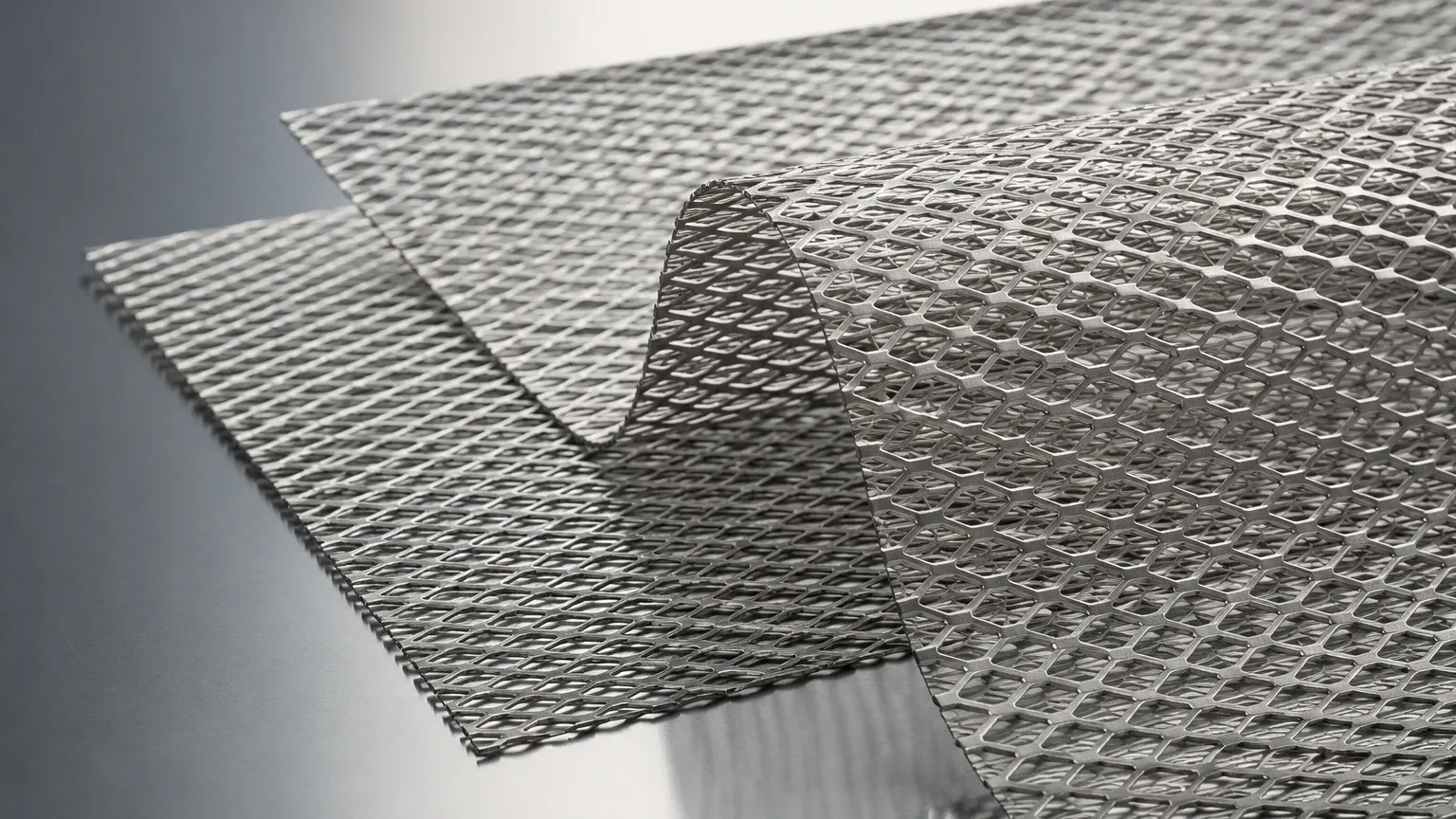
Thin expanded metal is produced through a simultaneous slitting and stretching process. A solid sheet or foil of metal is fed through a machine equipped with precision knives that create a series of staggered cuts. As the knives descend, the material is stretched, creating a diamond-shaped pattern of openings.
One of the primary technical advantages of this process is that it is "waste-free." Unlike perforated metal, where the "slugs" or holes are punched out and discarded, expanded metal utilizes the entire surface area of the original sheet. This makes it a highly cost-effective solution when working with expensive alloys like SS316L or titanium.
The Geometry of the Mesh
To specify thin expanded metal accurately, engineers must define several key geometric parameters:
* Long Way of Diamond (LWD): The distance from the center of one joint to the center of the next joint across the long axis of the diamond.
* Short Way of Diamond (SWD): The distance across the short axis of the diamond.
* Strand Width: The amount of metal between the diamond openings.
* Strand Thickness: The thickness of the original base material.
* Overall Thickness: In its standard (raised) form, the expanded metal is thicker than the original sheet because the strands are turned at an angle. If a flat surface is required, the material must undergo a secondary "flattening" process.
For thin-gauge applications, the precision of these measurements is measured in microns. Even a slight deviation in strand width can significantly alter the open area percentage, affecting the flow rate and pressure drop across a filter assembly.
Performance Characteristics in Industrial Filtration
Thin expanded metal is frequently utilized as a support medium for finer wire mesh or as a primary filter element in applications where high mechanical strength is required without the weight of solid plate.
Structural Rigidity and Support
In high-pressure hydraulic systems or pleated filter cartridges, thin expanded metal provides the necessary rigidity to prevent the collapse of delicate filter media. Because the strands and bonds form a truss-like structure, the material offers a higher strength-to-weight ratio than woven wire mesh of a similar thickness. This structural integrity ensures that the filter maintains its shape under fluctuating flow velocities and back-pulsing cleaning cycles.
Open Area and Flow Dynamics
The "Open Area" percentage is a critical metric for any filtration engineer. In thin expanded metal, the open area is determined by the relationship between the SWD and the strand width. A larger open area reduces the resistance to flow (lower pressure drop), which is essential for energy-efficient fluid processing. However, increasing the open area typically reduces the mechanical strength of the mesh. Finding the equilibrium between these two factors is a core part of the design phase.
Material Selection and Chemical Compatibility
When dealing with Perforated & Expanded Metal solutions, material choice is dictated by the operating environment. Thin expanded metal is available in a variety of alloys, each offering distinct advantages:
1. Stainless Steel 304/304L: The most common choice for general industrial use, offering good corrosion resistance and excellent formability.
2. Stainless Steel 316/316L: Preferred for chemical processing and marine environments due to the addition of molybdenum, which enhances resistance to pitting and crevice corrosion.
3. Aluminum: Used in lightweight applications and EMI/RFI shielding, though it lacks the high-temperature resistance of stainless steel.
4. Specialty Alloys (Monel, Inconel, Titanium): Reserved for highly corrosive or extreme temperature environments where standard steels would fail.
For B2B buyers, it is essential to confirm that the raw material used for the expansion process meets ASTM or ISO standards. Impurities in the base metal can lead to premature stress-corrosion cracking, especially in the highly stressed "bond" areas where the strands meet.
Comparing Thin Expanded Metal with Other Media
Engineers often weigh the benefits of thin expanded metal against perforated metal and woven wire mesh. Each has a specific role in an industrial filtration system.
Expanded Metal vs. Perforated Metal
Perforated metal offers high precision in hole size and placement, making it ideal for exact particle size exclusion. However, the punching process creates waste and can introduce burrs that are difficult to remove in thin-gauge materials. Thin expanded metal is generally more cost-effective and provides a three-dimensional surface that can help break up laminar flow, potentially improving filtration efficiency in certain liquid-solid separation processes.
Expanded Metal vs. Woven Wire Mesh
Woven wire mesh can achieve much finer filtration ratings (down to 1 micron or less), but it lacks the inherent rigidity of expanded metal. In many high-performance filter cartridges, a layer of thin expanded metal is used as a "drainage layer" or support cage to protect the inner woven mesh from mechanical damage and to ensure uniform flow distribution across the entire surface area of the filter.
Common Risks and Quality Evaluation Criteria
Working with thin-gauge materials introduces specific manufacturing risks that can compromise the final product. When evaluating a supplier for thin expanded metal, engineers should focus on the following:
Edge Integrity and Selvage
One of the primary risks with thin expanded metal is the presence of sharp edges or "raw" diamonds at the perimeter. For filters that are manually handled or installed in tight-tolerance housings, these edges can cause injury or damage to O-rings and seals. Specifying a "selvage" (a solid metal border) or ensuring a burr-free finish through electrochemical polishing is often necessary.
Flatness and Camber
During the expansion process, internal stresses can cause the sheet to curl or develop a "camber" (a curve in the plane of the sheet). In automated assembly lines, non-flat material can lead to machine jams and inconsistent weld quality. High-quality thin expanded metal should undergo precision leveling to ensure it meets strict flatness tolerances.
Bond Integrity
The "bond" is the point where two diamonds meet. In extremely thin expanded metal, these bonds can become weak points if the expansion ratio is too aggressive. Micro-cracks at the bonds can lead to structural failure under vibration or pressure surges. Visual inspection under magnification and mechanical stress testing are recommended for mission-critical applications.
Procurement Checklist: Information to Confirm
Before moving from the design phase to procurement, purchasing teams should confirm several technical details with their manufacturer to ensure the total cost of ownership is optimized:
* Dimensional Tolerances: What are the allowable variances for LWD, SWD, and overall thickness? For thin expanded metal, tolerances are often tighter than standard industrial grades.
* Surface Treatment: Does the application require degreasing, pickling, or passivating? For food and beverage or pharmaceutical applications, removing residual lubricants from the expansion process is mandatory.
* Forming Requirements: Will the material be rolled into a cylinder or pleated? Thin expanded metal behaves differently when bent along the LWD versus the SWD.
* Certification: Is a Mill Test Report (MTR) available to verify the chemical composition and mechanical properties of the alloy?
Conclusion
Thin expanded metal is a versatile and efficient material that solves complex engineering challenges in the filtration industry. By providing a unique combination of structural strength, high open area, and material efficiency, it serves as an indispensable component in modern industrial systems.
However, the performance of thin expanded metal is heavily dependent on precision manufacturing and informed material selection. Engineers must look beyond basic dimensions and consider the nuances of flow dynamics, chemical compatibility, and mechanical stress to select a solution that offers long-term reliability. By partnering with manufacturers who understand these technical boundaries, industrial firms can achieve optimized filtration performance and reduced maintenance costs.
For those seeking detailed specifications on available patterns and alloy options, reviewing professional Perforated & Expanded Metal documentation is the recommended next step in the selection process.
