


Thin Perforated Metal
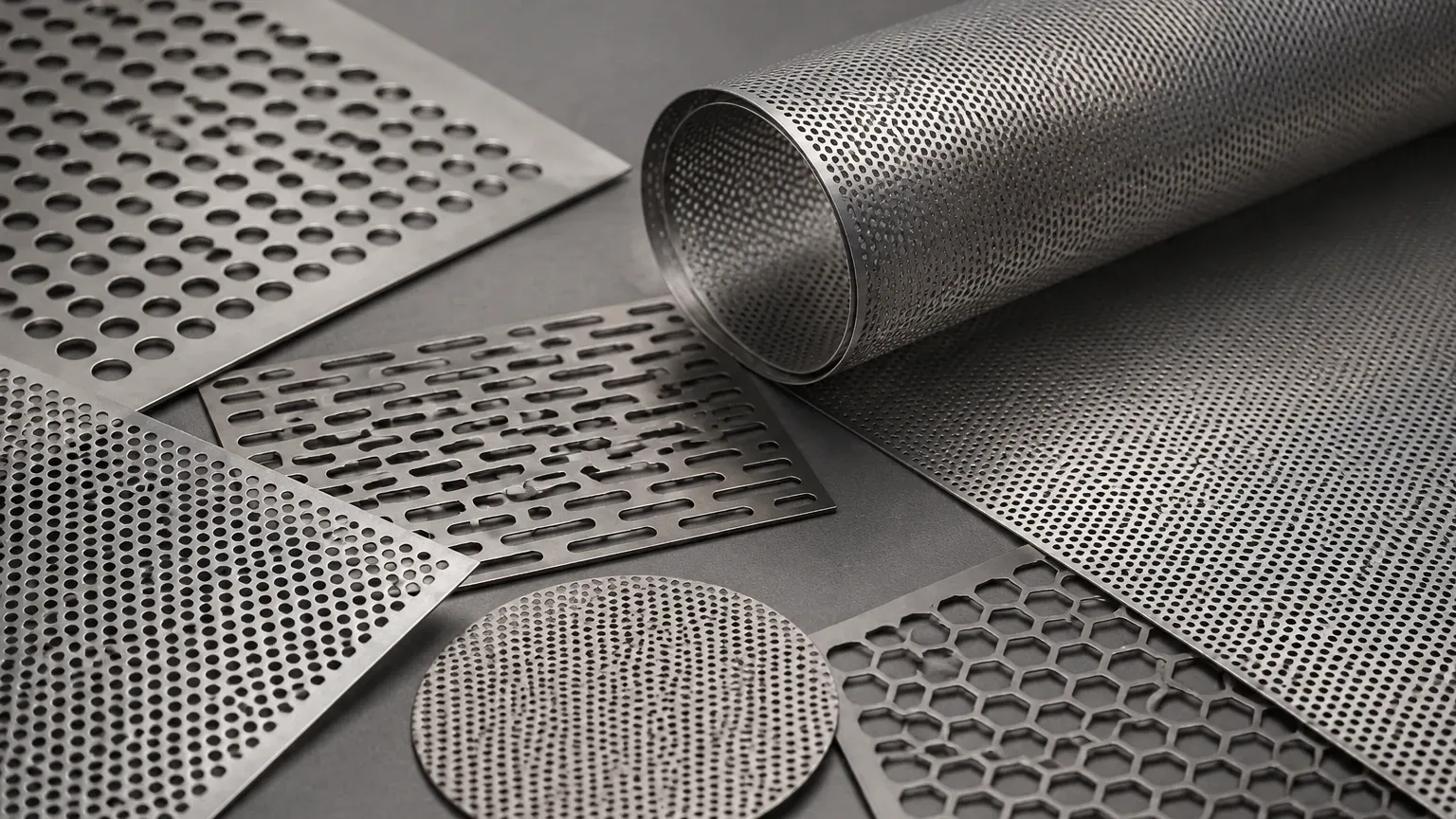
In industrial engineering and precision manufacturing, the selection of filtration and separation media often hinges on the balance between structural integrity and functional efficiency. Thin perforated metal occupies a critical niche in this landscape. Defined generally by gauges where the thickness is significantly less than the hole diameter—or where the material thickness falls below 1.0mm (often reaching as low as 0.05mm in precision applications)—this material provides the necessary permeability for fluid and gas flow while maintaining the rigid characteristics of metal.
For engineers and purchasing teams sourcing components for chemical processing, pharmaceuticals, or high-end hydraulic systems, understanding the technical nuances of thin perforated metal is essential. It is not merely a "mesh substitute"; it is a precision-engineered component that offers predictable flow rates, high mechanical resistance compared to polymer alternatives, and superior cleanability. This guide examines the technical specifications, manufacturing considerations, and application-specific criteria required to integrate Perforated & Expanded Metal into industrial systems effectively.
Engineering Fundamentals of Thin Perforated Metal
The performance of thin perforated metal is dictated by the relationship between the material thickness, the hole size, and the pitch (the distance between the centers of adjacent holes). In standard perforated sheets, the rule of thumb is that the hole diameter should not be smaller than the material thickness. However, with advanced manufacturing techniques, thin perforated metal can push these boundaries, allowing for micro-perforations that facilitate fine filtration.
Open Area Calculations
The "Open Area" percentage is the most critical metric for engineers calculating pressure drop and flow velocity. For a standard 60-degree staggered round hole pattern—the most common configuration for industrial filtration—the open area is calculated using the formula:
OA = (D² × 90.69) / P²
Where:
* D = Hole Diameter
* P = Pitch (Center-to-center distance)
In thin-gauge materials, achieving a high open area (above 50%) while maintaining the sheet's flatness is a significant engineering challenge. If the "bridge" (the metal remaining between the holes) is too narrow relative to the thickness, the material becomes prone to stretching or tearing during the perforation process.
Strength-to-Weight Ratio
One of the primary reasons for selecting thin perforated metal over thicker alternatives is weight reduction without a proportional loss in structural performance. In aerospace or portable filtration units, reducing the gauge of a stainless steel support tube or screen can significantly lower the total assembly weight while still providing the necessary hoop strength to withstand internal pressures.
Material Selection and Chemical Compatibility
Because thin perforated metal is frequently used in corrosive or high-temperature environments, material selection is paramount. Kaifil specializes in stainless steel solutions, which are preferred for their longevity and resistance to oxidation.
1. AISI 304/304L: The standard choice for general industrial applications. It offers excellent formability and weldability, making it ideal for thin-gauge filter cartridges. It is suitable for food and beverage applications where mild acidity is present.
2. AISI 316/316L: Containing molybdenum, this grade provides superior resistance to chlorides and marine environments. In pharmaceutical and chemical processing, 316L is the baseline requirement to prevent pitting corrosion in thin-walled components.
3. Specialty Alloys: For extreme environments, materials like Hastelloy, Monel, or Inconel may be used in thin perforated forms. These are typically reserved for high-temperature gas filtration or highly aggressive chemical catalysts.
When specifying thin perforated metal, engineers must also consider the "L" grades (Low Carbon). During the welding of thin sheets—such as forming a longitudinal seam for a filter core—low carbon content prevents carbide precipitation, ensuring the heat-affected zone (HAZ) remains as corrosion-resistant as the rest of the material.
Manufacturing Techniques for Thin Gauges
The method used to create perforations in thin metal significantly impacts the final part's mechanical properties and surface finish. There are three primary methods used in industrial production:
CNC Punching and Stamping
This is the most common method for gauges between 0.3mm and 1.0mm. High-speed presses use precision dies to punch holes.
* Advantages: Cost-effective for high-volume production and offers high dimensional consistency.
* Considerations: Punching induces mechanical stress. In very thin materials, this can lead to "oil canning" (warping) or curling. To mitigate this, the material often requires secondary leveling or annealing.
Laser Perforation
Fiber laser technology allows for extremely small holes in thin sheets without the need for physical contact or hard tooling.
* Advantages: No mechanical stress on the material and the ability to create complex, non-standard patterns.
* Considerations: Laser cutting introduces a small heat-affected zone. For certain high-purity applications, the microscopic dross or slag around the hole edge must be removed via electropolishing.
Chemical Etching (Photo-Etching)
For ultra-thin perforated metal (below 0.2mm), chemical etching is often the preferred route. This process uses acids to dissolve the metal in specific patterns defined by a photo-resist mask.
* Advantages: Entirely burr-free, no stress, and capable of extremely high hole density.
* Considerations: Generally more expensive than punching and limited to specific metals that react predictably with etchants.
Performance Criteria in Filtration and Industrial Applications
Thin perforated metal serves several distinct roles in industrial assemblies. Identifying the primary function helps determine the necessary tolerances and finish.
Support Cores for Pleated Filters
In hydraulic and fuel filtration, thin perforated stainless steel is rolled and welded into tubes. These tubes act as the inner core that prevents the pleated filter media (such as wire mesh or fiberglass) from collapsing under high differential pressure. Here, the burr direction is critical; burrs must face away from the filter media to prevent puncturing the delicate pleats.
Acoustic Damping and EMI Shielding
In power generation and electronics, thin perforated metal acts as a functional barrier. In acoustic applications, the hole size and spacing are tuned to specific frequencies to dissipate sound energy. In electronics, the material provides electromagnetic interference (EMI) shielding while allowing for airflow and cooling.
Precision Screening and Sifting
In the food and pharmaceutical sectors, thin sheets are used for centrifugal liners and vibratory sieves. The thinness of the material reduces the "blinding" effect (where particles get stuck in the depth of the hole) because the hole has almost no side-wall depth.
Common Risks and Quality Evaluation
When sourcing thin perforated metal, several technical risks can compromise the final product's performance. Purchasing teams should evaluate suppliers based on their ability to manage these factors:
* Burr Height: In thin materials, a burr that is 10% of the material thickness can be significant. Excessive burrs can trap contaminants, impede flow, or cause injury during handling. Specification should include a maximum allowable burr height.
* Flatness Tolerances: The punching process naturally relieves internal stresses in the metal, which can cause the sheet to bow. Precision leveling is often required to ensure the material can be accurately rolled or welded into final components.
* Hole Elongation: During the continuous punching of coils, the material can stretch. This leads to ovalization of round holes, which may affect the micron rating or the fit-up in precision assemblies.
* Surface Contamination: For pharmaceutical or food-grade applications, thin perforated metal must be free of residual punching oils or lubricants. Aqueous degreasing or ultrasonic cleaning is often a necessary secondary step.
Customization and OEM Integration
Standard off-the-shelf perforated sheets rarely meet the specific requirements of complex industrial systems. Customization is often necessary to optimize performance and reduce assembly costs.
Margins and Blank Areas
Unlike standard sheets, custom thin perforated components can be produced with "safe margins"—unperforated areas along the edges. This is vital for welding, as it provides a solid surface for seam welding or spot welding without the risk of burning through the perforated pattern. It also increases the structural integrity of the part.
Secondary Fabrication
Thin perforated metal is often just one part of a larger assembly. Kaifil’s manufacturing capabilities allow for these materials to be further processed through:
* Rolling and Seam Welding: Creating rigid cylinders for filter housings.
* Capping and Flanging: Adding end caps or mounting flanges to create a complete filter cartridge.
* Pleating: In some specialized applications, thin perforated metal can be pleated to increase the surface area within a compact footprint.
Information for Engineers Before Purchasing
To ensure a successful procurement process for thin perforated metal, engineers should confirm the following technical details with their manufacturer:
1. Differential Pressure Requirements: What is the maximum pressure drop the material must withstand? This determines if a thin gauge is sufficient or if additional support structures are needed.
2. Flow Media Characteristics: Is the fluid or gas corrosive? What is the operating temperature? This dictates the stainless steel grade and the need for specialized coatings.
3. Dimensional Precision: Are the tolerances for hole diameter and pitch critical for the application's performance, or are they secondary to the open area percentage?
4. Cleaning Protocols: How will the filter be cleaned? Thin materials must be robust enough to withstand backwashing or ultrasonic cleaning cycles without fatigue.
By focusing on these technical boundaries, engineers can leverage the benefits of thin perforated metal to create more efficient, durable, and lightweight industrial systems. Whether used as a primary filtration layer or a structural support component, the precision of the perforation and the quality of the base material are the foundation of reliable performance.
For more information on material specifications and custom design options, professionals can Review product options and application support to find the optimal solution for their specific industrial requirements.
