


Trailer Gate Expanded Metal
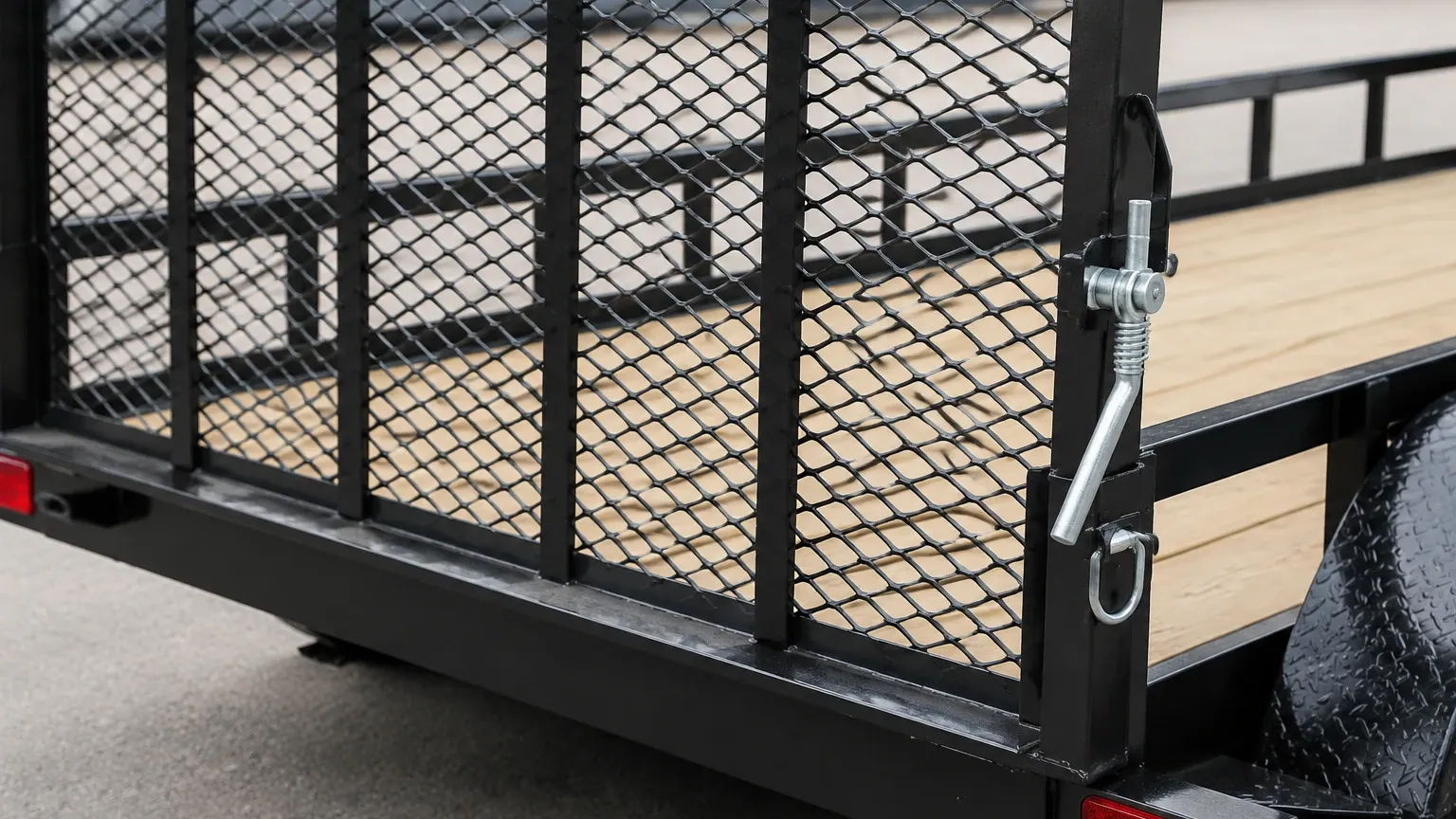
In the design and manufacture of utility trailers, the rear gate or ramp serves as a critical interface between the vehicle and its cargo. Engineering a gate that is both lightweight enough for manual operation and robust enough to withstand heavy loading requires careful material selection. Trailer gate expanded metal has emerged as the industry standard for these applications, offering a unique combination of structural strength, traction, and aerodynamic efficiency.
For engineers and procurement professionals, selecting the correct specification of expanded metal involves more than just choosing a mesh size. It requires an understanding of material properties, load-bearing capacities, and the long-term environmental factors that affect the durability of the trailer assembly. As a specialist in precision metal components, Kaifil provides technical insights into how Perforated & Expanded Metal solutions are optimized for demanding industrial and transport environments.
The Manufacturing Logic of Expanded Metal
Unlike perforated metal, which is created by punching holes out of a solid sheet and generating scrap material, expanded metal is produced through a process of simultaneous slitting and stretching. A single sheet of metal is fed through a machine where reciprocating knives cut and pull the material into a diamond-shaped pattern.
This process creates a continuous piece of mesh without any joins or welds. The resulting "bonds" (where the strands intersect) provide inherent structural integrity. For trailer gates, this manufacturing method offers two distinct advantages:
1. Material Efficiency: Since no material is lost during production, expanded metal is often more cost-effective than perforated alternatives of similar strength.
2. Structural Rigidity: The strands are set at an angle to the plane of the sheet, which increases the section modulus and provides greater resistance to bending compared to a flat sheet of the same weight.
Key Performance Benefits for Trailer Applications
When evaluating trailer gate expanded metal, several performance factors make it superior to solid plate or wood decking for ramps and gates.
Aerodynamic Efficiency
One of the primary reasons for using expanded metal on trailer gates is the reduction of wind resistance. A solid gate acts as a massive sail when the trailer is in motion, significantly increasing fuel consumption and putting unnecessary strain on the towing vehicle's engine and transmission. The open area of expanded metal allows air to pass through freely, stabilizing the trailer at high speeds and improving overall fleet efficiency.
Traction and Safety
Safety is paramount during the loading and unloading of equipment. Standard (raised) expanded metal features strands that are tilted. This creates a high-friction surface that provides multi-directional grip for tires and footwear. Even in wet, muddy, or icy conditions, the diamond pattern allows debris to fall through the mesh, preventing the buildup of slippery layers on the ramp surface.
Weight-to-Strength Ratio
By expanding the metal, manufacturers can cover a large surface area with minimal weight. This is essential for trailer gates that must be lifted and lowered frequently by hand. Using a high-strength stainless steel or heavy-gauge carbon steel mesh allows for a gate that can support thousands of pounds of rolling load without requiring complex hydraulic lift assists.
Technical Specifications: Choosing the Right Mesh
Selecting the appropriate trailer gate expanded metal requires a technical assessment of the mesh dimensions and material gauge. In the industry, these are typically defined by the Long Way of the Diamond (LWD) and the Short Way of the Diamond (SWD).
Common Sizes for Utility Ramps
The most frequent specification for general-purpose utility trailers is 3/4" #9.
* 3/4" refers to the nominal width of the diamond opening (SWD).
* #9 refers to the gauge of the metal before expansion.
For heavier industrial applications, such as loading skid steers or small tractors, a 1/2" #13 or a heavier 3/4" #7 might be specified to prevent the mesh from "bowing" under concentrated point loads. Smaller diamond sizes provide a smoother ride for small-wheeled equipment like hand trucks or lawnmowers, whereas larger diamonds offer better drainage and lower weight.
Raised vs. Flattened Mesh
* Raised (Standard) Expanded Metal: The strands are turned at an angle. This is the preferred choice for trailer gates because of the superior traction it provides.
* Flattened Expanded Metal: The mesh is passed through a cold-rolling mill to flatten the strands into the same plane as the sheet. While this creates a smoother surface, it reduces the overall rigidity and grip, making it less ideal for ramps but suitable for side panels or cages.
Material Considerations: Stainless Steel vs. Carbon Steel
While carbon steel is common due to its lower initial cost, it requires significant post-processing—such as hot-dip galvanizing or powder coating—to prevent rapid oxidation. In many industrial and high-use scenarios, stainless steel is the preferred engineering choice.
Kaifil specializes in high-grade stainless steel filtration and metal components, and these same material benefits apply to expanded metal gates. Stainless steel (Grades 304 or 316) offers inherent corrosion resistance that does not rely on a surface coating. For trailers used in coastal environments, those exposed to road salt, or those used in the food and pharmaceutical industries where hygiene and wash-down capabilities are required, stainless steel trailer gate expanded metal provides a much longer service life and a lower total cost of ownership.
Engineering for Load Capacity and Support
The expanded metal itself is only one part of the structural equation. The load capacity of a trailer gate is determined by the interaction between the mesh and the supporting frame.
Support Spacing
Expanded metal is not designed to span long distances without support. To prevent permanent deformation (sagging), horizontal and vertical support members (typically angle iron or square tubing) must be spaced correctly. For a standard 3/4" #9 mesh, support spans should generally not exceed 12 to 16 inches when expecting heavy rolling loads. Engineers must calculate the "point load" of the heaviest equipment intended for the trailer to ensure the mesh strands do not shear or buckle.
Orientation Matters
For maximum strength, the Long Way of the Diamond (LWD) should run perpendicular to the direction of the load or parallel to the support members. Incorrect orientation can lead to premature fatigue of the bonds, especially under repetitive loading cycles.
Fabrication and Installation Best Practices
Proper fabrication is essential to ensure the longevity of the trailer gate. Because expanded metal has many exposed edges, certain steps must be taken during the assembly process:
1. Welding Technique: MIG welding is typically used to secure the mesh to the frame. It is important to weld at the "bonds" rather than the thin strands to ensure a secure connection. Perimeter welding should be consistent to prevent the mesh from rattling or vibrating loose during transport.
2. Edge Protection: The cut edges of expanded metal can be sharp. Professional fabricators often "tuck" the edges into the C-channel of the frame or use a flat bar trim to cover the raw ends. This protects the operator and prevents the mesh from snagging cargo.
3. Finishing: If using carbon steel, the entire gate assembly should be hot-dip galvanized after welding. This ensures that the interior of the bonds and the weld points are protected from rust. For stainless steel applications, a passivated finish ensures maximum corrosion resistance at the weld sites.
Identifying and Mitigating Common Risks
When sourcing trailer gate expanded metal, buyers should be aware of common quality issues that can compromise safety:
* Inconsistent Strand Width: Variations in the slitting process can lead to weak points in the mesh. High-quality manufacturers like Kaifil maintain tight tolerances to ensure uniform strength across the entire sheet.
* Stress Cracking: If the metal is over-stretched during the expansion process, micro-cracks can form at the bonds. These cracks expand over time due to vibration and load, eventually leading to catastrophic failure.
* Corrosion Fatigue: In carbon steel gates, if the protective coating is chipped, rust can migrate under the coating and weaken the strands. Regular inspections are necessary to identify thinning strands or failing welds.
Conclusion: Confirming Requirements for Your Project
Selecting the right trailer gate expanded metal is a balance of weight, strength, and environmental resistance. Before moving forward with a purchase or a design, project leads should confirm the following:
* What is the maximum concentrated point load the gate must support?
* Will the trailer be exposed to corrosive elements (salt, chemicals, moisture)?
* Is the priority maximum traction or a smooth rolling surface?
* Does the support structure design align with the chosen mesh gauge and orientation?
By addressing these technical considerations, you ensure that the resulting trailer gate is safe, efficient, and durable. For specialized applications requiring high-precision Perforated & Expanded Metal, partnering with a manufacturer that understands the nuances of metal fabrication and material science is essential for long-term performance.
