


Underlay in Perforated Metal Panels
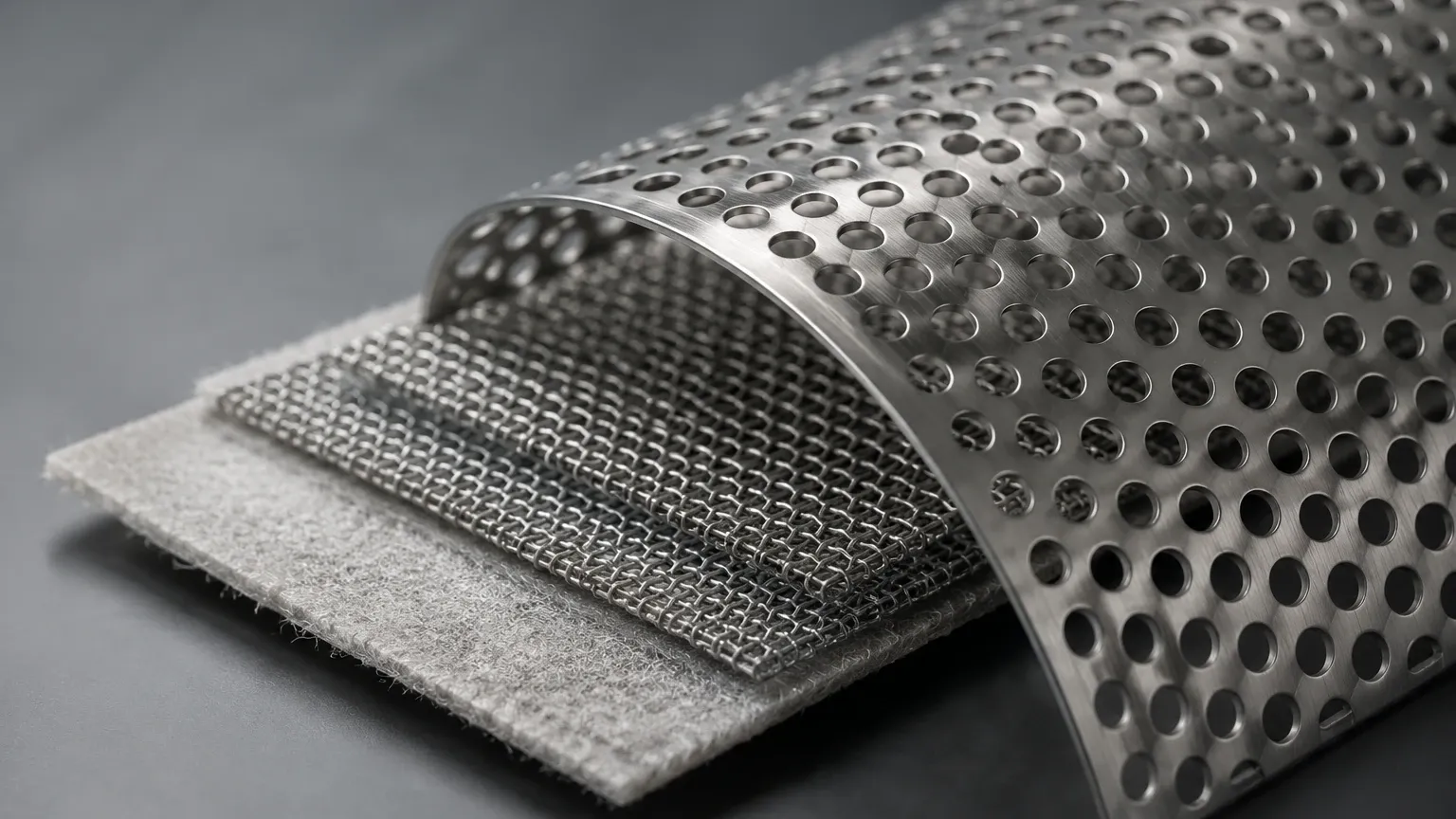
In industrial engineering and architectural design, perforated metal panels are rarely used as standalone components when high-performance filtration, acoustic control, or precise fluid dynamics are required. To achieve specific functional objectives, engineers often specify an underlay in perforated metal panels. This composite approach combines the structural integrity and aesthetic versatility of Perforated & Expanded Metal with the specialized properties of secondary materials, such as fine wire mesh, non-woven fabrics, or acoustic membranes.
Selecting the correct underlay is a critical engineering decision that affects the entire system's efficiency, durability, and maintenance requirements. This guide explores the technical considerations, material compatibility, and performance metrics necessary for integrating underlays into industrial filtration and protective systems.
Understanding the Composite Structure: Perforated Panels and Underlays
A perforated metal panel serves as the primary substrate, providing mechanical strength, impact resistance, and a defined open area. However, the hole sizes in standard perforated sheets—typically ranging from 0.5mm to several centimeters—are often too large for fine particle retention or specific acoustic dampening.
The underlay is the functional layer situated immediately behind the perforated face. In industrial contexts, this is frequently a layer of stainless steel wire mesh or a synthetic filter medium. The perforated plate acts as a "support cage" or protective shield, while the underlay performs the actual work of filtration or sound absorption. This synergy allows for the use of delicate, high-precision materials that would otherwise lack the structural rigidity to withstand high pressure or physical impact.
Primary Functions of Underlay in Perforated Metal Panels
The integration of an underlay serves several distinct technical purposes depending on the application environment:
1. Fine Filtration and Particle Retention
In chemical processing and water treatment, perforated metals often serve as the outer support for a fine-mesh underlay. While the perforated plate handles the hydraulic load and prevents the assembly from collapsing under pressure, the underlay captures particles that are significantly smaller than the plate's perforations. This is common in basket strainers and custom filter cartridges where multi-stage filtration is required.
2. Acoustic Dampening and Sound Absorption
In industrial machinery enclosures or architectural baffles, perforated panels are used to allow sound waves to pass through to an absorbent underlay. The underlay, often a non-woven glass fiber or specialized acoustic foam, converts sound energy into heat. The perforated panel protects the fragile acoustic material from mechanical damage and airflow erosion.
3. Flow Diffusion and Pressure Regulation
In gas or liquid flow systems, an underlay can act as a diffuser. By introducing a secondary layer with a different resistance profile, engineers can achieve a more uniform flow distribution across the surface of the panel, preventing "channeling" and reducing turbulence.
4. Pest and Debris Shielding
For ventilation systems in harsh environments, a perforated metal panel provides security and structural closure, while a fine mesh underlay prevents the ingress of insects, wind-borne debris, or small contaminants that could foul internal components.
Material Selection for Industrial Environments
Choosing the material for an underlay in perforated metal panels requires a deep understanding of the operating environment. Misalignment between the perforated plate and the underlay can lead to premature failure.
Stainless Steel Wire Mesh
Stainless steel (typically Grade 304 or 316L) is the gold standard for industrial underlays. It offers excellent corrosion resistance and can be woven into extremely fine counts. When paired with a stainless steel perforated plate, it eliminates the risk of galvanic corrosion, a common failure point in composite metal systems.
Synthetic Non-Wovens and Felts
For applications requiring high dust-holding capacity or specific chemical resistance (such as acidic environments where even stainless steel might struggle), synthetic underlays like polypropylene or PTFE felts are used. These are often bonded to the perforated metal to prevent sagging or migration during operation.
Expanded Metal Underlays
In some heavy-duty structural applications, a coarse expanded metal sheet is used as an underlay for a finer perforated face. This provides a high strength-to-weight ratio and adds a three-dimensional depth to the assembly, which can be useful in heat exchange applications.
Technical Evaluation: Airflow, Pressure Drop, and Open Area
One of the most complex aspects of specifying an underlay is calculating the resulting performance of the composite stack. Engineers must look beyond the "nominal open area" of the perforated panel alone.
Cumulative Pressure Drop
The total pressure drop across a panel with an underlay is not merely the sum of the two individual components. The proximity of the underlay to the perforated holes creates a "shadowing effect." If the underlay is pressed tightly against the solid portions of the perforated plate (the "bars" or "bridges"), the effective open area of the underlay is significantly reduced.
Calculating Effective Open Area
To maintain optimal flow, engineers often use a staggered hole pattern in the perforated plate to ensure that the underlay has maximum exposure to the fluid stream. When the underlay is a wire mesh, the mesh count and wire diameter must be balanced against the perforated plate’s hole diameter to avoid excessive resistance.
Fabrication and Assembly Techniques
The method used to join the underlay to the perforated metal panel determines the assembly's durability and ease of maintenance.
* Spot Welding: Common for stainless steel mesh underlays. This provides a permanent, high-strength bond but requires careful control to avoid burning through fine mesh wires.
* Mechanical Fastening: Using clips, frames, or bolts. This is preferred when the underlay is a consumable part (like a filter cloth) that needs frequent replacement.
* Adhesive Bonding: Used primarily for acoustic fabrics or synthetic felts. The adhesive must be chemically compatible with the process fluid and capable of withstanding the operating temperature.
* Hemming and Folding: The edges of the perforated panel are folded over the underlay. This is an effective way to secure the layers without introducing heat or chemicals, often used in decorative or light-industrial screens.
* Sintering: For high-pressure filtration, the mesh underlay and perforated support are vacuum-sintered together. This creates a molecular bond between the layers, resulting in a monolithic structure that cannot delaminate.
Common Risks and Mitigation Strategies
Integrating an underlay in perforated metal panels introduces specific engineering risks that must be addressed during the design phase:
Galvanic Corrosion
If the perforated panel and the underlay are made of dissimilar metals (e.g., an aluminum panel with a copper mesh), moisture can act as an electrolyte, leading to rapid corrosion of the more anodic metal. Always aim for material parity or use non-conductive spacers.
Clogging and Blindage
In filtration applications, the interface between the perforated plate and the underlay can become a trap for fines. If the underlay is not properly tensioned or if the hole-to-mesh ratio is poorly calculated, "blindage" occurs, where the holes of the perforated plate become plugged, drastically reducing throughput. Regular backwashing or ultrasonic cleaning protocols should be established based on the underlay’s micron rating.
Thermal Expansion
In high-temperature applications, such as exhaust silencers or heat shields, the perforated plate and the underlay may expand at different rates. If they are rigidly fixed at all points, this can lead to buckling or tearing of the underlay. Floating mounts or expansion joints are necessary to accommodate these dimensional changes.
Procurement and Customization: What to Confirm with Manufacturers
When sourcing Perforated & Expanded Metal for use with underlays, purchasing teams and engineers should confirm the following specifications with their manufacturer:
1. Flatness Tolerances: A perforated panel that is not perfectly flat will create gaps between the plate and the underlay, leading to bypass (where fluid or sound escapes around the functional layer).
2. Burr Direction: For underlays made of fabric or fine mesh, the "burr side" of the perforated metal must be identified. Placing the underlay against the burr side can lead to puncturing or tearing under vibration.
3. Margin Requirements: Specify the "unperforated borders" or margins. These solid areas are essential for welding or mechanically securing the underlay without interfering with the hole pattern.
4. Surface Finish: If the assembly is used in food processing or pharmaceuticals, both the perforated plate and the underlay must meet specific Ra (roughness average) values to ensure cleanability and prevent bacterial growth.
Conclusion
The use of an underlay in perforated metal panels is a sophisticated solution for industrial challenges that require a balance of strength and precision. By carefully selecting materials, calculating flow dynamics, and choosing the appropriate assembly method, engineers can create composite filtration and protective systems that offer superior performance and a lower total cost of ownership. Whether the goal is to filter sub-micron particles in a chemical plant or to manage acoustic signatures in a power generation facility, the relationship between the perforated face and its functional underlay remains a cornerstone of modern industrial design.
