


Weight of Expanded Metal
In industrial filtration and structural engineering, the physical properties of materials dictate the efficiency, safety, and longevity of the final system. Among these properties, the weight of expanded metal is a fundamental metric that influences everything from structural load calculations to the total cost of ownership. Unlike perforated metal, which is created by punching holes and removing material, expanded metal is manufactured through a process of simultaneous slitting and stretching. This unique production method ensures that no material is lost, but it significantly alters the weight-to-surface-area ratio compared to the original solid sheet.
For engineers and procurement professionals sourcing components for chemical processing, hydraulic systems, or water treatment, understanding how to calculate and evaluate the weight of these materials is essential. This guide examines the technical factors determining the weight of expanded metal, the engineering trade-offs involved, and the practical implications for industrial applications.
The Manufacturing Process and Its Influence on Weight
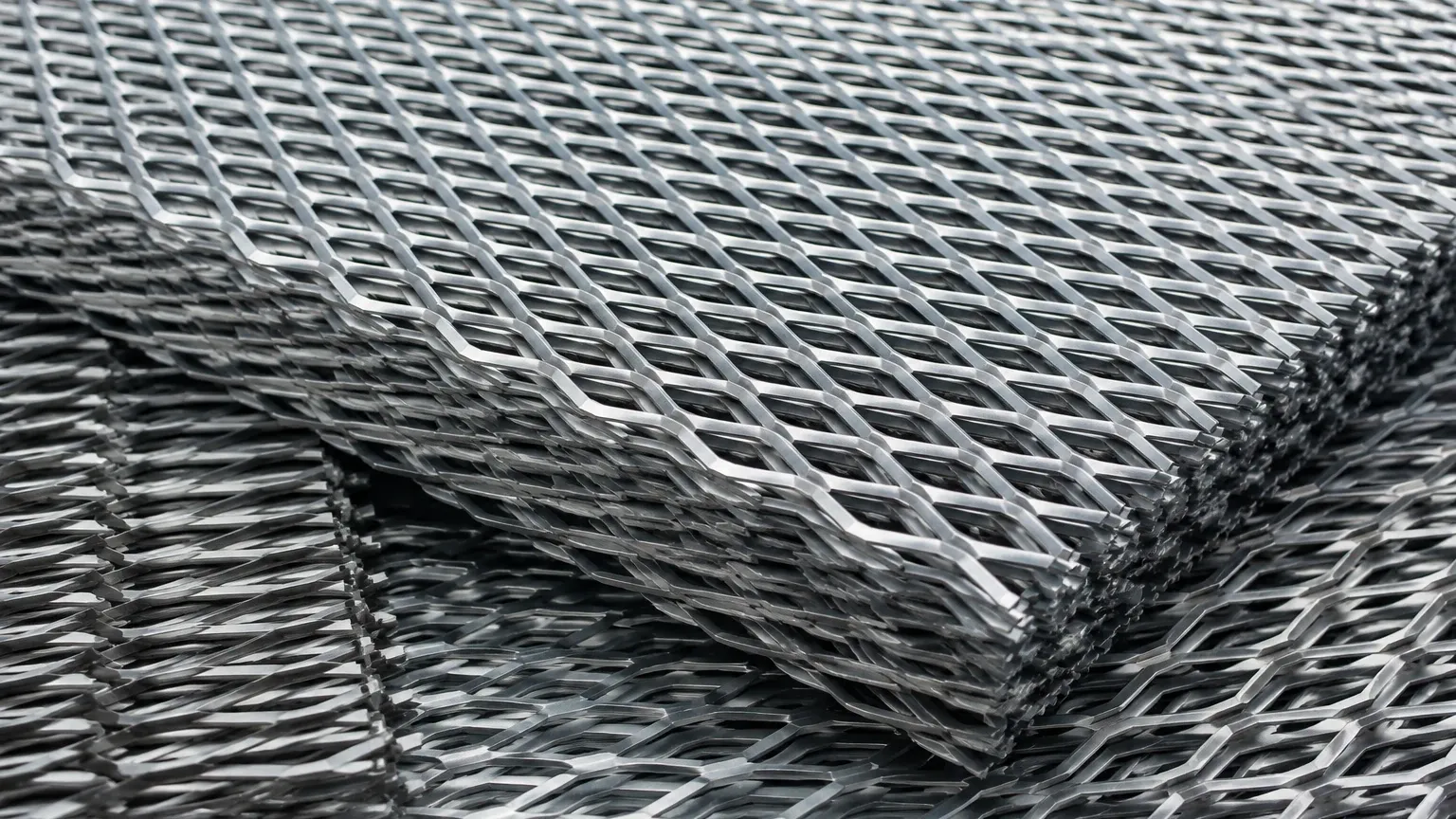
To understand the weight of expanded metal, one must first understand how it is produced. A solid metal sheet—typically stainless steel, carbon steel, or aluminum—is fed through a machine that slits the metal and stretches it in a single motion. This creates the characteristic diamond-shaped openings.
Because the process involves stretching rather than cutting away material, the total weight of the finished expanded sheet is theoretically identical to the weight of the original solid sheet from which it was made. However, because the sheet has been expanded, the weight per square foot (or square meter) of the finished product is lower than that of the original solid material. For instance, if a one-square-foot solid sheet is expanded to cover two square feet, the weight per square foot of the resulting Perforated & Expanded Metal is halved.
This "no-waste" manufacturing process makes expanded metal a highly cost-effective and sustainable choice for filtration media and support structures, as it provides a larger surface area and structural rigidity without the material loss associated with traditional perforation.
Key Variables Determining the Weight of Expanded Metal
Several physical dimensions and material properties interact to determine the final weight of an expanded metal product. When specifying filters or support components, engineers must account for the following variables:
1. Material Density
The base material is the primary determinant of weight. Stainless steel (typically 304 or 316 grades) is the standard for industrial filtration due to its corrosion resistance. Stainless steel has a density of approximately 0.28 to 0.29 lbs per cubic inch. If an application requires a lighter component, aluminum might be used, though it lacks the chemical resistance and mechanical strength of steel in high-pressure environments.
2. Sheet Thickness (Gauge)
The thickness of the original solid sheet (often referred to as the "base metal thickness") directly impacts the weight. A thicker starting sheet results in a heavier, more robust expanded metal product. In filtration applications, the thickness must be sufficient to withstand the differential pressure of the fluid flow without deforming.
3. Strand Width
The strand width is the amount of metal between the diamond openings. By adjusting the slitting machine, manufacturers can increase or decrease the strand width. A wider strand increases the weight of expanded metal per unit area and enhances its structural strength but reduces the open area, which can restrict flow in filtration systems.
4. Opening Size (SWD and LWD)
The dimensions of the diamond opening are defined by the Short Way of Design (SWD) and Long Way of Design (LWD). These dimensions determine how much the metal is stretched. A larger SWD/LWD ratio generally indicates more stretching, resulting in a lower weight per square foot and a higher percentage of open area.
Calculating the Weight of Expanded Metal
For precise engineering calculations, it is necessary to determine the weight per unit area of the expanded product. The formula generally follows the principle of volume and density conservation:
Weight per Unit Area = (Density of Material) × (Original Thickness) × (Strand Width / SWD)
In practical B2B procurement, most engineers rely on standardized weight tables provided by manufacturers. These tables list the weight per square foot based on the "Style Designation," which combines the gauge and the opening size. For example, a common designation like "1/2-inch #13" refers to a specific opening size and the gauge of the steel used.
It is also important to distinguish between "Standard" (Raised) and "Flattened" expanded metal. Standard expanded metal has strands that are turned at an angle to the plane of the sheet, providing extra rigidity. Flattened expanded metal is processed through a cold-rolling mill to flatten the strands. While the total weight remains the same, the thickness and profile of the sheet change, which can affect how the material fits into filter housings or cartridges.
Engineering Trade-offs: Weight vs. Performance
In the design of industrial filtration components, selecting the appropriate weight is a balancing act between mechanical durability and hydraulic performance.
Strength-to-Weight Ratio
Expanded metal is prized for its high strength-to-weight ratio. The truss-like structure of the diamond openings allows the material to support significant loads while remaining relatively light. In high-pressure hydraulic filters, the expanded metal often serves as a support core for finer wire mesh. The weight must be high enough to prevent the core from collapsing under pressure spikes, but low enough to keep the overall filter assembly manageable for maintenance crews.
Open Area and Pressure Drop
The weight of the material is inversely related to the percentage of open area. A heavier sheet with wider strands provides more surface area for the metal but less space for the fluid to pass through. This results in a higher pressure drop across the filter. Engineers must specify a weight that ensures structural integrity without compromising the flow rate required by the process.
Practical Implications for Industrial Applications
Understanding the weight of expanded metal is not merely a theoretical exercise; it has significant practical implications for the lifecycle of industrial equipment.
* Logistics and Shipping: For global supply chains, the weight of bulk filtration components impacts freight costs. Accurately predicting the weight of a shipment of expanded metal sheets or custom-fabricated cartridges is essential for budgeting and logistics planning.
* Installation and Ergonomics: In large-scale chemical plants or water treatment facilities, filter elements may need to be replaced manually. If the expanded metal support structure is unnecessarily heavy, it increases the risk of workplace injuries and requires more complex lifting equipment.
* Support Structures: When expanded metal is used for walkways, gratings, or large-scale screening in industrial environments, the total weight determines the requirements for the underlying support beams. Overestimating the weight leads to unnecessary material costs in the support structure, while underestimating it can lead to structural failure.
What Engineers Should Confirm Before Purchasing
When partnering with a manufacturer for custom filtration solutions, providing the correct specifications regarding weight and dimensions is critical to avoid project delays or performance issues. Engineers should confirm the following details:
1. Exact Material Grade: Ensure the density used in weight calculations matches the specific alloy (e.g., SS 316L vs. SS 304).
2. Tolerances: Manufacturing processes have inherent tolerances. Confirm the allowable variance in strand width and thickness, as these will cause slight fluctuations in the final weight.
3. Flattened vs. Raised: Specify whether the application requires the added grip and rigidity of raised expanded metal or the smooth surface of flattened metal.
4. Application Environment: If the filter will be exposed to high temperatures or corrosive chemicals, the weight and thickness must account for potential material loss over time due to corrosion or erosion.
Conclusion
The weight of expanded metal is a decisive factor in the engineering of efficient, durable industrial filtration systems. By understanding the relationship between material density, strand dimensions, and the expansion process, technical professionals can optimize their designs for both performance and cost-effectiveness. Whether used as a primary filter medium or a structural support core, the correctly specified weight ensures that the component can withstand the rigors of industrial processing while maintaining the necessary flow characteristics. For those designing complex systems, collaborating with a manufacturer that understands these technical nuances is the most reliable path to achieving long-term operational success.
