What Is Expanded Metal Mesh
In the landscape of industrial filtration and structural engineering, selecting the correct media is critical for ensuring system longevity and process efficiency. Among the various options available, expanded metal mesh stands out as a unique material that combines structural rigidity with precise open-area configurations. For engineers and procurement professionals, understanding the technical nuances of this material is essential for optimizing filtration performance and mechanical support.
Defining Expanded Metal Mesh
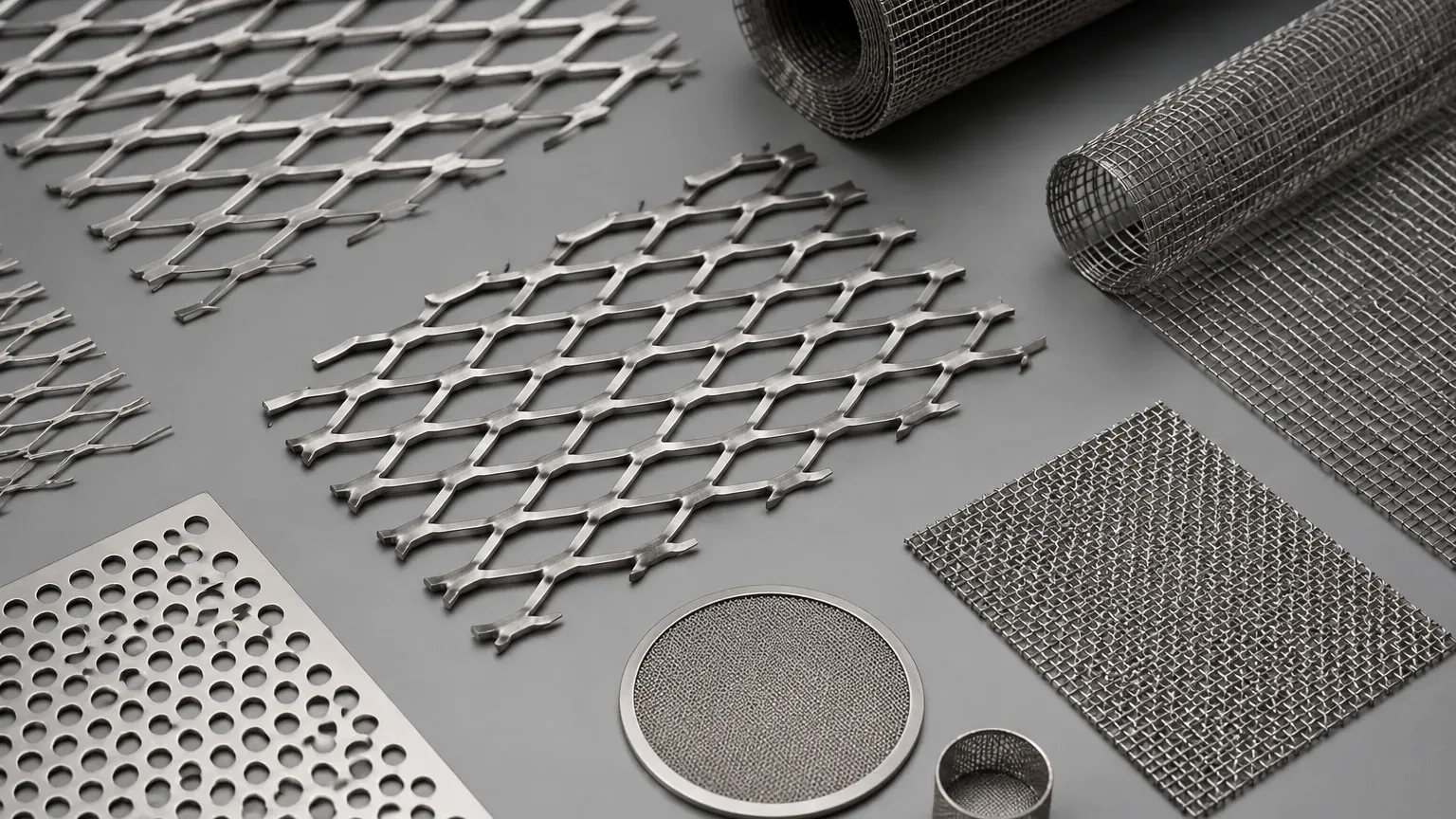
To answer the fundamental question—what is expanded metal mesh—one must look at its unique manufacturing process. Unlike woven wire mesh, which consists of interlaced wires, or perforated metal, which is created by punching holes out of a solid sheet, expanded metal is produced through a simultaneous slitting and stretching process.
A solid metal sheet or coil is fed through a machine equipped with a reciprocating knife. This knife slits the metal at regular intervals while the machine stretches the material laterally. The result is a continuous piece of mesh characterized by diamond-shaped openings. Because the material is stretched rather than punched, there is virtually no scrap or waste produced during manufacturing, making it a highly resource-efficient option for industrial applications.
The Manufacturing Process and Structural Integrity
One of the most significant technical advantages of expanded metal mesh is its monolithic structure. Because it is formed from a single piece of metal, there are no welds, joints, or weaves that can unravel or break under stress. The "bonds" (the points where the strands intersect) are part of the original metal sheet, providing inherent mechanical strength.
For filtration applications, this structural integrity is vital. When used as a support layer for finer filter media or as a standalone coarse filter, expanded metal can withstand significant differential pressures without deforming. This makes it a preferred choice in high-pressure hydraulic systems and heavy-duty chemical processing environments.
Key Terminology for Engineering Specifications
When specifying Perforated & Expanded Metal for a project, engineers must use standardized terminology to ensure the final product meets the application's requirements. The following parameters define the geometry and performance of the mesh:
* SWD (Short Way of Design): The distance from the center of one bond to the center of the next bond measured across the short diamond diagonal.
* LWD (Long Way of Design): The distance from the center of one bond to the center of the next bond measured across the long diamond diagonal.
* SWO (Short Way of Opening): The actual width of the opening, measured from the inside of the bonds.
* LWO (Long Way of Opening): The actual length of the opening, measured from the inside of the bonds.
* Strand Width: The amount of metal fed under the knives to produce one strand.
* Strand Thickness: The thickness of the original base metal sheet.
* Raised vs. Flattened: This is a critical distinction. "Standard" or "Raised" expanded metal has strands that are turned at an angle to the plane of the sheet, creating a three-dimensional surface that offers high slip resistance and specific flow characteristics. "Flattened" expanded metal has been passed through a cold-rolling mill, resulting in a smooth, flat surface similar to perforated metal but retaining the expanded structure.
Material Selection for Industrial Environments
The performance of expanded metal mesh is heavily dependent on the alloy selected. At Kaifil, we focus on high-performance alloys that can withstand the rigors of demanding industrial sectors.
1. Stainless Steel (304, 316, 316L): This is the gold standard for filtration. Stainless steel expanded mesh offers exceptional corrosion resistance, making it suitable for pharmaceutical, food and beverage, and chemical processing applications. Grade 316L is particularly valued for its resistance to pitting and crevice corrosion in chloride-rich environments.
2. Carbon Steel: Often used in applications where corrosion is less of a concern or where the mesh will be coated (galvanized or powder-coated). It provides excellent strength at a lower price point.
3. Aluminum: Lightweight and corrosion-resistant, aluminum expanded mesh is frequently used in HVAC systems and aerospace applications where weight reduction is a priority.
4. Specialty Alloys: For extreme environments, materials like Monel, Inconel, or Titanium may be used to handle high temperatures or highly aggressive chemical media.
Comparing Expanded Metal with Perforated Metal
Engineers often weigh the pros and cons of Perforated & Expanded Metal when designing filtration components. While both serve similar functions, their mechanical properties differ:
* Material Efficiency: Expanded metal is more cost-effective in terms of raw material usage because it involves no waste. Perforated metal involves punching out "slugs," which must be recycled.
* Strength-to-Weight Ratio: Expanded metal generally offers a better strength-to-weight ratio. The angled strands in raised expanded metal provide significant directional rigidity.
* Flow Dynamics: The three-dimensional nature of raised expanded metal can create turbulence, which may be desirable in some heat exchange or mixing applications but could increase pressure drop in high-velocity filtration. Flattened expanded metal or perforated metal provides a more linear flow path.
* Customization: Perforated metal allows for a wider variety of hole shapes (round, square, slotted, decorative), whereas expanded metal is almost exclusively diamond-shaped (though the proportions of the diamond can be varied).
Applications in Filtration and Industrial Processing
Understanding what is expanded metal mesh also requires looking at how it is integrated into industrial systems. In the context of filtration, it serves several critical roles:
1. Support and Pleat Spacing
In pleated filter cartridges, expanded metal mesh is often used as an outer wrap or an inner core. It provides the necessary mechanical support to prevent the delicate filter media (such as fiberglass or thin wire cloth) from collapsing under pressure. It also ensures uniform pleat spacing, which is essential for maximizing the effective filtration area.
2. Pre-Filtration and Coarse Straining
In water treatment and hydraulic systems, expanded metal acts as a primary barrier to remove large debris before the fluid reaches finer filtration stages. Its durability allows it to handle high flow rates and heavy contaminant loads.
3. Flame and Spark Arrestors
The thermal conductivity of metal combined with the high surface area of expanded mesh makes it an excellent medium for flame and spark arrestors in exhaust systems and chemical vent lines.
4. Protective Cages
Industrial filters often operate in harsh environments where they may be subject to physical impact. Expanded metal cages protect the internal filter elements from mechanical damage during installation, operation, and maintenance.
Engineering Considerations for Selection
When integrating expanded metal into a filtration system, several engineering factors must be evaluated to ensure performance expectations are met:
* Open Area Percentage: This determines the flow capacity and pressure drop across the mesh. Calculating the open area for expanded metal is more complex than for perforated metal because the strand angle must be accounted for in raised mesh.
* Filtration Accuracy: While expanded metal is generally used for coarse filtration (measured in millimeters rather than microns), the SWO and LWO must be precisely controlled to ensure the target particle size is captured.
* Compatibility: The metal grade must be chemically compatible with the process fluid to prevent galvanic corrosion or fluid contamination.
* Total Cost of Ownership: While the initial cost of expanded metal is often lower than perforated or woven options, engineers should consider the replacement cycle. Stainless steel expanded mesh, though more expensive than carbon steel, often provides a lower total cost of ownership due to its extended service life in corrosive environments.
Customization and OEM Capabilities
At Kaifil, we recognize that standard off-the-shelf specifications do not always meet the requirements of specialized industrial processes. Customization is often necessary to optimize performance. This includes:
* Custom Dimensions: Tailoring the SWD and LWD to achieve a specific open area or aesthetic.
* Edge Treatments: Providing mesh with solid borders or specific edge configurations to facilitate welding or mechanical fastening into a filter housing.
* Surface Finishing: Options such as pickling, passivation, or electropolishing to enhance corrosion resistance and ensure the material is "clean" for pharmaceutical or food-grade applications.
Confirming Requirements Before Purchase
To ensure a successful procurement process, technical teams should confirm the following details with their manufacturer:
1. Exact Material Grade: Specify the alloy (e.g., SS316L) to ensure chemical compatibility.
2. Dimensional Tolerances: Define the acceptable variance in SWD, LWD, and strand thickness.
3. Flattened vs. Raised: Clearly state the required surface profile, as this significantly impacts flow and thickness.
4. Quantity and Form: Determine if the material should be supplied in sheets, coils, or pre-cut fabricated components.
Conclusion
Expanded metal mesh is a high-performance, cost-effective material that plays a vital role in modern industrial filtration. By understanding what is expanded metal mesh and how its manufacturing process influences its mechanical properties, engineers can make more informed decisions regarding material selection and system design. Whether used as a robust support structure or a primary filtration layer, the monolithic strength and versatility of expanded metal make it an indispensable component in demanding industrial environments.
For more detailed technical specifications or to discuss custom filtration solutions, engineers and purchasing teams are encouraged to Review product options and application support to find the optimal configuration for their specific needs.