


What Is Perforated Metal
In industrial engineering and manufacturing, perforated metal is a foundational material used across a vast spectrum of applications, ranging from structural components to high-precision filtration systems. Understanding what is perforated metal requires looking beyond its simple appearance as a sheet with holes. It is a highly engineered product where hole geometry, material properties, and mechanical integrity are precisely calculated to meet specific industrial demands.
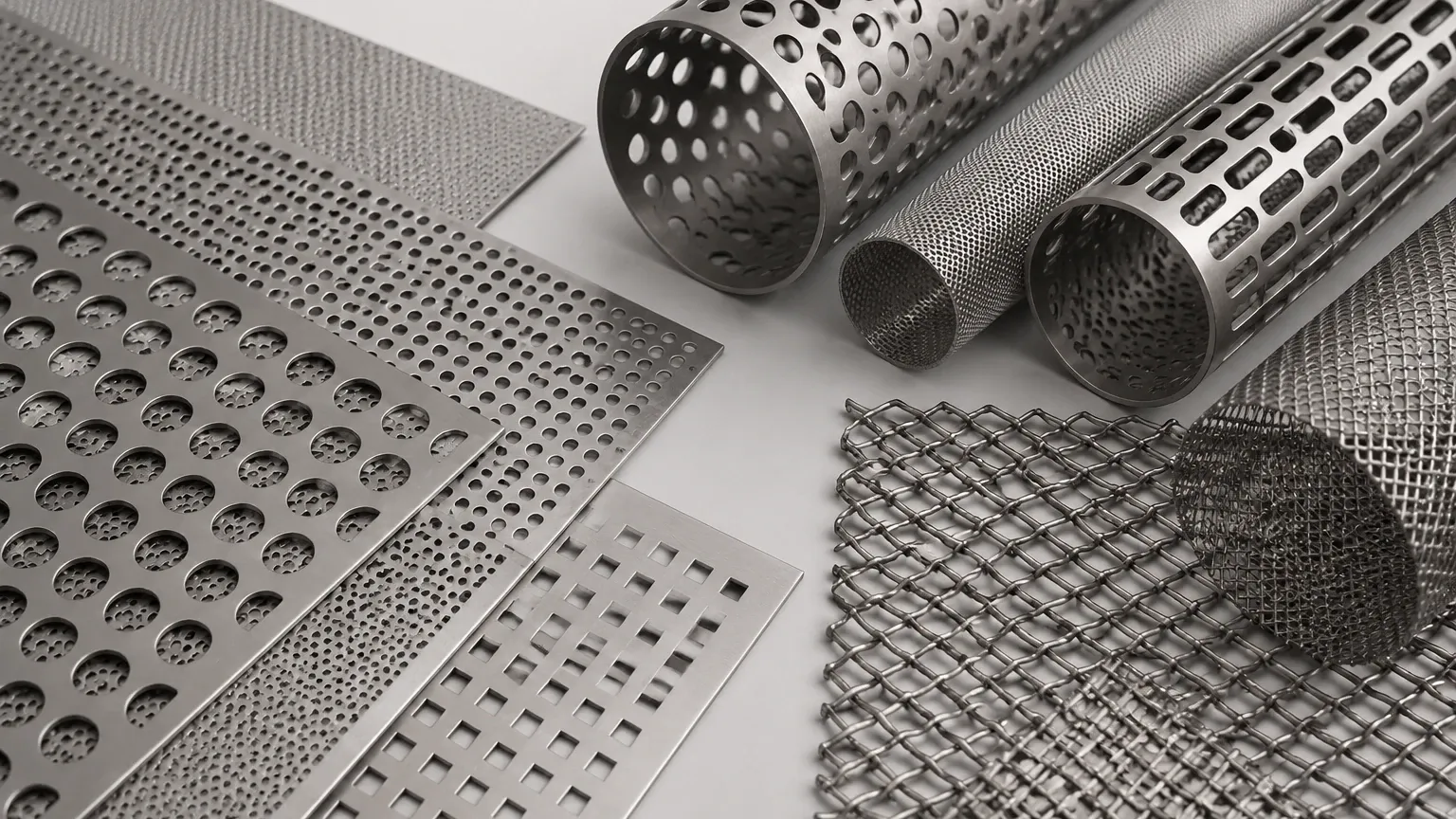
At its core, perforated metal is a sheet or coil of metal—typically stainless steel, carbon steel, or aluminum—that has been mechanically or manually stamped, punched, or laser-cut to create a pattern of holes, slots, or decorative shapes. For technical professionals, the selection of perforated metal involves balancing the open area for flow requirements against the structural strength needed to withstand pressure and environmental stressors.
The Manufacturing Process of Perforated Metal
The production of perforated metal has evolved from manual punching to highly automated CNC (Computer Numerical Control) processes. The method chosen often depends on the material thickness, the complexity of the pattern, and the required precision.
All-Across Punching
This is the most common method for high-volume production. A wide press equipped with a "die set" containing multiple punches moves across the entire width of the metal sheet. With each stroke, a full row of holes is created. This process is exceptionally fast and cost-effective for standard patterns.
CNC Nibbling and Laser Cutting
For complex geometries or small production runs where the cost of a custom die set is prohibitive, CNC nibbling or laser cutting is used. Laser cutting, in particular, offers extreme precision and the ability to cut thicker materials without the mechanical stress associated with physical punching. This is often preferred for specialized Perforated & Expanded Metal components used in high-end filtration or architectural applications.
Rotary Pinned Perforation
Used primarily for thin foils and light-gauge materials, this method involves a rotating cylinder with sharp pins that pierce the material. While less common in heavy industrial filtration, it is utilized in specific venting and acoustic applications.
Material Selection and Engineering Properties
When engineers evaluate what is perforated metal for a specific project, material selection is the first critical decision. The choice of alloy dictates the component's lifespan, corrosion resistance, and load-bearing capacity.
Stainless Steel (304, 316, 316L)
In the filtration industry, stainless steel is the gold standard. Grade 304 offers excellent strength and basic corrosion resistance, while Grade 316 contains molybdenum, making it resistant to chlorides and acidic environments. For applications involving welding, 316L (low carbon) is preferred to prevent intergranular corrosion. These materials are essential for chemical processing, food and beverage, and pharmaceutical environments where hygiene and durability are paramount.
Carbon Steel and Galvanized Steel
Carbon steel is selected for its high strength-to-weight ratio and cost-effectiveness in dry environments. To prevent oxidation, it is often galvanized. However, in filtration applications involving fluids, stainless steel remains the superior choice due to the risk of coating failure.
Aluminum
Aluminum is valued for its lightweight properties and natural resistance to atmospheric corrosion. It is frequently used in HVAC systems, acoustic panels, and architectural elements where weight reduction is a primary engineering goal.
Technical Specifications: Hole Patterns and Open Area
The performance of a perforated sheet is defined by its geometric configuration. Engineers must specify several variables to ensure the material performs as intended.
Hole Shapes
* Round Holes: The most versatile and common shape. They offer the best structural integrity and are the easiest to manufacture.
* Square Holes: Often used when a higher open area is required, though they can introduce stress concentrations at the corners.
* Slotted Holes: Ideal for sorting and grading applications where elongated particles must be separated.
* Hexagonal Holes: Provide the maximum possible open area, often exceeding 80%, making them ideal for high-airflow applications.
Hole Arrangement
* Staggered (60-degree): This is the industry standard. It provides the highest strength and a uniform open area across the sheet.
* Straight Line: Holes are aligned in both vertical and horizontal rows. This is less structurally sound than staggered patterns but is used for specific aesthetic or alignment needs.
Calculating the Open Area
The "Open Area" is the percentage of the sheet that is occupied by holes. This is a critical metric for filtration and heat exchange. For a standard 60-degree staggered round hole pattern, the formula is:
Open Area % = (D² × 90.69) / P²
*(Where D = Hole Diameter and P = Pitch/Center-to-Center distance)*
Understanding this calculation is vital for determining the pressure drop across a filter or the flow rate of a cooling system.
Perforated vs. Expanded Metal: Key Differences
In the context of Perforated & Expanded Metal, it is important to distinguish between these two types of processed metal. While they may appear similar, their manufacturing and mechanical properties differ significantly.
* Manufacturing: Perforated metal is created by removing material (the "slug"). Expanded metal is created by slitting and stretching the sheet simultaneously, resulting in no material waste.
* Structure: Perforated metal remains a flat sheet unless post-processed. Expanded metal has a raised, diamond-shaped texture that provides inherent slip resistance and a high strength-to-weight ratio.
* Precision: Perforated metal allows for much tighter tolerances and specific hole geometries, making it the preferred choice for precision filtration.
Applications in Industrial Filtration
For companies like Kaifil, perforated metal serves as a cornerstone for industrial filtration solutions. It is rarely used in isolation for fine filtration but acts as a critical structural element.
Filter Support Cores
In high-pressure hydraulic systems or chemical processing, fine wire mesh lacks the structural rigidity to withstand differential pressure. Perforated metal cylinders act as the internal or external support core, preventing the mesh from collapsing or bursting under load.
Coarse Strainers and Pre-filters
In water treatment and food processing, perforated metal baskets serve as the primary stage of filtration, removing large debris and protecting downstream equipment like pumps and valves. The durability of stainless steel ensures these components can be cleaned and reused repeatedly.
Diffusers and Baffles
Perforated sheets are used to distribute flow evenly across a filter bed or to reduce the velocity of a fluid stream, preventing "channeling" and ensuring the entire surface area of the filtration media is utilized efficiently.
Engineering Considerations for Procurement
When specifying perforated metal for an industrial project, engineers should confirm the following technical details with the manufacturer to ensure performance and cost-efficiency:
1. Gauge and Thickness: Ensure the material thickness can handle the expected mechanical load and pressure drop. Thicker materials may require laser cutting rather than punching.
2. Tolerances: Standard industrial tolerances are usually sufficient, but high-precision filtration components may require tighter CNC-controlled accuracy.
3. Margins: Specify the "safe zones" or unperforated borders required for welding or mounting. Standard sheets often have minimal margins, while custom-cut parts can be designed with specific solid borders.
4. Flatness Requirements: The punching process can introduce internal stresses that cause the sheet to bow. For precision assemblies, specify that the material must undergo a leveling process after perforation.
5. Surface Finish: Depending on the application, you may require deburring (to remove sharp edges), degreasing (to remove lubricants from the punching process), or electropolishing (for pharmaceutical and food-grade hygiene).
Total Cost of Ownership and Sustainability
While the initial cost of perforated metal is influenced by material prices and tooling, the total cost of ownership is often lower than alternative materials. Stainless steel perforated components are highly durable, resistant to thermal shock, and 100% recyclable. In filtration systems, the ability to clean and reuse perforated metal strainers reduces the operational waste associated with disposable filter cartridges.
Furthermore, the precision of modern perforation allows for optimized flow designs that reduce energy consumption in pumping and HVAC systems by minimizing resistance. When engineers understand what is perforated metal in the context of their specific system requirements, they can design more efficient, longer-lasting industrial solutions.
Conclusion
Perforated metal is a versatile, high-performance material that requires careful technical consideration. Whether it is used as a structural support for fine wire mesh or as a standalone strainer in a chemical plant, its effectiveness depends on the correct combination of material grade, hole geometry, and open area. By focusing on these engineering fundamentals, purchasing teams and engineers can ensure they select the most reliable and cost-effective filtration components for their demanding industrial environments.
