


What Is Perforated Steel
In the landscape of industrial manufacturing and filtration engineering, understanding the fundamental materials used for structural support and media retention is critical. When professionals ask what is perforated steel, they are typically looking for more than a simple definition; they require a technical breakdown of how this material is manufactured, its mechanical properties, and how it integrates into complex systems like high-performance filtration units.
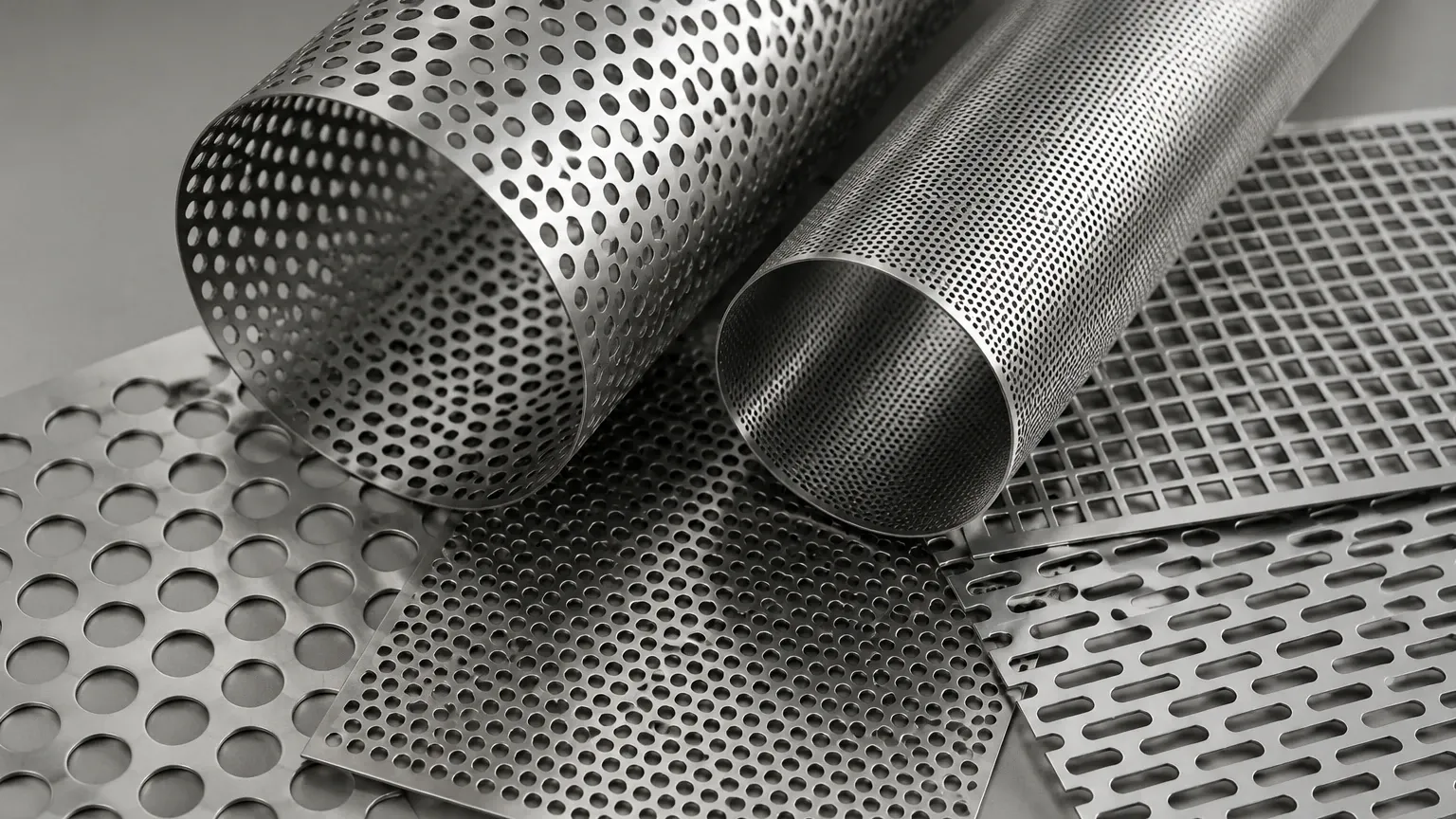
Perforated steel is a sheet or coil of steel that has been mechanically or manually stamped, punched, or laser-cut to create a specific pattern of holes, slots, or decorative shapes. Unlike other metal processing methods, perforation involves the actual removal of material to achieve a desired open area. This material is a cornerstone in the production of Perforated & Expanded Metal components, serving as the backbone for everything from industrial strainers to architectural panels.
The Manufacturing Process: From Solid Sheet to Precision Component
To fully grasp what is perforated steel, one must examine the precision engineering required to produce it. The manufacturing process determines the material's structural integrity and its suitability for specific industrial applications.
Die and Punch Perforating
This is the most common method for high-volume production. A large machine equipped with a "punching die" moves across the metal sheet. As the die presses down, it shears the metal to create holes. This process is exceptionally fast and cost-effective for standard patterns like round or square holes. Modern CNC (Computer Numerical Control) punching allows for extreme precision, ensuring that the spacing (pitch) between holes remains consistent across thousands of linear feet.
Laser and Plasma Cutting
For thicker materials or highly complex, non-repeating patterns, laser or plasma cutting is utilized. While slower than traditional punching, these methods do not require physical dies, making them ideal for custom OEM prototypes or heavy-duty industrial components where the steel thickness exceeds the capacity of standard punching presses.
Rotary Pinned Perforation
Used primarily for thinner foils or specific specialized applications, this method involves a rotating cylinder with sharp pins that pierce the metal. This is less common in heavy industrial filtration but is a niche technique within the broader category of metal perforation.
Key Technical Specifications and Terminology
When specifying perforated steel for an engineering project, several technical parameters must be defined. These factors dictate how the material will perform under pressure, how much fluid it will allow to pass, and how long it will last in a corrosive environment.
Hole Patterns: Staggered vs. Straight
* Staggered Pattern: The most common configuration where holes are offset in the direction of the flow or the sheet length. A 60-degree staggered pattern is the industry standard because it provides the highest open area and the greatest structural strength-to-weight ratio.
* Straight Pattern: Holes are aligned in both vertical and horizontal rows. While aesthetically symmetrical, straight patterns generally offer lower structural stability than staggered configurations.
Open Area Percentage
The "open area" is the total area of the holes divided by the total area of the sheet, expressed as a percentage. This is perhaps the most critical metric for filtration engineers. For example, a sheet with a 40% open area allows for significant flow but provides more surface area for the retention of particles or for structural support of a finer mesh overlay.
Pitch and Bridge
* Pitch: The distance from the center of one hole to the center of the adjacent hole.
* Bridge: The amount of solid metal remaining between the holes. A bridge that is too narrow can lead to material fatigue and failure under high-pressure loads.
Perforated vs. Expanded Metal: Understanding the Differences
In the context of Perforated & Expanded Metal, it is essential to distinguish between these two types of processed steel, as they are often used interchangeably in casual conversation but serve different engineering purposes.
Perforated steel is created by punching holes out of the metal, which results in "slugs" or waste material. This allows for a vast variety of hole shapes (round, square, slotted, hexagonal) and precise control over the open area and hole placement.
Expanded metal, conversely, is created by simultaneously slitting and stretching the metal sheet. There is no material waste in this process. The result is a diamond-shaped mesh pattern. While expanded metal is often more cost-effective because there is no scrap, it does not offer the same level of precision in hole sizing or the smooth surface finish that perforated steel provides. For high-precision filtration cartridges and chemical processing equipment, perforated steel is usually the preferred choice due to its predictable flow characteristics and ease of cleaning.
Material Selection: Why Stainless Steel is Often Preferred
While perforated steel can be made from carbon steel, aluminum, or brass, stainless steel (specifically Grades 304 and 316L) is the gold standard for industrial applications. Understanding what is perforated steel in an industrial context requires looking at the chemical resistance of the base metal.
Grade 304 Stainless Steel
This is the most common grade used for perforated components. It offers excellent corrosion resistance and is suitable for most food and beverage applications, as well as general industrial use. It is easy to weld and form into cylindrical shapes for filter cartridges.
Grade 316L Stainless Steel
For more demanding environments, such as marine applications, pharmaceutical processing, or heavy chemical filtration, 316L is required. The addition of molybdenum provides superior resistance to chlorides and pitting. In filtration, using 316L perforated steel ensures that the structural support of the filter does not succumb to the corrosive nature of the fluid being processed.
Industrial Applications in Filtration and Beyond
Perforated steel is a versatile component found in almost every sector of modern industry. Its primary role is often as a "media retainer" or a "support core."
Filter Cartridge Cores
In many liquid and gas filtration systems, the actual filtering is done by a fine wire mesh or a pleated fabric. However, these materials lack the structural strength to withstand high differential pressures. Perforated steel tubes are used as the inner core or outer shroud of these cartridges to prevent the filter media from collapsing or bursting.
Industrial Strainers and Baskets
In water treatment and chemical processing, perforated steel baskets act as the primary stage of filtration, removing large debris from the flow. Because the material is rigid, it can be cleaned and reused multiple times, reducing the total cost of ownership compared to disposable filters.
Acoustic Dampening and Ventilation
Beyond filtration, perforated steel is used in machinery enclosures to reduce noise levels while allowing for necessary airflow to prevent overheating. The hole size and pattern can be engineered to trap specific sound frequencies.
Engineering Considerations for Purchasing and Customization
When a procurement team or engineering department decides to source perforated steel, they must confirm several factors to ensure the final product meets the application's demands.
1. Thickness vs. Hole Diameter: A general rule of thumb in perforation is that the hole diameter should not be smaller than the thickness of the material. For example, if you are using 2mm thick stainless steel, the holes should ideally be 2mm or larger to avoid excessive tool wear and potential material deformation.
2. Edge Margins: Engineers must specify the "margins"—the solid areas around the edges of the sheet where no holes are punched. This is vital for welding the sheet into a cylinder or mounting it into a frame.
3. Flatness Requirements: The punching process can introduce internal stresses into the metal, causing it to curl. For precision applications, the material must undergo a leveling process after perforation to ensure it meets flatness tolerances.
4. Surface Finish: Depending on the application, the steel may need to be deburred (to remove sharp edges), pickled, or electropolished. In the pharmaceutical and food industries, a smooth, burr-free surface is non-negotiable to prevent bacterial growth.
Maintenance and Replacement Cycles
One of the advantages of perforated steel is its durability. However, it is not an "install and forget" material. In filtration systems, the perforated support should be inspected during every filter media change.
* Erosion: High-velocity fluids containing abrasive particles can eventually wear down the bridges of the perforated steel, leading to structural failure.
* Clogging: If used as a primary strainer, the holes can become "blinded" or clogged. Regular cleaning via backwashing or ultrasonic baths can extend the life of the component.
* Corrosion Monitoring: Even stainless steel can corrode if the process chemistry changes. Regular visual inspections for tea-staining or pitting are necessary to prevent catastrophic failure of the filtration system.
Conclusion
Defining what is perforated steel involves understanding its role as a high-precision, engineered material that balances open area with structural strength. Whether it is serving as a support core for a 5-micron filter or acting as a heavy-duty strainer in a wastewater plant, the quality of the perforation directly impacts the efficiency and safety of the industrial process.
By selecting the correct material grade, hole pattern, and open area, engineers can optimize their systems for longevity and performance. For those requiring specialized configurations or high-volume OEM production, exploring the full range of Perforated & Expanded Metal options is the first step toward achieving reliable industrial filtration results.
