


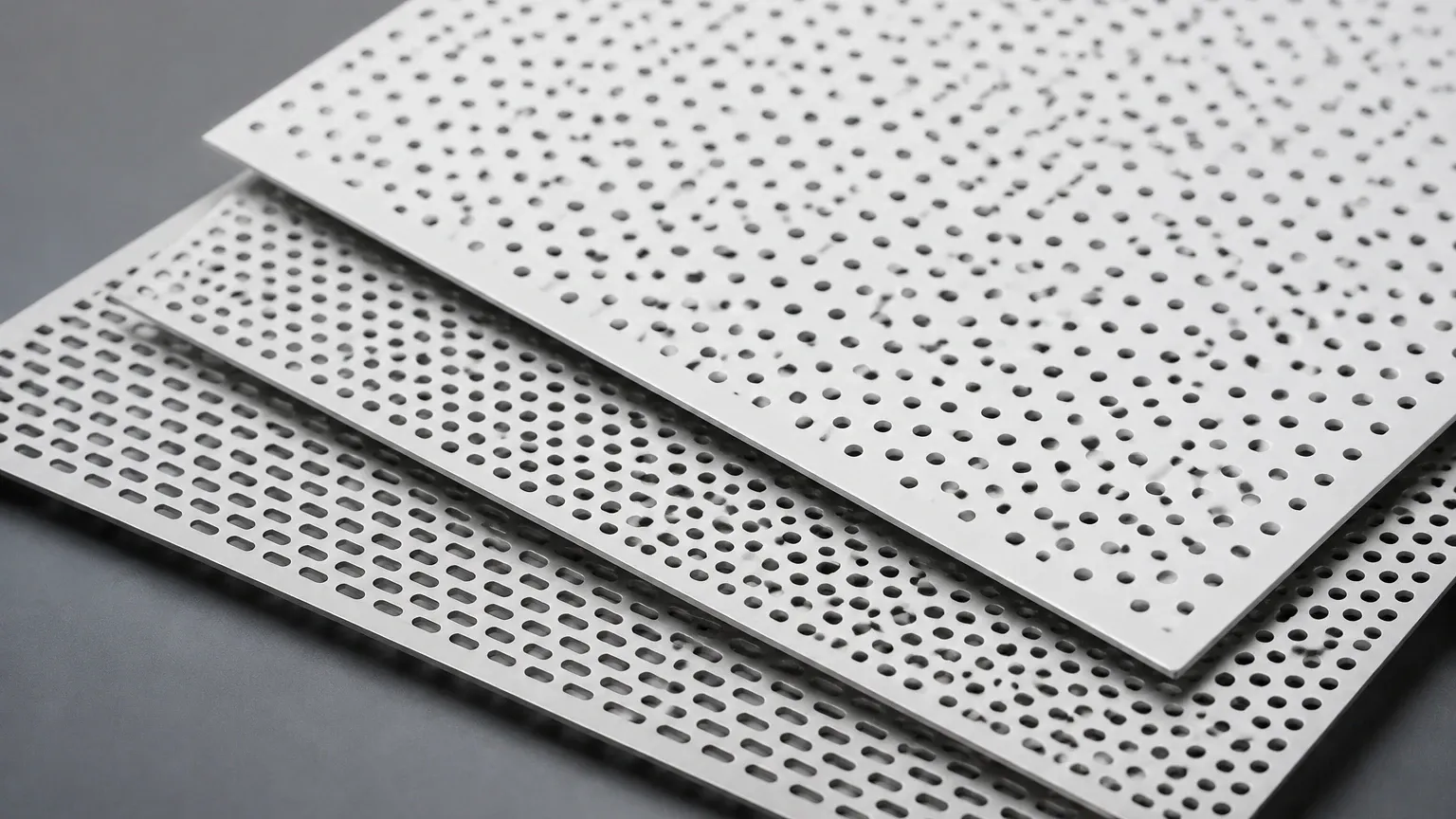
White Perforated Metal Sheet
In industrial design and filtration engineering, the selection of materials often extends beyond structural integrity to include surface finish and environmental compatibility. A white perforated metal sheet represents a specialized category within the broader spectrum of Perforated & Expanded Metal solutions. It combines the mechanical strength of a metal substrate with a high-performance polymer coating, typically applied through powder coating or PVDF (Polyvinylidene Fluoride) processes. This combination is essential for applications requiring high visibility, light reflectivity, and resistance to specific corrosive elements.
For engineers and procurement professionals, understanding the technical nuances of these sheets—from substrate selection to the impact of coating thickness on filtration tolerances—is critical for ensuring long-term performance in demanding environments. This guide explores the engineering considerations, material specifications, and application-specific advantages of white perforated metal components.
Understanding the Composition of White Perforated Metal Sheets
The performance of a white perforated metal sheet is fundamentally determined by its base material and the subsequent finishing process. While the "white" aspect is a surface treatment, the underlying metal provides the necessary tensile strength and rigidity.
Substrate Options
1. Cold-Rolled Steel (CRS): Often used for indoor applications where cost-effectiveness is a priority. It requires a robust coating to prevent oxidation.
2. Aluminum: Preferred for its lightweight properties and natural corrosion resistance. When coated white, it is ideal for architectural cladding and HVAC systems.
3. Galvanized Steel: Offers an extra layer of zinc protection beneath the white coating, making it suitable for outdoor or humid industrial environments.
4. Stainless Steel: Utilized in highly corrosive environments, such as chemical processing or marine applications. While stainless steel is often left unfinished, a white coating may be applied for specific aesthetic or reflective requirements.
The Coating Process
The most common method for achieving a durable white finish is electrostatic powder coating. In this process, dry powder is applied to the grounded metal sheet and then cured under heat to form a hard, continuous skin. For extreme outdoor exposure or high-UV environments, PVDF coatings are often specified due to their superior color retention and chemical resistance. Engineers must specify the coating thickness (typically measured in microns) to ensure it meets the application's durability requirements without excessively clogging the perforated apertures.
Coating Technologies and Durability Standards
When specifying a white perforated metal sheet, the quality of the finish is as important as the metal itself. In industrial settings, the coating must withstand mechanical abrasion, chemical exposure, and thermal cycling.
Powder Coating vs. Liquid Paint
Powder coating is generally preferred for perforated materials because it provides better edge coverage. When a metal sheet is punched, the edges of the holes can be sharp; powder coating tends to wrap around these edges more effectively than liquid paint, reducing the risk of "edge creep" corrosion.
Technical Standards for Coatings
Engineers should look for compliance with international standards to ensure the longevity of the finish:
* AAMA 2604/2605: Standards for high-performance organic coatings on aluminum extrusions and panels.
* Qualicoat: A quality label organization for coated aluminum.
* Salt Spray Testing (ASTM B117): A critical metric for determining how long the coated sheet can withstand corrosive saline environments before the finish fails.
For filtration applications, the coating must also be checked for "outgassing" if used in vacuum environments or high-temperature air filtration. Furthermore, in food and beverage or pharmaceutical processing, the coating must often be FDA-compliant or certified for contact with sensitive materials.
Engineering Specifications: Hole Patterns and Open Area
The primary functional characteristic of any Perforated & Expanded Metal product is its perforation pattern. In a white perforated metal sheet, the geometry of these holes dictates airflow, light transmission, and filtration efficiency.
Common Hole Patterns
* Round Holes: The most versatile and common pattern, offering a balance of strength and open area. They are typically arranged in a 60-degree staggered formation to maximize structural integrity.
* Square Holes: Provide a higher open area for maximum airflow but may have lower structural rigidity compared to round holes.
* Slotted Holes: Often used for screening and sorting applications where the direction of flow or material movement is a factor.
Calculating Open Area
The open area percentage is the ratio of the total area of the holes to the total area of the sheet. This is a vital calculation for HVAC engineers and filtration specialists. For a standard 60-degree staggered round hole pattern, the formula is:
$$OA = \frac{D^2 \times 90.69}{P^2}$$
Where:
* D = Hole Diameter
* P = Center-to-Center Pitch
Note on Tolerances: When ordering a white perforated metal sheet, engineers must account for the coating thickness. A 60-80 micron coating applied to both sides of a hole will reduce the effective diameter by approximately 0.12-0.16mm. For precision filtration, this reduction must be factored into the initial punching specifications to ensure the final product meets the required filtration rating.
Industrial and Architectural Application Scenarios
White perforated metal sheets are selected for their functional properties in a variety of sectors. The white finish serves specific purposes beyond simple aesthetics.
HVAC and Air Distribution
In cleanrooms and commercial HVAC systems, white perforated panels are used as diffusers. The white surface provides high light reflectivity, which helps brighten workspaces, while the perforations ensure laminar airflow. The coating also provides a smooth surface that is easier to clean and less likely to harbor dust compared to raw metal.
Acoustic Damping
In industrial facilities and data centers, white perforated metal is often used as the facing for acoustic insulation. The holes allow sound waves to pass through into the sound-absorbing material (like mineral wool), while the white finish maintains a professional, clean appearance in the facility.
Food and Pharmaceutical Processing
In these industries, cleanliness is paramount. A white finish allows for the easy visual detection of contaminants or buildup. If the coating is chipped or damaged, the contrast between the white surface and the underlying metal (if it is not stainless) makes the defect immediately visible, allowing for proactive maintenance and preventing batch contamination.
Architectural Cladding and Sunshades
White perforated panels are frequently used on building exteriors to reduce solar heat gain. The white color reflects a significant portion of solar radiation, while the perforations allow for natural ventilation and outward visibility. This contributes to the overall energy efficiency of the structure.
Selection Criteria for Engineering and Procurement
Selecting the right white perforated metal sheet requires a detailed analysis of the operating environment and the mechanical loads the sheet will bear. Procurement teams should confirm the following parameters before finalizing an order:
1. Gauge and Thickness: The thickness of the base metal must be sufficient to prevent sagging or deformation under load. For large architectural panels, wind load calculations are necessary.
2. Margin Requirements: Standard sheets often have "minimum margins" (unperforated areas along the edges). Custom margins may be required for welding, bolting, or framing the sheets into a larger assembly.
3. Flatness Requirements: The punching process can introduce internal stresses that cause the metal to curl. For high-precision applications, specify that the sheets must be leveled or flattened after perforation but before coating.
4. Coating Hardness: Measured by the pencil hardness test (e.g., 2H, 3H), this indicates the coating's resistance to scratching during installation or maintenance.
5. Environmental Exposure: Will the sheet be exposed to UV light, high humidity, or chemical vapors? This will dictate whether a standard polyester powder or a more robust PVDF coating is required.
Maintenance, Longevity, and Total Cost of Ownership
The total cost of ownership (TCO) for a white perforated metal sheet includes the initial purchase price, installation costs, and the long-term maintenance required to preserve the finish and functionality.
Maintenance Protocols
To maintain the reflective properties and hygienic standards of the white finish, regular cleaning is required. In industrial environments, this usually involves low-pressure washing with mild detergents. Abrasive cleaners or high-pressure steam should be avoided as they can degrade the polymer coating over time, leading to micro-cracking and eventual corrosion of the substrate.
Replacement Cycles
The lifespan of a coated perforated sheet depends heavily on the environment. In controlled indoor environments, these sheets can last 20+ years. In coastal or heavy industrial zones, the lifespan may be reduced to 10-15 years if the coating is not properly maintained. Engineers should evaluate the cost of higher-grade coatings (like PVDF) against the potential labor costs of premature replacement.
Customization Options
As a professional manufacturer, Kaifil provides extensive customization for Perforated & Expanded Metal products. This includes custom hole geometries, non-standard sheet sizes, and specific white shades (RAL colors) to match existing equipment or architectural standards. Customization ensures that the filtration or structural component fits perfectly within the intended assembly, reducing installation time and waste.
By carefully considering the relationship between the metal substrate, the perforation pattern, and the technical properties of the white coating, engineering teams can implement solutions that are both functionally superior and visually integrated into their industrial or architectural projects.
