


White Perforated Metal
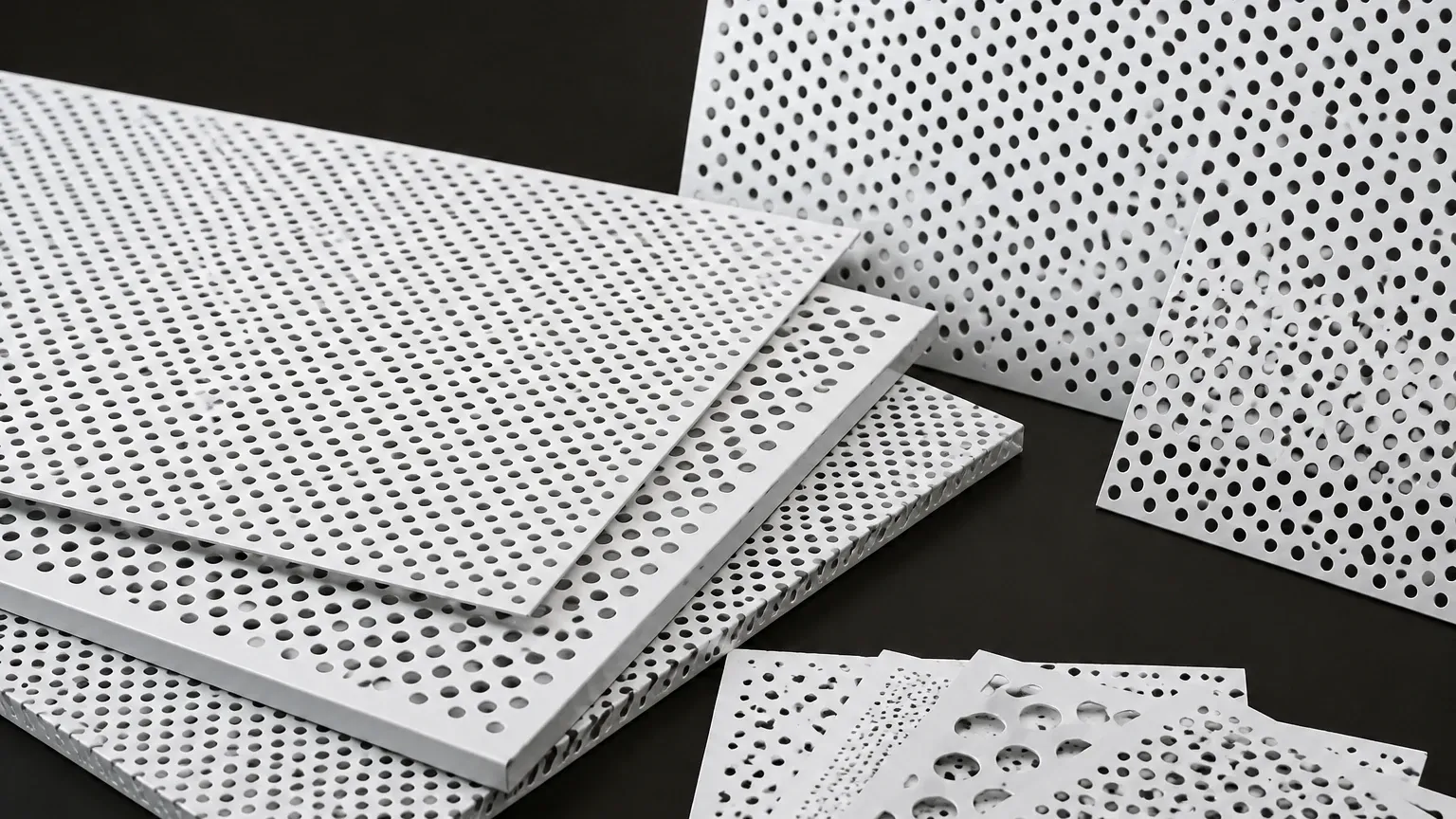
In industrial and architectural engineering, the selection of materials often requires a balance between structural integrity, functional performance, and environmental aesthetics. White perforated metal represents a specialized category of processed metal sheets where precision-engineered apertures are combined with high-performance surface coatings. While the "white" aspect is frequently associated with architectural finishes, in B2B and industrial contexts, it serves critical functional roles ranging from heat reflection and cleanliness monitoring to chemical resistance and light diffusion.
As a manufacturer specializing in Perforated & Expanded Metal and custom filtration solutions, Kaifil provides these components to meet rigorous technical standards. Understanding the nuances of substrate selection, coating chemistry, and perforation geometry is essential for engineers and procurement teams looking to optimize the lifecycle and performance of their systems.
Understanding the Composition of White Perforated Metal
White perforated metal is not a single product but a composite system consisting of a metal substrate and a polymer-based surface treatment. The performance of the final component is dictated by how these two elements interact under operational stress.
Substrate Selection
The choice of base metal is the first technical decision in the specification process. While the white coating provides a barrier, the underlying material determines the mechanical properties:
* Cold Rolled Steel (CRS): Often used for indoor applications where cost-efficiency is paramount. It requires high-quality phosphating before coating to prevent sub-film corrosion.
* Galvanized Steel: Provides an extra layer of sacrificial protection (zinc) beneath the white finish, making it suitable for HVAC components and outdoor enclosures.
* Aluminum: Preferred for its high strength-to-weight ratio and natural corrosion resistance. White perforated aluminum is standard in architectural cladding and lightweight filtration housings.
* Stainless Steel (304 or 316): Utilized in highly corrosive environments, such as chemical processing or marine applications, where even a breach in the white coating must not lead to structural failure of the mesh.
The Perforation Process
Perforations are typically created using high-speed CNC punching presses or laser cutting for thicker gauges. The process involves creating a pattern of holes—round, square, slotted, or hexagonal—arranged in staggered or straight rows. For industrial filtration and airflow management, the precision of these holes is measured in microns or millimeters, directly impacting the "open area" percentage which governs fluid dynamics and structural rigidity.
The Role of Surface Treatment: Powder Coating vs. Liquid Painting
The "white" in white perforated metal is almost exclusively achieved through advanced coating technologies. For B2B industrial applications, powder coating is the industry standard due to its durability and environmental profile.
Powder Coating Technology
In this process, dry thermoplastic or thermoset polymer powder is electrostatically charged and sprayed onto the grounded metal part. The part is then cured in an oven, where the powder melts and chemically reacts to form a hard, continuous film.
For engineers, the benefits of powder coating include:
* Uniformity: Unlike liquid paint, powder coating flows into the edges of the perforations, ensuring that the interior circumferences of the holes are protected from oxidation.
* Impact Resistance: The cured film is more flexible and resistant to chipping than traditional paint, which is vital during the installation of large panels or the assembly of filter cartridges.
* Chemical Resistance: Specific formulations (such as epoxy-polyester hybrids) can be selected to withstand detergents, oils, and certain industrial solvents.
Color Standards and Reflectivity
"White" is a broad term in industrial design. Specifications often refer to the RAL color system (e.g., RAL 9003 Signal White or RAL 9010 Pure White). In lighting and thermal management, the Total Solar Reflectance (TSR) of the white finish is a key metric, as it helps reduce heat absorption in outdoor electronic enclosures or improves light distribution in interior spaces.
Key Performance Metrics for Engineering Evaluation
When specifying white perforated metal, engineers must look beyond the visual finish and evaluate the component based on its operational environment.
Open Area Calculation
The open area is the ratio of the total area of the holes to the total area of the sheet, expressed as a percentage. This is the most critical factor for airflow, light transmission, and filtration efficiency.
For a standard 60-degree staggered round hole pattern, the formula is:
OA = (D² × 90.69) / P²
*(Where D = Hole Diameter and P = Pitch/Center-to-Center distance)*
A high open area (above 50%) improves ventilation but reduces the structural integrity of the sheet and the surface area available for the white coating to adhere to. Finding the "sweet spot" is essential for applications like acoustic dampening or protective machinery guards.
Coating Thickness and Tolerance
In precision filtration, the thickness of the white coating (typically measured in microns) can slightly reduce the effective diameter of the perforations. If a design requires a strict 2.0mm aperture for particle retention, the engineer must account for the 60–100 microns of coating added to the hole walls. Failure to account for this can lead to restricted flow rates or unexpected pressure drops.
Industrial and Architectural Applications
White perforated metal serves diverse functions across multiple sectors, leveraging both its physical apertures and its protective finish.
HVAC and Air Distribution
In cleanroom environments and commercial HVAC systems, white perforated panels are used as air diffusers. The white finish provides a clean, professional appearance that integrates with ceiling systems, while the perforations ensure laminar airflow. The coating also makes the surfaces easier to wipe down, preventing the accumulation of dust and microbes.
Acoustic Management
In industrial facilities or large public spaces, white perforated metal acts as the facing for acoustic insulation. The holes allow sound waves to pass through into an absorbent material (like mineral wool) behind the metal. The white finish is often chosen to enhance the brightness of the room by reflecting ambient light, which is not possible with darker industrial finishes.
Filtration and Separation
While many industrial filters use raw stainless steel, white perforated metal is used in specific pre-filtration stages where visual inspection is required. In some food processing applications, a white coating can help operators quickly identify the buildup of organic contaminants or "biofilm" that might be less visible on a metallic surface.
Electronic Enclosures
For outdoor telecommunications and power equipment, white perforated cabinets are used for passive cooling. The white color reflects solar radiation, keeping the internal components cooler, while the perforations allow for natural convection and heat dissipation.
Selection Criteria and Technical Specifications
To ensure the successful procurement of white perforated metal, technical professionals should define the following parameters during the RFQ (Request for Quote) stage:
1. Hole Pattern: Round holes are the most common and cost-effective, but square holes offer a higher open area for maximum ventilation.
2. Pitch and Orientation: Staggered patterns provide higher strength and better flow distribution compared to straight-row patterns.
3. Margin Requirements: Specify the "safe side" or unperforated borders. Standard sheets often have minimal margins, but custom OEM components may require specific solid areas for welding or mounting.
4. Edge Conditions: Indicate whether "broken" holes (holes cut through at the edge) are acceptable or if the pattern must be contained within a solid border to prevent sharp edges.
5. Environmental Exposure: Will the material be exposed to UV light, salt spray, or high humidity? This determines whether a standard polyester powder or a high-durability fluoropolymer coating is required.
Quality Control and Common Risks
Procuring white perforated metal involves managing risks associated with both the metal fabrication and the coating process. Substandard manufacturing can lead to several failure points:
* Adhesion Failure: If the metal is not properly degreased and pre-treated, the white coating may peel or flake, especially around the edges of the perforations. This is a major risk in filtration applications where coating flakes could contaminate the process fluid.
* Burrs and Sharp Edges: During the punching process, small metal burrs can form. If these are not removed via de-burring before coating, they will create "thin spots" in the white finish where corrosion can begin.
* Dimensional Distortion: The perforation process introduces internal stresses into the metal sheet. Large panels with high open areas may "oil can" or warp. High-quality manufacturers use leveling rollers to ensure the final product is flat and within tolerance.
Information for Project Confirmation
Before moving from design to production, Kaifil recommends that engineering teams confirm the following data points to ensure the Perforated & Expanded Metal meets the intended application requirements:
* Flatness Tolerances: Define the maximum allowable deviation over a specific length.
* Coating Certification: Request a Certificate of Conformance (CoC) for the powder coating, ensuring it meets specific ASTM or ISO standards for hardness and salt spray resistance.
* Sample Testing: For filtration applications, a sample should be tested for flow resistance to verify that the coating thickness has not adversely affected the pressure drop.
By focusing on these technical details, B2B buyers can ensure that their white perforated metal components provide the necessary durability and performance, whether they are used in a high-traffic architectural space or a demanding industrial filtration system. Kaifil’s expertise in custom metal fabrication ensures that every specification, from material gauge to final coating hue, is executed with precision.
