


Xpm Expanded Metal
In the landscape of industrial filtration and structural engineering, material selection often dictates the efficiency, longevity, and cost-effectiveness of a system. Xpm expanded metal represents a specialized category of expanded mesh that provides a unique balance of mechanical strength and open-area precision. Unlike traditional woven wire or perforated sheets, expanded metal is produced through a process of simultaneous slitting and stretching, resulting in a continuous piece of material without joins or welds. For engineers and procurement specialists, understanding the technical nuances of xpm expanded metal is essential for optimizing filtration performance and structural integrity in demanding environments.
At Kaifil, our focus on high-performance stainless steel filtration solutions necessitates a deep understanding of how different metal geometries interact with fluid dynamics and mechanical stress. This guide explores the engineering characteristics, application benefits, and selection criteria for xpm expanded metal within industrial contexts.
The Manufacturing Process: Slitting and Stretching
The production of xpm expanded metal is a cold-forming process that distinguishes it from other metal mesh products. A solid sheet or coil of metal—typically stainless steel for industrial filtration—is fed through a machine equipped with a reciprocating knife. This knife slits the metal while simultaneously stretching it laterally.
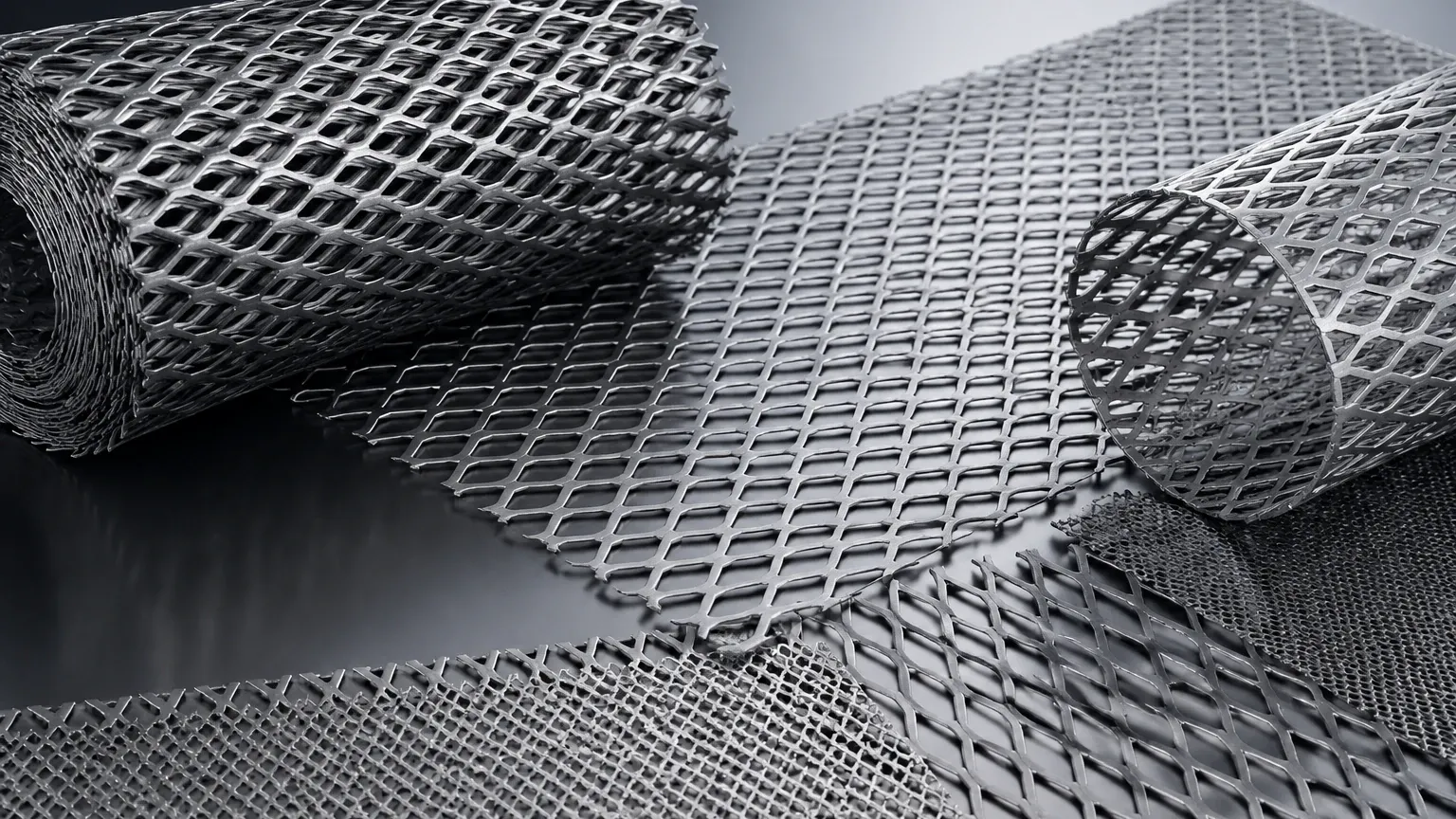
This process creates a diamond-shaped pattern of openings. Because the metal is stretched rather than punched, there is zero material waste. This "no-scrap" manufacturing makes expanded metal a highly sustainable and cost-effective alternative to perforated metal, where the "slugs" punched out of the holes represent lost material and energy. Furthermore, because the strands and bonds are formed from a single piece of metal, the material maintains its structural integrity. There are no welds to break or wires to unravel, which is a critical advantage in high-vibration or high-pressure applications.
Key Technical Specifications for Xpm Expanded Metal
When specifying xpm expanded metal for an industrial project, engineers must use precise terminology to ensure the resulting product meets the application's requirements. The geometry of the mesh is defined by several key parameters:
* SWD (Short Way of Diamond): The distance from the center of one bond to the center of the next bond across the short axis of the diamond.
* LWD (Long Way of Diamond): The distance from the center of one bond to the center of the next bond across the long axis of the diamond.
* SWO (Short Way of Opening): The actual width of the opening, measured from the inside of the strands.
* LWO (Long Way of Opening): The actual length of the opening, measured from the inside of the strands.
* Strand Thickness: The thickness of the original base material.
* Strand Width: The amount of metal fed under the knives to create one strand.
The relationship between these dimensions determines the "open area" percentage, which is the primary factor influencing flow rate and pressure drop in filtration systems. For instance, a wider strand width will increase the structural strength and weight of the mesh but decrease the open area, potentially increasing the resistance to fluid flow.
Standard vs. Flattened XPM Expanded Metal
Engineers must choose between two primary finishes: raised (standard) and flattened. Each offers distinct mechanical properties.
Raised Expanded Metal
Raised xpm expanded metal is the immediate product of the expansion process. The strands and bonds are set at a sharp angle to the plane of the sheet. This creates a three-dimensional surface that provides excellent grip (in flooring applications) and high structural rigidity. In filtration, the raised profile can be used to create turbulence in a fluid stream, which may be desirable in certain mixing or heat exchange processes. However, the raised edges can also capture debris more aggressively, which might complicate cleaning cycles.
Flattened Expanded Metal
Flattened expanded metal is produced by passing the raised mesh through a cold-rolling reducing mill. This process flattens the strands and bonds into the same plane as the original sheet. Flattening increases the overall length of the sheet by approximately 5% but results in a smooth, two-dimensional surface. For many filtration applications, flattened mesh is preferred because it is easier to clean, provides a consistent surface for supporting filter media (such as fine wire mesh or membranes), and is safer to handle during the assembly of filter cartridges.
Material Selection: The Case for Stainless Steel
While expanded metal can be produced from aluminum, carbon steel, or copper, industrial filtration typically demands the properties of stainless steel. As a manufacturer specializing in Perforated & Expanded Metal, Kaifil emphasizes the use of 300-series stainless steels for their superior performance in harsh environments.
* Grade 304: The standard for most industrial applications, offering excellent corrosion resistance and formability. It is suitable for food and beverage processing and general water treatment.
* Grade 316/316L: Contains molybdenum, which provides enhanced resistance to chlorides and pitting. This is the preferred choice for chemical processing, pharmaceutical manufacturing, and marine environments.
* High-Temperature Alloys: For applications involving extreme heat, such as exhaust filtration or high-temperature gas cleaning, specialized alloys may be required to prevent oxidation and maintain mechanical strength.
Selecting the correct material ensures that the xpm expanded metal does not introduce contaminants into the process stream due to corrosion or material degradation.
Applications in Industrial Filtration and Support
Xpm expanded metal serves several critical roles in industrial systems, often acting as the "backbone" for more delicate filtration components.
1. Filter Support Cores
In many liquid and gas filter cartridges, a fine filtration medium (like a pleated membrane) lacks the structural strength to withstand high differential pressures. Expanded metal is rolled into cylinders to act as an internal support core or an external protective shroud. The high strength-to-weight ratio of xpm expanded metal allows it to prevent the collapse of the filter media under pressure while maintaining a high open area for efficient flow.
2. Pre-Filtration and Trash Racks
For large-scale water treatment or intake systems, expanded metal is used as a primary screen to remove large debris. Its durability allows it to withstand the impact of heavy solids, and its continuous structure prevents the "shifting" of openings that can occur with woven wire screens.
3. Diffusers and Flow Straighteners
The angular nature of raised expanded metal can be used to break up laminar flow and create a more uniform distribution of fluid across a filter bed. This ensures that the entire surface area of the primary filter medium is utilized, extending the service life of the component.
4. Acoustic and Thermal Shielding
Beyond fluid filtration, xpm expanded metal is used in industrial equipment to provide ventilation while shielding against electromagnetic interference (EMI) or providing acoustic dampening. The diamond pattern is particularly effective at diffusing sound waves in high-decibel machinery environments.
Engineering Selection: Evaluating Performance and Risks
When evaluating xpm expanded metal for a new project, engineers should consider the following factors to mitigate risks and ensure optimal performance:
Pressure Drop and Flow Rate
The open area of the mesh is the most significant contributor to pressure drop. Engineers must calculate the required flow rate and ensure the selected SWD/LWD and strand width provide sufficient open area. A common mistake is over-specifying the strand width for strength, which can lead to an unacceptable increase in energy consumption due to higher pump pressure requirements.
Mechanical Stress and Fatigue
In applications involving pulsating flow or mechanical vibration, the fatigue resistance of the material is paramount. Because expanded metal is a single piece of material, it generally resists fatigue better than welded mesh. However, the points where the strands meet (the bonds) are areas of stress concentration. Proper support and mounting within the filter housing are necessary to prevent premature failure.
Compatibility and Contamination
In the pharmaceutical and food industries, the "cleanability" of the material is a regulatory requirement. Flattened xpm expanded metal is often required to eliminate crevices where bacteria or process residues could accumulate. Furthermore, the passivation of stainless steel components is a critical post-production step to ensure maximum corrosion resistance.
Customization and Procurement Considerations
Standard industrial catalogs offer a wide range of expanded metal sizes, but many B2B applications require custom solutions. When working with a manufacturer like Kaifil, providing the following information will streamline the design and production process:
1. Dimensional Tolerances: Specify the allowable variance in sheet size and diamond dimensions. For precision filter cores, tight tolerances are essential for a proper fit within the housing.
2. Edge Configuration: Do you require "closed diamonds" (where the edges are sheared through the bonds) or "open diamonds" (where the edges are sheared through the strands)? Closed diamonds are safer to handle and provide a cleaner edge for welding.
3. Forming Requirements: If the mesh needs to be rolled into a cylinder or formed into a specific shape, the orientation of the diamonds (LWD vs. SWD) relative to the bend direction must be considered. Expanded metal bends more easily in one direction than the other.
4. Surface Finish: Beyond flattening, do you require electropolishing, degreasing, or specialized coatings? For high-purity applications, degreasing is often mandatory to remove residual lubricants from the expansion process.
Conclusion: The Total Cost of Ownership
While the initial purchase price of xpm expanded metal is an important factor, technical professionals should focus on the total cost of ownership. The durability of stainless steel expanded mesh reduces the frequency of replacements, and its high strength-to-weight ratio can lead to lighter, more efficient equipment designs. By eliminating material waste during production and providing a robust, weld-free structure, xpm expanded metal stands as a superior choice for modern industrial filtration and structural support.
Choosing the right filtration component requires a partner who understands the intersection of material science and fluid engineering. Whether you are designing a high-pressure hydraulic filter or a large-scale chemical processing system, the correct application of Perforated & Expanded Metal ensures that your operations remain efficient, reliable, and cost-effective. By confirming technical specifications such as SWD/LWD, material grade, and surface finish early in the design phase, engineering teams can avoid common pitfalls and achieve long-term performance goals.
