


Yard Perforated
In the industrial filtration and fabrication sectors, the term "yard perforated" often refers to the procurement and application of perforated metal sheets or rolls measured by the linear yard. While standard dimensions are common in retail, industrial engineers and purchasing teams require a deeper understanding of how these materials perform under pressure, corrosive environments, and high-flow conditions. Selecting the right Perforated & Expanded Metal involves more than just choosing a hole size; it requires a technical evaluation of material properties, open area percentages, and structural integrity.
Perforated metal serves as a foundational component in many filtration systems, often acting as a rigid support for finer wire mesh or as a primary filter for coarse particles. Whether sourced by the yard for large-scale architectural screening or custom-fabricated for specific industrial housings, the precision of the perforation process dictates the efficiency of the entire system.
Understanding the Mechanics of Perforated and Expanded Metal
To make an informed decision when specifying yard perforated materials, it is essential to distinguish between perforated metal and expanded metal. While both provide open areas for flow, their manufacturing processes and physical characteristics differ significantly.
Perforated Metal
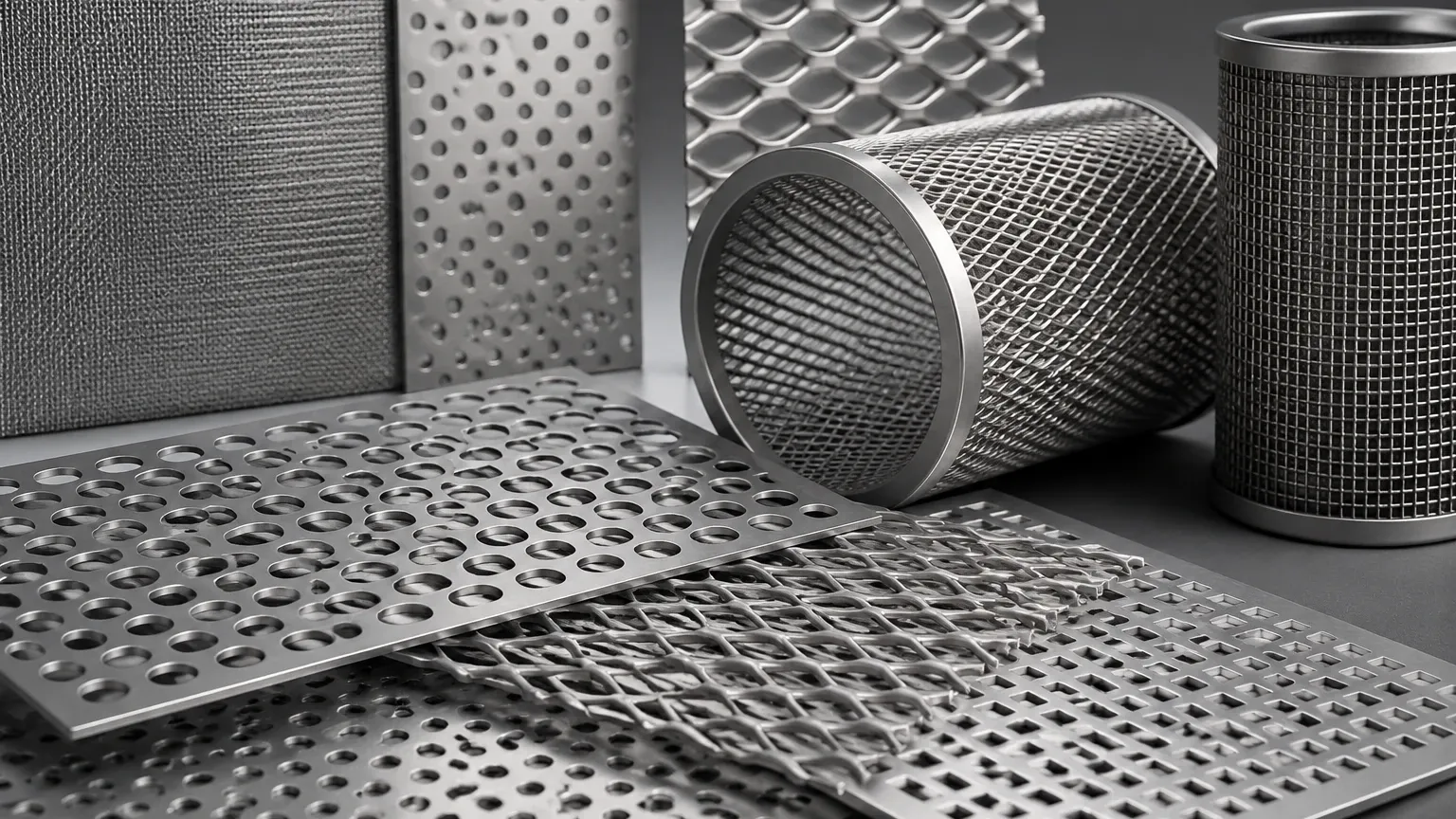
Perforated metal is created by punching a series of holes into a solid sheet of material, typically stainless steel, carbon steel, or aluminum. This process allows for extreme precision in hole shape (round, square, slotted, or hexagonal) and placement. In filtration, round holes are the most common due to their structural strength and predictable flow patterns. The "staggered" pattern is generally preferred over "straight" patterns because it offers a higher open area and better structural uniformity.
Expanded Metal
Expanded metal is produced by simultaneously slitting and stretching the material. This creates a diamond-shaped mesh without any waste, as no metal is punched out. Expanded metal can be supplied in "raised" (standard) or "flattened" forms. For filtration applications where a smooth surface is required to prevent bypass or to protect an inner mesh layer, flattened expanded metal is often the superior choice. It provides a high strength-to-weight ratio, making it ideal for large-scale industrial yard perforated applications where weight and cost are primary concerns.
Key Technical Specifications for Engineering Selection
When ordering yard perforated metal for industrial use, engineers must define several critical parameters to ensure the material meets the application's demands. Failure to specify these can lead to premature mechanical failure or insufficient filtration performance.
1. Open Area Percentage
The open area is the total area of the holes divided by the total area of the sheet, expressed as a percentage. This is the most critical factor for determining flow rate and pressure drop. A higher open area allows for more fluid or gas to pass through but reduces the structural strength of the sheet. For support cylinders in high-pressure hydraulic filters, a lower open area with thicker gauge material is often required to prevent collapsing.
2. Hole Size and Pitch
The hole size (diameter) and the pitch (the distance between the centers of adjacent holes) determine the filtration rating of the perforated sheet. In many B2B applications, yard perforated metal acts as a "pre-filter" or a "strainer," removing large debris before the fluid reaches a secondary, finer filter element. The relationship between hole size and thickness is also vital; generally, the hole diameter should not be smaller than the material thickness to ensure clean punches and avoid tool breakage.
3. Material Gauge and Thickness
The thickness of the metal, measured in gauges or millimeters, affects the durability and weldability of the component. In the chemical processing and food industries, stainless steel (304 or 316L) is the standard due to its corrosion resistance and ability to withstand high-temperature sterilization cycles.
Applications of Yard Perforated Metal in Industrial Filtration
The versatility of yard perforated metal allows it to be integrated into various stages of industrial processes. Its primary roles include protection, support, and separation.
Filter Element Support Cores
In many stainless steel filter cartridges, the perforated metal serves as the inner core or the outer cage. The perforated layer provides the mechanical strength necessary to withstand the differential pressure across the filter media. Without a robust yard perforated support, the fine wire mesh or pleated media would collapse under the force of the fluid flow.
Industrial Intake Screens
For water treatment plants or cooling systems that draw from natural water sources, large sections of yard perforated metal are used to create intake screens. These screens prevent large debris, aquatic life, and trash from entering the pumps and sensitive downstream equipment. In these environments, 316L stainless steel is often specified for its superior resistance to chloride-induced pitting.
Centrifuge Baskets and Vibratory Screens
In the food and pharmaceutical industries, perforated metal is used in centrifuge baskets to separate solids from liquids. The precision of the hole pattern ensures consistent separation, while the smooth surface of the perforated sheet allows for easy cleaning and prevents material buildup, which is essential for maintaining hygienic standards.
Engineering Considerations: Flow Rate and Pressure Drop
One of the most common questions engineers face is how the selection of yard perforated metal will impact the system's total pressure drop. The pressure drop ($ΔP$) is influenced by the fluid's velocity, viscosity, and the geometry of the perforated sheet.
When calculating the expected performance, it is important to consider the "vena contracta" effect, where the fluid stream narrows as it passes through the holes, causing a localized increase in velocity and a subsequent drop in pressure. Using a staggered hole pattern typically results in a more uniform flow distribution compared to a straight pattern, which can help minimize turbulence and energy loss in high-velocity systems.
Furthermore, the "margin"—the unperforated area around the edges of the sheet—must be accounted for. When yard perforated metal is rolled into cylinders or welded into frames, the margins provide the necessary surface area for a secure, leak-proof bond. However, excessive margins can reduce the effective filtration area, leading to higher-than-expected pressure drops.
Customization and Manufacturing Precision
While "yard perforated" stock may be available in standard configurations, most industrial applications require some level of customization to achieve optimal performance. Customization options include:
* Variable Margins: Specifying exact unperforated areas for welding or mounting.
* Custom Hole Shapes: Using slotted holes for specific particle shapes or hexagonal holes for maximum open area.
* Surface Finishes: Electropolishing or pickling to improve corrosion resistance and remove burrs that could trap contaminants.
* Fabrication: Rolling, bending, and welding the perforated sheets into finished components like baskets, cones, or cylinders.
At Kaifil, the focus is on providing tailored solutions that go beyond simple bulk material. By understanding the specific requirements of the chemical, pharmaceutical, and food sectors, manufacturers can produce Perforated & Expanded Metal that integrates seamlessly into complex filtration assemblies.
Maintenance, Cleaning, and Service Life
The longevity of a yard perforated component depends heavily on the operating environment and the maintenance protocol. Unlike disposable synthetic filters, stainless steel perforated metal is designed for long-term use and can be cleaned multiple times.
Cleaning Methods
* Backwashing: Reversing the flow of the fluid to dislodge particles trapped on the surface of the holes.
* Ultrasonic Cleaning: Using high-frequency sound waves in a cleaning solvent to remove fine particulates from the crevices of the metal.
* Chemical Cleaning: Using specialized detergents or acids to remove scale or organic buildup, provided the metal is compatible with the cleaning agent.
Monitoring Wear and Corrosion
In abrasive environments, such as mining or heavy industrial slurry processing, the edges of the perforations can wear down over time, effectively increasing the hole size and reducing filtration accuracy. Regular inspections should check for thinning of the material, signs of stress cracking, or localized corrosion (pitting). If the structural integrity of the yard perforated support is compromised, it must be replaced immediately to prevent a catastrophic failure of the entire filter element.
Total Cost of Ownership (TCO) in Procurement
When purchasing yard perforated metal, technical professionals should look beyond the initial price per yard. The total cost of ownership includes the material cost, the cost of fabrication, the expected service life, and the maintenance requirements.
Investing in a higher-grade material, such as 316L stainless steel over 304, may have a higher upfront cost but can significantly reduce the frequency of replacements in corrosive environments. Similarly, specifying a burr-free, precision-punched sheet can reduce the time required for cleaning and prevent downstream contamination, leading to lower operational costs over the life of the equipment.
Conclusion: Selecting the Right Partner for Perforated Solutions
Selecting the appropriate yard perforated material is a critical step in designing an efficient industrial filtration system. By considering the open area, hole geometry, and material compatibility, engineers can ensure their systems operate reliably under demanding conditions.
Whether you require bulk Perforated & Expanded Metal for large-scale projects or precision-engineered components for specialized filtration tasks, working with a manufacturer that understands the technical nuances of metal fabrication is essential. Providing detailed specifications regarding flow requirements, pressure limits, and environmental factors will allow for the development of a filtration solution that delivers durability, performance, and long-term value.
