


Yellow Perforated Metal Texture
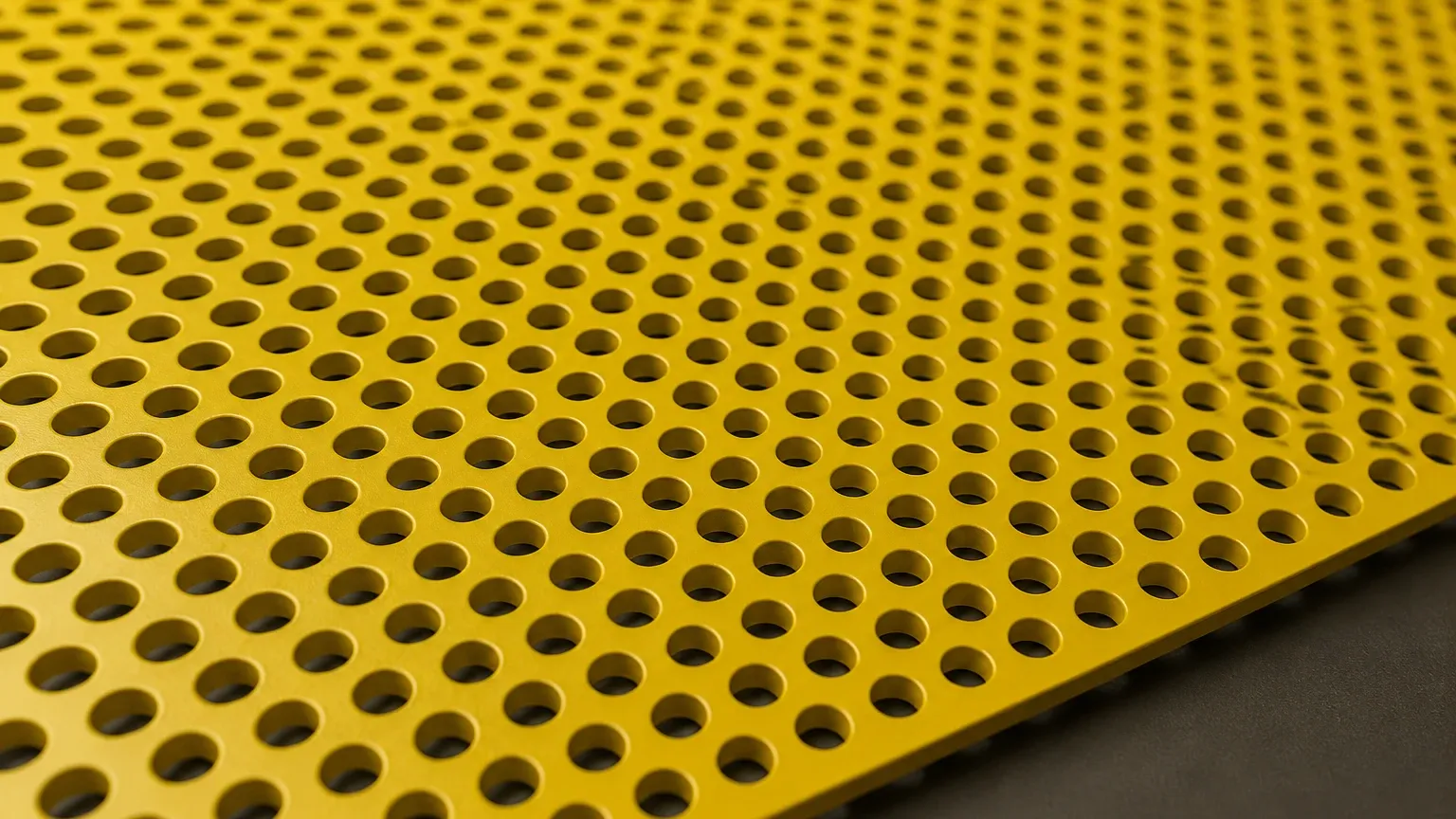
In industrial design and engineering, the term "yellow perforated metal texture" refers to a specific intersection of visual signaling, surface protection, and structural functionality. While the "texture" is defined by the physical pattern of holes or slits in a metal substrate, the "yellow" component typically signifies a specialized coating—often powder-coated or thermoplastic—applied to enhance visibility, safety, or corrosion resistance. For engineers and procurement specialists, selecting the right Perforated & Expanded Metal requires a deep understanding of how these surface treatments interact with the underlying mechanical properties of the filter or guard.
At Kaifil, we recognize that the choice of metal texture and finish is rarely purely aesthetic. In B2B applications ranging from industrial filtration to safety guarding, the specific configuration of a perforated sheet determines its performance limits, including flow rates, pressure drops, and structural longevity. This guide examines the technical nuances of yellow perforated metal textures, focusing on material selection, manufacturing precision, and the engineering logic behind their implementation.
The Technical Fundamentals of Perforated and Expanded Metal
To understand the implications of a yellow perforated metal texture, one must first distinguish between the two primary manufacturing methods used to create industrial metal textures: perforation and expansion.
Perforated Metal Production
Perforated metal is created through a punching process where CNC-controlled presses remove material from a solid metal sheet. This allows for extreme precision in hole size, shape, and spacing. Common patterns include round, square, slotted, and hexagonal holes. The "texture" here is defined by the regularity of the pattern and the smoothness of the hole edges. For filtration applications, the precision of these holes is critical for determining the micron rating and the effective open area.
Expanded Metal Production
Unlike perforation, expanded metal is produced by simultaneously slitting and stretching a metal sheet. This process creates a diamond-shaped pattern without any material waste. The resulting texture is three-dimensional; the strands and bonds are set at a uniform angle to the plane of the sheet. This provides inherent structural rigidity and a high strength-to-weight ratio. When a yellow finish is applied to expanded metal, the complex facets of the diamond pattern create a highly visible, high-traction surface often used in walkways or machine guards.
Analyzing the Yellow Perforated Metal Texture
When a project specifies a yellow perforated metal texture, the "yellow" is almost always a post-production finish. The most common method is industrial powder coating, which provides a durable, thick layer of pigment and resin.
Functional Benefits of Yellow Finishes
1. Safety and Visibility: In industrial environments, yellow is the standard color for caution. Perforated metal guards finished in high-visibility yellow (such as RAL 1021 or RAL 1003) alert personnel to moving parts or hazardous areas while still allowing for visual inspection of the machinery through the perforations.
2. Corrosion Protection: While stainless steel is inherently corrosion-resistant, carbon steel perforated sheets require a coating to prevent oxidation. A yellow polyester or epoxy powder coating acts as a barrier against moisture and chemical exposure.
3. Identification: In complex filtration systems, color-coded textures allow maintenance teams to quickly identify the micron rating or the specific stage of a multi-stage filtration process.
Impact on Filtration Performance
It is vital for engineers to account for the thickness of the yellow coating when calculating filtration accuracy. A standard powder coating can add between 60 to 120 microns to the surface of the metal. If the hole diameters are small (e.g., sub-millimeter), the coating will significantly reduce the effective open area and potentially alter the flow characteristics. At Kaifil, we calibrate our perforation tools to account for the eventual coating thickness, ensuring the final product meets the specified flow requirements.
Engineering Criteria for Pattern Selection
The "texture" of the metal is technically defined by its geometric parameters. When sourcing Perforated & Expanded Metal, several key metrics must be confirmed:
Hole Pattern and Orientation
* Staggered vs. Straight Row: A 60-degree staggered pattern is the most common for perforated metal because it provides the highest open area and uniform strength across the sheet. Straight rows are easier to align but offer less structural integrity.
* Pitch: The distance from the center of one hole to the center of the adjacent hole. This measurement, combined with the hole diameter, determines the open area percentage.
Open Area Calculation
The open area is the ratio of the total area of the holes to the total area of the sheet, expressed as a percentage. This is the most critical factor for filtration and ventilation applications. A yellow perforated metal texture with a 40% open area will behave very differently under pressure than one with a 60% open area. Engineers must balance the need for high flow rates with the requirement for structural stability, especially in high-pressure hydraulic or chemical processing environments.
Material Selection and Compatibility
The base material used for perforated or expanded metal dictates the product's environmental limits. Even if a yellow texture is applied, the underlying chemistry of the metal remains relevant for structural performance and long-term durability.
Stainless Steel (304 and 316)
Stainless steel is the preferred choice for Kaifil’s high-performance filtration components. Grade 316, containing molybdenum, offers superior resistance to chlorides and acids. When a yellow finish is applied to stainless steel, it is typically for identification or architectural purposes rather than basic corrosion protection.
Carbon Steel
For indoor machine guards or secondary filtration stages where chemical exposure is minimal, carbon steel is a cost-effective alternative. However, the integrity of the yellow powder coating is paramount; any chip or scratch in the "texture" can lead to localized rusting, which may eventually compromise the entire component.
Aluminum
Aluminum is used when weight is a primary concern. It accepts powder coating exceptionally well, resulting in a vibrant and durable yellow perforated metal texture that is resistant to atmospheric corrosion.
Common Risks and Quality Evaluation
When purchasing industrial perforated metal, several quality risks can impact the total cost of ownership and system performance. Procurement teams should evaluate the following before finalizing a supplier:
1. Burr Formation: During the punching process, small metal fragments (burrs) can remain on the edge of the holes. If these are not properly removed before the yellow coating is applied, they can break off during operation, contaminating the fluid stream or causing the coating to peel.
2. Coating Uniformity: In expanded metal, the "bonds" (where the strands meet) are difficult to coat evenly. Poorly applied yellow finishes may be thin at these points, leading to premature failure. High-quality manufacturers use electrostatic application methods to ensure the coating wraps around all facets of the texture.
3. Flatness Tolerances: The perforation process can introduce internal stresses into the metal sheet, causing it to curl or bow. Specialized leveling equipment is required to ensure the final yellow perforated sheet is perfectly flat for installation into filter housings or frames.
Application Profiles: Where Yellow Textures Excel
Industrial Guarding and Enclosures
In the manufacturing sector, yellow expanded metal is the gold standard for safety. The three-dimensional texture provides a high degree of rigidity, allowing the guard to withstand impacts without deforming. The yellow color ensures compliance with safety regulations, while the open texture allows for heat dissipation and airflow around motors and pumps.
Specialized Filtration Stages
In water treatment or chemical processing, different stages of filtration are often color-coded. A yellow perforated metal texture might signify a coarse pre-filtration stage, protecting more delicate wire mesh filters downstream. By using color-coded components, facilities reduce the risk of installation errors during routine maintenance cycles.
Architectural and Acoustic Panels
Beyond heavy industry, perforated metal is used for sound attenuation. The yellow texture can be engineered with specific hole sizes to trap sound waves, while the color serves a dual purpose in interior design or branding for commercial spaces.
Procurement Checklist for Engineers
Before ordering Perforated & Expanded Metal with a yellow finish, confirm the following technical details with your manufacturer:
* Substrate Material: Is the base metal compatible with the operating environment (e.g., 316L for marine applications)?
* Exact RAL Code: "Yellow" is subjective. Specify a standardized RAL or Pantone code to ensure consistency across different batches.
* Effective Open Area: Has the calculation accounted for the reduction in hole size caused by the coating thickness?
* Edge Requirements: Do you require "safe edges" (unperforated margins) for welding or bolting into a frame?
* Load Requirements: If the metal is being used for a walkway or a pressurized filter support, has the load-bearing capacity of the specific pattern been verified?
The Kaifil Advantage in Custom Filtration
Kaifil specializes in bridging the gap between raw material production and high-precision engineering. We do not simply provide metal sheets; we develop integrated filtration solutions. Our expertise in stainless steel wire mesh, filter cartridges, and precision metal components allows us to consult on the optimal "texture" for any given industrial challenge.
Whether you require a yellow perforated metal texture for a safety-critical machine guard or a complex multi-layer stainless steel filter cartridge, our manufacturing processes are designed for repeatability and precision. We work closely with global purchasing teams to ensure that every specification—from the micron rating of the perforations to the durability of the surface finish—meets the rigorous demands of the chemical, pharmaceutical, and hydraulic industries.
By focusing on the technical interplay between material, pattern, and finish, Kaifil ensures that your filtration and guarding components deliver maximum performance with minimal maintenance. For detailed technical specifications or custom design support, engineers are encouraged to review our full range of capabilities and consult with our technical team on their specific application requirements.
