


Zahner Perforated Metal
In the realm of industrial design and precision engineering, perforated metal serves as a foundational component that bridges the gap between structural integrity and functional permeability. While many engineers and architects associate high-end aesthetic and technical standards with zahner perforated metal, the underlying principles of precision perforation are critical across a vast array of industrial filtration and separation applications. Understanding the technical nuances of hole patterns, material properties, and manufacturing tolerances is essential for procurement teams and engineers tasked with selecting the right Perforated & Expanded Metal solutions for demanding environments.
Industrial filtration requires more than just a surface with holes; it demands a calculated balance of open area, mechanical strength, and chemical resistance. Whether used as a primary filter medium or as a support structure for finer wire mesh, the quality of the perforation directly impacts the efficiency of the entire system.
The Role of Perforated & Expanded Metal in Modern Engineering
Perforated and expanded metals are distinct yet complementary materials used extensively in industrial sectors. Perforated metal is created by punching a series of holes into a solid sheet, whereas expanded metal is produced by simultaneously slitting and stretching the material, creating a diamond-shaped mesh without any scrap waste.
For applications requiring the precision often associated with zahner perforated metal, the focus is typically on the consistency of the hole size and the flatness of the sheet. In industrial filtration, these components are utilized in:
* Centrifuge Baskets: Requiring high G-force resistance and precise drainage.
* Filter Support Tubes: Providing the rigid skeleton for pleated or wrapped wire mesh cartridges.
* De-watering Screens: Used in food processing and pulp and paper industries.
* Acoustic Dampening: Where perforated sheets are used to house sound-absorbing materials in high-pressure gas systems.
Selecting between perforated and expanded options depends on the specific mechanical requirements of the project. Perforated sheets offer higher precision in terms of hole geometry and are easier to clean, while expanded metal provides a higher strength-to-weight ratio and is often more cost-effective for large-scale screening.
Key Technical Specifications for High-Performance Perforation
When specifying perforated metal for industrial use, engineers must define several critical parameters to ensure the component performs as expected under operational stress. These specifications go beyond simple aesthetics and delve into the physics of fluid dynamics and structural mechanics.
Open Area Calculations
The open area is the percentage of the sheet that is occupied by holes. This is perhaps the most critical factor in filtration, as it determines the flow rate and pressure drop across the medium. A higher open area reduces resistance but may compromise the structural integrity of the sheet. The calculation varies based on the pattern:
* 60-Degree Staggered Pattern: The most popular choice due to its inherent strength and uniform flow distribution.
* Straight Row Pattern: Easier to align with other components but generally weaker than staggered configurations.
Hole Geometry and Pitch
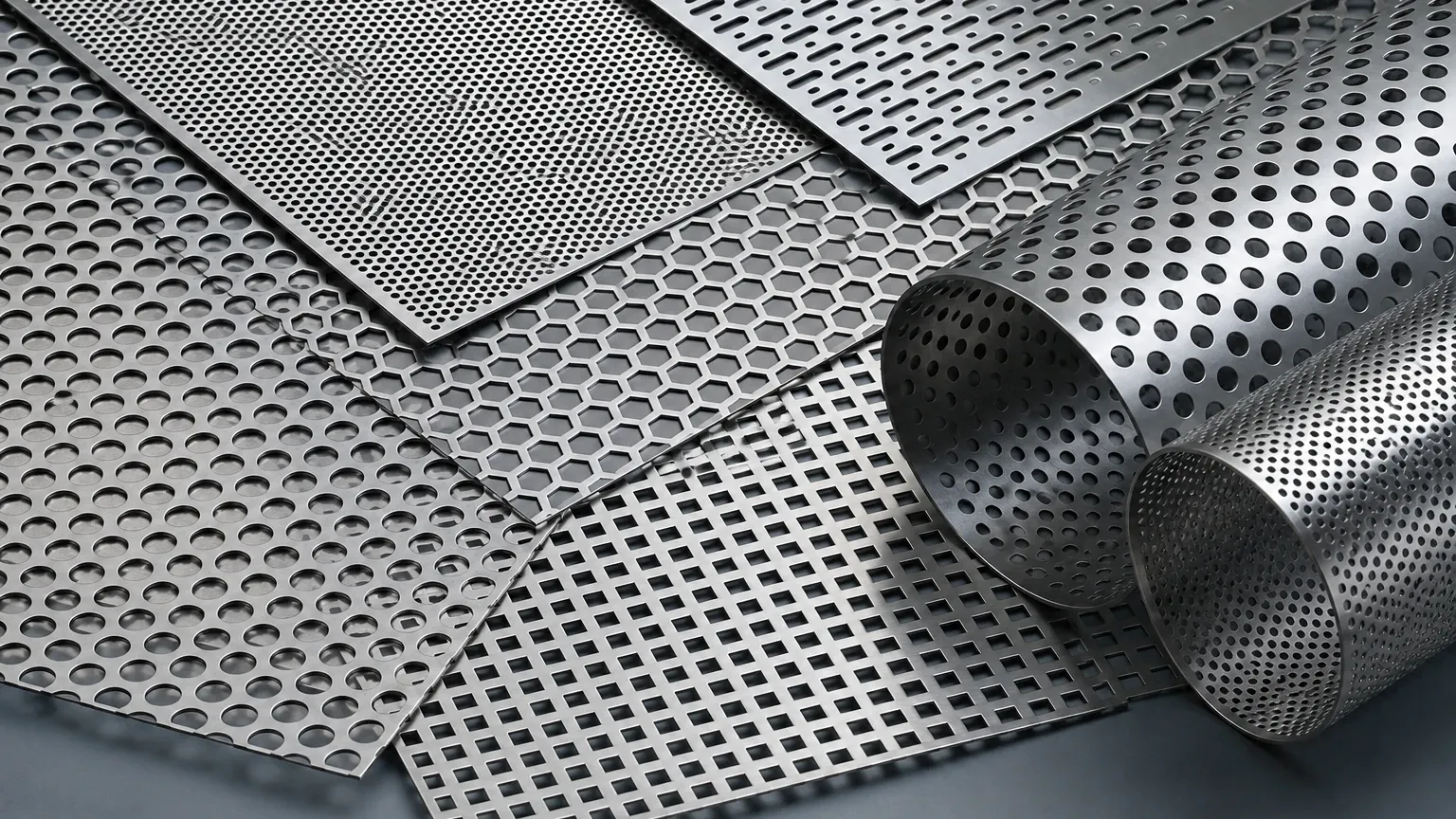
The shape of the perforation—whether round, square, slotted, or hexagonal—affects how particles interact with the surface. Round holes are the industry standard for general filtration due to their ease of manufacture and uniform stress distribution. Slotted holes are often preferred for viscous fluids or when sorting elongated particles. The "pitch" refers to the distance between the centers of adjacent holes; maintaining a precise pitch is vital for ensuring uniform flow and avoiding "blind spots" in the filter.
Comparing Perforated and Expanded Metal Structures
While both materials provide permeability, their manufacturing processes result in different performance characteristics. Understanding these differences is crucial for engineers who might be evaluating zahner perforated metal for its precision but need to consider the practicalities of industrial scale-up.
Mechanical Integrity
Perforated metal retains the inherent flatness of the original sheet, making it ideal for applications where the filter must fit into tight tolerances or be welded into cylindrical cartridges. Expanded metal, by contrast, has a three-dimensional texture. While "flattened" expanded metal is available, the process of expanding creates a truss-like structure that is exceptionally strong under tension, making it suitable for guards, grates, and heavy-duty strainers.
Waste and Sustainability
From a manufacturing perspective, expanded metal is a "zero-waste" product because no material is punched out. Perforated metal produces "slugs" (the punched-out circles), which are recycled but represent a different cost structure. For high-value alloys like Hastelloy or Titanium, the material efficiency of expanded metal can lead to significant cost savings.
Material Integrity and Chemical Compatibility
In the chemical processing, pharmaceutical, and food industries, the choice of material is non-negotiable. Most high-performance perforated components are fabricated from stainless steel, though the specific grade must be matched to the environment.
* Grade 304/304L: The standard for general-purpose applications with good corrosion resistance and excellent formability.
* Grade 316/316L: Contains molybdenum, providing superior resistance to chlorides and pitting, making it the preferred choice for marine environments and pharmaceutical processing.
* Duplex Stainless Steel: Used in high-pressure, highly corrosive environments where both strength and chemical resistance are paramount.
Beyond the base alloy, surface finishes such as electropolishing or passivating are often required to ensure the perforated metal does not harbor bacteria or succumb to localized corrosion. For projects requiring the high-end finish of zahner perforated metal, these post-processing steps are essential to meet both aesthetic and hygienic standards.
Integration with Wire Mesh for Multi-Stage Filtration
A common application for perforated metal in industrial filtration is as a support layer for fine wire mesh. In high-pressure hydraulic or oil filtration, a fine mesh alone would collapse under the force of the fluid. By wrapping the mesh around a perforated stainless steel core, the system gains the necessary structural support while maintaining high filtration accuracy.
This "composite" approach allows for:
1. High Differential Pressure: The perforated core absorbs the mechanical load.
2. Protection: The outer perforated layer can act as a "pre-filter" or a protective shroud against mechanical damage during installation or cleaning.
3. Uniform Distribution: The hole pattern of the perforated metal ensures that the fluid is distributed evenly across the entire surface of the fine mesh, preventing localized clogging.
Specifying Custom Perforated Components for Industrial Systems
When transitioning from a standard design to a custom solution, engineers should provide detailed drawings that specify not only the hole size and pattern but also the "margins." Margins are the unperforated areas along the edges of the sheet. Proper margin specification is critical for welding and assembly; without a solid edge, welding a perforated sheet into a cylinder becomes difficult and can lead to structural failure at the seam.
Furthermore, the direction of the perforation (parallel or perpendicular to the length of the sheet) can affect the flexibility of the material. This is a key consideration when the metal must be rolled into small-diameter filter cartridges.
Maintenance, Durability, and Total Cost of Ownership
The longevity of a perforated filter is determined by its resistance to wear and the ease with which it can be cleaned. Unlike disposable synthetic filters, stainless steel perforated and expanded metal components are designed for long-term use.
Cleaning Protocols
Industrial perforated metals are typically cleaned via backwashing, ultrasonic cleaning, or chemical CIP (Clean-In-Place) cycles. Because the holes are precision-punched, they lack the internal crevices found in woven materials, making them less prone to permanent fouling. This ease of maintenance reduces downtime and lowers the total cost of ownership over the life of the equipment.
Wear Resistance
In applications involving abrasive slurries, the thickness of the perforated plate can be increased to provide a "wear allowance." This is a significant advantage over wire mesh, which can be quickly eroded by high-velocity particles. By selecting a thicker gauge of Perforated & Expanded Metal, engineers can extend the replacement interval of the filtration unit significantly.
Conclusion: Selecting the Right Partner for Perforation
Whether a project requires the architectural precision of zahner perforated metal or the rugged durability of industrial-grade expanded metal, the success of the application depends on rigorous engineering standards. The selection process must account for flow dynamics, mechanical stress, material compatibility, and long-term maintenance requirements.
For engineers and procurement professionals, working with a manufacturer that understands these technical boundaries is essential. By focusing on precision manufacturing and customized design, it is possible to achieve filtration solutions that offer both high performance and exceptional durability in the most demanding industrial environments. When specifying your next filtration component, ensure that the perforated or expanded metal choice aligns with the total system requirements to optimize both efficiency and service life.
