


How Are Sintered Metal Filters Made
In industrial filtration, sintered metal components represent the pinnacle of durability and precision. These filters are engineered to withstand extreme temperatures, high pressure, and corrosive environments where traditional polymer or paper filters would fail. For engineers and procurement specialists, understanding how these components are manufactured is essential for evaluating their performance limits and life cycle costs. The production of Sintered Metal Filters involves a sophisticated combination of powder metallurgy, precision engineering, and thermal processing known as sintering.
Sintering is the process of compacting and forming a solid mass of material by heat or pressure without melting it to the point of liquefaction. When applied to metal filtration, this process creates a porous yet rigid structure that offers exceptional mechanical strength and precise filtration accuracy. This article provides a technical overview of the manufacturing stages, material considerations, and quality control measures involved in the production of high-performance sintered metal filters.
Understanding Sintered Metal Filtration Technology
Before exploring the manufacturing steps, it is important to define the core objective of the process. The goal of making a sintered metal filter is to create a porous matrix where the pore size is tightly controlled. Unlike surface filtration (such as a single layer of fine mesh), sintered filters often provide depth filtration, where particles are trapped within the complex interconnected pathways of the metal structure.
Industrial applications for these filters range from chemical processing and pharmaceutical production to hydraulic systems and gas-liquid separation. Because the manufacturing process allows for the fusion of metal particles at a molecular level, the resulting filter media is permanent, cleanable, and capable of maintaining structural integrity under significant differential pressure.
Material Selection and Powder Metallurgy Basics
The manufacturing process begins with the selection of the raw material, typically in the form of fine metal powders. The choice of alloy determines the filter’s chemical compatibility, thermal resistance, and mechanical properties.
Common Alloys Used
1. Stainless Steel (316L): The most common material due to its excellent corrosion resistance and ability to withstand temperatures up to 450°C (842°F) in oxidizing environments.
2. Bronze: Often used for pneumatic silencers and basic liquid filtration where cost-efficiency is a priority.
3. Nickel-Based Alloys (Monel, Inconel, Hastelloy): Selected for highly aggressive chemical environments or extreme temperature requirements exceeding the limits of stainless steel.
4. Titanium: Used in applications requiring a high strength-to-weight ratio and exceptional resistance to seawater or chlorine-based chemicals.
Powder Morphology
The shape and size distribution of the metal powder particles are critical. Spherical powders are often preferred because they allow for more predictable pore sizes and consistent permeability. During the initial phase of how are sintered metal filters made, manufacturers must ensure the powder is free from contaminants and graded to the specific micron rating required for the final application.
The Compaction Phase: Shaping the Filter Media
Once the material is selected, the metal powder must be formed into the desired shape. This is achieved through various compaction methods, depending on the complexity of the filter design and the required density.
Cold Isostatic Pressing (CIP)
For cylindrical filter cartridges or complex shapes, Cold Isostatic Pressing is frequently used. The metal powder is placed into a flexible mold (often made of rubber or silicone), which is then submerged in a high-pressure fluid chamber. The pressure is applied uniformly from all directions, ensuring a consistent density across the entire part. This uniformity is vital for maintaining a consistent pore size distribution throughout the filter element.
Gravity Sintering (Loose Powder Sintering)
In some applications, such as the production of flat porous sheets or simple discs, the powder is poured into a rigid mold and leveled. No external pressure is applied; instead, the powder is held in place by gravity. This method typically results in higher porosity and lower density, which is ideal for high-flow gas filtration applications.
Die Pressing
For high-volume production of small, simple components like breather vents or small discs, mechanical die pressing is used. The powder is fed into a steel die and compressed by a hydraulic or mechanical press. This method is fast and provides excellent dimensional accuracy.
The Thermal Sintering Process: Diffusion Bonding
The defining stage of the manufacturing process is the sintering cycle. The green compact (the shaped but fragile metal powder) is placed into a high-temperature furnace.
Temperature Control
The furnace temperature is carefully controlled to remain below the melting point of the base metal. For stainless steel, this temperature is typically between 1,100°C and 1,300°C. At these temperatures, atomic diffusion occurs at the contact points between the metal particles. This creates "necks" or metallurgical bonds that fuse the particles together into a rigid, monolithic structure.
Atmosphere Control
To prevent oxidation and ensure the purity of the metal bonds, sintering is performed in a controlled atmosphere. This may involve:
* Vacuum Sintering: Removing all air to prevent any chemical reactions.
* Reducing Atmospheres: Using hydrogen or dissociated ammonia to remove existing oxides from the particle surfaces, promoting stronger bonding.
* Inert Gas: Using argon or nitrogen to provide a stable environment for the thermal process.
During this phase, the duration of the heat soak is critical. If the part is sintered for too long or at too high a temperature, the pores may close up, reducing permeability. Conversely, insufficient sintering results in a weak structure that may shed particles (media migration) during operation.
Variations in Manufacturing: Sintered Powder vs. Sintered Mesh
While powder sintering is the most common method for creating depth filters, there is another significant category: sintered wire mesh filters. Understanding the difference is important for engineers selecting the right media for their application.
Sintered Metal Mesh
Instead of starting with powder, this process uses multiple layers of woven stainless steel wire mesh. These layers are stacked in a specific orientation—often combining a fine filtration layer with coarser support and drainage layers. The stack is then sintered in a vacuum furnace. The result is a robust, pleated, or cylindrical filter element that offers high flow rates and excellent surface filtration characteristics. Sintered mesh is particularly valued for its ease of cleaning (backwashing) and high mechanical strength.
Sintered Metal Fiber Felt
In some specialized cases, fine metal fibers (non-woven) are used instead of powder or mesh. These fibers are laid down in a random web and then sintered. This produces a media with very high porosity (up to 80%), which allows for extremely low pressure drops while maintaining high dirt-holding capacity.
Post-Sintering Processes and Quality Control
After the sintering cycle is complete, the filter elements undergo several finishing steps to meet industrial specifications.
Machining and Welding
Sintered metal can be machined using standard techniques, though care must be taken not to "smear" the surface pores. For filter cartridges, the sintered media is often welded to end caps, flanges, or threaded connectors. TIG (Tungsten Inert Gas) welding is the preferred method to ensure clean, leak-proof joints that maintain the integrity of the filtration system.
Cleaning and Passivation
To ensure the filters are suitable for sensitive applications like food, beverage, or pharmaceutical production, they undergo ultrasonic cleaning to remove any residual processing debris. Passivation is also performed on stainless steel components to enhance their natural corrosion resistance by forming a protective oxide layer.
Technical Testing and Verification
To verify that the manufacturing process has met the design requirements, several tests are conducted:
* Bubble Point Test: The filter is submerged in a liquid, and air pressure is applied. The pressure at which the first bubble appears identifies the largest pore size (the absolute micron rating).
* Permeability Testing: Measuring the flow of air or liquid at a specific differential pressure to ensure the filter meets the required flow characteristics.
* Dimensional Inspection: Ensuring the part meets the tight tolerances required for housing installation.
Engineering Considerations for Industrial Applications
When evaluating how are sintered metal filters made, engineers must consider how the manufacturing variables impact the total cost of ownership. A well-manufactured sintered filter is an investment in process stability.
Pore Size and Distribution
The precision of the powder grading and the control of the sintering furnace directly determine the pore size distribution. A narrow distribution means the filter will be highly efficient at capturing particles of a specific size without prematurely clogging.
Structural Integrity
Unlike polymer filters, sintered metal filters do not suffer from bypass caused by media deformation. The metallurgical bonds created during sintering ensure that the pore structure remains fixed, even under high-pressure surges or reverse flow during cleaning cycles.
Customization Options
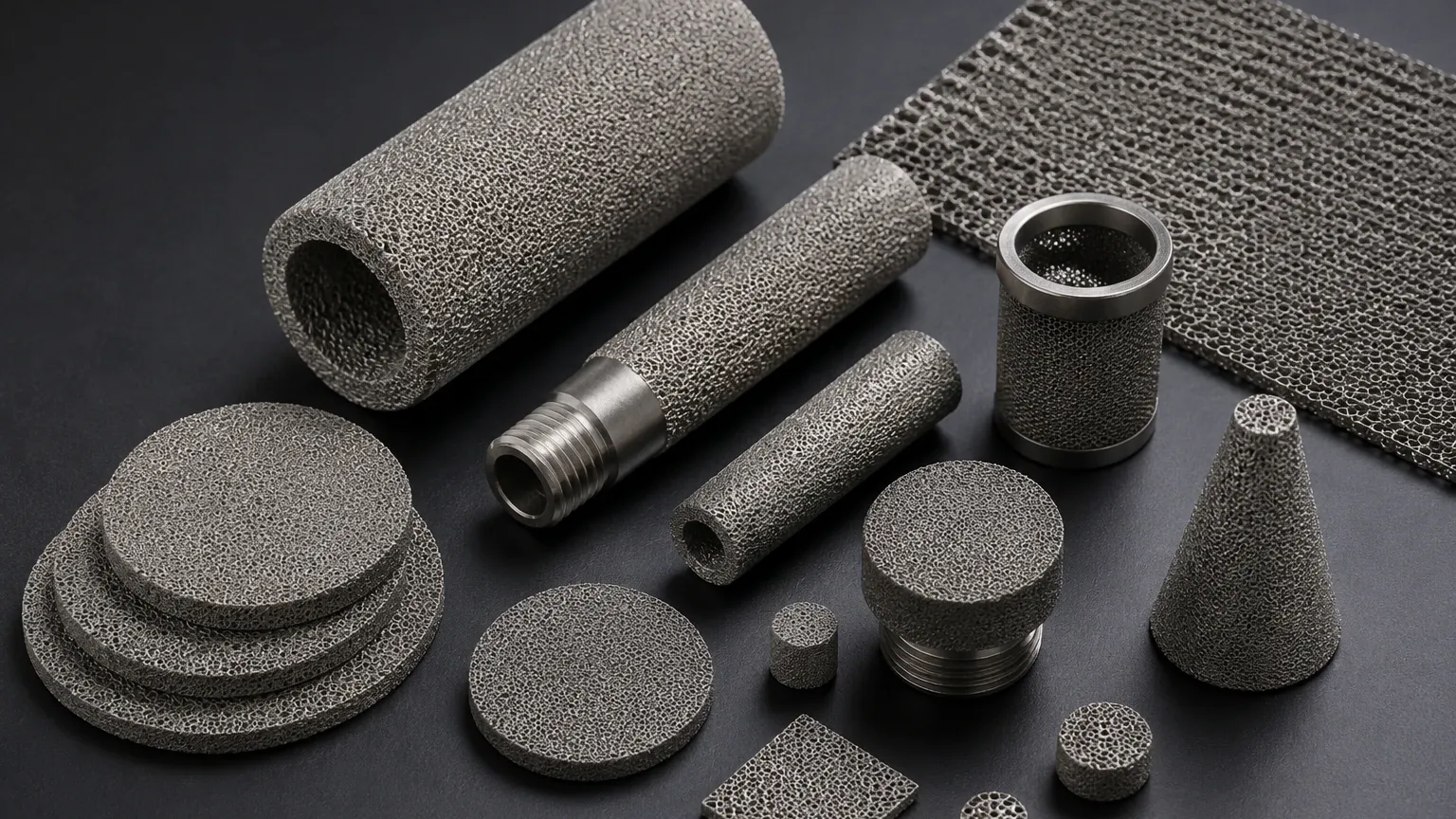
Because the manufacturing process involves molds and powder metallurgy, there is a high degree of flexibility. Filters can be customized in terms of shape (tubes, discs, cones, plates), micron ratings (from 0.1 to 200 microns), and alloy selection to match the specific chemical and thermal demands of the end-user's facility.
In conclusion, the production of sintered metal filters is a highly controlled engineering process that transforms raw metal powders or meshes into high-performance filtration media. By mastering the variables of compaction, temperature, and atmospheric control, manufacturers like Kaifil produce components that provide reliable, long-term service in the world’s most demanding industrial environments. For those looking to optimize their filtration systems, understanding these manufacturing nuances is the first step toward selecting a solution that balances performance, durability, and cost-effectiveness.
