


Mott Sintered Metal Filters
In the landscape of industrial filtration, the requirement for precision, durability, and thermal stability often leads engineers to specify sintered metal media. Within this specialized field, Mott sintered metal filters have long been recognized as a benchmark for high-performance porous metal technology. For technical professionals and procurement teams in the chemical processing, pharmaceutical, and energy sectors, understanding the engineering principles behind these components is essential for optimizing system performance and ensuring long-term reliability.
Sintered metal filtration is not merely about removing particulates; it is about managing fluid dynamics under extreme conditions. Whether the application involves high-pressure gas filtration or the recovery of expensive catalysts from aggressive chemical streams, the choice of filter media dictates the efficiency of the entire process. This article examines the technical specifications, selection criteria, and operational considerations associated with Sintered Metal Filters, providing a comprehensive resource for industrial decision-makers.
The Engineering Principles of Sintered Metal Media
Sintering is a metallurgical process where metal powders, fibers, or meshes are heated to a temperature below their melting point. This causes the particles to bond at their contact points through a process of atomic diffusion, creating a rigid, porous structure. The result is a filter medium that possesses the mechanical strength of solid metal while maintaining a highly controlled network of interconnecting pores.
When evaluating mott sintered metal filters or similar high-precision components, engineers focus on three primary structural characteristics:
1. Pore Size Distribution: Unlike depth filters made of polymer fibers, sintered metal offers a very tight pore size distribution. This ensures a sharp "cut-off" point, meaning the filter effectively blocks particles above a specific micron rating with high consistency.
2. Porosity and Permeability: Porosity refers to the percentage of void space within the filter, while permeability measures how easily a fluid can pass through that space. High-quality sintered filters balance these two factors to provide low initial pressure drop (ΔP) without sacrificing structural integrity.
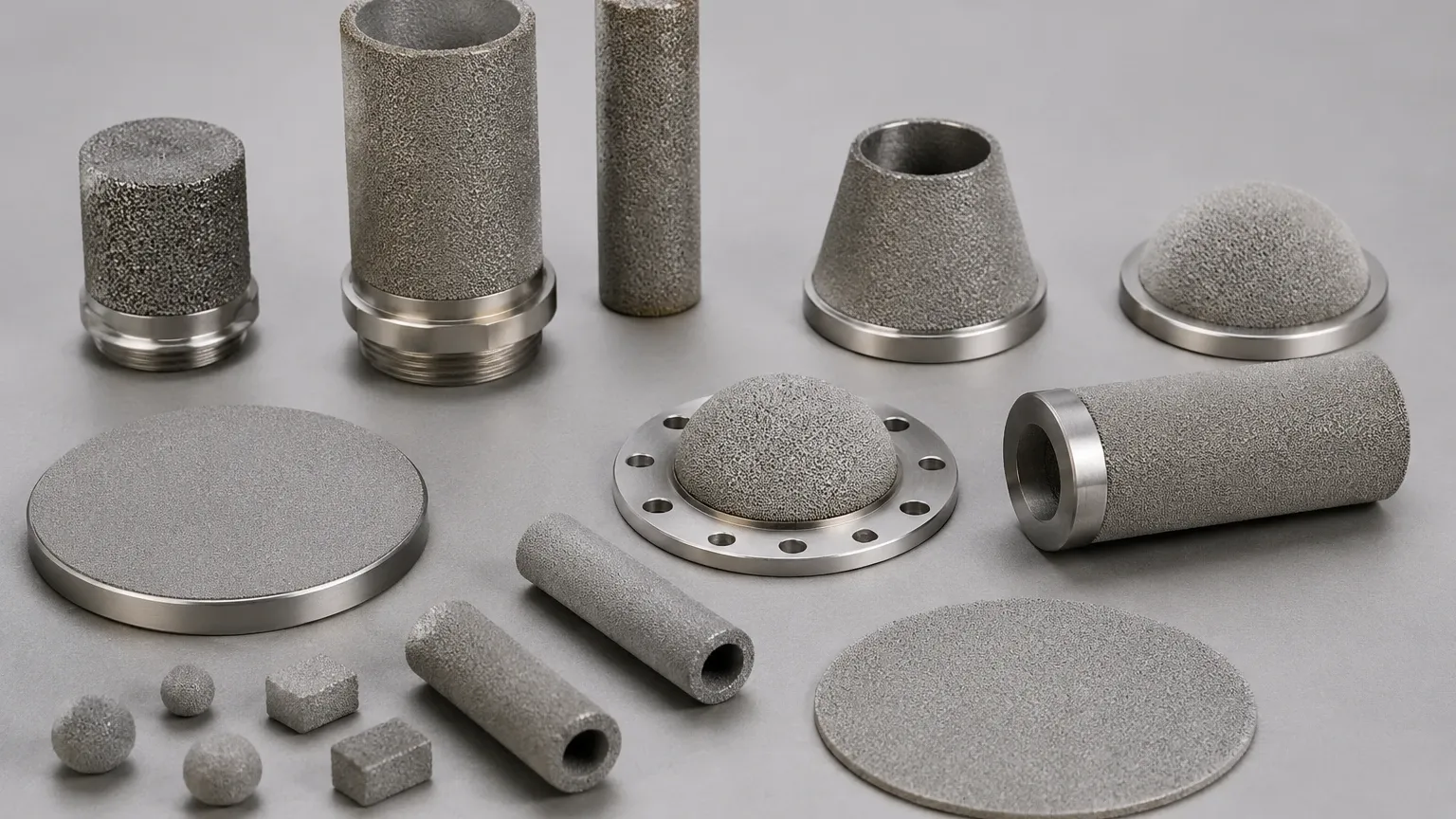
3. Mechanical Geometry: Sintered media can be fabricated into various forms, including seamless tubes, flat discs, and complex pleated cartridges. This versatility allows for the integration of filtration stages into existing piping architectures without extensive redesign.
Material Selection and Chemical Compatibility
The performance of a sintered filter is intrinsically linked to its metallurgy. While 316L stainless steel is the industry standard due to its balance of corrosion resistance and cost-effectiveness, demanding applications may require specialized alloys.
* 316L Stainless Steel: Offers excellent resistance to oxidation and a wide range of organic and inorganic chemicals. It is the preferred choice for food and beverage and pharmaceutical applications where sanitary standards are paramount.
* Hastelloy (C-276, C-22): Used in highly corrosive environments involving strong acids, such as sulfuric or hydrochloric acid, where standard stainless steels would suffer from pitting or stress corrosion cracking.
* Inconel and Monel: These alloys are selected for high-temperature applications or environments involving brackish water and hydrofluoric acid.
For engineers specifying mott sintered metal filters, verifying the material grade against the specific chemical composition of the process fluid is the first step in preventing premature failure. Factors such as pH levels, the presence of chlorides, and operating temperatures must be cross-referenced with metallurgical data sheets to ensure compatibility.
Evaluating Performance: Micron Ratings and Efficiency
One of the most critical aspects of selecting sintered metal filters is understanding the difference between absolute and nominal micron ratings. In industrial filtration, an "absolute" rating implies that 99.9% of particles at that size will be retained by the filter. Sintered metal media are typically rated for absolute filtration, making them ideal for critical applications where downstream contamination is not an option.
Flow Rate and Pressure Drop
The relationship between flow rate and pressure drop is governed by Darcy’s Law. In practical terms, as the pore size decreases, the resistance to flow increases. Engineers must calculate the required surface area to maintain the desired flow rate while keeping the initial pressure drop within the system's operational limits.
If the pressure drop is too high from the outset, the filter will reach its terminal pressure (the point at which it must be cleaned or replaced) much faster, leading to increased maintenance costs and potential downtime. Utilizing pleated sintered metal designs can significantly increase the effective filtration area within the same footprint, thereby reducing the flux (flow per unit area) and extending the service life.
Customization and OEM Integration
While standard sizes are available, many industrial systems require customized filtration solutions to meet specific spatial or functional requirements. Manufacturers like Kaifil specialize in developing custom sintered metal components that match the technical rigor associated with mott sintered metal filters but are tailored to unique OEM specifications.
Customization options often include:
* End Fittings: Integration of NPT threads, BSP, flanges, or sanitary Tri-Clamp fittings to ensure leak-proof connections.
* Reinforcement Structures: In high-pressure hydraulic or gas systems, sintered tubes may be reinforced with internal cores or external cages to prevent collapse or bursting under extreme differential pressures.
* Hybrid Media: Combining different layers of sintered mesh and powder to create a multi-stage filtration effect within a single component, optimizing both dirt-holding capacity and fine particle retention.
Cleaning Protocols and Maintenance Cycles
A primary advantage of sintered metal filters over disposable alternatives is their cleanability. Because the media is rigid and thermally stable, it can withstand aggressive cleaning cycles that would destroy polymer-based filters. This capability significantly reduces the Total Cost of Ownership (TCO) over the life of the equipment.
Common cleaning methods include:
1. Backpulsing/Backwashing: Using a reverse flow of clean gas or liquid to dislodge accumulated cake from the surface of the filter. This is often performed in-situ without Disassembling the system.
2. Ultrasonic Cleaning: Submerging the filter in an ultrasonic bath where high-frequency sound waves create cavitation bubbles. These bubbles implode on the surface and within the pores, removing deeply embedded particulates.
3. Chemical Cleaning: Utilizing solvents, caustic soaks, or acid baths to dissolve organic or inorganic foulants. This is particularly effective in chemical processing where "sticky" residues may accumulate.
4. Thermal Burn-off: In applications involving polymers or carbonaceous materials, filters can be heated in a controlled atmosphere to oxidize and remove contaminants.
Determining the replacement cycle requires monitoring the "clean" pressure drop after each cleaning cycle. When the pressure drop no longer returns to an acceptable baseline, the filter has reached the end of its functional life due to permanent pore plugging or structural fatigue.
Application Focus: High-Stakes Industrial Environments
Sintered metal filtration is utilized where failure is not an option. In the Pharmaceutical Industry, these filters are used for steam filtration (SIP – Sterilization in Place) and the removal of carbon or catalysts from active pharmaceutical ingredients (APIs). The ability to withstand repeated sterilization cycles without shedding fibers is a critical requirement.
In Chemical Processing, sintered metal filters protect downstream equipment like high-speed pumps and sensitive instrumentation from corrosive particulates. They are also used in gas-solid separation in fluidized bed reactors, where temperatures can exceed 500°C.
Hydraulic and Aerospace applications leverage the high strength-to-weight ratio of sintered components. These filters must operate reliably under massive pressure spikes and vibrations, ensuring that hydraulic fluids remain free of microscopic debris that could cause valve sticking or component wear.
Selecting the Right Partner for Sintered Solutions
When engineers search for mott sintered metal filters, they are looking for a guarantee of quality and performance. However, the selection process should also consider the manufacturer's ability to provide technical support, material traceability, and customization.
Key questions to ask a supplier before procurement include:
* Can you provide a bubble point test report to verify the absolute micron rating?
* What is the maximum allowable differential pressure for this specific geometry?
* Are the materials sourced with full mill test certificates (MTC) to ensure metallurgical integrity?
* What is the recommended cleaning procedure for the specific contaminants in my process?
By focusing on these technical boundaries, procurement teams can ensure they are investing in a filtration solution that balances initial capital expenditure with long-term operational efficiency. Sintered metal filters represent a significant investment, but their durability and precision make them an indispensable component in modern industrial engineering.
For more information on technical specifications and custom design options, engineers can Review product options and application support to find the optimal configuration for their specific filtration challenges.
