


Sintered Metal Filter Cartridges
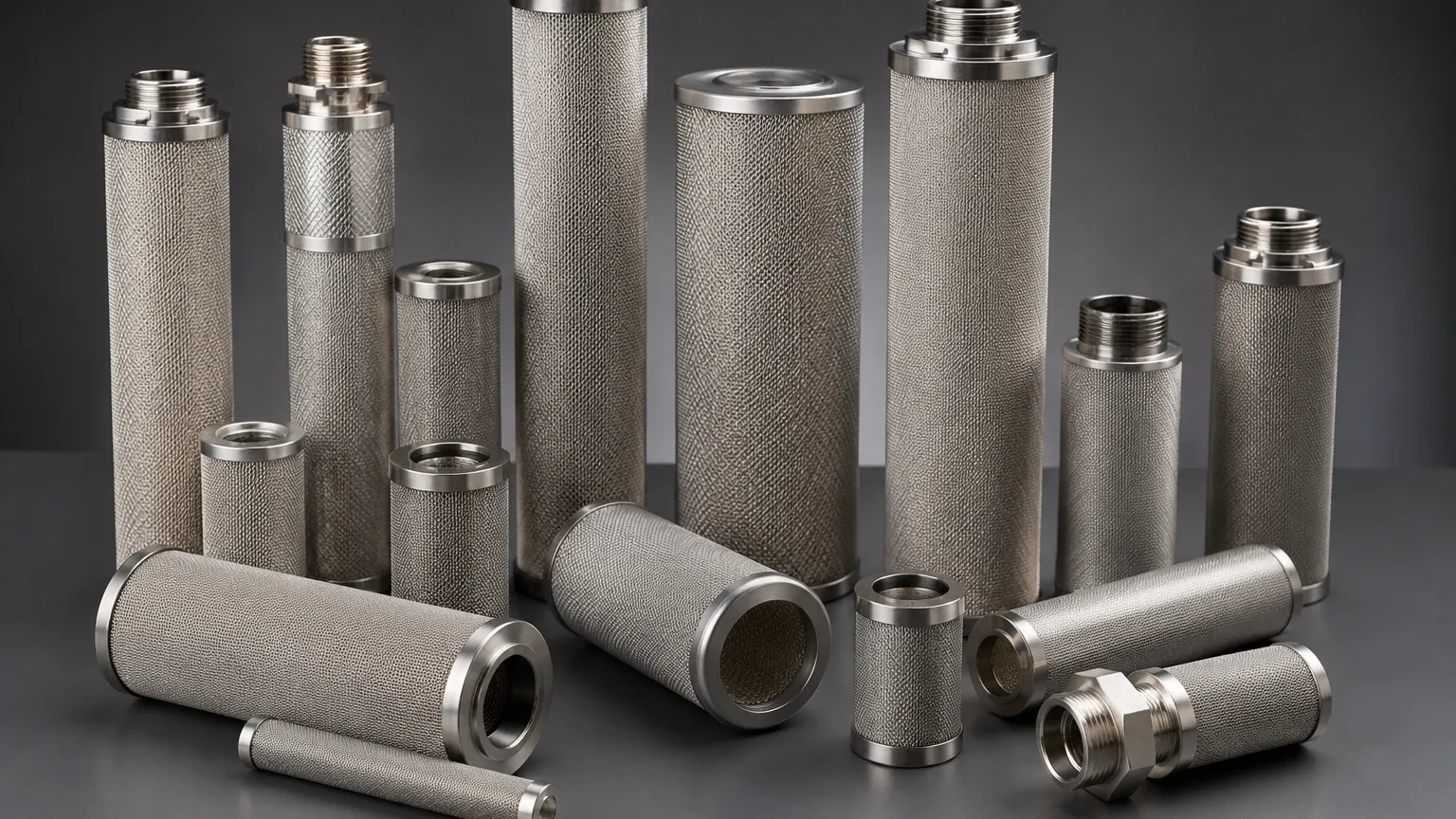
In the landscape of industrial filtration, sintered metal technology represents a specialized engineering solution designed to withstand conditions that would cause conventional polymer or paper-based media to fail. Sintered metal filter cartridges are porous metal components manufactured through a thermal process known as sintering, which bonds metal particles, fibers, or wire mesh together without melting them. This creates a rigid, self-supporting structure with precise pore sizes and high mechanical integrity.
For engineers and procurement professionals in the chemical, pharmaceutical, and food processing sectors, understanding the technical nuances of these components is essential for optimizing process efficiency and ensuring the longevity of filtration systems. This guide explores the manufacturing, performance characteristics, and selection criteria for Sintered Metal Filters in demanding industrial environments.
The Sintering Process and Material Science
Sintering is a solid-state diffusion process. When metal media—whether in the form of spherical powder, fine fibers, or woven mesh—is subjected to high temperatures (below the melting point) in a controlled atmosphere furnace, the contact points between the individual metal elements fuse. This molecular bonding creates a permanent structure that maintains its shape even under extreme pressure and temperature fluctuations.
Material Selection
The choice of alloy is the first critical decision in the engineering of sintered metal filter cartridges. While various metals can be sintered, stainless steel is the industry standard due to its balance of cost, availability, and performance.
* 316L Stainless Steel: The most common material for sintered filters. The "L" denotes low carbon content, which minimizes carbide precipitation during welding and sintering, thereby enhancing corrosion resistance, particularly in acidic or marine environments.
* 304 Stainless Steel: Suitable for less aggressive environments, offering good mechanical strength and oxidation resistance at a lower price point than 316L.
* Nickel-Based Alloys (Inconel, Hastelloy): Utilized for extreme chemical compatibility requirements or temperatures exceeding the limits of stainless steel (up to 800°C or higher in some configurations).
* Titanium: Preferred for its high strength-to-weight ratio and exceptional resistance to seawater and chlorine-based chemicals.
Types of Sintered Media Configurations
Sintered metal filter cartridges are categorized by the type of media used in their construction. Each configuration offers distinct advantages in terms of flow rate, dirt-holding capacity, and cleanability.
1. Sintered Metal Powder Filters
These are produced by compacting and sintering metal powders. The resulting structure is characterized by a "tortuous path" filtration mechanism. As fluid passes through the interconnected pores, contaminants are trapped throughout the depth of the media. Powder-sintered cartridges offer high filtration precision, with micron ratings available as low as 0.1 μm.
2. Sintered Metal Fiber (Felt)
Sintered fiber felt is made from non-woven stainless steel fibers that are laid down in a random web and سپس sintered. This media is known for its exceptionally high porosity (up to 80%). The high void volume results in a significantly lower initial pressure drop and a higher dirt-holding capacity compared to powder-sintered media, making it ideal for high-viscosity fluids or high-flow applications.
3. Sintered Wire Mesh
This involves sintering multiple layers of woven wire mesh together. The layers are typically arranged to provide a combination of mechanical support and filtration accuracy. For example, a five-layer sintered mesh might include a fine filtration layer protected by coarser drainage and support layers. This configuration provides a very precise, uniform pore size and is the easiest to clean via backwashing.
Key Engineering Performance Characteristics
When evaluating sintered metal filter cartridges for a specific application, several performance metrics must be considered to ensure the component meets the operational requirements of the system.
Mechanical Strength and Pressure Resistance
Unlike pleated paper or melt-blown cartridges, sintered metal filters are inherently rigid. They can withstand high differential pressures (ΔP) without collapsing or bypassing. In many industrial designs, these cartridges are rated for differential pressures exceeding 20 bar (290 psi). This strength allows for filtration in high-pressure hydraulic systems and facilitates aggressive cleaning cycles.
Thermal Stability
Sintered metal cartridges maintain their structural integrity at temperatures that would melt or degrade synthetic filters. Standard stainless steel cartridges can operate continuously at temperatures up to 450°C (842°F) in oxidizing atmospheres and even higher in reducing or inert environments. This makes them indispensable for steam filtration, hot gas filtration, and high-temperature polymer processing.
Corrosion and Chemical Compatibility
The use of high-grade alloys ensures that the filter does not react with the process fluid. This is critical in the pharmaceutical and food industries where material leaching could contaminate the product. Sintered metal is also resistant to a wide range of solvents, caustic cleaning agents, and acids.
Industrial Applications of Sintered Metal Filters
The versatility of sintered metal filter cartridges allows them to be deployed across diverse sectors where reliability is non-negotiable.
Chemical and Petrochemical Processing
In these industries, filters are used to recover catalysts, clarify aggressive solvents, and protect downstream equipment from particulate wear. The ability to clean and reuse the cartridges is a significant economic advantage when dealing with hazardous materials that would make the disposal of single-use filters expensive and logistically difficult.
Food and Beverage Production
Sintered metal filters are frequently used for "culinary steam" applications, where they remove pipe scale and rust from steam used in direct contact with food products. They are also employed in the filtration of edible oils, syrups, and carbonated beverages, where they must meet stringent hygiene standards and withstand Clean-in-Place (CIP) procedures.
Pharmaceutical Manufacturing
Precision is paramount in pharma. Sintered metal cartridges provide absolute filtration for sterile air, vent gases, and liquid ingredients. Their smooth surface finish and lack of fiber shedding ensure that no media migration occurs, maintaining the purity of the final drug product.
Power Generation and Hydraulics
In hydraulic systems, sintered metal filters protect sensitive valves and actuators from metallic wear particles. In power plants, they are used for condensate polishing and the filtration of boiler feed water, where high temperatures and pressures are standard.
Technical Selection Criteria for Engineers
To select the correct sintered metal filter cartridge, engineers should confirm several variables with the manufacturer to ensure the component is fit for purpose.
1. Micron Rating (Absolute vs. Nominal): It is vital to distinguish between these two. An absolute rating indicates the pore size at which 99.9% of particles are retained, whereas a nominal rating is an average. For critical applications, absolute-rated Sintered Metal Filters are typically required.
2. Flow Rate and Viscosity: The fluid's viscosity directly impacts the pressure drop across the filter. High-viscosity fluids require larger surface areas or higher porosity media (like sintered fiber felt) to maintain acceptable flow rates.
3. Contaminant Loading: The nature and concentration of the solids being removed will dictate the cleaning frequency. If the solids are "slimy" or deformable, a depth-style powder filter might blind more quickly than a surface-style mesh filter.
4. End Cap Configuration: Cartridges must interface correctly with the filter housing. Common configurations include Double Open End (DOE), Code 7 (226 O-ring with locking tabs), and NPT or BSP threaded connections for high-pressure seals.
Cleaning and Maintenance Protocols
One of the primary value propositions of sintered metal filter cartridges is their cleanability. Unlike disposable filters, these components represent a capital investment that can be restored to near-original performance through various cleaning methods.
* Backpulsing/Backwashing: This involves reversing the flow of fluid or gas through the filter to dislodge accumulated cake from the surface. It is often automated within the filtration system.
* Ultrasonic Cleaning: The cartridge is submerged in a cleaning solvent and subjected to high-frequency sound waves. This creates cavitation bubbles that penetrate deep into the pores to remove fine particulates.
* Chemical Cleaning: Depending on the contaminant, the filter may be soaked in caustic solutions, acids, or specialized solvents to dissolve organic or inorganic deposits.
* Thermal Cleaning (Burn-off): For organic contaminants like polymers, the filter can be heated in a controlled oven to carbonize and remove the material, followed by ultrasonic cleaning to remove the ash.
Customization and OEM Considerations
Industrial filtration requirements are rarely one-size-fits-all. Manufacturers like Kaifil specialize in providing customized sintered metal solutions that integrate seamlessly into existing equipment or new designs. Customization options often include:
* Bespoke Dimensions: Non-standard lengths and diameters to fit proprietary housings.
* Reinforced Structures: Adding internal cores or external cages for applications involving extreme pressure surges or mechanical vibration.
* Integrated Fittings: Welding specific flanges or threaded connectors directly to the filter body to eliminate leak points.
When working with an OEM partner, engineers should provide a complete process data sheet, including minimum and maximum operating temperatures, chemical composition of the fluid, and target cleaning cycles. This allows the manufacturer to optimize the pore structure and material selection for the lowest total cost of ownership.
Total Cost of Ownership (TCO)
While the initial purchase price of a sintered metal filter cartridge is higher than that of a disposable polymer filter, the TCO is often lower in industrial settings. The longevity of metal media—often lasting years rather than weeks—reduces the frequency of procurement cycles, lowers labor costs associated with filter changes, and eliminates the waste disposal costs of contaminated disposable elements. Furthermore, the high efficiency and low pressure drop of optimized sintered designs can lead to significant energy savings in pumping and compression systems over the life of the installation.
In summary, sintered metal filter cartridges provide a robust, high-performance solution for challenging industrial filtration tasks. By leveraging the mechanical strength of stainless steel and the precision of the sintering process, these components ensure process continuity, product purity, and long-term operational economy.
