


Sintered Metal Filter Cleaning
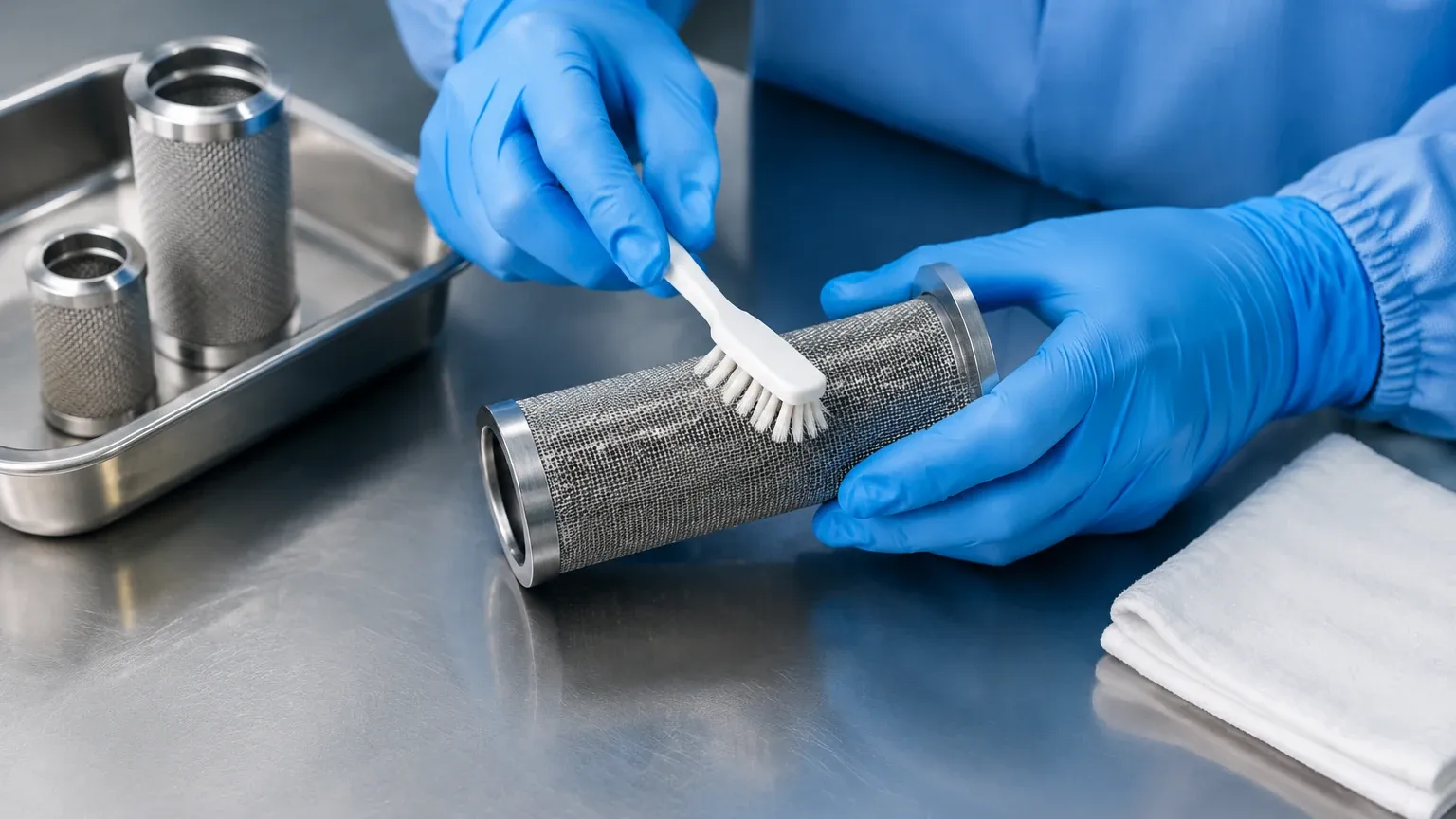
In industrial filtration, the longevity and reliability of filtration media directly impact operational costs and process consistency. Sintered metal filters are widely recognized for their mechanical strength, thermal stability, and precise filtration ratings. Unlike disposable polymer or paper filters, these metallic components are designed for reuse. However, the effectiveness of a reuse strategy depends entirely on the implementation of a rigorous and technically sound sintered metal filter cleaning protocol.
Understanding the engineering principles behind cleaning these porous structures is essential for maintaining the integrity of the filtration system. When executed correctly, cleaning restores the differential pressure of the filter to near-original levels, extending the service life of the component and reducing the total cost of ownership. This guide examines the technical considerations, methods, and verification processes required for effective filter regeneration.
The Engineering of Sintered Metal Filters
To understand why specific cleaning methods are required, one must first consider the structural nature of the media. Sintered Metal Filters are produced by bonding metal powders or multi-layered wire meshes through a thermal process called sintering. This process occurs at temperatures just below the melting point of the metal, causing the particles to fuse at their contact points.
The result is a rigid, porous structure with a "tortuous path"—a complex network of interconnected pores. While this structure provides exceptional filtration efficiency and depth-loading capacity, it also means that contaminants can become deeply embedded within the matrix. Effective sintered metal filter cleaning must therefore address both surface-level cake buildup and internal pore blockages without compromising the metallurgical integrity of the filter.
Indicators for Cleaning and Regeneration
In a B2B industrial environment, the decision to initiate a cleaning cycle is usually driven by process data rather than visual inspection. Engineers typically monitor several key performance indicators (KPIs):
1. Differential Pressure (ΔP): This is the most critical metric. As contaminants accumulate, the resistance to flow increases. Once the differential pressure reaches a predetermined terminal limit—often specified by the system designer to prevent structural bypass or pump strain—the filter must be cleaned.
2. Flow Rate Decay: In constant-pressure systems, a drop in the effluent flow rate indicates that the effective filtration area is being reduced by particulate loading.
3. Process Cycle Time: In batch operations, if the time required to filter a specific volume of fluid increases significantly, it indicates a loss of permeability in the filter media.
4. Downstream Contamination: While rare with sintered media unless a breach occurs, any shift in filtrate quality may suggest that the filter is operating in a "bridge-break" mode where captured particles are being forced through the media due to excessive pressure.
Common Sintered Metal Filter Cleaning Methods
The choice of cleaning method depends on the nature of the contaminant (organic vs. inorganic), the filter material (e.g., 316L stainless steel, Hastelloy, or Monel), and the required level of cleanliness. Industrial facilities often employ a combination of the following techniques.
Ultrasonic Cleaning
Ultrasonic cleaning is perhaps the most effective method for removing fine particulates from deep within the porous matrix. This process utilizes high-frequency sound waves (typically 20 kHz to 40 kHz) to create cavitation bubbles in a cleaning solvent. When these bubbles implode near the surface and inside the pores of the filter, they generate high-energy micro-jets that dislodge contaminants.
For successful ultrasonic sintered metal filter cleaning, the filter must be submerged in a solution that is chemically compatible with both the metal and the contaminant. The orientation of the filter in the ultrasonic bath is also crucial to ensure that the sound waves penetrate all areas of the media.
Chemical Cleaning and Solvent Circulation
Chemical cleaning involves the use of acids, alkalis, or specialized surfactants to dissolve or break down contaminants.
* Caustic Soaking: Often used for organic materials, fats, and oils. Sodium hydroxide solutions are common for breaking down carbonaceous deposits.
* Acid Pickling/Cleaning: Used to remove mineral scales, metal oxides, or inorganic salts. Nitric acid is frequently used for stainless steel filters because it also aids in the passivation of the metal surface.
* Solvent Flushing: For polymers or resins, specific organic solvents may be circulated through the filter to liquefy the buildup.
It is imperative that the chemical agent does not react negatively with the filter alloy. For instance, high concentrations of chlorides should be avoided with 300-series stainless steels to prevent stress corrosion cracking.
Thermal Cleaning (Pyrolysis)
In applications involving heavy polymers, resins, or carbonized organic matter, thermal cleaning may be necessary. The filter is placed in a controlled-atmosphere furnace (often a vacuum or fluidized bed furnace) and heated to temperatures that cause the organic contaminants to decompose or burn off.
Engineers must strictly control the temperature during this process. Exceeding the recommended temperature can lead to grain growth in the metal, reducing its mechanical strength, or cause unwanted phase transformations that decrease corrosion resistance.
Backwashing and Backpulsing
This is an in-situ cleaning method where the flow of the process fluid (or a dedicated cleaning fluid) is reversed. Backpulsing involves a rapid, high-pressure burst of gas or liquid to dislodge the filter cake. While effective for surface-loading applications, backwashing is often less effective for depth-loading filters where particles are wedged deep in the tortuous path. It is frequently used as a preliminary step before more intensive off-line cleaning.
Selecting the Right Cleaning Agent and Process
A systematic approach to sintered metal filter cleaning requires a thorough analysis of the "soil" or contaminant.
* Inorganic Contaminants: If the blockage consists of calcium carbonate or iron oxide, an inhibited acid solution is typically the first choice.
* Organic Contaminants: For biological growth or food-grade oils, alkaline cleaners combined with oxidizing agents (like hydrogen peroxide) are effective.
* Polymer Residues: These often require thermal degradation followed by ultrasonic cleaning to remove the residual ash.
Engineers should also consider the sequence of cleaning. For example, a common industrial SOP (Standard Operating Procedure) involves an initial solvent rinse, followed by ultrasonic treatment in a detergent solution, and a final high-purity water flush.
Risks and Engineering Considerations in Filter Recovery
While sintered metal filters are robust, they are not indestructible. Improper cleaning can lead to several failure modes:
1. Media Erosion: Repeated high-pressure backpulsing or aggressive ultrasonic cycles can eventually wear down the sintered bonds, leading to pore enlargement and a loss of filtration efficiency.
2. Chemical Attack: Using the wrong concentration of acid or failing to neutralize the filter after cleaning can lead to pitting or intergranular corrosion.
3. Incomplete Cleaning: If residues remain in the center of the filter wall, they can act as a nucleus for faster clogging in the next cycle, leading to progressively shorter service intervals.
4. Cross-Contamination: In industries like pharmaceuticals or specialty chemicals, the cleaning process itself must be validated to ensure no cleaning agents or previous batch residues remain on the filter.
Verification and Testing Post-Cleaning
Once the sintered metal filter cleaning process is complete, the filter must be verified before being returned to service. A visual inspection is insufficient for porous media. Professional filtration services and internal maintenance departments use the following tests:
Bubble Point Test
The bubble point test is a non-destructive method used to determine the maximum pore size of the filter. The filter is submerged in a liquid of known surface tension, and air pressure is gradually applied to the inside. The pressure at which the first continuous stream of bubbles appears (the bubble point) is inversely proportional to the pore size. If the bubble point is lower than the manufacturer’s specification, it indicates that the pores have been enlarged or the media has been breached.
Pressure Drop Testing
By passing a clean fluid (usually air or water) through the filter at a specific flow rate and measuring the pressure drop, engineers can compare the cleaned filter’s performance against the "clean" baseline of a new filter. A successful cleaning should return the pressure drop to within 5-10% of the original factory specification.
Weight Verification
In some heavy-duty applications, weighing the filter before and after cleaning can provide a rough estimate of the volume of contaminant removed. While not a definitive measure of pore cleanliness, it serves as a useful secondary check.
Total Cost of Ownership and Replacement Strategy
Although sintered metal filters can be cleaned many times, they have a finite lifespan. Eventually, the accumulation of non-removable "permanent" fouling or the cumulative effects of mechanical stress will necessitate replacement.
From a B2B procurement perspective, the total cost of ownership (TCO) includes the initial purchase price, the cost of cleaning (chemicals, energy, labor), and the cost of downtime. If the interval between cleanings becomes too short, or if the risk of process contamination due to media fatigue becomes too high, the economic balance shifts in favor of replacement.
Kaifil provides technical support to help engineers determine the optimal cleaning cycles and replacement schedules for their specific applications. By selecting high-quality Sintered Metal Filters and implementing a disciplined cleaning regimen, industrial facilities can achieve significant long-term savings and process stability.
Conclusion
Sintered metal filter cleaning is a critical maintenance function that requires a balance of chemical knowledge, metallurgical understanding, and mechanical precision. By moving beyond simple rinsing and adopting advanced techniques like ultrasonic cavitation and controlled thermal degradation, engineers can maximize the utility of their filtration assets. Rigorous post-cleaning verification ensures that the restored filter meets the original design specifications, protecting downstream equipment and maintaining product quality. In the demanding world of industrial processing, the ability to effectively regenerate filtration media is not just a cost-saving measure—it is a cornerstone of operational excellence.
