


0493 Series Raw Water Strainers
In industrial and marine fluid handling, the protection of downstream equipment from particulate matter is a critical engineering priority. Raw water—whether sourced from rivers, lakes, or oceans—contains a variety of debris, including sand, biological growth, and suspended solids, that can cause catastrophic failure in pumps, heat exchangers, and cooling systems. The 0493 series raw water strainers have established themselves as a standard for high-reliability filtration in these demanding environments. For engineers and procurement specialists, understanding the technical nuances of these components is essential for maintaining system uptime and optimizing the total cost of ownership.
Understanding the Role of 0493 Series Raw Water Strainers in Industrial Systems
The primary function of a raw water strainer is to act as a mechanical barrier, capturing solids before they enter sensitive machinery. The 0493 series is specifically designed for suction-side applications where low pressure drop and ease of maintenance are paramount. Unlike high-pressure hydraulic filters, raw water strainers must handle high volumes of fluid with varying levels of contamination without significantly impeding flow.
In industrial contexts, these strainers are frequently utilized in cooling water loops, fire suppression systems, and HVAC installations. The design typically features a robust housing with a removable internal basket. The efficiency of the system relies heavily on the quality and configuration of these Strainers & Baskets, which must be selected based on the specific particle size distribution of the source water and the tolerance of the downstream components.
Technical Specifications and Design Architecture
The 0493 series is characterized by its vertical flow path and high-capacity basket design. Several engineering factors define the performance of these units:
Material Composition
Housings for the 0493 series are commonly cast from bronze or specialized stainless steel alloys. Bronze is often preferred in marine environments due to its natural resistance to biofouling and corrosion in salt water. However, for industrial chemical processing or high-purity water applications, 316L stainless steel is the standard. The choice of material impacts not only the initial cost but also the longevity of the unit under galvanic stress.
Flow Rate and Pipe Sizing
These strainers are available in a range of port sizes, typically from 1/2 inch to 2-1/2 inches NPT or BSPP. Selecting the correct size involves calculating the maximum flow rate (GPM or m³/h) and ensuring the velocity through the strainer does not exceed recommended limits, which could lead to excessive turbulence or cavitation at the pump inlet.
Filtration Surface Area
One of the defining features of the 0493 series is the ratio of the basket's open area to the pipe's cross-sectional area. A high ratio—often 6:1 or greater—ensures that the strainer can accumulate a significant amount of debris before a pressure drop is observed. This extends the service interval and protects the pump from starving.
Engineering Considerations for Strainers & Baskets
When specifying 0493 series raw water strainers, the internal basket is the most critical component. It is the primary wear part and the element that determines filtration accuracy. Engineers must evaluate several factors regarding the basket construction:
1. Mesh vs. Perforation: For coarse filtration (removing large weeds, plastic, or stones), a perforated metal basket with 1/8" or 1/16" holes may suffice. For finer protection, a stainless steel wire mesh liner is bonded to the perforated basket. This allows for filtration down to 50 microns or less, depending on the application requirements.
2. Structural Integrity: Under high-flow conditions or when the basket is heavily loaded with debris, the differential pressure can cause a standard basket to collapse. Custom-engineered baskets from manufacturers like Kaifil utilize reinforced frames and heavy-duty mesh to withstand these stresses without bypassing.
3. Corrosion Resistance: Even if the housing is bronze, the basket is almost always stainless steel. In high-salinity environments, 316 stainless steel is the minimum requirement, while Monel or Duplex alloys may be specified for extreme conditions to prevent pitting and crevice corrosion.
Evaluating Performance and Pressure Drop
Every filtration component introduces a degree of resistance into the system. For 0493 series raw water strainers, the clean pressure drop is usually negligible, often less than 0.5 PSI at rated flow. However, as the basket fills, the pressure drop increases exponentially.
Engineers should utilize pressure gauges on both the inlet and outlet sides of the strainer to monitor this differential. A sudden increase in pressure drop indicates that the basket requires cleaning. If the pressure drop is ignored, the resulting vacuum on the suction side can lead to pump cavitation, which causes rapid erosion of the impeller and mechanical seals.
Installation and Maintenance Best Practices
Proper installation is vital for the functional longevity of 0493 series raw water strainers. The following guidelines should be observed by technical teams:
* Orientation: The strainer must be installed vertically with the bowl facing downward. This allows gravity to assist in settling debris into the basket and prevents air pockets from forming in the housing.
* Accessibility: Because these units require manual cleaning, they must be located in an area where the top cap or bowl can be easily removed. Space must be allocated for the withdrawal of the basket.
* Seal Integrity: The 0493 series typically uses a gasket or O-ring to seal the cap. During every maintenance cycle, these seals should be inspected for compression set or chemical degradation. Using the correct elastomer (Buna-N for general water, Viton for higher temperatures or chemical exposure) is essential to prevent air leaks into the suction line.
* Cleaning Procedures: Baskets should be cleaned with a soft brush or low-pressure water jet. High-pressure washing can damage fine wire mesh, leading to a loss of filtration accuracy.
Customization and OEM Solutions
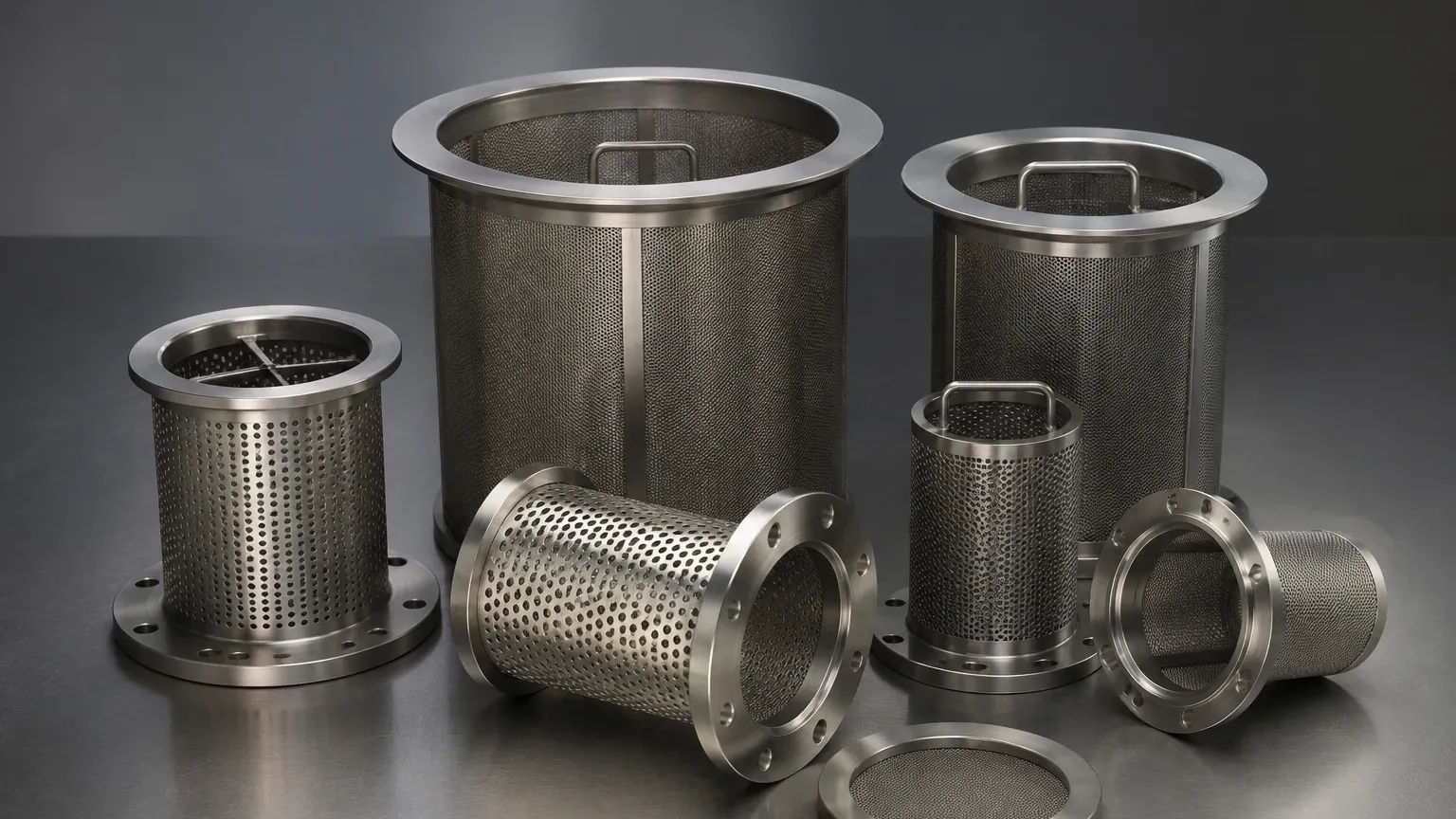
In many industrial scenarios, a standard off-the-shelf 0493 series strainer may not meet the specific demands of a unique process. This is where customization becomes a value-add for engineering teams. Manufacturers like Kaifil specialize in providing tailored Strainers & Baskets that fit standard 0493 housings but offer enhanced performance characteristics.
Customization options include:
* Variable Mesh Sizes: Adjusting the micron rating to capture specific contaminants found in a local water source.
* Magnetic Inserts: Adding magnetic rods to the center of the basket to capture fine ferrous particles that might pass through standard mesh.
* Reinforced Support: Adding internal ribs or heavier gauge perforated metal to the basket to handle higher differential pressures in high-viscosity or high-velocity applications.
* Specialty Coatings: Applying epoxy or other protective coatings to the housing for increased chemical resistance.
Common Risks and Mitigation Strategies
Failure to correctly specify or maintain 0493 series raw water strainers can lead to several operational risks:
* Bypass Leakage: If the basket does not seat perfectly within the housing, raw water can bypass the filter media. This is often caused by using low-quality aftermarket baskets that do not meet the original equipment's tolerances. Ensuring a precision fit is critical.
* Air Ingress: Because these strainers are on the suction side, any leak in the cap seal will draw air into the system rather than leaking water out. This can cause pumps to lose prime. Regular inspection of the casting for pinholes or cracks is necessary, especially in older installations.
* Galvanic Corrosion: When dissimilar metals (like a stainless steel basket in a bronze housing) are immersed in an electrolyte (raw water), galvanic corrosion can occur. The use of sacrificial anodes or ensuring compatible alloy selection can mitigate this risk.
Procurement Checklist: What Engineers Should Confirm
Before purchasing or replacing 0493 series raw water strainers, the following technical data points should be verified:
1. Maximum System Flow Rate: Ensure the strainer's CV value supports the required flow without exceeding a 2 PSI pressure drop when 50% clogged.
2. Source Water Analysis: Determine the type of debris present. Is it organic (algae), abrasive (sand), or chemical? This dictates the mesh material and micron rating.
3. Connection Type: Confirm NPT, BSPP, or flanged connections to match existing piping.
4. Temperature and Pressure Limits: Verify that the housing and seal materials are rated for the maximum operating temperature and pressure of the system.
5. Replacement Part Availability: Ensure that high-quality replacement baskets and seals are readily available to minimize downtime during maintenance.
Conclusion
The 0493 series raw water strainers are a fundamental component in the protection of industrial fluid systems. By focusing on high-quality construction, appropriate material selection, and precise basket engineering, facilities can significantly reduce maintenance costs and prevent equipment failure. Whether utilizing standard configurations or seeking customized OEM solutions for specific filtration challenges, the integration of robust Strainers & Baskets remains a cornerstone of efficient raw water management. For technical professionals, the priority should always be on verified performance metrics and structural reliability to ensure the long-term integrity of the process loop.
