


Strainer 6
In industrial fluid handling, the selection of filtration components is a critical engineering decision that impacts the longevity of downstream equipment, such as pumps, heat exchangers, and flow meters. A "strainer 6," typically referring to a 6-inch (DN150) nominal pipe size strainer, serves as a primary defense mechanism in large-scale piping systems. These components are designed to remove coarse particles from liquids or gases, ensuring that debris does not compromise the structural integrity or operational efficiency of the system.
As a specialized manufacturer of stainless steel filtration solutions, Kaifil provides high-performance Strainers & Baskets engineered to meet the rigorous demands of chemical processing, water treatment, and food production. Understanding the technical specifications, material requirements, and performance variables of a 6-inch strainer is essential for engineers and procurement professionals tasked with optimizing industrial processes.
Understanding the Role of 6-Inch Strainers in Industrial Piping
The 6-inch strainer is a staple in medium-to-heavy industrial applications where flow rates are substantial. At this size, the volume of fluid being processed requires a robust housing and a high-capacity basket to prevent frequent clogging and excessive pressure drops.
Typically, a strainer 6 is installed in suction lines to protect pumps from cavitation caused by large debris or in discharge lines to ensure the purity of the final product. Unlike fine filters, which may target sub-micron particles, these strainers focus on "macro-filtration," capturing solids ranging from several millimeters down to approximately 40 microns, depending on the mesh lining utilized within the basket.
Engineering Specifications for a Strainer 6
When specifying a 6-inch strainer, engineers must look beyond the pipe diameter. Several technical factors determine the suitability of a specific unit for an application:
1. Housing Configuration
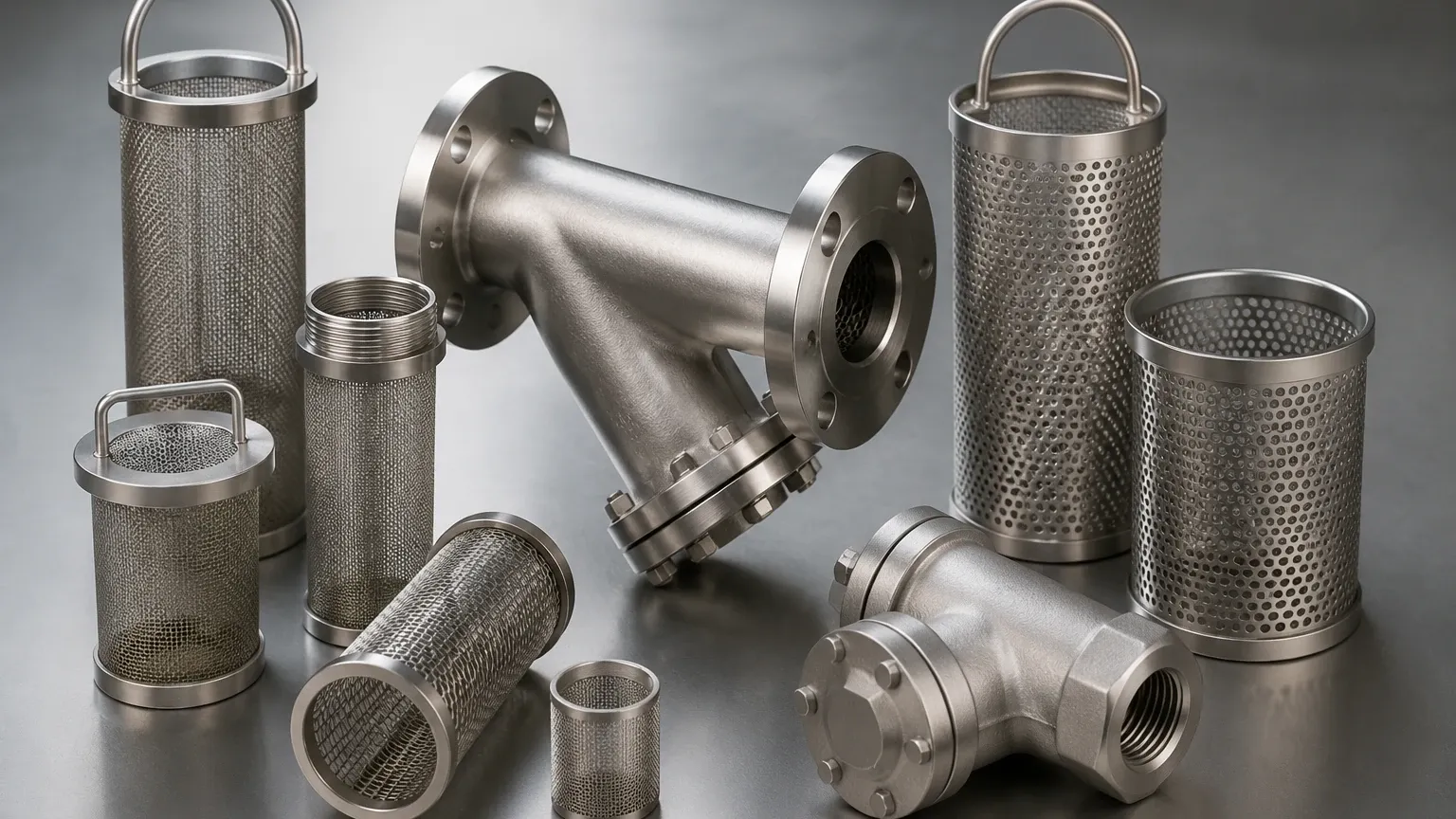
The most common configurations for a strainer 6 include Y-strainers and Basket (T-type) strainers.
- Y-Strainers: These are often preferred for high-pressure steam or gas lines where the amount of debris is relatively low. Their compact design allows for installation in both horizontal and vertical pipelines.
- Basket Strainers: For 6-inch lines carrying liquids with higher solids loading, basket strainers are the industry standard. They offer a larger surface area for filtration and a greater dirt-holding capacity, which translates to longer intervals between cleaning cycles.
2. Pressure Ratings
A strainer 6 must be rated to handle the maximum operating pressure of the system. Common standards include ANSI Class 150, 300, and 600. For stainless steel housings, these ratings ensure that the unit can withstand pressure surges and thermal expansion without risking a catastrophic failure or leakage at the flange connections.
3. Connection Types
While 6-inch strainers are almost exclusively flanged (RF or RTJ) to ensure a secure, leak-proof seal in high-flow environments, some custom applications may require butt-weld ends for permanent installations. Flanged connections allow for easier removal of the entire housing during major system overhauls.
Material Selection and Chemical Compatibility
Material science plays a pivotal role in the performance of a strainer 6. Because these components are often exposed to corrosive fluids, high temperatures, or abrasive slurries, the choice of alloy is paramount. Kaifil specializes in stainless steel constructions, which offer superior durability compared to cast iron or carbon steel alternatives.
* Grade 304 Stainless Steel: This is the standard choice for general-purpose applications, including water treatment and food processing. It provides excellent corrosion resistance and structural strength at a cost-effective price point.
* Grade 316L Stainless Steel: For more aggressive environments, such as chemical processing or marine applications, 316L is preferred. The addition of molybdenum enhances resistance to pitting and crevice corrosion, particularly in chloride-rich environments.
* Specialty Alloys: In extreme cases involving highly acidic or alkaline fluids, strainers may be fabricated from Hastelloy, Monel, or Duplex stainless steel to ensure a reliable service life.
Beyond the housing, the internal basket material must be compatible with the fluid. A mismatch in materials can lead to galvanic corrosion, where the basket degrades faster than the housing, eventually allowing bypass of unfiltered fluid.
Performance Metrics: Flow Rate and Pressure Drop
One of the most critical aspects of integrating a strainer 6 into a system is calculating the pressure drop (ΔP). Every filtration element introduces resistance to the flow. If the pressure drop is too high, it can lead to reduced flow rates, increased energy consumption by pumps, and potential damage to the internal basket.
The Cv Factor
The flow coefficient (Cv) represents the volume of water at 60°F that will flow through the strainer with a pressure drop of 1 psi. For a 6-inch basket strainer, the Cv value is significantly higher than that of a 2-inch or 4-inch unit, reflecting its ability to handle larger volumes. Engineers must ensure that the clean pressure drop does not exceed 2 psi in most liquid applications.
Mesh vs. Perforation
The internal basket of a strainer 6 usually consists of a heavy-duty perforated plate that provides structural support, lined with a fine wire mesh for precision filtration.
- Perforation: Common hole sizes range from 1/8" to 1/2". This acts as the primary barrier for large debris.
- Mesh Lining: To achieve finer filtration, a stainless steel wire mesh is welded to the interior of the basket. The mesh count determines the micron rating. For example, a 100-mesh screen will stop particles larger than 149 microns.
Customization Options for Strainers & Baskets
Standard off-the-shelf strainers often fail to meet the unique requirements of specialized industrial processes. Customization is where manufacturers like Kaifil provide significant value. When ordering a strainer 6, several elements can be tailored to the application:
* Ratio of Open Area: To minimize pressure drop and extend cleaning intervals, the "open area ratio" (the ratio of the total area of the holes in the basket to the cross-sectional area of the inlet pipe) should ideally be 6:1 or higher.
* Reinforced Baskets: In high-viscosity applications or systems prone to pressure spikes, baskets can be reinforced with external cages or internal bracing to prevent collapsing.
* Magnetic Inserts: For systems where fine iron or steel particles (sharf) are a concern, magnetic rods can be installed inside the basket to capture metallic debris that might otherwise pass through the mesh.
* Differential Pressure Taps: Adding NPT ports for pressure gauges allows operators to monitor the pressure drop across the strainer in real-time, providing a clear indicator of when the basket needs cleaning.
Maintenance and Replacement Cycles
The total cost of ownership for a strainer 6 is heavily influenced by its maintenance requirements. A well-designed strainer should allow for rapid servicing to minimize system downtime.
Cleaning Procedures
In a simplex basket strainer, the system must be shut down and depressurized before the cover can be removed. For 6-inch units, the cover can be heavy, so many designs incorporate a "swing bolt" or "quick-opening" mechanism rather than a standard bolted flange to facilitate faster access. Once the cover is removed, the basket is lifted out, cleaned (usually via back-washing or ultrasonic cleaning), and replaced.
When to Replace the Basket
While the housing of a stainless steel strainer 6 can last for decades, the internal baskets are considered wear parts. Signs that a basket requires replacement include:
- Permanent Deformation: If the basket has buckled due to high differential pressure.
- Mesh Separation: If the wire mesh has detached from the perforated backing.
- Corrosion Pitting: Even in stainless steel, localized corrosion can eventually create holes larger than the intended micron rating, leading to bypass.
Key Considerations Before Purchasing a Strainer 6
Before finalizing a purchase or design specification, engineers should confirm the following data points to ensure the selected strainer 6 is fit for purpose:
1. Fluid Properties: What is the viscosity, temperature, and chemical composition of the fluid? High-viscosity fluids require larger baskets and coarser mesh to maintain flow.
2. Contaminant Load: Is the debris constant or slug-loading? For high-debris environments, a duplex strainer (which allows for cleaning without stopping the flow) may be more appropriate than a simplex strainer 6.
3. Filtration Goal: What is the smallest particle that must be removed to protect downstream equipment? Over-filtering (selecting a mesh that is too fine) leads to excessive maintenance and pressure loss.
4. Installation Space: Does the site have enough clearance to remove the basket? A 6-inch basket is substantial in size and requires significant vertical or horizontal clearance for extraction.
By addressing these factors during the design phase, technical professionals can ensure that their Strainers & Baskets provide reliable, long-term protection for their industrial infrastructure. Kaifil’s expertise in custom metal filtration ensures that every strainer 6 is manufactured to precise tolerances, providing the durability and accuracy required in demanding industrial environments.
