


1 Basket Sink Strainer
In industrial and commercial environments, the management of wastewater and the protection of downstream plumbing systems are critical operational concerns. A 1 basket sink strainer serves as the primary line of defense against solid debris that could otherwise cause blockages, damage pumps, or contaminate water treatment processes. Unlike residential components, industrial-grade strainers must meet rigorous standards for durability, chemical resistance, and filtration precision. Choosing the correct strainer requires a deep understanding of material properties, flow dynamics, and the specific requirements of the application environment.
Industrial filtration specialist Kaifil provides a range of Strainers & Baskets designed to withstand the demanding conditions of chemical processing, food and beverage production, and pharmaceutical manufacturing. This guide explores the technical considerations essential for engineers and procurement professionals when selecting and implementing basket-style filtration solutions.
Understanding the Role of 1 Basket Sink Strainer in Industrial Systems
The fundamental purpose of a 1 basket sink strainer is to separate solids from liquid flow at the point of drainage. In a commercial or industrial setting, this is not merely about preventing a clogged pipe; it is about protecting the integrity of the entire facility’s fluid handling system. For example, in a food processing plant, organic solids must be captured before they enter the grease traps or the municipal sewer system to ensure compliance with environmental regulations and to reduce maintenance costs.
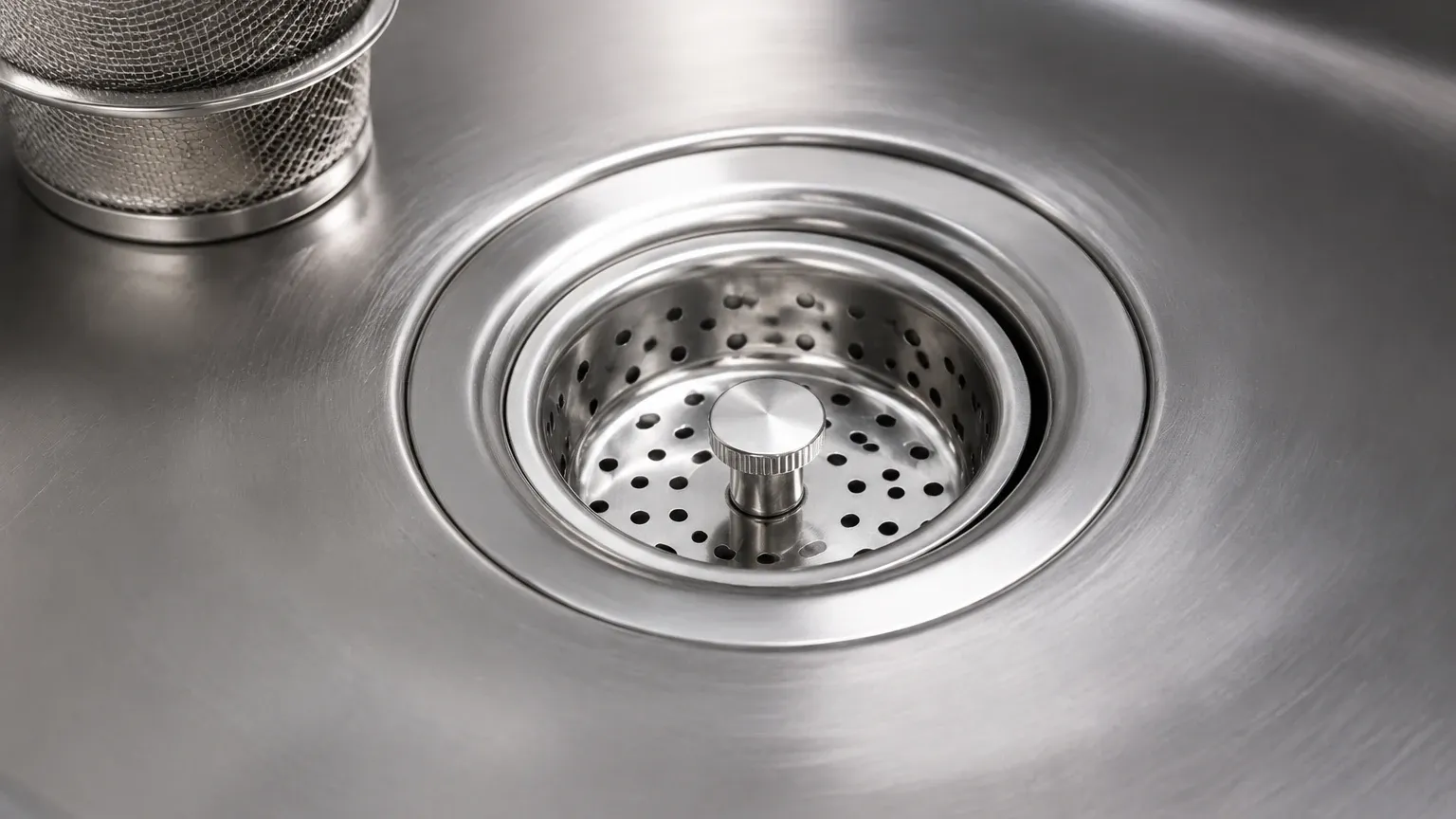
An industrial 1 basket sink strainer typically consists of a housing body, a removable basket, and a sealing mechanism. The "1 basket" configuration refers to a single-stage filtration unit where the basket acts as the primary collection vessel. The design allows for high flow rates while maintaining a significant holding capacity for captured debris. Because these components are often subjected to high temperatures, caustic cleaning agents, and abrasive materials, their construction must be significantly more robust than standard hardware-store varieties.
Material Science: Why Stainless Steel is the Standard
Material selection is the most critical factor in determining the lifespan and performance of a sink strainer. In industrial contexts, stainless steel is the preferred material due to its exceptional corrosion resistance and mechanical strength. Kaifil utilizes high-grade stainless steel alloys to ensure that their filtration components can handle diverse chemical profiles.
SS304 vs. SS316
* SS304 (Standard Industrial Grade): This alloy is suitable for most general-purpose industrial applications. It offers excellent resistance to oxidation and is highly durable. It is commonly used in commercial kitchens and light industrial wash stations where exposure to highly corrosive chemicals is limited.
* SS316 (Marine and Chemical Grade): For environments involving high salinity, chlorides, or acidic cleaning solutions—typical in pharmaceutical and chemical processing—SS316 is the necessary choice. The addition of molybdenum enhances its resistance to pitting and crevice corrosion, ensuring the 1 basket sink strainer does not degrade prematurely under harsh conditions.
Beyond the metal itself, the seals and gaskets used in the strainer assembly must be compatible with the fluids being processed. Common materials include EPDM for general water applications, Viton for high-temperature or chemical-heavy environments, and PTFE for maximum chemical inertness.
Technical Specifications: Mesh, Perforation, and Filtration Efficiency
The performance of a 1 basket sink strainer is defined by its filtration media. Engineers must balance the need for fine filtration with the requirement for high flow rates. The basket can be constructed using perforated metal, woven wire mesh, or a combination of both.
Perforated Metal Baskets
Perforated baskets are typically used for coarse filtration where the goal is to capture large debris like food scraps, plastic fragments, or metal shavings. The hole size and "open area" percentage are the key metrics here. A higher open area reduces the pressure drop across the strainer but may compromise the structural integrity of the basket if the material is too thin.
Woven Wire Mesh Liners
For applications requiring the removal of finer particulates, a woven wire mesh liner is often added to the interior of the perforated basket. This provides the necessary filtration fineness while the perforated outer shell provides the mechanical support to withstand the weight of the captured solids and the pressure of the fluid flow. Common mesh counts range from 20 mesh (coarse) to 400 mesh (very fine), depending on the specific industrial requirement.
Evaluating Flow Dynamics and Pressure Drop
A common mistake in specifying a 1 basket sink strainer is failing to account for the pressure drop (ΔP). As fluid passes through the strainer, the resistance provided by the mesh or perforations causes a decrease in pressure. If the pressure drop is too high, it can lead to slow drainage, backups, and increased stress on the plumbing system.
Several factors influence the pressure drop:
1. Viscosity of the Fluid: Thicker fluids require larger openings or more surface area to maintain flow.
2. Percentage of Open Area: This is the ratio of the total area of the holes to the total area of the basket. A higher open area generally results in a lower pressure drop.
3. Debris Loading: As the basket fills with solids, the effective open area decreases, and the pressure drop increases. Industrial systems often incorporate pressure gauges or sensors to alert operators when a basket needs cleaning.
Engineers should aim for a design where the clean pressure drop does not exceed 2 psi, allowing for a margin of error as the basket accumulates debris during an operational shift.
Installation and Maintenance for Long-Term Reliability
Proper installation is essential to prevent leaks and ensure the 1 basket sink strainer functions as intended. In industrial sinks, the strainer is often connected to heavy-duty piping. It is vital to ensure that the flange of the strainer is perfectly seated against the sink surface with appropriate sealant or gaskets to prevent bypass leakage, which could allow unfiltered water to enter the drain line.
Maintenance cycles for industrial strainers are dictated by the volume of solids in the waste stream. In high-load environments, such as vegetable processing or metal fabrication wash stations, the basket may need to be emptied several times per shift.
Key Maintenance Steps:
* Visual Inspection: Regularly check for signs of corrosion or mechanical deformation in the basket.
* Cleaning: Use appropriate cleaning agents that do not react with the stainless steel. For fine mesh baskets, ultrasonic cleaning may be required to remove deeply embedded particles.
* Seal Replacement: Gaskets and O-rings are wear items. They should be inspected for cracks or loss of elasticity and replaced during scheduled downtime to prevent leaks.
Customization and OEM Solutions for Specialized Applications
Many industrial applications have unique constraints that cannot be met by off-the-shelf products. This is where the expertise of a manufacturer like Kaifil becomes invaluable. Customization options for a 1 basket sink strainer include:
* Dimensional Adjustments: Modifying the depth or diameter of the basket to fit specific sink configurations or to increase holding capacity.
* Handle Designs: Incorporating specialized handles (e.g., locking handles or extended reach handles) to make it easier for operators to remove the basket while wearing protective equipment.
* Reinforced Structures: Adding support ribs or thicker gauge metal for applications involving heavy debris or high-pressure wash-downs.
* Multi-Stage Filtration: Designing baskets with multiple layers of different mesh sizes to capture a range of particle sizes in a single pass.
By working closely with an OEM partner, engineers can ensure that the filtration component is perfectly matched to the operational requirements, reducing the risk of system failure and optimizing the total cost of ownership.
Total Cost of Ownership (TCO) Considerations
When purchasing a 1 basket sink strainer for an industrial facility, the initial purchase price is only one component of the Total Cost of Ownership. A low-cost, low-quality strainer can lead to significantly higher costs over time due to:
* Frequent Replacements: Cheap materials corrode or warp, requiring the purchase of new units.
* Labor Costs: Difficult-to-clean designs increase the time maintenance staff must spend on each unit.
* Downstream Damage: If a strainer fails and allows debris through, the cost of repairing a damaged pump or clearing a main sewer line can be thousands of dollars.
* Operational Downtime: Any time a sink is out of commission due to a drainage failure, it impacts the productivity of the entire line.
Investing in high-quality Strainers & Baskets from a reputable manufacturer ensures that these hidden costs are minimized, providing a more stable and predictable operational budget.
Conclusion
The 1 basket sink strainer is a vital component in the industrial fluid management ecosystem. While it may appear to be a simple piece of hardware, its design and material composition have profound implications for the efficiency, safety, and longevity of industrial plumbing and processing systems. By focusing on high-grade materials like SS316, precisely calculated filtration specs, and robust construction, facilities can ensure their drainage systems remain clear and their downstream equipment remains protected. For specialized needs, partnering with a manufacturer capable of providing custom engineering and OEM support is the most effective way to achieve optimized filtration performance.
