


18 0 Strainer
In the landscape of industrial filtration, material selection is the most critical factor determining the longevity and efficiency of a system. While 300-series stainless steels like 304 and 316 are the most recognized alloys in filtration, specific industrial requirements often lead engineers to evaluate alternatives such as the 18 0 strainer. Understanding the technical nuances of 18/0 stainless steel—technically known as AISI 430—is essential for procurement teams and engineers who must balance corrosion resistance, magnetic properties, and cost-effectiveness in their Strainers & Baskets applications.
Technical Profile of 18/0 Stainless Steel in Filtration
The designation "18/0" refers to the alloy's composition: approximately 18% chromium and 0% nickel. This composition places it within the ferritic class of stainless steels. Unlike the austenitic 300-series, which contains nickel to stabilize the austenite grain structure, 18/0 relies solely on chromium for its corrosion resistance.
Corrosion Resistance and Chemical Compatibility
From a technical standpoint, the absence of nickel makes an 18 0 strainer less resistant to chemical attack than its 304 or 316 counterparts. However, it provides excellent resistance to atmospheric corrosion and mild acids. In industrial environments where the fluid medium is non-corrosive or where the strainer is used for mechanical separation of dry particulates, 18/0 offers a stable and durable solution. It is particularly resistant to nitric acid and many organic acids, making it a viable choice for specific chemical processing stages where nickel contamination must be avoided.
Magnetic Properties
One of the most significant engineering distinctions of the 18 0 strainer is its ferromagnetism. Because it lacks nickel, the crystal structure is ferritic, meaning it is naturally magnetic. In many industrial filtration processes, this is a functional advantage. Magnetic strainers can assist in capturing fine ferrous particles that might otherwise pass through the physical mesh openings, providing a secondary layer of protection for downstream equipment like pumps and valves.
Thermal Conductivity and Expansion
Ferritic stainless steels generally have better thermal conductivity and a lower coefficient of thermal expansion than austenitic steels. For high-temperature filtration applications where thermal cycling is frequent, an 18 0 strainer may exhibit better dimensional stability, reducing the risk of fatigue in the mesh-to-frame welds or the housing interface.
Engineering Applications for Strainers & Baskets
Industrial Strainers & Baskets are designed to remove large solids from liquid or gas streams. The choice of an 18 0 configuration is typically driven by specific environmental or process constraints.
Food and Beverage Processing
In the food industry, 18/0 stainless steel is frequently used for flatware and certain processing components. When used in straining baskets, it provides a hygienic surface that is easy to clean and sanitize. Since it is nickel-free, it is often preferred in applications where nickel sensitivity is a concern or where the specific food chemistry does not require the higher pitting resistance of 316L.
Magnetic Separation Systems
In manufacturing lines where machinery wear might introduce small iron or steel fragments into the product stream, an 18 0 strainer acts as a compatible component within magnetic trap systems. Its magnetic nature allows it to work in tandem with rare-earth magnets to ensure that even sub-micron ferrous debris is localized and removed during maintenance cycles.
Cost-Sensitive Industrial Utilities
For utility water systems, cooling towers, and non-potable water filtration where the budget is a primary constraint and the water chemistry is well-monitored (low chloride levels), the 18 0 strainer provides a professional-grade alternative to carbon steel or plastic. It offers the structural integrity of steel without the high cost associated with nickel-rich alloys.
Design Considerations for Custom Strainers
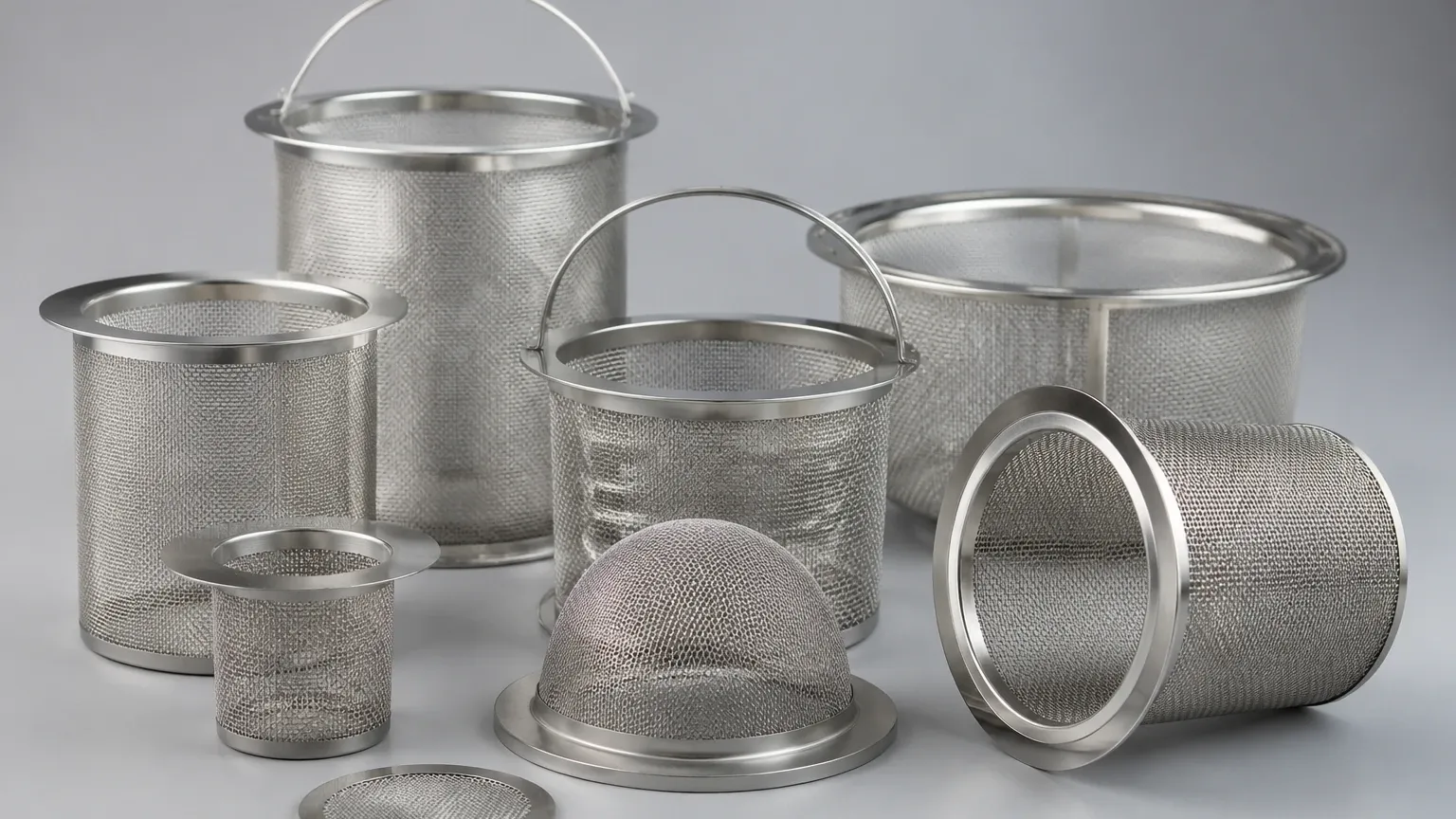
When specifying an 18 0 strainer, engineers must look beyond the material and focus on the structural design of the basket or strainer element. Kaifil specializes in custom-engineered solutions that ensure these components meet the rigorous demands of industrial flow rates.
Perforation and Mesh Selection
The core of any strainer is the media. For 18/0 baskets, this often involves a perforated metal support structure lined with a finer wire mesh. The open area ratio must be calculated to minimize pressure drop (Delta P) while maintaining the required filtration accuracy. A common mistake in procurement is over-specifying the filtration fineness, which leads to frequent clogging and increased maintenance costs.
Reinforcement and Structural Integrity
Industrial strainers are subject to significant hydraulic forces, especially during start-up or when the basket begins to load with debris. Custom Strainers & Baskets should feature reinforced seams, heavy-duty bails (handles), and precision-machined flanges to ensure a bypass-free seal within the strainer housing.
Surface Treatments
To enhance the performance of an 18 0 strainer, various surface treatments can be applied. Passivation is critical for 430-series stainless steel to remove surface iron and strengthen the protective chromium oxide layer. Electropolishing can also be utilized to create a mirror-like finish, which significantly improves the ease of cleaning and reduces the adhesion of biological or chemical films.
Comparing 18/0 (430) with 18/8 (304) and 18/10 (316)
Selecting the right alloy requires a direct comparison of performance metrics. The following table outlines the key differences relevant to strainer applications:
| Feature | 18/0 (AISI 430) | 18/8 (AISI 304) | 18/10/2 (AISI 316) |
| :— | :— | :— | :— |
| Nickel Content | 0% | 8-10% | 10-14% |
| Magnetism | Strongly Magnetic | Non-Magnetic (Usually) | Non-Magnetic |
| Corrosion Resistance | Moderate | High | Excellent (Pitting Resistant) |
| Workability | Good | Excellent | Excellent |
| Typical Use Case | Mild environments, Magnetic capture | General industrial, Food | Chemical, Marine, Pharma |
For most heavy-duty chemical processing, 316 is the standard. However, for dry filtration, indoor utilities, and magnetic-assisted separation, the 18 0 strainer is a technically sound and economically superior choice.
Maintenance and Life Cycle Management
The total cost of ownership for industrial filtration components is determined by their durability and the ease of maintenance. An 18 0 strainer requires specific care to reach its maximum service life.
1. Regular Inspection for Pitting: In environments with chlorides (such as brackish water or salt-heavy food processing), 18/0 is susceptible to pitting. Regular visual inspections are necessary to identify localized corrosion before it compromises the mesh integrity.
2. Cleaning Protocols: Use non-abrasive cleaning agents. Avoid bleach or chlorine-based sanitizers, as these can rapidly degrade the chromium oxide layer on 400-series steels.
3. Magnetic Cleaning: If the strainer is being used for its magnetic properties to assist in particle capture, the cleaning cycle must include a step to demagnetize or mechanically strip the captured ferrous fines from the basket surface.
Custom OEM Solutions from Kaifil
As a professional manufacturer of stainless steel filtration solutions, Kaifil provides comprehensive OEM services for custom Strainers & Baskets. Our engineering team works closely with global clients to determine if an 18 0 strainer is the optimal choice for their specific application or if a higher-alloyed material is required for long-term reliability.
Our manufacturing capabilities include:
* Precision CNC Perforating: Creating support baskets with optimized open areas.
* Advanced Wire Mesh Weaving: Providing filtration accuracies from coarse scales down to micron levels.
* Custom Geometric Designs: Fabricating conical, hat-style, pleated, or multi-layered baskets to fit any existing housing.
* Rigorous Quality Control: Every strainer undergoes dimensional inspection and material verification to ensure it meets the specified industrial standards.
Conclusion: Making an Informed Decision
The 18 0 strainer is a specialized tool in the industrial filtration toolkit. While it does not possess the universal corrosion resistance of 316 stainless steel, its unique magnetic properties, thermal stability, and cost profile make it the ideal solution for specific niches in food processing, magnetic separation, and mild industrial utilities.
When choosing between different grades of Strainers & Baskets, engineers should prioritize the chemical composition of the process fluid and the mechanical requirements of the system. By partnering with a manufacturer like Kaifil, you gain access to technical expertise that ensures your filtration components are engineered for maximum performance and durability. Whether you require a standard 18/0 basket or a highly customized multi-stage filter cartridge, focusing on material science and precision manufacturing is the key to optimizing your industrial process.
