


2 Inch Strainers
In industrial fluid handling systems, 2 inch strainers serve as critical protection components designed to remove unwanted solids from liquid or gas streams. While seemingly a standard size, the selection of a 2-inch filtration unit requires a deep understanding of fluid dynamics, material compatibility, and the specific mechanical requirements of the piping system. For engineers and procurement teams, choosing the right Strainers & Baskets involves more than just matching pipe diameters; it necessitates an evaluation of pressure drop, filtration surface area, and the nature of the contaminants being managed.
Kaifil specializes in manufacturing high-performance stainless steel filtration solutions, providing the technical expertise required to integrate 2 inch strainers into demanding industrial environments. This guide examines the engineering considerations, design variations, and selection criteria essential for optimizing the performance of 2-inch filtration systems.
The Engineering Role of 2 Inch Strainers
A 2-inch pipe size is a common standard in chemical processing, food and beverage production, and hydraulic systems. Within these lines, strainers act as the first line of defense for sensitive downstream equipment such as centrifugal pumps, flow meters, heat exchangers, and control valves. Even small amounts of particulate matter—such as pipe scale, weld beads, or organic debris—can cause catastrophic mechanical failure or significant erosion over time.
The primary function of 2 inch strainers is to provide a coarse filtration stage (typically ranging from 40 microns up to several millimeters) that prevents large particles from passing through while maintaining a manageable pressure drop. Because the 2-inch line often carries significant flow volumes, the internal geometry of the strainer must be engineered to minimize turbulence and maximize the effective filtration area (EFA).
Material Selection: Stainless Steel vs. Alternatives
For industrial applications, the choice of material is the most significant factor in determining the service life and reliability of a strainer. While cast iron or plastic may be suitable for low-pressure water utility lines, industrial processes involving chemicals, high temperatures, or sanitary requirements demand stainless steel.
Stainless Steel 304
This is the most common material for general industrial use. It offers excellent strength and good corrosion resistance for water, oils, and mild chemicals. In many 2-inch piping systems, SS304 provides a cost-effective balance between durability and performance.
Stainless Steel 316/316L
For environments involving chlorides, acids, or high-salinity fluids, SS316 is the preferred choice. The addition of molybdenum enhances its resistance to pitting and crevice corrosion. In the pharmaceutical and food industries, 316L (low carbon) is often specified to ensure sanitary compliance and prevent carbide precipitation during welding.
Gasket and Seal Compatibility
The housing material is only part of the equation. Engineers must also confirm that the gaskets or O-rings used in the strainer—typically EPDM, Viton (FKM), or PTFE—are compatible with the process fluid and the operating temperature range.
Design Variations: Y-Strainers vs. Basket Strainers
When specifying 2 inch strainers, the two most common configurations are the Y-pattern and the Basket (Simplex) pattern. Each has distinct advantages based on the installation orientation and the expected solids loading.
Y-Strainers
Y-strainers are characterized by their compact, cylindrical shape and are often used in high-pressure applications or where space is limited.
* Orientation: They can be installed horizontally or vertically (downward flow).
* Capacity: They generally have a smaller dirt-holding capacity compared to basket designs.
* Best Use: Ideal for steam, gas, or liquid lines with low concentrations of solids where frequent cleaning is not required.
Basket Strainers
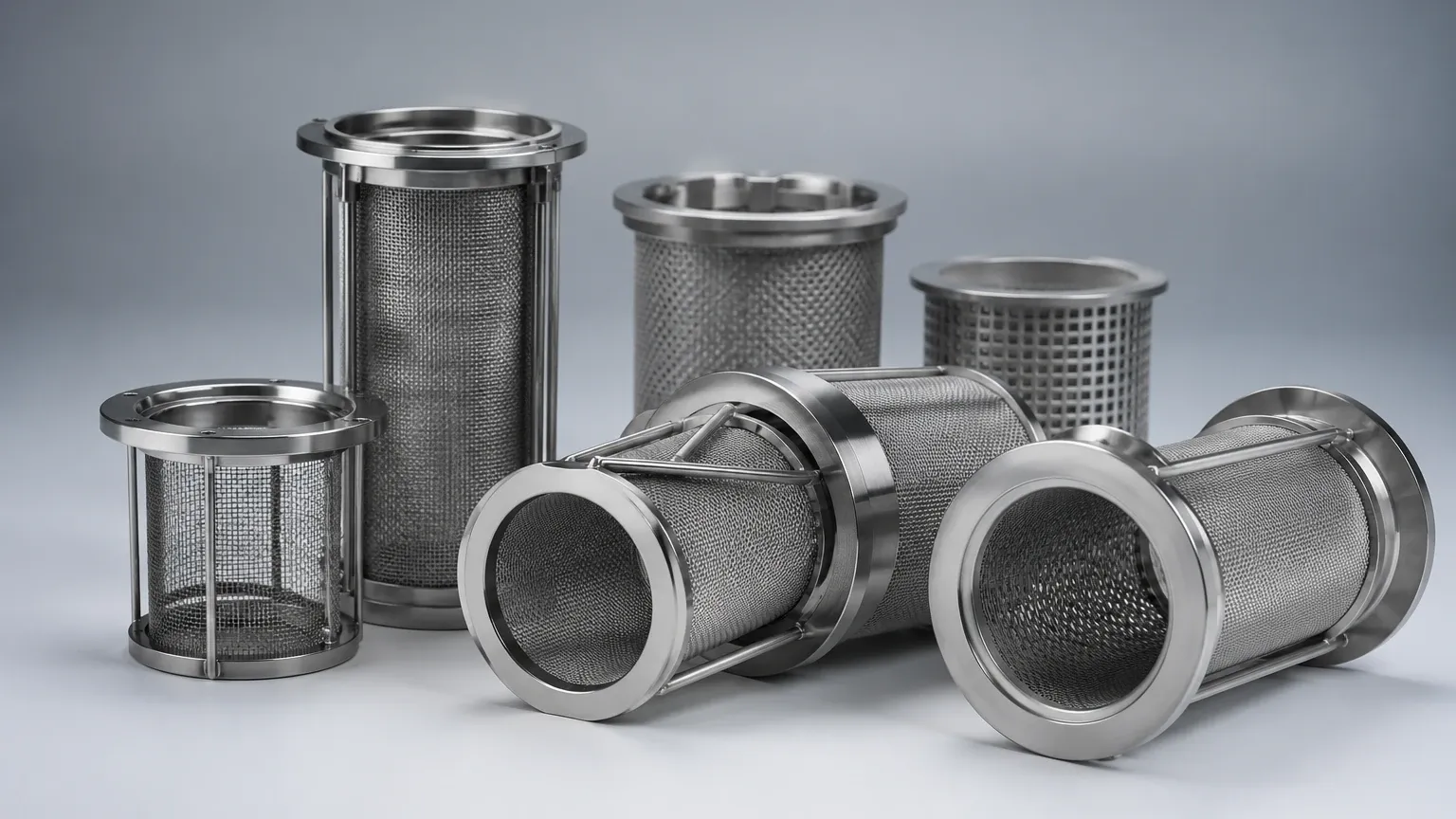
Basket strainers, or Simplex strainers, feature a vertical chamber that houses a removable basket.
* Orientation: These are strictly for horizontal piping.
* Capacity: They offer a significantly larger filtration surface area, which results in a lower initial pressure drop and longer intervals between cleanings.
* Maintenance: The top-opening design allows for easier access to the filter element without the need to drain the entire line, making them the standard for liquid applications with higher debris levels.
Evaluating Filtration Performance and Pressure Drop
One of the most common mistakes in selecting 2 inch strainers is focusing solely on the micron rating without considering the resulting pressure drop (Delta P). As fluid passes through the mesh or perforated screen, it encounters resistance. If the mesh is too fine for the application, the pressure drop will increase rapidly, potentially starving downstream pumps or triggering system shutdowns.
The Flow Coefficient (Cv)
Engineers use the Cv value to predict the pressure drop across a strainer. For a 2-inch unit, the Cv value indicates how many gallons per minute (GPM) of water can pass through the strainer with a 1 psi pressure drop. A higher Cv indicates less resistance to flow. When selecting a mesh size, it is vital to calculate the "clean pressure drop" and ensure it does not exceed 2-3 psi for the intended flow rate.
Mesh vs. Perforation
* Perforated Screens: These are used for larger particles (e.g., 1/16" or 1/8" holes). They are robust and easy to clean.
* Wire Mesh: For finer filtration, a wire mesh liner is added to the perforated basket. Common mesh sizes for 2-inch lines range from 20 mesh (840 microns) to 400 mesh (37 microns).
Connection Types for 2-Inch Lines
The method of connecting the strainer to the piping system affects both the ease of installation and the pressure rating of the assembly.
1. NPT (Threaded): Common in smaller 2-inch systems, threaded connections are easy to install but can be prone to leaks if not properly sealed, especially in high-vibration environments.
2. Flanged (ANSI/ASME): Flanged connections (typically Class 150 or 300) are the industrial standard for 2 inch strainers. They provide a secure, leak-proof seal and allow for easy removal of the entire unit for major maintenance or system reconfiguration.
3. Socket Weld: Used in high-pressure or hazardous chemical lines where a permanent, leak-free joint is required.
4. Tri-Clamp: Standard in the food, beverage, and pharmaceutical industries to facilitate rapid disassembly for Clean-in-Place (CIP) or manual sanitization.
Maintenance and Operational Longevity
The total cost of ownership for a 2-inch strainer is heavily influenced by how easily it can be maintained. A strainer that is difficult to clean will eventually be bypassed or ignored, leading to equipment damage.
Differential Pressure Monitoring
Installing pressure gauges upstream and downstream of the strainer is the most effective way to monitor performance. When the differential pressure reaches a predetermined limit (usually 10-15 psi), the operator knows it is time to clean the basket. Automated systems can use differential pressure switches to trigger an alarm or a backwash cycle.
Blow-off Valves
In Y-strainers, a blow-off port can be fitted with a valve. This allows the operator to flush out accumulated debris without stopping the flow or opening the strainer housing. While this does not replace a full cleaning, it can significantly extend the time between manual inspections.
Structural Integrity
In high-flow 2-inch lines, the filter basket is subject to significant mechanical stress. Kaifil ensures that all custom baskets are engineered with reinforced frames or heavier gauge perforated metal to prevent collapsing under high differential pressure conditions.
Customization and OEM Solutions
Standard off-the-shelf 2 inch strainers may not meet the specific requirements of every industrial application. Customization is often necessary to address unique challenges such as:
* Non-Standard Dimensions: Fitting a strainer into an existing piping layout with restricted space.
* High-Viscosity Fluids: Modifying the internal basket geometry to handle heavy oils or resins without excessive pressure loss.
* Specialty Coatings: Applying PTFE or other linings for extreme chemical resistance.
* Magnetic Inserts: Adding magnetic rods to the basket to capture fine iron or steel particles that might otherwise pass through the mesh.
Kaifil works closely with engineering teams to develop OEM filtration components that match these specific operational parameters, ensuring that the 2 inch strainers provided are optimized for the intended environment.
Summary Checklist for Procurement
Before finalizing a purchase for 2 inch strainers, technical buyers should confirm the following data points with their supplier:
* Operating Pressure and Temperature: Ensure the housing and seals are rated for the maximum system peaks.
* Flow Rate (GPM): Verify that the clean pressure drop is within acceptable limits for the pump curve.
* Contaminant Type: Is the debris hard, soft, fibrous, or metallic?
* Filtration Level: What is the specific micron or mesh requirement needed to protect downstream equipment?
* Housing Material: Is SS304 sufficient, or does the chemical profile require SS316?
* Space Constraints: Will a Y-strainer fit, or is a Basket strainer required for higher capacity?
By addressing these technical factors, organizations can ensure that their 2 inch strainers provide reliable, long-term protection for their industrial processes, reducing downtime and maintenance costs across the facility.
